
NEW
Font size
S
M
L
XL
 Worksheets
AP Chem Review Questions
Total questions: 75
Worksheet time: 1hrs 29mins
Name
Class
Date
1.
What is the measure of a tetrahedral bond angle?
a)
90 Degrees
b)
109.5 Degrees
c)
120 Degrees
d)
180 Degrees
2.
Which of the following shapes has unshared pairs of electrons on the central atom?
a)
Bipyramidal
b)
Bent
c)
Trigonal Planar
d)
Tetrahedral
3.
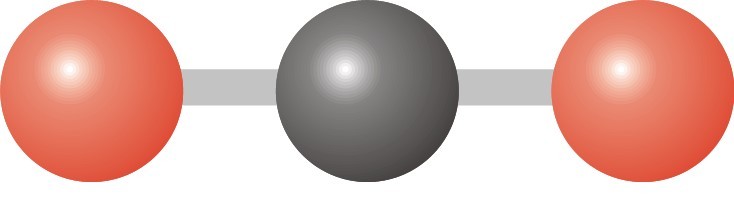
Which molecule would have this shape?
a)
BF3
b)
CH4
c)
PCl5
d)
CO2
4.
Which of the following molecular shapes would have a bond angle of 180 Degrees?
a)
Bent
b)
Trigonal Planar
c)
Tetrahedral
d)
Linear
5.
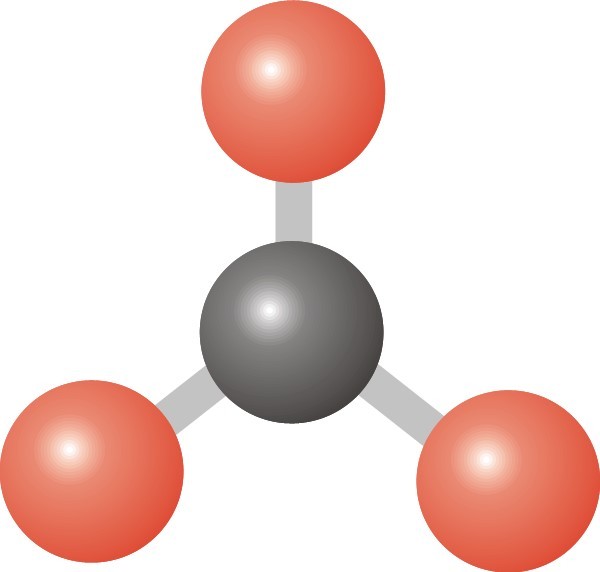
What molecule could this be?
a)
BF3
b)
CH4
c)
H2O
d)
CO2
6.
The bond angle for a trigonal planar molecule is
a)
90 Degrees
b)
109.5 Degrees
c)
120 Degrees
d)
180 Degrees
7.
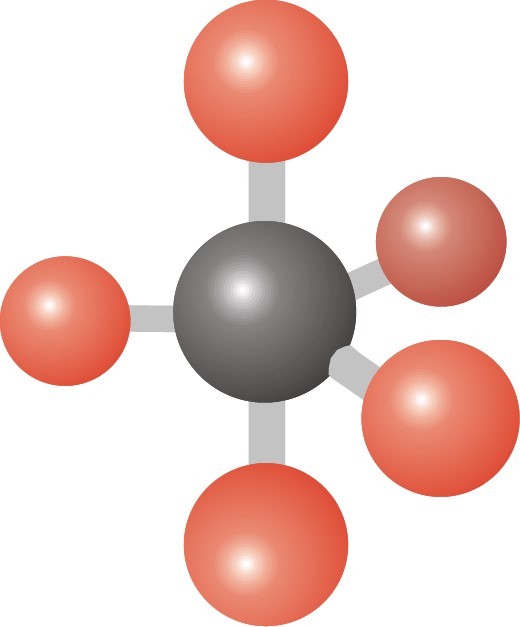
What molecular shape is this?
a)
Trigonal Planar
b)
Trigonal Bipyramidal
c)
Tetrahedral
d)
Pyramidal
8.
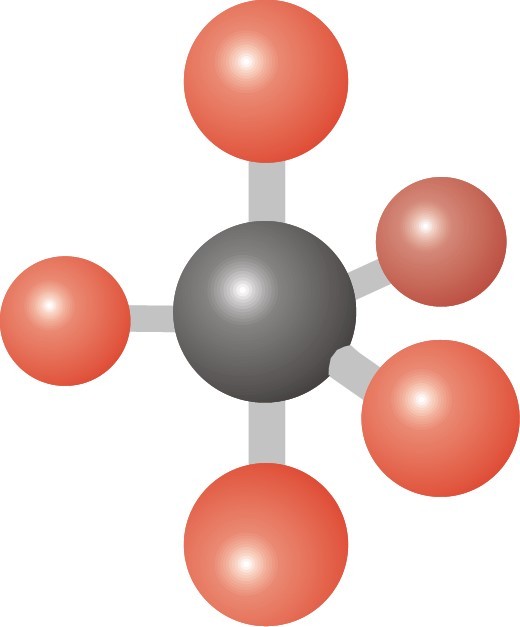
What molecule could this be?
a)
H2O
b)
CCl4
c)
PCl5
d)
NaCl
9.
Which shapes are altered by unshared pairs of electrons?
a)
Bent and Pyramidal
b)
Trigonal Planar and Bent
c)
Tetrahedram and Bipyramidal
d)
Pyramidal and Linear
10.
How many unshared pairs of electrons will a pyramidal molecule have?
a)
1
b)
2
c)
3
d)
4
11.
What is the bond angle for a pyramidal molecule?
a)
90
b)
107 (<109.5)
c)
109.5
d)
120
12.
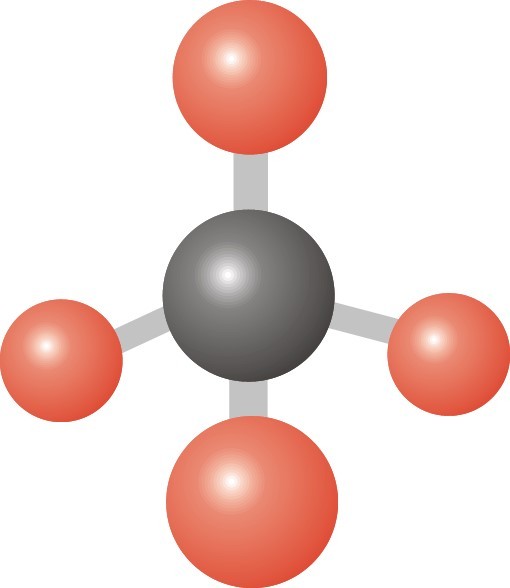
What could this molecule be?
a)
CH4
b)
CO2
c)
PCl5
d)
BF3
13.
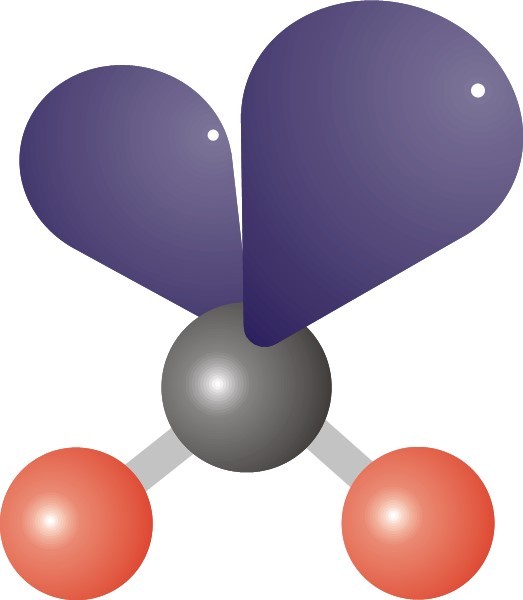
What could this be?
a)
CO2
b)
NH3
c)
H2S
d)
CH4
14.
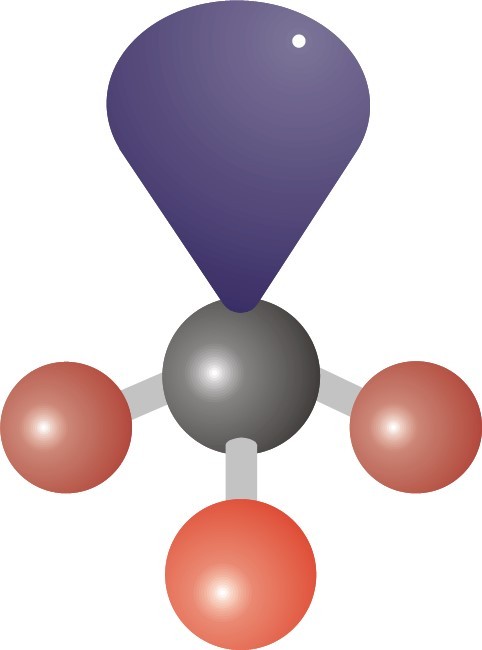
What could this be?
a)
H2O
b)
NH3
c)
CO2
d)
CH4
15.
What shape would PH3 have?
a)
Trigonal Planar
b)
Trigonal Pyramidal
c)
Bent
d)
Linear
16.
HCl
a)
Polar
b)
Nonpolar
17.
N2
a)
Polar
b)
Nonpolar
18.
NF3
a)
Polar
b)
Nonpolar
19.
BF3
a)
Polar
b)
Nonpolar
20.
C2H2
a)
Polar
b)
Nonpolar
21.
C3H8
a)
Polar
b)
Nonpolar
22.

Polar, nonpolar, or ionic?
a)
nonpolar
b)
polar
c)
ionic
23.

Polar, nonpolar, or ionic?
a)
nonpolar
b)
polar
c)
ionic
24.

Polar, nonpolar, or ionic?
a)
nonpolar
b)
polar
c)
ionic
25.

Polar, nonpolar, or ionic?
a)
nonpolar
b)
polar
c)
ionic
26.

Polar, nonpolar, or ionic?
a)
nonpolar
b)
polar
c)
ionic
27.

Polar, Nonpolar, or ionic?
a)
nonpolar
b)
polar
c)
ionic
28.

Polar, Nonpolar, or ionic?
a)
nonpolar
b)
polar
c)
ionic
29.

Polar, nonpolar, or ionic?
a)
Nonpolar
b)
Polar
c)
Ionic
30.
polar, nonpolar, or both:
"electronegativity values are the same"
"electronegativity values are the same"
a)
polar
b)
nonpolar
c)
both
31.
polar, nonpolar, or both:
"unequal sharing of electrons"
"unequal sharing of electrons"
a)
polar
b)
nonpolar
c)
both
32.

polar, nonpolar, or both:
"the arrow symbol shown here"
"the arrow symbol shown here"
a)
polar
b)
nonpolar
c)
both
33.
polar, nonpolar, or both:
"electonegativity values are different"
"electonegativity values are different"
a)
polar
b)
nonpolar
c)
both
34.
polar, nonpolar, or both:
"all bond electronegativity values cancel each other out around a molecule"
"all bond electronegativity values cancel each other out around a molecule"
a)
polar
b)
nonpolar
c)
both
35.
polar, nonpolar, or both:
"pyramidal shape"
"pyramidal shape"
a)
polar
b)
nonpolar
c)
both
36.
polar, nonpolar, or both:
"slight positive and slight negative charge"
"slight positive and slight negative charge"
a)
polar
b)
nonpolar
c)
both
37.
Which of the following has two bonding pairs and two unshared pairs of electrons around the central atom?
a)
CH4
b)
H2O
c)
NH3
d)
HF
38.

What geometry will this molecular structure have?: CCl4
a)
bent
b)
tetrahedral
c)
linear
d)
trigonal pyramidal
39.
Will this molecule be polar or nonpolar? CCl4
a)
polar
b)
nonpolar
40.

What geometry will this molecular structure have?: H2S
a)
bent
b)
tetrahedral
c)
linear
d)
trigonal pyramidal
41.

Will this molecule be polar or nonpolar? H2S
a)
polar
b)
nonpolar
42.

What geometry will this molecular structure have?: PH3
a)
bent
b)
tetrahedral
c)
linear
d)
trigonal pyramidal
43.

Will this molecule be polar or nonpolar? PH3
a)
polar
b)
nonpolar
44.

What shape will this molecule have?
a)
Tetrahedral
b)
Trigonal Planar
c)
Square Pyramidal
d)
Octohedral
45.
The electron configuration of nitrogen is 1s22s22p3. How many more electrons does nitrogen need to satisfy the octet rule?
a)
8
b)
3
c)
5
d)
2
46.
Which of these elements most readily accepts three electrons?
a)
Argon
b)
Arsenic
c)
Nitrogen
d)
Aluminum
47.
The polarity of a bond between two elements can be best determined by
a)
The difference in electronegativity between the elements
b)
The difference in first ionization energy between the elements
c)
The number of electrons shared in the bond
d)
The difference in atomic radius between the elements
48.

Which is a correct orbital box diagram?
a)
a
b)
b
c)
d
d)
e
49.

The interaction energy of two hydrogen atoms is shown on the graph above. Which of the answer choices displayed on the graph best represents the bond length of the H2 molecule?
a)
A
b)
B
c)
C
d)
D
50.
Which of the following molecules contains only single bonds?
a)
CH3COOH
b)
CH3CH2COOCH3
c)
C2H6
d)
C6H6
51.
Which of the following molecules has the shortest bond length?
a)
N2
b)
O2
c)
Cl2
d)
Br2
52.

What is the hybridization of the carbon atoms in a molecule of ethyne, represented above?
a)
sp
b)
sp2
c)
sp3
d)
dsp2
53.
Which of the following is a nonpolar molecule that contains polar bonds?
a)
NH3
b)
CHF3
c)
CO2
d)
HCl
54.
What type of bonding typically exhibits the greatest melting point and boiling point?
a)
ionic
b)
metallic
c)
polar covalent
d)
nonpolar covalent
55.
Why do ionic bonding NOT conduct when it is a solid?
a)
the charges are not able to move in the crystal lattice
b)
there is too much repulsion
c)
the positive charges are attracted to other positive charges
d)
the formula units are separating based on IMF
56.
Ionic bonding conducts electricity when they are?
a)
solid
b)
solid, molten, solution
c)
solid and solution
d)
molten and solution
57.
Bonds are an example of a(n)
a)
intermolecular force
b)
intramolecular force
c)
may the force be with you
58.
Which type of carbon-carbon bond would be the shortest?
a)
single
b)
double
c)
triple
d)
all the same
59.
Which type of carbon-carbon bond would be the weakest?
a)
single
b)
double
c)
triple
d)
all the same
60.

Consider the molecule below. Determine the molecular geometry at each of the 2 labeled carbons.
a)
C1 = tetrahedral, C2 = linear
b)
C1 = trigonal planar, C2 = bent
c)
C1 = bent, C2 = trigonal planar
d)
C1 = trigonal planar, C2 = tetrahedral
61.

Which molecule will undergo sp3 hybridization?
a)
CO2
b)
NH3
c)
SO3
d)
NO2
62.

Carbon atom undergo
a)
sp hybridization
b)
sp2 hybridization
c)
sp3 hybridization
d)
dsp3 hybridization
63.

Sulfur atom undergo
a)
sp hybridization
b)
sp2 hybridization
c)
sp3 hybridization
d)
dsp3 hybridization
64.
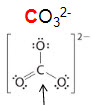
Carbon atom undergo
a)
sp hybridization
b)
sp2 hybridization
c)
sp3 hybridization
d)
dsp3 hybridization
65.

Which of the following is the correct Lewis dot structure for the molecule fluorine (F2)?
a)
A
b)
B
c)
C
d)
D
66.

Which of the following is an acceptable Lewis structure for CH3Cl?
a)
Option A
b)
Option B
c)
Option C
d)
Option D
67.

Which of the following bonds would be the shortest?
a)
A
b)
B
c)
C
d)
D
68.
In general, a double bond is _____ than a single bond between a given pair of atoms.
a)
more polar
b)
less polar
c)
stronger
d)
weaker
69.
Given that elements O and H are bonded and the electronegativity difference is 1.4, determine the bond type and the more-negative atom.
a)
polar-covalent bond; O
b)
nonpolar-covalent bond; O
c)
polar-covalent bond; H
d)
nonpolar-covalent bond; H
70.
On the usual Pauling scale of electronegativities, the electronegativity of Selenium (Se) is 2.4, while that of chlorine (Cl) is 3.0. Based on these values we should expect the bondingbetween Se and Cl to be
a)
ionic
b)
covalent and nonpolar
c)
covalent and polar with the Se end of the bond slightly negative
d)
covalent and polar with the Cl end of the bond slightly negative
71.
The molecule AX3 is polar and obeys the octet rule; therefore, the central atom A
a)
has no lone pairs of electrons
b)
has one lone pair of electrons
c)
has two lone pairs of electrons
d)
has three lone pairs of electrons
72.
Which of the following contains 1 sigma and two pi bonds?
a)
B2
b)
N2
c)
O2
d)
F2
73.
How many sigma and pi bonds are there in C2H2
a)
1 sigma and 1 pi
b)
3 sigma and 1 pi
c)
3 sigma and 2 pi
d)
2 sigma and 3 pi
74.
What is the formal charge on the central atom in PO43-
a)
-1
b)
0
c)
+1
d)
None of the above
75.
Why does the bond angle in molecules with lone pairs become a bit less than it should be?
a)
The lone pairs are more electronegative
b)
The lone pairs causes a larger force of repulsion that pushes the terminal atoms closer together
c)
The lone pairs attract the other atoms towards them
d)
They do not, they actually make the angle bigger
Reset

