
 Worksheets
Test 3 Review
Total questions: 75
Worksheet time: 6hrs 41mins
How many significant figures does the following number have: 0.002040
6
4
3
2
How many significant figures does the following number have: 1740200
4
7
3
5
Calculate 12.34 + 1.234 + 0.1234 and give your answer with the correct number of significant figures.
13.6974
13.697
13.70
13.7
Calculate 1.23 m x 0.89 m and give your answer with the correct number of significant figures.
1.0 m2
1.1 m2
1.0947 m2
1.095 m2
All of the following have one significant figure except:
100 cm
0.0001 cm
2 cm
2.00 cm

6.5
6.60
6
6.65
Which is the more precise measurement?
4 mL
4.3 mL
4.30 mL
4.300 mL
To make a proper measurement...
write down only the certain digits.
write down all certain digits and one estimated digit.
write down all certain digits and a few estimated digits.
look at the instrument carefully
An experimental measurement was taken of 10.4 mL and the actual measurement was 9.7 mL. What is the percent error? Round to the nearest tenth of a percent.
5.2%
9%
7.2%
8.8%
Which substance has the weakest intermolecular forces?
Substance A, boiling point of 75 °C
Substance B, boiling point of 105 °C
Substance C, boiling point of 25 °C
Substance d, boiling point of 45 °C

According to the reference table, what is the boiling point of ethanoic acid at 80 kPa?
28 oC
100oC
111oC
125oC

At which temperature is the vapor pressure of ethanol equal to the vapor pressure of propanone at 35oC?
35oC
60oC
82oC
95oC
When the atmospheric pressure equals the equilibrium vapor pressure ___ occurs.
freezing
melting
boiling
sublimation
What is the normal boiling point of water
0oC
100oF
50oC
100oC

Which model represents a LOWER Vapor Pressure?
A
B
As pressure decreases, boiling point___
decreases
increases
decreases then increases
increases then decreases
Which model represents STRONGER Intermolecular Forces?
A
B
Imagine A & B represent the same substance. Which model would be at a HIGHER temperature?
A
B
When the vapor pressure of water is 70 kPa the temperature of the water is
20oC
40oC
60oC
91oC
Which is an example of a chemical change?
distillation
filtration
combustion
freezing
Which describes a chemical change?
sugar dissolving in tea
sunshine warming a sidewalk
scissors cutting paper into pieces
acid in the stomach digesting food
Contains two or more different substances that are physically, not chemically, combined
a mixture
an element
a compound
a chemical formula

What type of substance is pictured?
element
compound
mixture
solution
A substance that can NOT be broken down by physical or chemical means
element
compound
mixture
Matter that is composed of one type of atom is ...
an element
a compound
a molecule
a mixture
Which is a mixture of compounds?


Which is a pure substance?


Which picture(s) represents a mixture between two elements?
A
B
C
A and C
Which picture(s) represents a mixture between an element and a compound?
A
B
D
B and D
Heterogeneous mixture is
A mixture with a composition that varies from point to point
A mixture with a uniform composition and appears visually the same throughout
Homogeneous mixture is
A mixture with a composition that varies from point to point
A mixture with a uniform composition and appears visually the same throughout
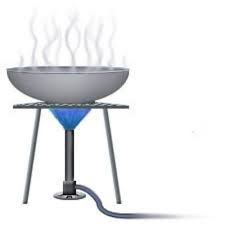
Name the separation technique shown in the diagram.
evaporation
distillation
filtration
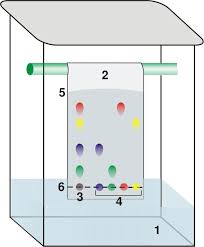
Dyes in water soluble markers may be separated by means of..
crystallization
sublimation
chromatography
sedimentation
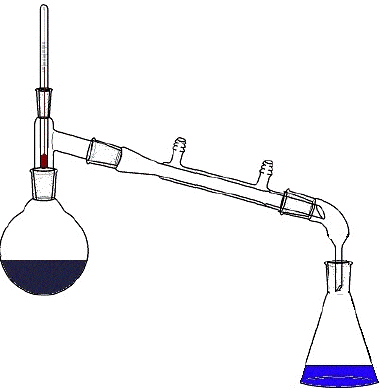
Water and alcohol are easily separated by distillation because of their
different melting points
different colours
different densities
different boiling points

Look at the apparatus setup. It CANNOT be used to separate which of the following mixtures?
Marble chips from oil
Alcohol and water
Chalk from sugar solution
Sand and sea water

Matter can be classified by analyzing its composition as it is shown in the diagram. Steel is a material that contains two elements: iron (Fe) and carbon (C). Two different samples of steel have different quantities of these two elements, but both have uniform composition. Using the diagram above, how would you classify steel?
As pure substance, because it has uniform composition and it is a compound
As a heterogeneous mixture, because is formed by two different elements
As a homogeneous mixture, because is formed by two different elements and it is uniform
As pure substance, because different samples have different composition
What is the correct order for obtaining salt from a mixture of sand and salt?
Dissolving in water - filtration – evaporation
Evaporation - filtration - dissolving in water
Filtration - dissolving in water - evaporation
Dissolving in water – evaporation - filtration
Which part of a filtration is the "filtrate"?
The filter paper
The solid material left in the funnel
The liquid that has gone through
The conical flask

This diagram represents...
An element
A molecule
A compound
A mixture of elements and compounds

Water and alcohol are easily separated by distillation because of their
different densities
different boiling points
different colours
different melting points
If the specific heat of water is 4.18 J/g∙°C, how much heat is required to increase the temperature of 1,200 g of water from 23 °C to 39 °C?
-80,256 J
80.256 J
80,256 J
-80.256 J
A sample of iron receives 50.J of heat energy that raises the temperature of the iron by 25.0°C. If iron has a specific heat of 0.10 J/g°C, what is the mass of the iron sample?
25g
30g
20g
50g
The specific heat of water is 4.18 J/g°C.
If 980. J of energy is added to 6.20 g of water at 18.0 °C, what is the final temperature of the water?
37.8 °C
-19.8 °C
19.8 °C
55.8 °C
How many Joules of energy are required to make 50.0 grams of ice at 0 οC completely melt?
334 J
0 J
33,400 J
16,700 J
The temperature of a 6.0 g sample of glass changed from 20.0°C to 45.0°C when it absorbed 550 J of heat. What is the specific heat of this glass?
0.27 J/g °C
3.7 J/g °C
130 J/g °C
12 J/g °C
Specific heat of water is 4.18 J/g°C. Specific heat of wood is 1.760 J/g°C What material needs more heat energy to raise the temperature?
Water
Wood
Both are same
Calculate the energy needed to completely boil away 30 g of water at 100 ⁰C .
67,800 J
2260 J
226,000 J
100 J
What are the characteristics of a solid?
Solids do not have a definite shape but have a definite volume
Solids have a definite shape and no definite volume
Solids do not have a definite shape and no definite volume
Solids have a definite shape and definite volume
5. What is it called when a solid turns directly into a gas?
Sublimation
Condensation
Liquid
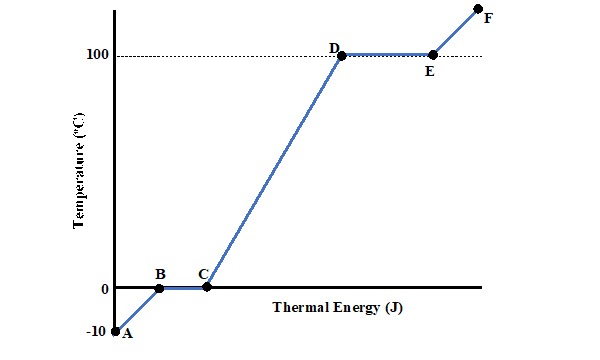
Between which two points is the solid cooling?
A <---- B
B <----> C
C <---- D
D <----> E
E <---- F

A substance's heating curve is shown in the graph. What is its boiling point?
100 C
60 C
80 C
20 C
Which two phases changes takes away energy?
Freezing, Melting
Condensation, Evaporation
Freezing, Condensation
Melting, Evaporation
Endothermic phase changes include
conduction, convection and radiation
freezing and condensation
vaporization and condensation
melting, boiling, evaporation and sublimation
Temperature is the measure of _______________ energy.
potential
kinetic
thermal
mechanical
Absolute zero happens when particles -
move very fast
move very slowly
stop moving
melt
The food that plants make during the process called photosynthesis is what form of energy?
electrical
chemical
mechanical
light
What does the law of conservation of matter and energy say?
that matter changes phase when it absorbs thermal or heat energy
that all matter melts when heated
that matter and energy cannot be created or destroyed, but just transformed from one form into another
that energy causes motion in matter

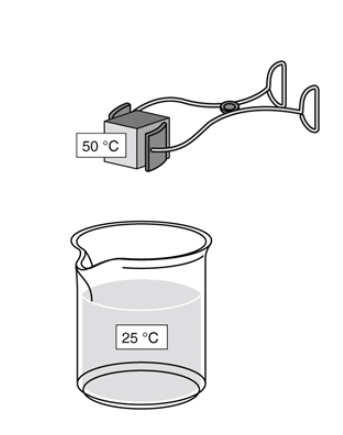
As part of a lab experiment, Tasha drops a metal cube into a beaker of water, as shown in the figure below.
After energy in the form of heat transfers between the substances, what is the final temperature of the water?
The final temperature is 25 °C because there is more water than metal.
The final temperature is 50 °C because the metal warms the water to the temperature of the metal.
The final temperature is between 25 °C and 50 °C because energy is transferred from the metal to the water.
The final temperature is between 25 °C and 50 °C because most of the thermal energy is lost to the air around the substances.
When calcium reacts with water, the temperature changes from 18°C to 39°C. Which statement is correct?
The solution at the end is acidic
The reaction is reversible
The reaction is exothermic
The reaction is endothermic
Convert
450 K to Celsius723oC
277oC
177 oC
623oC
Type of intermolecular force present between I2, Br2, and Cl2.
dipole dipole
H-bond
London dispersion
metallic
Which substance would have the weakest intermolecular forces of attraction?
CH4
NaCl
H2O
MgF2

Intermolecular forces for: NH3
London dispersion Forces
Dipole dipole
Hydrogen bonding

Intermolecular forces for: CO2
London dispersion Forces
Dipole dipole
Hydrogen bonding
The weaker the intermolecular forces of a substance the _____________ the boiling point
higher
lower
Which molecule: Br2, HCl, H2S, or NH3, will most likely have London dispersion forces as the MOST important IMF considered when determining melting/boiling points?
Br2, it only has dispersion forces when interacting
HCl, it can participate in dipole-dipole interactions and also dispersion forces
H2S, it can participate in dipole-dipole interactions and also dispersion forces
NH3, it can participate in hydrogen bonding and also dispersion forces
Which noble gas should have the highest boiling point? (Hint: Think about how size affects IMFs)
He
Ne
Kr
Xe
Which of the following will have the lowest melting point?


Which type of IMF is responsible for the attraction pictured above?
Dipole-Dipole Attraction
Molecule-Ion Attraction
Hydrogen Bonds
Covalent Bond
Ionic Bond

Which type of IMF is responsible for the attraction pictured above?
Dipole-Dipole Interaction
Ion-Dipole Interaction
Hydrogen Bonds
Covalent Bond
Ionic Bond

