
 Worksheets
Periodic Table, Bonding, Names and Formulas
Total questions: 86
Worksheet time: 2hrs 26mins
Name
Class
Date
1.
What two types of atoms make a covalent bond?
a)
2 Nonmetals
b)
1 Nonmetal and 1 Metal
c)
2 Metals
d)
2 Noble Gases
2.
How do covalent bonds form?
a)
Donating & receiving valence e- between atoms.
b)
Opposite slight charges attract each other between compounds.
c)
Scientists are still not sure how they form.
d)
Sharing valence e- between atoms.
3.
Which of the following is NOT formed by a covalent bond?
a)
K2S
b)
H2O
c)
I2
d)
CO2
4.
Which of the following describes the strength of a covalent bond?
a)
Middle - Each atom shares an octet
b)
Middle - One atom gains an octet & the other loses.
c)
Weakest - it only forms because of another bond forming
d)
Strongest - each atom receives a "permanent" octet.
5.
What do we call a covalent bond where electrons are shared UNEVENLY or UNEQUALLY?
a)
Ionic
b)
Polar Covalent
c)
Nonpolar Covalent
d)
Van der Waals Force
6.
Diatomic elements are defined as IDENTICAL elements that bond with each other (i.e. Oxygen with Oxygen). What type of bond should they form?
a)
Ionic
b)
Polar Covalent
c)
Nonpolar Covalent
d)
Van der Waals force
7.
An uneven sharing of electrons in a covalent bond due to differences in electronegativity is a:
a)
Polar
b)
Non-Polar
c)
Ionic
d)
NA
8.
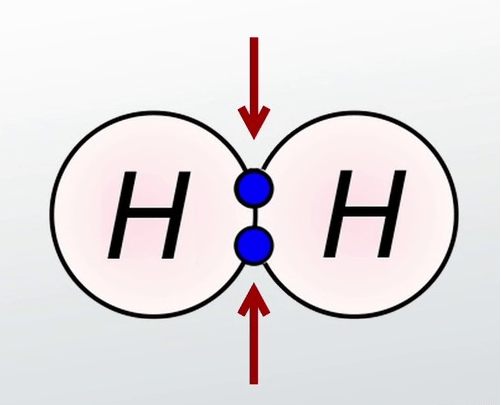
What type of bond is shown in this image?
a)
Ionic
b)
Polar Covalent
c)
Nonpolar Covalent
d)
Van der Waals Force
9.
All diatomic bonds are:
a)
Polar covalent
b)
Nonpolar covalent
c)
Ionic
d)
Metal
10.
Atoms create bonds to _______ their potential energy, therefore becoming _______ stable.
a)
lower ; less
b)
lower ; more
c)
increase ; less
d)
increase ; more
11.
Molecular Bonds are generally ________ than ionic bonds and have ______ melting points.
a)
stronger ; lower
b)
stronger ; higher
c)
weaker ; lower
d)
weaker ;
12.
Which of these would have a positive pole?
a)
HCl
b)
H2
c)
F2
d)
None of these
13.
A covalent bond has an electronegativity difference of
a)
= 1.7
b)
< 1.7
c)
> 1.7
d)
3.4
14.
An ionic bond has an electronegativity difference of
a)
> 1.7
b)
< 1.7
c)
= 1.7
d)
0
15.
What is the shape of water?
a)
Linear
b)
Bent
c)
Triangular Planar
d)
Triangular Pyramidal
16.

Na + N is what type of bond
a)
ionic bonding
b)
Covalent Bonding
c)
None of above
17.
How strongly an atom attracts electrons is called....................
a)
Ionization energy
b)
Electronegativity
c)
Electricity
d)
Nuclear force
18.
Why do elements bond?
a)
To be friends
b)
To create a new element
c)
To become stable
19.
How are ionic bonds formed?
a)
Transfer of electrons
b)
Sharing of electrons
20.
How are covalent bonds formed?
a)
Sharing of electrons
b)
Transfer of electrons
21.
P + O is what type of bond
a)
ionic bonding
b)
Covalent Bonding
c)
None of the above
22.

Where are metals located on the periodic table?
a)
Blue
b)
Green
c)
Red
23.
What is the correct name for C4H6?
a)
Carbon Hexahydride
b)
Pentacarbon Pentahydride
c)
Hexacarbon Tetrahydride
d)
Tetracarbon Hexahydride
24.
P3F4 (It is covalent)
a)
Phosphorous fluoride
b)
Triphosphorous tetrafluoride
c)
Phosphate Fluoride
d)
Trifluoride hexafluoride
25.
SiCl6
a)
Monosilicon hexachloride
b)
Silicon hexachloride
c)
Silicon heptachloride
d)
Monosilicon heptachloride
26.
Hydrogen needs _____ total electrons in its valence shell to be stable.
a)
4
b)
6
c)
8
d)
2
27.
A covalent bond in which electrons are shared unequally is:
a)
polar
b)
a double bond
c)
ionic
d)
polyatomic
28.
Molecular compounds that dissolve in water do not conduct electricity because no ___________________ are present.
a)
charged ions (particles)
b)
uncharged ions (particles)
c)
polar
d)
nonpolar
29.
Because the electrons in a molecule of hydrogen fluoride (HF) are more strongly pulled toward the fluorine atom, the molecule is:
a)
polar
b)
nonpolar
c)
ionic
d)
charged
30.
The octet rule means that all valence shells want to have the number......
a)
1
b)
9
c)
8
d)
16
31.
What is the name of the covalent molecule C4H10?
a)
Tetracarbon Decahydroxide
b)
Tetracarbon Decahydride
c)
Carbon Hydroxide
d)
Tetracarbon Decahydrogen
32.

This is a correct dot diagram for oxygen (O)
a)
true
b)
false
33.

What is the correct formula for this molecule?
a)
NH
b)
N3H
c)
NH3
d)
NH4
34.
Low Melting & Boiling Points
a)
Ionic
b)
Covalent
35.
Hard & Brittle
a)
Ionic
b)
Covalent
36.
Relatively soft
a)
Ionic
b)
Covalent
37.
Does not normally conduct Electricity
a)
Ionic
b)
Covalent
38.
In the compound Cl2 how many unshared pairs of electrons are there
a)
6
b)
4
c)
2
d)
3
39.

Which of the following is the correct Lewis dot structure for the molecule fluorine (F2)?
a)
A
b)
B
c)
C
d)
D
40.
What is it called if there are three-pairs of electrons being shared?
a)
Triple bond
b)
Bond length
c)
Tribond
d)
Chocolate Mousse
41.

The compound formed between lithium and chlorine is _________.
a)
ionic
b)
covalent
42.
Are the atoms more stable when they are bonded together or when they are apart?
a)
Bonded Together
b)
Apart
43.
What do atoms that form positive ions tend to do?
a)
Tend to lose electrons
b)
Tend to lose protons
c)
Tend to gain electrons
d)
Tend to gain protons
44.
What usually forms the positive ion?
a)
Metal
b)
Non Metals
c)
None
45.
What usually forms the negative ion?
a)
nonmetals
b)
metal
c)
none
46.
What is the number of valence electrons for Neon?
a)
6
b)
7
c)
8
d)
9
47.
When a molecule is symmetrical the molecular polarity is...
a)
Polar
b)
Nonpolar
c)
Ionic
d)
Covalent
48.

A molecule of methane has what shape?
a)
Tetrahedral
b)
Triangular
c)
Pyramidal
d)
Octahedral
49.

What is the shape of this Lewis Structure?
a)
linear
b)
bent
c)
tetrahedral
d)
planar
50.

Which is the correct lewis dot structure for calcium chloride?
a)
A
b)
B
c)
C
51.
How many more valence electrons does Oxygen need to be stable?
a)
6
b)
2
c)
4
d)
It's already stable with 8
52.
CaF2
a)
Calcium (II) Fluoride
b)
Calcium Fluoride
c)
Calcium Fluorine
d)
Carbon Fluoride
53.
How do the following two elements bond together?
Cr3+ O2-
Cr3+ O2-
a)
CrO
b)
Cr3O2
c)
Cr2O3
d)
CrO3
54.
Give the formula for oxygen dichloride
a)
OCl2
b)
O2Cl2
c)
OCl
d)
O2Cl
55.
Give the formula for phosphorus trifluoride
a)
P3F
b)
PF
c)
PF3
d)
P3F3
56.
Formula for lead (II) oxide?
a)
PbO2
b)
Pb2O
c)
PbO
d)
Pb2O3
57.
Formula for cobalt (III) sulfide?
a)
CoS
b)
Co(SO4)
c)
Co2S3
d)
Co2(SO4)3
58.
What is the formula for Potassium Fluoride?
a)
K2F
b)
KF
c)
KF2
d)
K2F2
59.
What is the formula for Barium Oxide?
a)
BaO3
b)
Ba2O3
c)
BaO
d)
Ba2O2
60.
What is the formula for silver nitride?
a)
Ag3N
b)
AgN3
c)
AgN2
d)
Ag2N3
61.
What is the formula for Calcium Chloride?
a)
CaCl
b)
CaCl2
c)
Ca2Cl
d)
CCl2
62.
How many lone pairs does oxygen have?
a)
0
b)
1
c)
2
d)
3
63.
How many lone pairs does nitrogen have?
a)
0
b)
1
c)
2
d)
3
64.
Which pair has the same empirical formula?
a)
NaCrO4 and Na2Cr2O7
b)
C2H4O2 and C6H12O6
c)
C3H6O3 and C2H6O2
d)
CH4 and C2H6
65.
What is the empirical formula of the following molecular formula: C3H6
a)
C3H6
b)
CH2
c)
C2H4
d)
CH3
66.
T/F
A compounds molecular formula can be the same as its empirical formula
A compounds molecular formula can be the same as its empirical formula
a)
True
b)
False
67.
C6H12O6
a)
Molecular
b)
Empirical
c)
Both
68.
An empirical formula:
a)
is a formula that calculates the coefficients of a compound in a balanced equation.
b)
is the simplest whole-number ratio of moles of elements in the compound.
69.
Calculate the mass of 5.0 mol of iron.
a)
8.3 x 10⁻²⁴ g
b)
0.090 g
c)
3.0 x 1024 g
d)
280 g
70.
How many moles are in 88 g of propane, C3H8.
a)
2.0
b)
16.0
c)
0.051
d)
3,872
71.

How many grams of Sulfur are there in 2 moles of Sulfur?
a)
64 grams S
b)
6.4 grams S
c)
16 grams S
d)
1.2 x 1024 grams S
72.
What is the percent composition by mass of oxygen in the compound MgSO4 (gram formula mass = 120 g/mol)?
a)
20%
b)
27%
c)
46%
d)
53%
73.
What is the percent composition by mass of magnesium in the compound MgSO4 (gram formula mass = 120 g/mol)?
a)
20%
b)
27%
c)
46%
d)
53%
74.
Choose the bond below that is most polar.
a)
C-C
b)
C-O
c)
C-N
d)
C-F
75.

Choose the correct shape for this molecule:
a)
Bent
b)
Trigonal pyramidal
c)
Tetrahedral
d)
Trigonal planar
76.

Will this molecule be polar or nonpolar? PH3
a)
polar
b)
nonpolar
77.
Metallic bonding occurs between atoms of
a)
Iron (Fe)
b)
Argon (Ar)
c)
Helium (He)
d)
Boron (B)
78.
Which of the following is a polar molecule?
a)
CH4
b)
Xe
c)
H2O
d)
CO2
79.

Choose the correct shape for this molecule:
a)
Bent
b)
Linear
c)
Tetrahedral
d)
Trigonal pyramidal
80.

IS this molecule polar or non-polar
a)
non-polar
b)
polar
81.

Is the following molecule polar or non-polar?
a)
non-polar
b)
polar
82.

Is the following molecule polar or non-polar?
a)
non-polar
b)
polar
83.
Lone pairs around the oxygen atom of a water molecule play no role in determining its molecular geometry which has what shape?
a)
True;
bent
bent
b)
False;
bent
bent
c)
True;
linear
linear
d)
False;
linear
linear
84.
Why is H2O bent?
a)
left over electron pairs
b)
It has no carbon
c)
It is not bent, but linear
d)
Oxygen has 4 valence electrons
85.

This molecule has______bond and is a _________molecule.
a)
non-polar; non-polar
b)
polar, polar
c)
polar,
non-polar
non-polar
d)
non-polar; polar
86.
Which molecule contains a triple covalent bond between its atoms?
a)
N2
b)
O2
c)
F2
d)
H2
100 %

