
NEW
Font size
 Worksheets
Photosynthesis and Water
Total questions: 68
Worksheet time: 51mins

What is the energy molecule for all living cells?
ADP
ATP
Protein
Sugars
Which of the following is the correct structure of ATP?
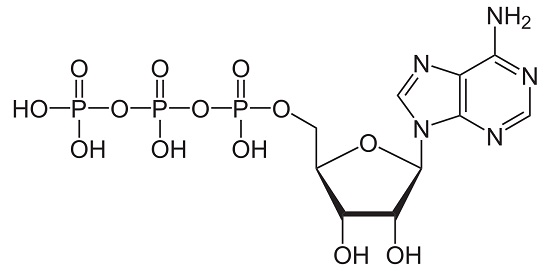
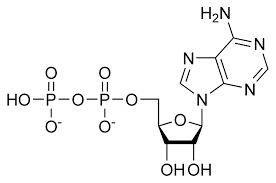
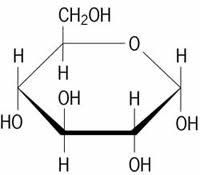
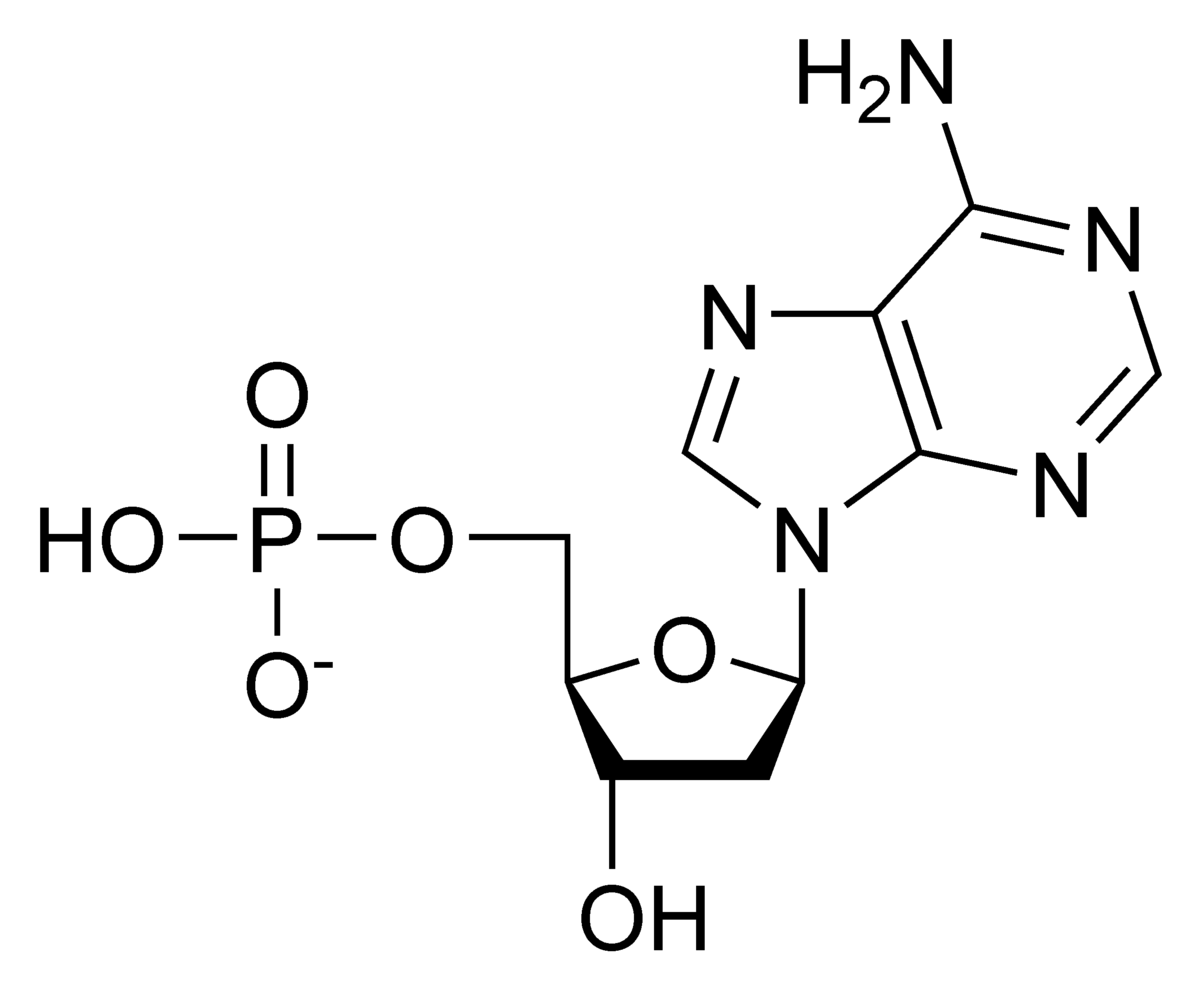
How does ATP provide energy for the cell?
The bond between the first and second phosphate is broken to release energy.
The bond between the adenine and the sugar is broken to release energy.
The bond between the sugar and phosphates are broken and release energy.
The bond between the second and third phosphate are broken to release energy.

The function of a pigment is to...
Generate new light ("glow") in certain colors
absorb some light and reflect the rest
delete light energy
none of these
Which of the following pigments is not present in plants?
Melanin
chlorophyll a
chlorophyll b
carotenoids
What is a wavelength?
How bright a lightbeam is
Distance from light source to the object the light strikes
Distance between two peaks on a wave of light
A single unit / "packet" of light


how many membrane envelopes does a chloroplast have?
One
Two
Three
Four
Photons (packets of light) are used to
split water molecules
split sugar molecules
split carbon dioxide
split ATP

When light strikes a photosystem...
It blows up
The first chlorophyll gives electrons to NADP+
Excited electrons jump from chlorophyll to chlorophyll, then to an electron carrier
Excited ATPs jump from one chlorophyll to the next
What is the primary electron carrier used in photosynthesis?
NADP+/NADPH
NAD+/NADH
FAD+/FADH
ADP/ATP
Which of the following does NOT enter the light-dependent reactions?
CO2
H2O
Light
ADP & NADP+
Which of the following is NOT produced by the light-dependent reactions?
ATP
NADPH
sugar
O2
Which of the following DOES NOT enter the light-independent reactions?
ATP
NADPH
CO2
H2O
Which of the following IS NOT produced by the light-independent reactions?
sugar
ADP
NADP+
O2
Where do the light-dependent reactions occur?
in the airspace
in the epidermis
on the thylakoid membrane
in the stroma
where do the light-independent reactions occur?
in the airspace
in the epidermis
on the thylakoid membrane
in the stroma

The splitting of water at photosystem II is known as ____ and results in the production of _____.
photosynthesis: carbon dioxide, G3P, and electrons that are given to photosystem II.
photolysis: oxygen, hydrogen ions (protons), and electrons that are given to photosystem II.
the Calvin cycle: carbon dioxide, G3P, and electrons that are given to photosystem II
chemiosmosis: oxygen, hydrogen ions (protons), glucose and electrons that are given to photosystem II.
As the electrons travel from photosystem II down the first electron transport chain, their energy is used to….
form oxygen, water, NADPH, and glucose.
pump hydrogen ions into the stroma, producing a concentration gradient that will later be used by an enzyme to form ADP and phosphate.
pump hydrogen ions into the thylakoid space, producing a concentration gradient that will later be used by ATP synthase to form ATP.
create glucose directly.
Why do hydrogen ions flow from the thylakoid space to the stroma through ATP synthase?
They are pumped actively through the ATP synthase. This uses ATP energy and causes the production of ADP and phosphate.
They flow through the Calvin cycle and produce light.
Hydrogen ions do not actually flow from the thylakoid space to the stroma. They flow the opposite way.
They flow passively from the high to low concentration via facilitated diffusion. As they flow through ATP synthase, the enzyme spins and produces ATP.
After electrons get excited by light a second time (at photosystem I), where do they go?
They travel down a second electron transport chain and are donated to ADP, which is then converted to ATP.
They remain excited and then travel to photosystem II where they get even more excited until they spontaneously combust.
They travel down a second electron transport chain and are donated to NADP+ which becomes NADPH (an electron carrier).
They travel down a second electron transport chain and are donated to oxygen which then bonds to hydrogen ions to form water.
what is the formula for glucose?
C6H12O2
C12H6O12
C6H12O6
C6O2H12
What is special about RuBisCo?
it helps with transferring ATP energy
it its the main part of photosynthesis
used in the Calvin cycle to catalyze the first major step of carbon fixation
it is a molecule that joins with G3P to make glucose
Which of the following is true?
PS1 comes before PSII
PSII comes before PS1
The 5-Carbon molecule that the Calvin Cycle starts and ends with, is called _____________.
PGA
G3P
RuBP
RuDp
True or False: The Calvin Cycle returns ADP and NADP+ to the light dependent phase.
True
False
Electrons that are transported through the 'electron transport system' of the Light Reaction (through PSII and PSI) ultimately end up in...
NADPH
ATP
Oxygen Gas
Carbon Dioxide
The energy lost by electrons as they move from PS II to PS I (through the electron transport chain) is used to
add H+ to NADP to form NADPH
move H+ from the stroma to the thylakoid space
move H+ from the thylakoid space to the stroma
move the electrons to PS I
What is the name of the enzyme involved in ATP production?
ATP synthase
ADP synthase
ATP generator
ADP generator
Which of the following is NOT a product of the Calvin Cycle?
NADP+
NADPH
ADP
G3P (to form glucose)
The main function of the light-dependent reactions is to...
trap sunlight energy as chemical energy
synthesize glucose
reflect green light
produce oxygen gas
The first 2 steps of the Calvin cycle use ATP and NADPH, in order to do WHAT?
To add energy to the intermediates
To confuse the intermediates
There is no reason; it is absurd
To remove energy from the intermediates
What molecule adds phosphates to the intermediates in the Calvin cycle?
NADPH
NADP+
ATP
ADP
What molecule donates a pair of high energy electrons to the intermediates in the Calvin cycle?
NADPH
NADP+
ATP
ADP
What is the function of the enzyme "rubisco"?
To attach ("affix") CO2 to RuBP
To phosphorylate RuBP
To rearrange 10 3C molecules to 6 5C molecules
To synthesize glucose
What type of photosynthesis do "normal" plants do?
C3
C4
CAM
none of these
What type of water-conserving photosynthesis is performed by plants like corn, and moves the Calvin cycle to the bundle sheath cells instead of the mesophyll?
C3
C4
CAM
none of these
What type of photosynthesis (carried out by cacti) conserves water by only opening stomata at night, and closing them during the day?
C3
C4
CAM
none of these

