
 Worksheets
Energy Diagrams
Total questions: 29
Worksheet time: 22mins

In the reaction depicted in the diagram,
the energy content of the products is greater than the energy content of the reactants
the energy content of the reactants is the same as the energy content of the products
the energy content of the reactants is greater than the energy content of the products

The activation energy (Ea) of this reaction is ___ kJ
40
-80
80
240
-240

The line that represents the heat of reaction (ΔH) of this reaction is
A
B
C
D

The reaction whose energy diagram is shown here is
Exothermic
Endothermic
Isothermic

The heat of reaction (ΔH) of this reaction is
240 kJ
160 kJ
-80 kJ
-160 kJ
80 kJ

If a catalyst were added to this reaction, which lines would change?
A only
B only
C only
B and D
A and C

The heat content of the products is
80 kJ
160 kJ
240 kJ
100 kJ

If you were holding in your hand a test tube in which the reaction above is taking place, it would
feel hot, because energy is being absorbed
feel cold, because energy is being absorbed
feel hot, because energy is being released
feel cold, because energy is being released

The line that represents the activation energy (Ea) of this reaction is
E
D
C
B
A

The line that represents the heat of reaction (ΔH) of this reaction is
A
B
C
D
E

The heat of reaction (ΔH) of this reaction is
-80 kJ
240 kJ
160 kJ
80 kJ
-160 kJ

The reaction whose energy diagram is shown here is
Exothermic
Endothermic
Isothermic

The heat content of the products is
80 kJ
160 kJ
240 kJ
100 kJ

The activation energy (Ea) of this reaction is
- 80 kJ
240 kJ
40 kJ
160 kJ
80 kJ

The line that represents the heat of reaction (ΔH) of this reaction is
A
B
C
D
E
If you were holding in your hand a test tube in which the reaction above is taking place, it would
feel hot, because energy is being absorbed
feel cold, because energy is being absorbed
feel hot, because energy is being released
feel cold, because energy is being released

If a catalyst were added to this reaction, which lines would change? (hint think forward and reverse reactions)
A only
B only
C only
A and D
B and C

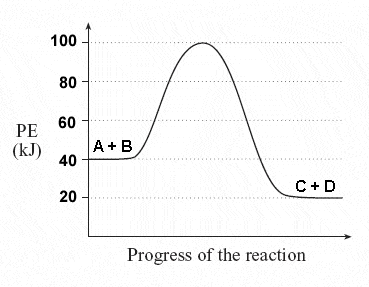
The activation energy (Ea) of this reaction is
100 kJ
40 kJ
60 kJ
20 kJ
The heat of reaction (ΔH) of this reaction is
100 kJ
40 kJ
60 kJ
20 kJ
-20 kJ
The forward reaction is
endothermic
exothermic
isothermic
all of these
endothermic and exothermic only
The reverse reaction is
endothermic
exothermic
isothermic
all of these
none of these


Substance that changes the rate of a chemical reaction without being consumed in the reaction
bonding
catalyst
chemical reaction
activation energy

If a catalyst is added to the reaction above, what is the activation energy of the reaction?
10 kJ
25 kJ
75 kJ
90 kJ
15 kJ

