Font size
 Worksheets
Biology Battle Questions
Total questions: 61
Worksheet time: 1hrs 26mins
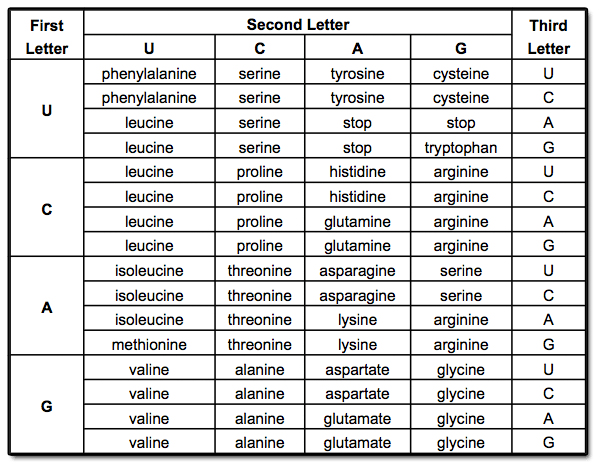
ATG GGA ACT CCA



Having freckles is dominant over not having freckles. If two individuals heterozygous for freckles have a child, what is the probability the child will have freckles?
0%
25%
50%
75%
Identical twin girls are separated at birth and cared for by two different families. After twenty years, the twins have different heights and weights. What is most likely the cause of these differences?
One twin had a genetic condition that prevented her from growing tall.
The DNA of one twin was different from the DNA of the other twin.
Each twin was provided a different diet and physical activities.
The proteins made by one twin were different than the proteins made by the other twin.
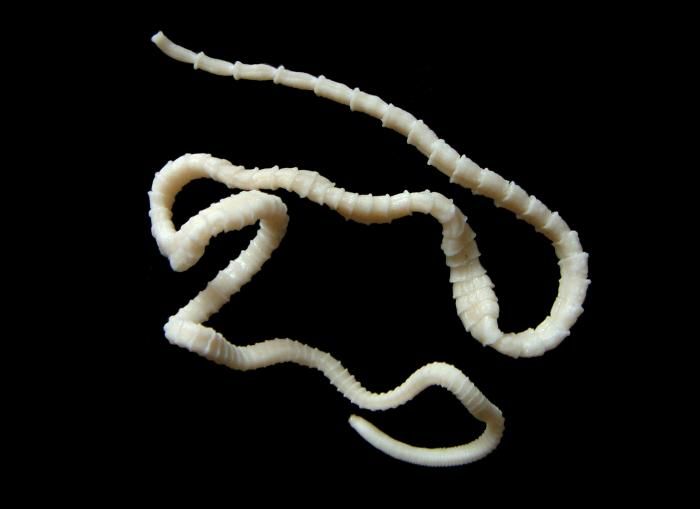
Some marine worms and mollusks go through similar larval stages during development. Which can be inferred about their relationship?
They share a common ancestor
The mate with each other
They compete for a habitat
The share the same food source
Which statement best describes natural selection?
As the weather changes, organisms that are able to find shelter need less energy to live.
Organisms that eat only plants need less food than organisms that eat animals.
Organisms better adapted to their environment are more likely to reproduce and pass on their traits to their offspring.
Small organisms are more likely to survive than larger organisms.
Some scientists claim recent evidence suggests birds should be reclassified to share more taxonomic groups with dinosaurs. What type of evidence would provide the best support for this claim?
evidence showing birds shared similar habitats with dinosaurs
evidence showing birds shared similar nutritional requirements as dinosaurs
evidence showing birds shared similar behaviors with dinosaurs
evidence showing birds shared a common genetic history with dinosaurs
Which molecules are joined together to make proteins?
fatty acids
nucleic acids
amino acids
acetic acids
Which word equation best represents the process of cellular respiration?
carbon dioxide + glucose → oxygen + water
carbon dioxide + water → glucose + oxygen
glucose + oxygen → carbon dioxide + water
oxygen + water → carbon dioxide + glucose
How does the body of a runner keep up with the demand for energy when cellular oxygen levels are low?
through energy production in the mitochondria
through aerobic respiration in the plasma membrane
through ATP produced directly from sunlight
through anaerobic respiration in the cytoplasm
Which of the following converts food into energy for the cell?
vacuole
mitochondria
cytoplasm
cell membrane

The light independent reactions (Calvin Cycle) of photosynthesis happen where?
stroma of chloroplast
mitochondrial matrix
stem
thylakoid membrane


In the graph to the right, what is the population of deer at the carrying capacity of the environment?
3
7
70
40


In which cell below would a student likely observe a cell plate during mitosis?
rat muscle cell
alligator stomach cell
onion root cell
human lung cell

Is the following cell diploid or haploid?
Diploid
Haploid
Plant cells are able to produce their own food. This process happens in which structure?
cell wall
chloroplast
mitochondrion
vacuole
Which statement best explains how sweating during exercise maintains homeostasis?
It regulates mineral concentrations in cells
It regulates body temperature
It maintains water balance
It maintains sugar balance in cells
The chemical colchicine disrupts cell division. Which cell process would most likely stop if colchicine were added to a culture of human liver cells?
mitosis
meiosis
crossing over
active transport
Which statement best explains why animals are considered heterotrophic?
They are able to produce food through the process of photosynthesis.
They are able to produce food through the process of respiration.
They are able to obtain nutrients by decomposing plant and animal tissue.
They are able to obtain nutrients by consuming other organisms or their products
What will most likely be the result as humans move into new areas, forests are clear cut and housing developments are built?
Global temperatures will decrease because trees are removed.
Many organisms will lose their homes because their habitats have been destroyed.
Better sanitation in the area will reduce the amount of pollution.
The rainfall in the area will increase because there will be increased runoff.


Select all stages of interphase?
G1
S
G2
Mitosis


Analyze the following Phylogenetic Tree: What characteristic is shared by Mammals, Reptiles, Birds, and Amphibians?
(a)

Two unrelated species evolve in a way that makes them more similar.
adaptive radiation
microevolution
coevolution
convergent evolution
divergent evolution

What type of macroevolution is happening in the image?
adaptive radiation
microevolution
coevolution
convergent evolution
divergent evolution

Finches on the Galapagos Islands share similar characteristics because they share a common ancestor but have evolved into many different types of species to eat different foods in order to survive. What type of macroevolution is being described?
adaptive radiation
microevolution
coevolution
convergent evolution
divergent evolution

In the oceans; algae, plants, and other organisms use carbon from the atmosphere for ________________.
respiration
decomposition
transpiration
photosynthesis

BTB was used to indicate the amount of carbon dioxide present in the test tubes. A plant was placed in each test tube. The test tube on the left was placed in the dark and the one on the right was in the light. Which of the following best explains the results?
The solution in the right test tube became more blue because the algae was doing more photosynthesis and using carbon dioxide.
The solution in the right test tube became more blue because the algae was doing more photosynthesis and producing carbon dioxide.
The solution in the right test tube became more blue because the algae was only doing cellular respiration and producing carbon dioxide.
The solution in the right test tube became more yellow because the algae was only doing cellular respiration and using carbon dioxide.

A student conducted a science experiment about how light impacts plant growth. He placed one plant in full sunlight all day, one with sunlight half of the day and one in a closet with no sunlight. The student then recorded their growth over a 5-week period. His data is listed in the data table below.
Which data analysis statement BEST describes the connection between sunlight and photosynthesis that this data table represents?
The plant in the dark closet stopped growing because the plant uses sunlight to create the particles of food energy the plant needs to grow.
The plant in the dark closet grew at the same speed as a plant in sunlight because all plants are given the same amounts of water and carbon dioxide.
The plant in the dark closet grew slower than a plant in sunlight because the dark plant would have had to pull more energy from water and carbon dioxide.
The plant in the dark closet grew faster than a plant in sunlight because processing the energy from the sun used part of the food energy the plant needed to grow.

Given the following images, what does each picture represent and how can they be arranged to accurately represent the photosynthesis and cellular respiration cycles?
The soccer player needs energy to kick the ball. He gets that energy by eating the plant. He combines the glucose from the plant with carbon dioxide to release energy during cellular respiration. His body releases oxygen during this process. The plant uses carbon dioxide, water and sunlight to make new glucose during photosynthesis.
The soccer player needs energy to kick the ball. He gets that energy by eating the plant. Once he has eaten the plant, his body gets energy from the glucose in the food. His body releases carbon dioxide and oxygen through this cellular respiration. The plant uses the sunlight, oxygen, and carbon dioxide to make new glucose during photosynthesis.
The sun represents the light energy needed to begin photosynthesis. The plant is taking in the sun’s energy, using water and carbon dioxide to make glucose. The soccer player eats the plant to get glucose and breathes in the oxygen. Through cellular respiration, he uses the oxygen to break down the glucose to obtain the energy needed to kick the ball. He breathes out carbon dioxide and sweats out water.
The sun represents the light energy needed to begin photosynthesis. The plant is taking in the sun’s energy, using water and oxygen to make glucose. The soccer player eats the plant to get glucose and breathes in the carbon dioxide. Through cellular respiration, he uses the carbon dioxide to break down the glucose to obtain the energy needed to kick the ball. He breathes out oxygen and sweats out water.

Which answer best explains why letter 'A' uses the most oxygen? (two answers are correct, select both)
Plants need it for photosynthesis
A person is walking
A person is running for their life from 'IT'.
A person is about to be tardy to class and is running to make it on time

A polypeptide is a sequence of ____________________ held together by a ______________ bond.
amino acids; peptide
fatty acids; ionic
proteins; hydrogen
fatty acids; covalent