wayground logo

Free Printable Worksheets

NEW

Font size

S
M
L
XL
Worksheets

Science Mstep Prep

Total questions: 55

Worksheet time: 59mins

Name
Class
Date
1.

Why is the scientific method important?

a)

It allows other scientists to repeat your process

b)

Because Mr. Stone makes me do it

c)

It helps determine variables in an experiment

d)

Because experiments are fun

2.
Variable that the SCIENTIST CHANGES or TESTS.
a)
Control Variable
b)
Variable
c)
Dependent Variable
d)
Independent Variable
3.
Variable that is MEASURED or OBSERVED; it DEPENDS on the independent variable.
a)
Control Variable
b)
Variable
c)
Dependent Variable
d)
Independent Variable
4.
Variable that the scientist keeps CONSTANT or the SAME. 
a)
Control Variable
b)
Variable
c)
Dependent Variable
d)
Independent Variable
5.
How do scientists know that their data is accurate? 
a)
Follow their procedure exactly and control all their variables
b)
Compare results with other scientists that tested the same thing and get similar results
c)
Repeat the experiment and get similar results
d)
All of the choices are correct.
6.

Mr. Stone wants to know which brand of paper towels is the strongest. In this experiment, what is the INDEPENDENT variable?

a)

Strength

b)

Brand of paper towel

c)

Weight

d)

Environment

7.

Mr. Stone wants to know which brand of paper towels is the strongest. In this experiment, what is the DEPENDENT variable?

a)

Strength

b)

Brand of paper towel

c)

Environment

d)

Weight

8.

Mr. Stone wants to know which brand of paper towels is the strongest. In this experiment, what is the most important CONTROL variable?

a)

Strength

b)

Brand of paper towel

c)

Weight

d)

Environment

9.

Based on the graph, how many more students are in the science club than the book club?

a)

20

b)

16

c)

46

d)

18

10.
At which age do the least amount of teens have a cell phone?
a)
18
b)
14
c)
13
d)
15
11.
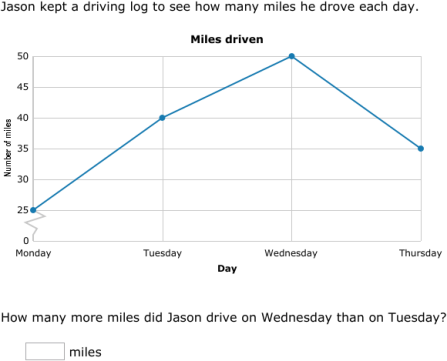
How many more miles did Jason drive on Wednesday than on Tuesday?
a)
40 miles
b)
10 miles
c)
5 miles
d)
50 miles
12.
Energy due to motion is ____________ energy. 
a)
Potential 
b)
Energy
c)
Kinetic
d)
Friction
13.
The faster an object moves, the ________ kinetic energy it has. 
a)
more
b)
less
c)
none of the above
d)
all of the above 
14.
__________ is stored energy. 
a)
Potential
b)
Kinetic
c)
None of the above 
d)
All of the above 
15.
Gravitational potential energy depends on the ________ and ________ of the object. 
a)
Height and mass
b)
Friction and movement
c)
Mass and Movement
d)
Height and Friction 
16.
What kind of energy is in a rock at the edge of a cliff?
a)
Potential
b)
Kinetic
17.
What kind of energy is in a moving skateboard?
a)
Potential
b)
Kinetic
18.
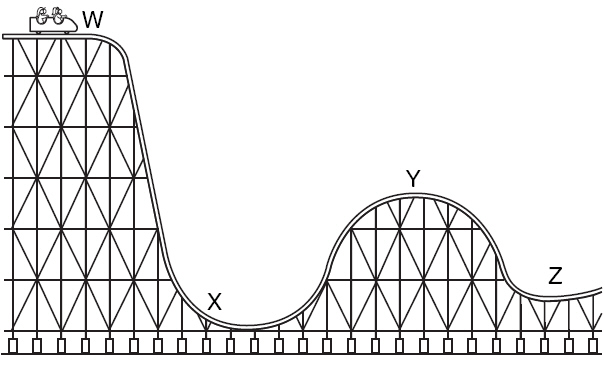
At which point is potential energy greatest?
a)
W
b)
X
c)
Y
d)
Z
19.

At which point is kinetic energy greatest?

a)

W

b)

X

c)

Y

d)

Z

20.
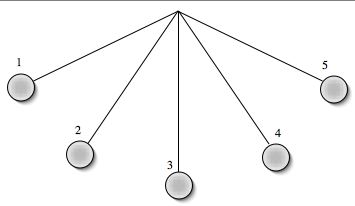
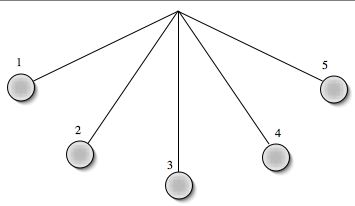
When a pendulum swings, at which point is kinetic energy highest?
a)
1
b)
2
c)
3
d)
4
21.
When a pendulum swings, at which point is potential energy at its greatest?
a)
1
b)
2
c)
3
d)
4
22.
As a pendulum swings from its highest to lowest position, what happens to its kinetic and potential energy? 
a)
Both the potential energy and kinetic energy decrease
b)
The potential energy decreases while the kinetic energy increases 
c)
The kinetic energy decreases while the potential energy increases 
d)
Bothe the potential energy and kinetic energy increase 
23.
Energy can be _____________ or changed from one type to another.
a)
destroyed
b)
transferred
c)
created
d)
ignored
24.
Which would have the greatest gravitational potential energy?
a)
A 4lb rat on a school desk
b)
A 45lb dog in an oak tree
c)
A 14 pound platypus on a swing
d)
A 45lb child on a bike
25.

Which would have the LEAST gravitational potential energy (GPE)?

a)

A ball sitting on the ground

b)

Moon viewed from the Earth

c)

An airplane flying 30,000 feet above the ground

d)

A rock sitting on top of Mt. Everest

26.

How could you increase the gravitational potential energy of an object without changing its mass and gravity?

a)

Make the object larger

b)

Lower the object towards the ground

c)

Raise the object farther off the ground

d)

Allow the object to roll on the ground

27.

An automobile you are riding in suddenly stops, but you continue to go forward.

a)

Newton's 1st Law - Inertia

b)

Newton's 2nd Law - F=ma

c)

Newton's 3rd Law - action:reaction

28.

When the force on a car is doubled, the acceleration is doubled.

a)

Newton's 1st Law - Inertia

b)

Newton's 2nd Law - F=ma

c)

Newton's 3rd Law - action:reaction

29.

A rocket pushes burning gases DOWN which causes the rocket to launch UP. Which law is this?

a)

Newton's 1st Law - Inertia

b)

Newton's 2nd Law - F=ma

c)

Newton's 3rd Law - action:reaction

30.
Which has more Inertia? (so need more force to move) 
a)
Truck
b)
Ant
c)
A cat
d)
A skateboard
31.
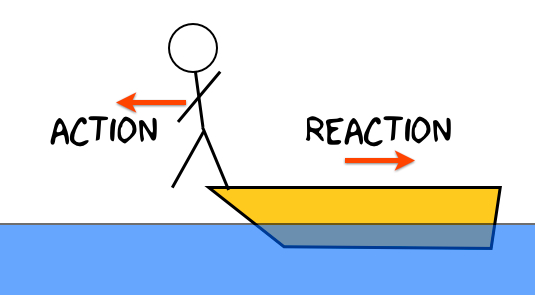
What law of motion does this picture represent?
a)
Newtons 1st law
b)
Newtons 4th law 
c)
Newtons 3rd law 
d)
Newtons 2nd law
32.
Speed =
a)
distance / time
b)
time / distance
c)
distance * time
33.
When something has speed in a certain direction it is called ___________.
a)
motion
b)
position
c)
velocity
d)
speed
34.

An object in motion stays in motion and an object at rest stays at rest UNLESS

a)

acted on by a balanced force.

b)

acted on by an unbalanced force.

35.
Acceleration: is the rate of change in ___________.
a)
speed
b)
distance
c)
velocity 
d)
displacement 
36.
In each of the following cases, determine where the car has no acceleration ?
a)
A car shortly after a stoplight turns green.
b)
A car approaching a red light
c)
A car with the cruise control set at 80 km/h
d)
A car moving down a ramp
37.

A roller coasters accelerates from an initial speed of 6.0 m/s to a final speed of 70 m/s over 4 seconds. What's the acceleration?

a)

24 m/s2

b)

18 m/s2

c)

16 m/s2

d)

16 m/s

38.
The picture of the position vs. time graph shows an object that is...
a)
accelerating/speeding up
b)
moving at a constant speed 
c)
not moving 
d)
accelerating/slowing down. 
39.
Why does a car accelerate as it round a corner at a constant speed?
a)
Its direction changes
b)
It doesn't
c)
It slows down
d)
Its speeds up  
40.
Acceleration only takes place when things speed up. 
a)
True
b)
False
41.
Which graph shows the object standing still?
a)
A
b)
B
c)
C
d)
D
42.
Magnetism is generated by moving
a)
protons.
b)
electrons.
c)
neutrons.
d)
elements.
43.
What do the lines around this magnet represent?
a)
North Pole
b)
South Pole
c)
Magnetic Declination
d)
Magnetic Field
44.
As the distance between two magnets increases (they get farther apart), the force between them:
a)
Increases
b)
Decreases
c)
Stays the Same
45.
If you cut a magnet in half, what happens to the poles?
a)
One half gets the North Pole, the other half gets the South Pole
b)
Both halves get only a North Pole
c)
Both halves get only a South Pole
d)
Both halves get a North pole and a South Pole
46.
What is responsible for the Magnetic Field around Earth?
a)
The Earth's crust
b)
The Earth's molton iron core
c)
The Earth's mantel
d)
The Sun
47.
If the North Pole of a permanent magnet is placed next to a compass as seen in the picture, which direction will the needle move?
a)
Clockwise
b)
Counter-clockwise
c)
It will not move
d)
Need more information
48.
In un-magnetized materials the domains are __________ aligned.
a)
super
b)
slightly
c)
randomly
d)
always
49.
The strongest part of a magnet is...
a)
the bars.
b)
the force field.
c)
the poles. 
d)
the middle.
50.
If you place the North pole of a magnet next to the South pole of another magnet, they will:
a)
Attract
b)
Repel
c)
Do nothing
d)
Shatter
51.
When two magnets repel, they ________________
a)
change color
b)
pull together
c)
push apart
d)
get colder
52.
Magnetism is a type of ____________
a)
force
b)
book
c)
plant
d)
animal
53.
When two magnets attract, they ______________
a)
push apart
b)
change color
c)
get colder
d)
pull together
54.
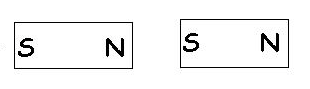
Magnets that are arranged like this will _______. 
a)
move away from each other (repel)
b)
move towards each other (attract)
55.
These magnets will _______.
a)
move away from each other (repel)
b)
move toward each other (attract)