

wayground logo

Free Printable Worksheets

NEW

Font size

S
M
L
XL
Worksheets

Arrhenius and Brønsted-Lowry Testing pH

Total questions: 28

Worksheet time: 39mins

Name
Class
Date
1.

NaOH is:

a)

an Arrhenius base

b)

an Arrhenius acid

c)

neither an acid nor a base

d)

both an acid and a base

2.

An Arrhenius base:

a)

donates H+

b)

accepts H+

c)

produces H+

d)

produces OH-

3.

An Arrhenius acid:

a)

donates H+ to another substance

b)

accepts H+ from another substance

c)

produces H+

d)

produces OH-

4.
A hydrogen ion, H+, is the same as a(n):
a)
neutron
b)
electron
c)
proton
d)
hydroxide ion
5.
Forms a OH- hydroxide ion
a)
Lewis Base
b)
Arrhenius Base
c)
Bronsted Lowry Base
d)
Bronsted Lowry Acid
6.
The following statement is true for arrhenius acid and base EXCEPT
a)
Arrhenius acid produces H+ ions
b)
Arrhenius base produces OH- ions
c)
H2O need to be present for arrhenius acid base to dissociate
d)
Hydrogen atoms that make the solution acidic
7.

A Bronsted Lowry base:

a)

donates H+ to another substance

b)

accepts H+ from another substance

c)

produces H+

d)

produces OH-

8.

Which of the following does not describe an Arrhenius or Bronsted Lowry acid or base?

a)

Produces H+

b)

Produces OH-

c)

Donates H+ to another substance

d)

Donates OH- to another substance

9.
The Acid-Base classification system that defined __________ is any compound that can donate a proton (an H+ ion) to an appropriate acceptor. A _________ is a compound that can remove (or accept) a proton.
a)
Bronsted-Lowry
b)
Arrhenius acid-base
c)
Lewis acid-base
d)
Monoprotic and Polyprotic Acids
10.
The Acid-Base classification system that defined acids as those that release H+ and bases as release OH- is known as ________.
a)
Bronsted-Lowry
b)
Arrhenius acid-base
c)
Lewis acid-base
d)
Monoprotic and Polyprotic Acids
11.

The Acid-Base classification system that defined any chemical species that accepts a pair of electrons as an acid, and a base is a chemical species that donates a pair of electrons.

a)

Bronsted-Lowry

b)

Arrhenius acid-base

c)

Lewis acid-base

d)

Monoprotic and Polyprotic Acids

12.

Accepts a pair of electrons

a)

Lewis Acid

b)

Lewis Base

c)

Bronsted Lowry Acid

d)

Arrhenius Base

13.

Lewis bases are defined as

a)

H+ acceptors

b)

electron pair acceptors

c)

H+ donors

d)

electron pair donors

14.

Classify the following molecule

a)

Lewis Acid

b)

Lewis Base

15.

Classify the following molecule

a)

Lewis Acid

b)

Lewis Base

16.

Which is the correct set of acid properties?

a)

sour taste, corrosive, change litmus from red to blue

b)

sour taste, corrosive, change litmus from blue to red

c)

sweet taste, slippery, change litmus from blue to red

d)

sour taste, slippery, change litmus from blue to red
17.
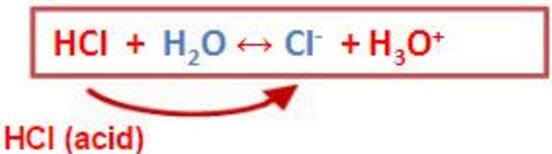
The following statement is true for Bronsted Lowry Conjugate Acid Base pair EXCEPT
a)
Bronsted Lowry Acid is a proton donor
b)
Bronsted Lowry Acid is a electron pair acceptor
c)
Conjugate acid has 1 hydrogen atom more than base
d)
Conjugate base has 1 hydroxide more than base
18.
Which of the following shows the correct conjugate acid base pair?
a)
HCI (acid) / H3O+ (conjugate base)
b)
HCI (acid) / CI- (conjugate base)
c)
HCI (base) / CI- (conjugate acid)
d)
HCI (base) / H3O+ (conjugate acid)
19.
Which of the following shows the correct conjugate acid base pair?
a)
H2O (base) / H3O+ (conjugate acid)
b)
H2O (acid) / CH3COO- (conjugate base)
c)
CH3COOH (acid) / H3O+ (conjugate base)
d)
CH3COOH (base) / CH3COO- (conjugate acid)
20.
Which of the following shows the correct conjugate acid base pair?
a)
SO32-(base) / HSO3- (conjugate base)
b)
HPO42- (acid) / HSO3-(conjugate base)
c)
SO32-(acid) / HSO3- (conjugate base)
d)
HPO42- (acid) / PO43-(conjugate base)
21.
CH3COOH dissociates partially and is reversible. Why?
a)
CH3COOH is a weak acid and H3O+ is strong conjugate base
b)
CH3COO- is a weak base and CH3COOH is strong conjugate acid
c)
CH3COOH is weak acid and CH3COO- is strong conjugate base
d)
CH3COOH is a weak acid and CH3COO- is a weak conjugate base
22.
NH3 dissociates partially and is reversible. Why ?
a)
NH3 is a weak acid and NH4+ is a strong conjugate base
b)
NH3 is a weak base and NH4+ is a conjugate acid
c)
NH4+ is a strong conjugate acid, donate H+ to form back NH3
d)
NH3 is a weak base and OH- is a strong conjugate acid
23.
The following statement is true EXCEPT
a)
Dissociation for strong acid is unidirectional
b)
Dissociation for weak acid is reversible
c)
Weak acid has a strong conjugate base
d)
Strong acid has a weak conjugate base
24.
H2O is amphiprotic, can act as acid or base. Which of the following is TRUE ?
a)
H2O is an acid because it is a proton donor
b)
H2O is an base because it is a proton acceptor
c)
H2O can gain or lose a proton, H+
d)
H2O can easily form hydronium ion, H3O+
25.
The following statement is true for Lewis acid EXCEPT
a)
Lewis acid are electrophiles
b)
Lewis acid are proton acceptor
c)
Lewis acid are electron pair acceptor
d)
Lewis acid are electron deficient
26.
The following statement is true for Lewis bases EXCEPT
a)
Lewis bases are nucleophiles
b)
Lewis bases are proton donors
c)
Lewis bases are electron pair donor
d)
Lewis bases are electron rich
27.
The following is true for Lewis acid and base EXCEPT
a)
BF3 is a Lewis acid
b)
NH3 is Lewis base
c)
BF3 is a electron pair acceptor
d)
NH3 is a lone pair acceptor
28.
The following is true for Lewis acid and base EXCEPT
a)
CO2 is a Lewis acid
b)
H2O is Lewis base
c)
CO2 is a electron pair acceptor
d)
H2O is a lone pair acceptor
