
NEW
Font size
 Worksheets
Period Table Properties
Total questions: 20
Worksheet time: 20mins
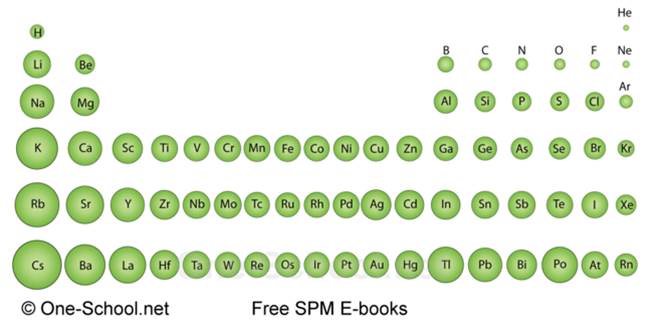
As you move across a row (period) on the periodic table, the atomic radius ______________________
Increases
Decreases
Stays the same
Explodes
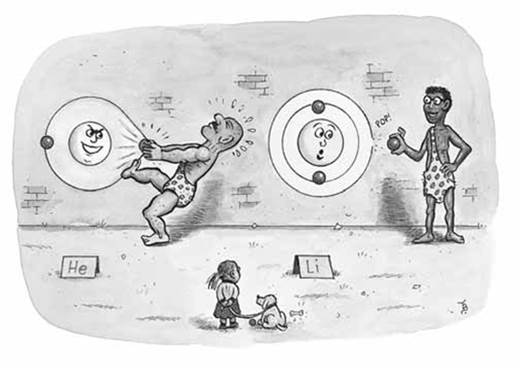
Ionization energy is the energy needed to _________ an electron.
Fission
Explode
Remove
Add
As you move across a row on the periodic table, ionization energy ______________________
Decreases
Increases
Stays the same
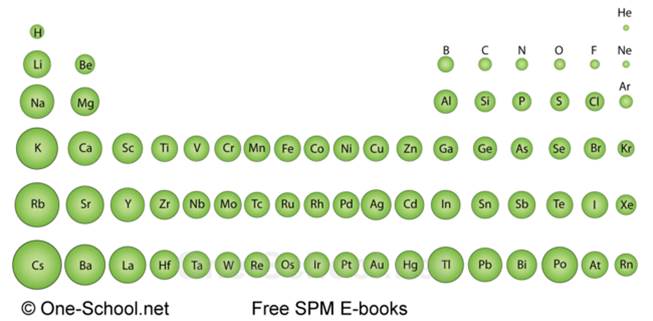
Which group of elements has the lowest ionization energy?
Group 1
Group 2
Group 3
Group 4
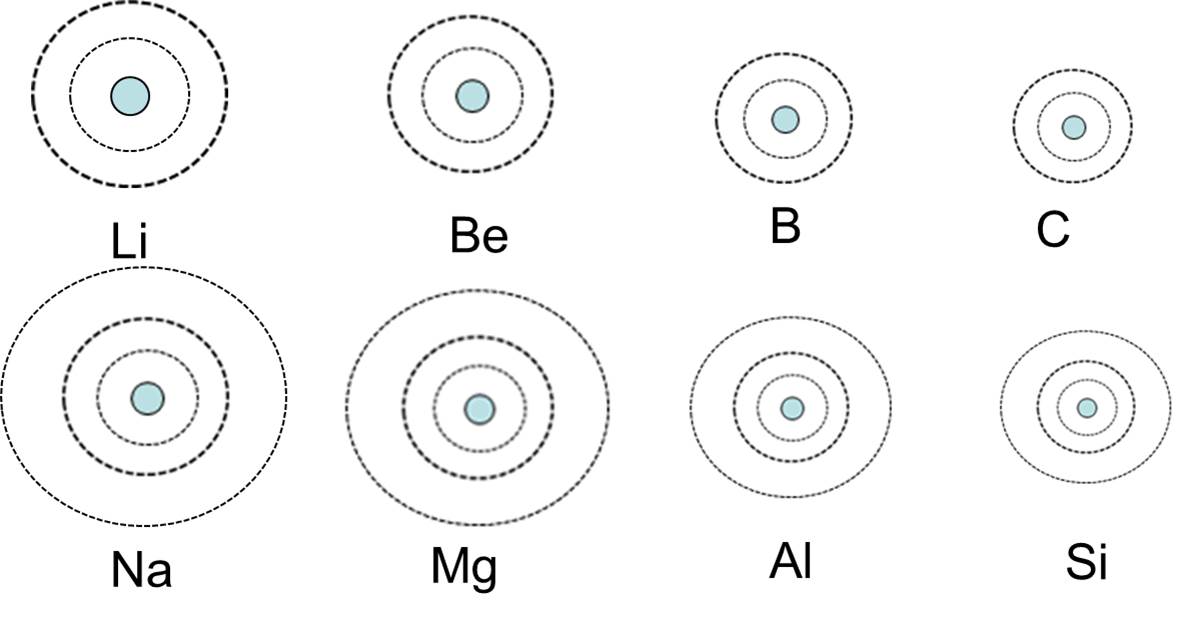
A vertical column on the periodic table is called a ___________
Period
Group
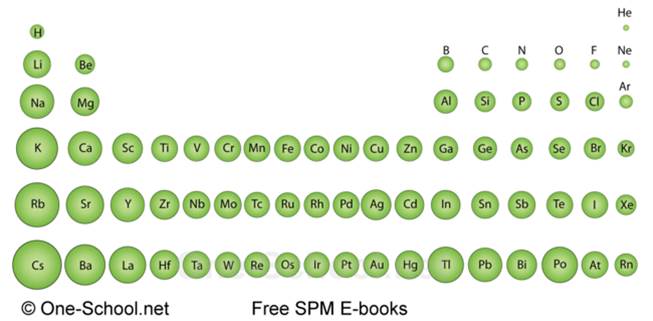
A horizontal row on the periodic table is called a ______________
Period
Group
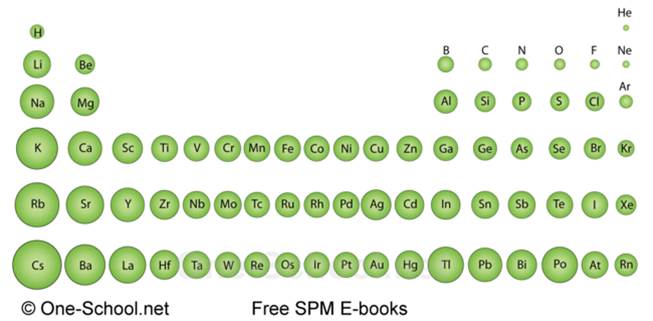
Group VIII A elements are called ________________
Alkali metals
Transition metals
Halogen
Noble gases
Group I A elements (not including hydrogen) are called ________________
Alkali metals
Transition metals
Halogen
Noble gases
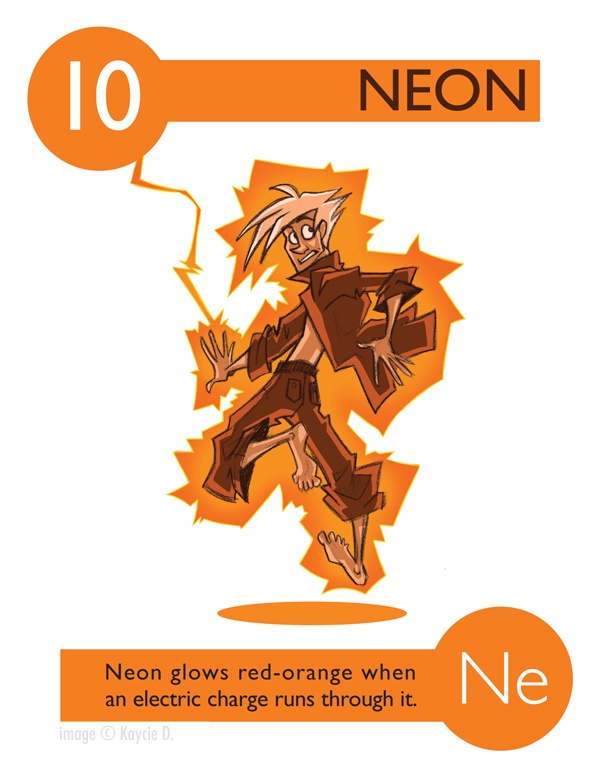
Which of the following elements would have the smallest atomic radius?
Li
Be
C
Ne
Which statement about subatomic particles is true?
Protons, neutrons, and electrons all have about the same mass.
Unlike protons or neutrons, electrons have no mass.
Neutrons have no charge and no mass.
An electron has far less mass than either a proton or neutron.
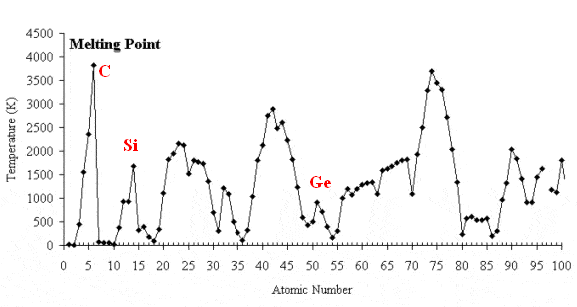
Which element in Period 3 has the highest melting point?
Silicon (Si)
Germanium (Ge)
Carbon (C)
Argon (Ar)
The number of protons in one atom of an element is that element’s
mass number.
balanced charge
atomic number
isotope
To find the number of neutrons in an atom, you would subtract
mass number from atomic number
atomic number from mass number
atomic number from electron number
isotope number from atomic number
Which statement is true about oxygen-16 and oxygen-18 ?
They do not have the same number of protons
their atoms have identical mass
they are isotopes of oxygen
they have the same mass number
Which statement is true concerning the periodic table?
periods go up and down and groups go across the table
groups go up and down and periods go across the table
periods go up and down and groups go up and down the table
periods go across the table and groups go across the table
Which list of elements contains only metals?
carbon, iodine, tin
tin, copper, cesium
helium, iron, copper
iodine, carbon, argon
Which statement is true about the metalloid silicon?
Silicon is a better conductor of electric current than silver is.
Silicon does not conduct electric current under any conditions.
Silicon's ability to conduct electric current does not vary with temperature.
Silicon is a better conductor of electric current than sulfur is.
Group VII A of the periodic table contains the
most reactive metals.
most reactive nonmetals.
least reactive nonmetals.
least reactive metals.
As you move from left to right across a period, the number of valence electrons
increase
stays the same
increases then decreases
decreases
In science lab, your teacher gives you two small pieces of matter and tells you that one piece is a metal and one is a nonmetal. Without changing the size or shape of the pieces, how could you test them to determine which is the metal?
Test the density
Test the conductivity
Test the viscosity
Test the hardness

