
 Worksheets
NGSS Review
Total questions: 72
Worksheet time: 1hrs 11mins
Name
Class
Date
1.
1) When nitrogen is returned to the soil when dead plants decompose, the interaction is between which two spheres?
a)
Hydrosphere and geosphere
b)
Cryosphere and geosphere
c)
Biosphere and Geosphere
d)
Biosphere and atmosphere
2.
Which of the following statements refers to weather?
a)
A. “It rains a lot in the Spring in my city.”
b)
A. “It’s very hot and sunny today. Let’s go to the beach.”
c)
“There are many people who don’t believe there is a hole in the ozone layer’”
d)
A. “We are going south to Florida in January because it will be warmer.”
3.
The water cycle is the continuous movement of water on, in and above the Earth. Which of the following describes evaporation in the water cycle?
a)
Water vapor meets cold air and changes back into a liquid
b)
Plants take in water from the soil
c)
Water gets heated and changes from liquid water to water vapor
d)
Water freezes
4.
Which of the following is the best explanation for sea breezes and land breezes along Florida’s coasts?
a)
The Gulf Stream current in the Atlantic
b)
Continental polar air masses moving in from the north.
c)
Conduction currents of rising cool air and falling warm air
d)
Convection currents of rising, less-dense warm air and falling, denser cool air caused by differences in how quickly water and land absorb or lose the Sun’s heat
5.

The arrows in the picture below show several ways heat is transferred from the Sun as it strikes sand on the surface of a beach. Which arrow shows radiation?
a)
1
b)
2
c)
3
d)
4
6.
Our beaches in Florida are lined with large hotels and condominiums. Natural vegetation was cleared away from the beaches to make room for the buildings. What is a consequence that we have seen on Florida beaches as a result of clearing the vegetation for building?
a)
There is less food from the vegetation to feed the citizens of Florida
b)
There is more and more erosion of the beaches in Florida
c)
The fishing is not as abundant as it once was in Florida
d)
The sand is heating up at record levels on our beach
7.
Both Ocala, Florida, and Lexington, Kentucky, are good places to raise racehorses, in part because of the limestone near the surface in both places. Calcium from the limestone helps make a horse's leg bones stronger and better able to withstand the pounding stress of running. Knowing that the Bluegrass Region around Lexington also sits on top of limestone, what other land features are also likely to be found there?
a)
Sand dunes, lakes, and springs
b)
Prairies, swamps, and marshes
c)
Sinkholes, caves, and aquifers
d)
Shallow rivers, flat land, and quartz sand
8.
Slate is a metamorphic rock that forms from the sedimentary rock, shale. Which of the following is needed for slate to form from shale?
a)
Weathering
b)
Erosion and deposition
c)
Melting and cooling
d)
Heat and pressure
9.
Which of the following would be a cause of chemical weathering?
a)
Acid rain
b)
Freezing and thawing
c)
Abrasion
d)
Animal action
10.
The oldest rock formation identified on Earth is found on the shoreline of Hudson Bay in Canada. This rock formed 4.28 billion years ago. What information does a scientist need to more accurately determine the age of a rock?
a)
The amount of each radioactive element present in the rock
b)
The percentage of each mineral that makes up the rock
c)
The thickness of younger rock layers that cover the rock
d)
The amount of weathering present on the surface of the rock
11.

Which of these is in order from oldest to most recent?
a)
4, 3, 2, 5, 1
b)
3, 2, 1, 4, 5
c)
1, 2, 3, 4, 5
d)
3, 4, 1, 5, 2
12.
A trace fossil includes no physical remains of the organism’s body, but only a mark or structure that the fossil left behind. Which of these is not an example of a trace fossil?
a)
Dinosaur tracks in sediment
b)
An insect in amber
c)
A burrow in the sea floor
d)
Coprolite in sediment
13.
The fossil record shows part of the history of life on Earth and can tell scientists about environmental changes over time. Which of the following statements explains what fossils of palm fronds found in Antarctica tell us about what the climate was once like?
a)
A) Palm fronds indicate an aquatic environment was once present
b)
A) Palm fronds indicate a period of drought once existed
c)
A) Palm fronds indicate a tropical climate was once present
d)
Palm fronds indicate Antarctica has always had a polar climate
14.
The “Ring of Fire” is an area along the edge of the Pacific Ocean with many volcanoes. Most of the volcanoes are formed as a result of one tectonic plate. Which of these geological areas is where rock is recycled by one tectonic plate sliding underneath another tectonic plate?
a)
Rift valley
b)
Strike-slip fault
c)
Subduction zone
d)
Divergent boundary
15.
If the locations of earthquakes over the past 10 years were plotted on a world map, which of the following would be observed?
a)
Earthquakes occur with the same frequency everywhere on Earth
b)
Earthquakes generally occur along the edges of tectonic plates
c)
Earthquakes most frequently occur near the middle of continents
d)
Earthquakes do not seem to occur in any consistent pattern
16.
The Himalayan Mountains are a result of
a)
A divergent plate boundary
b)
A transform fault
c)
A subduction zone
d)
A convergent plate boundary
17.
If an oceanic plate and a continental plate collide, the dense ocean plate sinks, or is subducted, beneath the continental plate. Which of these is formed when the subducted plate melts?
a)
Folded mountains and glaciers
b)
Magma and volcanic mountains
c)
Earthquakes and volcanoes
d)
New seafloor and sediments
18.

The diagram shows parts of the human body that work together to help you digest the food you eat. What can you conclude about this diagram?
a)
It is made of just one type of cell.
b)
It is made of just one type of organ system
c)
It is made of two or more types of tissue that work together to perform a function.
d)
It is made of two or more types of organs that work together to perform a function
19.

Eugene drew the following diagram to describe the levels of structural organization of an animal’s body. He will list the most specialized level at the top. The level that is least specialized will be at the bottom. Which of the following should Eugene list in level 1 on his diagram?
a)
organ
b)
tissue
c)
organism
d)
organ system
20.

The diagram shows the two main parts of the body’s central nervous system. According to the diagram, which statement best describes the brain?
a)
It is made up of several types of tissue.
b)
It is made up of several types of organs.
c)
It is made up of identical cells that work together.
d)
It is made up of identical organ systems that work together.
21.
The survival of cells depends on maintaining homeostasis. What will happen to a cell if homeostasis is not maintained?
a)
The cell will immediately divide.
b)
Cell processes will continue unchanged
c)
The cell will eliminate wastes more efficiently.
d)
Many chemical reactions in the cell will slow down or even stop.
22.

The following diagram shows two types of cells, prokaryotic and eukaryotic. Which statement correctly identifies the eukaryotic cell and then explains how to identify the eukaryotic cell?
a)
cell B, because there is DNA in its cytoplasm
b)
cell A, because there is cytoplasm filling the cell
c)
cell A, because there is a cell membrane around the cell
d)
cell A, because the DNA is in a membrane bounded nucleus in the middle of the cell
23.
Part of the cell theory states that cells come from other cells. Which statement below explains that this part of cell theory applies to all organisms?
a)
The cells of all organisms excrete waste.
b)
The cells of all organisms have cytoplasm.
c)
The cells of all organisms divide to make more cells.
d)
The cells of all organisms take in nutrients from their environment
24.
How is a multicellular organism most different from a unicellular organism?
a)
Each cell performs all special functions.
b)
All cells perform the same special functions
c)
Different kinds of cells perform special functions.
d)
Different parts of its cells perform all special functions.
25.

Look at the following diagram. Which of the following correctly names the type of cell shown and explains the evidence for that cell type?
a)
This is a plant cell, which is shown by the fact that it has a chloroplast.
b)
This is a plant cell, which is shown by the fact that it has a ribosomes.
c)
This is an animal cell, which is shown by the fact that it has mitochondria.
d)
This is an animal cell, which is shown by the fact that it has a cell wall.
26.
Which of the following choices includes two structures that are found in plant cells, but not in animal cells?
a)
cell wall, nucleus
b)
chloroplasts, cell membrane
c)
chloroplast, mitochondria
d)
cell wall, large central vacuole
27.

The following picture shows a single cell. What is the function of the structure labeled Nucleus?
a)
to hold the cell’s DNA
b)
to hold the cell’s organelles
c)
to hold the cell’s cytoplasm
d)
to hold the cell’s cell membrane
28.
Scientific knowledge may change as new evidence or information is discovered. Which of the following would NOT be a result of new scientific research and information?
a)
Binomial nomenclature is assigned to a recently identified plant species
b)
An endangered monkey species is put in a reserve for protection from extinction
c)
A newly discovered chemical element will be added to the periodic table of the elements
d)
A nonnative plant species will begin to reproduce rapidly after being introduced into a swamp ecosystem
29.
If a theory is challenged by new evidence, which of the following could occur?
a)
The theory could be altered
b)
The theory is accepted, not the evidence
c)
The evidence is wrong
d)
A vote is taken to accept new evidence
30.
How is a scientific experiment different from other investigations?
a)
A procedure is followed
b)
Only one variable is changed
c)
Precision and accuracy are used to record data
d)
All of the above
31.

The following statements were taken from the procedures of four different investigations. The statement from which investigation is an example of repetition?
a)
Investigation 1
b)
Investigation 2
c)
Investigation 3
d)
Investigation 4
32.

1) The model below represents a rocket in flight. What would be the best use of this model by a scientist?
a)
To model one-directional forces, as the rocket is affected only by one force.
b)
To model the idea of zero gravity, as the rocket is not affected by gravity
c)
To model the transition between the kinetic and potential energy of the rocket
d)
To model the effects of wind resistance on the rocket’s descent to the ground
33.

Which of the following describes a limitation of the drawing but NOT the clay model?
a)
The drawing does not represent the main parts of a cell.
b)
The drawing does not contain the correct number of nuclei
c)
The drawing cannot represent a living cell, since a true cell is three-dimensional
d)
The drawing cannot represent a living cell, since the cytoplasm should be in constant motion
34.
What is the difference between a scientific theory and a scientific law?
a)
Theories are upgraded into laws once they are proven.
b)
Laws use mathematical explanations and theories do not
c)
Laws describe what happens but theories explain why or how.
d)
A. Theories combine several laws into one.
35.

A timeline of some models of atoms throughout the history is shown below. Those models have contributed to the formation of the atomic theory. Which of the following statements best summarizes the formation of atomic theory?
a)
A. The discovery of new evidence resulted in changes to the atomic theory.
b)
Advancements in atomic models proved the atomic theory was accurate
c)
The atomic theory was modified with the discovery of every new element
d)
Changes in the atomic models showed that the atomic theory was based on opinions
36.
Mai tells Jaz his theory about what sea turtles nest on the beach instead of in the ocean. She says, “The turtle eggs would sink to the bottom of the ocean, and the baby turtle would drown.” Mai says her uncle, a fisherman, told Mai this information. Jaz tells Mai that her theory is not scientific. Why does Mai’s idea not meet the requirement to be a scientific theory?
a)
Mai’s idea is already a scientific law
b)
A. Mai’s idea is not supported by scientific evidence.
c)
Mai’s idea is a good guess that can be tested by experiments
d)
Mai and her uncle are not scientists
37.
What is the best definition of the term "theory", as it’s used in science?
a)
It is just a guess
b)
It is well tested set of ideas that explains events that occur in nature
c)
A theory is based on laws that can be proven true
d)
It is a hypothesis that has been confirmed
38.

Keesha did an experiment to study the rate of photosynthesis in the water plant Elodea. She placed a piece of Elodea in a beaker of water and set the beaker 10 centimeters (cm) from a light source. Keesha counted the bubbles released from the plant every minute for five minutes (min). She repeated the process two more times. First, she moved the light to 20 cm from the beaker, and then she moved the light to 30 cm from the beaker. Keesha’s setup and data are shown below.What is the outcome variable (dependent variable) in this experiment?
a)
the number of bubbles produced
b)
the type of plant placed in the beaker
c)
the distance of the light source from the plant
d)
the amount of time the bubbles were counted
39.
Ernest Rutherford developed an experiment that showed protons can pass through gold atoms untouched and/or un-deflected. Sometimes the protons were deflected by something, but this did not happen too often. Most of the atoms pass straight through. His experiment changed the way scientists viewed the structure of an atom. What conclusion did Rutherford draw from his experiment?
a)
The gold atoms are not close to each other
b)
The subatomic particles in the gold atoms are very close together
c)
Inside of the gold atom consists of empty spaces
d)
There can be no conclusion drawn from this observation
40.

A student wants to find out if temperature affects the behavior of goldfish. He has four fish bowls and 20 goldfish. Which of the following experiments should he do?
a)
A
b)
B
c)
C
d)
D
41.
University of Florida scientists developed a new type of wound dressing that keeps bacteria out of the wound. What is a conclusion that you can make from this information?
a)
Scientific discoveries always lead to new technologies
b)
Scientists often respond to the needs in our society
c)
Scientific advance are always made in the field of medicine
d)
Scientists may make discoveries that have no impact on society
42.

A farmer wants to find out which type of soil is best for growing his corn. He also wants to find out which type of fertilizer is best for growing his corn. He does the following experiment using two different types of soil and two different types of fertilizer. What can the farmer conclude from this experiment?
a)
He can conclude that Soil B is the best soil for growing his corn
b)
He can conclude that Fertilizer Y is the best fertilizer for growing his corn
c)
A. He can conclude that Soil B is the best soil for growing his corn and that Fertilizer Y is the best fertilizer for growing his corn.
d)
It is NOT possible to conclude from this experiment which soil is best for growing his corn or which fertilizer is best for growing his corn
43.
Chandler trained ten rats to reach through a hole in their cage, press a button, and be rewarded with a food pellet. He trained them with many flavors of food pellets, recording how long it took each rat to press the button for each flavor. Having watched how quickly his rats ate bananas in their cages, he hypothesized that the rats would push the button the fastest with banana flavored pellets. All ten rats pressed the button the fastest while reaching for the banana pellet. Based on his evidence, he concluded that rats in the wild prefer banana to any other food. Though there could be bias in one investigation, why could Chandler's conclusion be plausible based on his investigation?
a)
Because he performed a true scientific investigation, since he collected empirical evidence in the form of direct observations from a replicable planned experiment
b)
Because he performed a true scientific investigation, since he likely met with and discussed ideas with a prestigious scientist at a university about lab rats
c)
Because he performed a true scientific investigation since he observed behaviors
d)
Because he performed a true scientific investigation since he observed lab rats
44.

A student wants to know if the weight of a cart affects its speed at the bottom of a ramp. He can change the weight of the cart by adding different numbers of balls, and he can change the height of the ramp by using different numbers of blocks. Which set of tests should he compare (set A, B, C, or D)?
a)
A
b)
B
c)
C
d)
D
45.

A student is interested in the behavior of fish. He has 4 fish bowls and 20 goldfish. He puts 8 fish in the first bowl, 6 fish in the second bowl, 4 fish in the third bowl and 2 fish in the fourth bowl. He places each fish bowl under light, he keeps the temperature at 75°F for all four bowls, and he observes the behavior of the fish. What can the student find out from doing just this experiment?
a)
If the number of fish in the fishbowl affects the behavior of the fish
b)
If the temperature of the fish bowl affects the behavior of the fish
c)
If the temperature of the fish bowl and the amount of light affect the behavior of the fish
d)
If the number of fish, the temperature, and the amount of light affect the behavior of the fish.
46.
Scientists do many types of work. Their work often includes making field observations, conducting surveys, creating models, and carrying out experiments. Which description characterizes an experiment?
a)
Observation of plants or animals in their natural environment
b)
Physical or mathematical representation of an object or process
c)
An organized procedure to study something under controlled conditions
d)
Collection of data from unregulated world for comparative purpose
47.
____________ is a push or pull on an object.
a)
Motion
b)
Force
c)
Speed
d)
Velocity
48.
Force is measured in ________.
a)
Joules
b)
Kilograms
c)
Pounds
d)
Newtons
49.
_______________ result when two interacting objects are touching each other and exert a push or pull.
a)
Non-contact forces
b)
Contact forces
c)
Motion
d)
Speed
50.
_______________ result when two interacting objects are not touching each other, yet are able to exert a push or pull.
a)
Non-contact forces
b)
Contact forces
c)
Motion
d)
Speed
51.
___________ force is any push or pull on an object created from another source (person, animal, another object, etc.)
a)
Applied
b)
Normal
c)
Friction
d)
Air Resistance
52.
___________ force is a support force exerted on an object directly related to weight (gravity).
a)
Applied
b)
Normal
c)
Friction
d)
Air Resistance
53.
_______________ is friction due to air molecules. It opposes the motion of an object.
a)
Air Resistance
b)
Electromagnetic
c)
Gravitational
d)
Spring
54.
__________ force is a natural force of attraction between any two objects that have mass.
a)
Electromagnetic
b)
Gravitational
c)
Air Resistance
d)
Normal
55.
As the mass of an object increases, the force of gravity ___________.
a)
Increases
b)
Decreases
c)
Stays the same
d)
Increases and then decreases
56.
An object that is balanced will have a net force of:
a)
0 N
b)
10 N
c)
100 N
d)
1000 N
57.
A satellite in orbit would have _________________.
a)
unbalanced forces
b)
balanced forces
58.
South Pole on a magnet will be attracted to the _________.
a)
North Pole
b)
South Pole
59.
An object at rest will stay at rest and an object in motion will remain in motion unless acted upon by an unbalanced force.
a)
Newton's 1st Law
b)
Newton's 2nd Law
c)
Newton's 3rd Law
d)
Newton's 4th Law
60.
Jordan and Caleb are riding their bikes past the grocery store. Which of the following is true?
a)
Jordan and Caleb are moving relative to their bike, but not the grocery store.
b)
Jordan and Caleb are not moving relative to the grocery store or their bikes.
c)
Jordan and Caleb are moving relative to the grocery store, but not their bikes.
d)
Jordan and Caleb are moving relative to their bikes and the grocery store.
61.
__________ can be measured as the distance traveled in a given amount of time.
a)
Speed
b)
Acceleration
c)
Energy
d)
Force
62.
__________ force opposes the motion of an object and slows the object down.
a)
Applied
b)
Normal
c)
Friction
d)
Gravitational
63.
As the distance between two magnets increases, the magnetic force between them __________.
a)
Increases
b)
Decreases
c)
Stays the same
d)
Increases and then decreases
64.
A train accelerating away from the station would have ___________.
a)
unbalanced forces
b)
balanced forces
65.

What is the net force on the object?
a)
10 N right
b)
500 N right
c)
950 N right
d)
50 N left
66.
A magnet will attract to:
a)
Gold
b)
Silver
c)
Iron
d)
Aluminum
67.
__________ can be described as a change in position over a period of time.
a)
Energy
b)
Acceleration
c)
Motion
d)
Force
68.
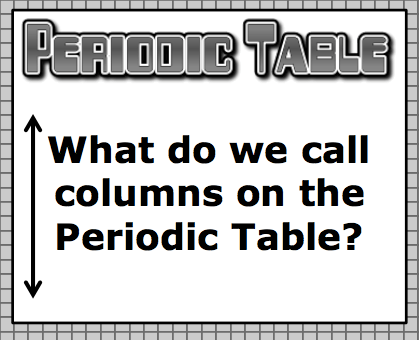
a)
Periods
b)
Groups
69.
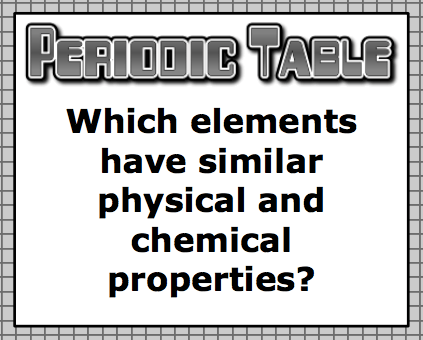
a)
Same group
b)
Same period
70.
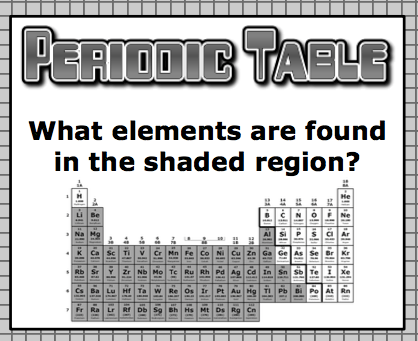
a)
Metals
b)
Nonmetals
c)
Metalloids
71.
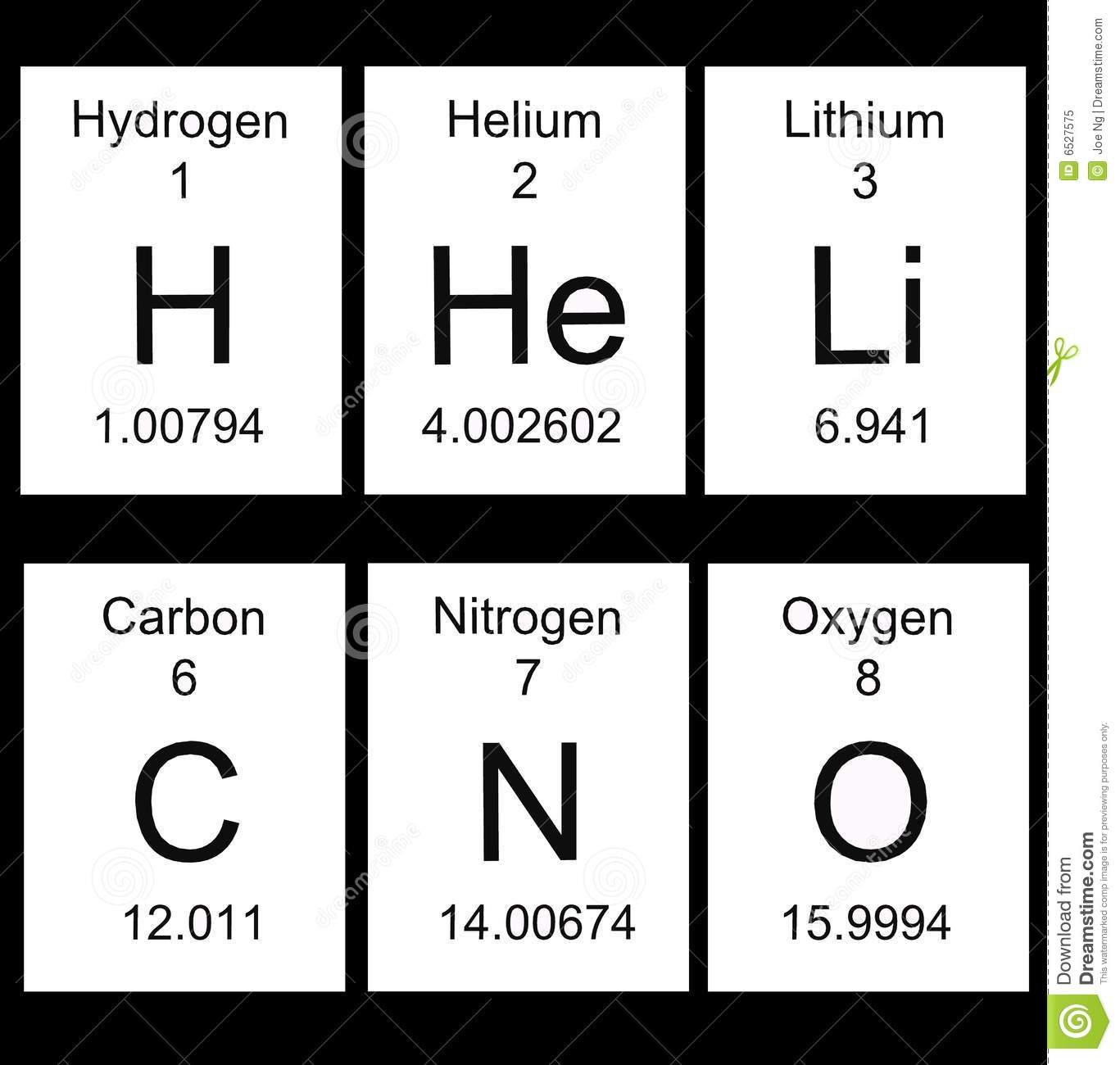
The number at the top of each square on the periodic table is the ...
a)
atomic number
b)
atomic mass
c)
Chemical Symbol
d)
Element Name
72.
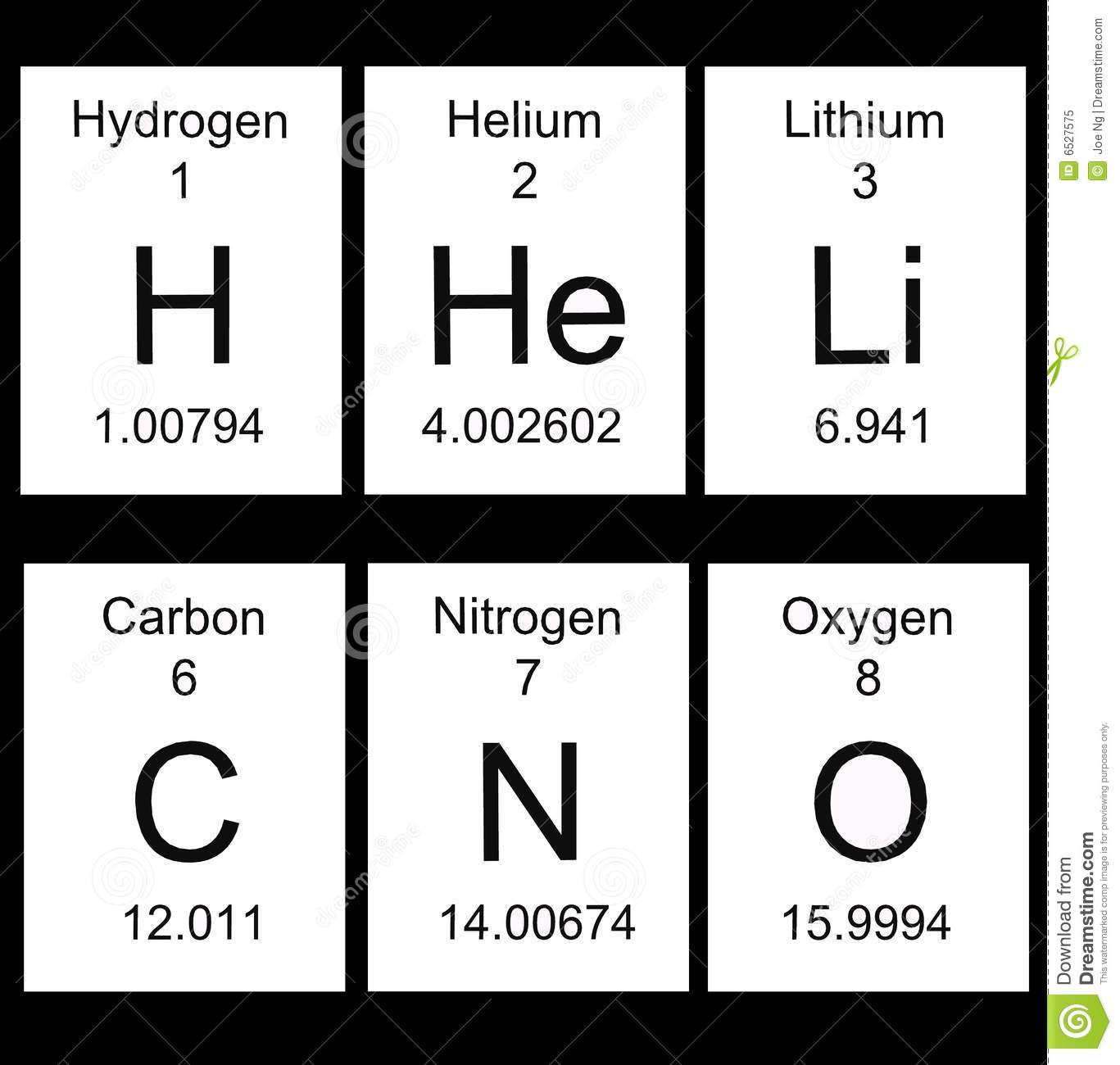
What is the chemical symbol for Lithium?
a)
H
b)
He
c)
Li
d)
N
100 %

