wayground logo

Free Printable Worksheets

Font size

S
M
L
XL
Worksheets

Earth Science Reference Table Rocks and Minerals

Total questions: 100

Worksheet time: 2hrs 41mins

Name
Class
Date
1.
One difference between a breccia rock and a
conglomerate rock is that the particles in a breccia rock are
a)
more aligned
b)
 more angular
c)
harder
d)
land derived
2.
The igneous rock gabbro most likely formed from molten material that cooled
a)
rapidly at Earth’s surface
b)
slowly at Earth’s surface
c)
rapidly, deep underground
d)
slowly, deep underground
3.
Extreme Heat and Pressure creates a _________ rock.
a)
Igneous
b)
Metamorphic
c)
Sedimentary
d)
Mineral
4.
When inside a volcano, the hot liquid that can cool to form rocks is called __________.
a)
lava
b)
magma
c)
extrusive
d)
liquid goo
5.
This rock was formed by lots of fossils that settled on top of each other over time. What type of rock is this?
a)
Sedimentary
b)
Igneous
c)
Metamorphic
6.
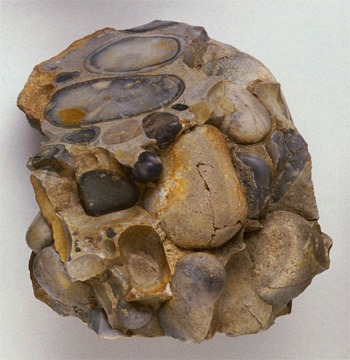
The name rock is given when it is broken down into smaller pieces.
a)
texture
b)
weathering
c)
sediment
d)
erosion
7.
What does it mean for a rock to be extrusive?
a)
Have layers
b)
Have Rounded Edges
c)
Form from Lava
d)
Form By Sediment
8.
When magma cools quickly, what kind of texture does rock have?
a)
coarse grained
b)
large grained
c)
medium grained
d)
fine grained
9.
Quartz + feldspar + mica
a)
granite
b)
basalt
c)
limestone
d)
slate
10.
In which type of the following rocks can you find a fossil
a)
limestone
b)
granite
c)
basalt
d)
magma
11.
slate
a)
sedimentary rock
b)
metamorphic rock
c)
igneous rock
12.
Rocks formed by small fragments of other rocks
a)
sedimentary rocks
b)
metamorphic rocks
c)
igneous rocks
d)
fragmented rocks
13.
Which type of rock forms at the bottom of a body of water?
a)
Igneous
b)
Metamorphic
c)
Mineral
d)
Sedimentary
14.
Which word describes how a mineral reflects light?
a)
Cleavage
b)
Fracture
c)
Luster
d)
Hardness
15.
Magma ______ & ______ to become igneous rock.
a)
weathers & deposits
b)
compacts & cements
c)
cools & hardens
d)
melts & crystallizes
16.
Evaporation can form what type of sedimentary rock?
a)
Chemical
b)
Organic
c)
Clastic
d)
Intrusive
17.
Rocks are classified based on _____________.
a)
their composition
b)
where they form
c)
how they form
d)
their texture
18.
What type of sedimentary rock is formed from decomposed once living material?
a)
Organic
b)
Chemical
c)
Clastic
d)
Extrusive
19.
What texture best describes an igneous rock that formed deep underground?
a)
glassy
b)
vesicular
c)
fine grained
d)
coarse grained
20.
What type of metamorphic rock has minerals segregated into wavy bands?
a)
Intrusive
b)
Foliated
c)
Unfoliated
d)
Extrusive
21.
If an igneous rock cools off slowly UNDERNEATH the Earth's surface, then its mineral crystals will be...
a)
Small mineral crystals that you can barely see.
b)
Large crystals that are easy to see.
c)
No crystals, it will have bits of plant and bones.
d)
No crystals, it will contain sand. 
22.
The way a mineral splits is called?
a)
hardness
b)
layers
c)
bands
d)
cleavage
23.
What word describes a streak test?
a)
Fractured
b)
Powdered
c)
Scratched
d)
Liquid
24.
Which of the words below describe mud, sand, and tiny bits of rocks that cement together to form a type of rock?
a)
stalactites
b)
magmas
c)
metamorphs
d)
sediments
25.
When sediments are pressed together tightly, this is called ____________.
a)
Compaction
b)
Cementation
c)
Weathering
d)
Erosion
26.
The process in which dissolved minerals crystallize and glue sediment together.
a)
compaction
b)
deposition
c)
organic rock
d)
cementation
27.
The process when rocks break into smaller pieces due to exposure to natural elements is called
a)
erosion
b)
weathering
c)
sediments
28.
____________ is determined by scratching a mineral with other minerals.
a)
fracture
b)
hardness
c)
streak
d)
color
29.
What is the scale that is used to indicate hardness of a mineral?
a)
Red Scale
b)
Moh's scale
c)
Einstein Scale
d)
Fracture Scale
30.
If a mineral does not break smoothly, and leaves an uneven surface:
a)
cleavage
b)
fracture
c)
hardness
d)
inorganic
31.
Which mineral property is being shown here?
a)
luster
b)
hardness
c)
cleavage
d)
streak
32.
Can a glass plate scratch apatite?
a)
Yes 
b)
No 
33.

Can a penny scratch fluorite?

a)

Yes

b)

No

34.
What mineral property is shown in the picture?
a)
Cleavage
b)
Hardness
c)
Streak
d)
Fracture
35.
Hardness of 3, rhombic cleavage and crystals, and fizzes in acid.
a)
calcite
b)
halite
c)
gypsum
d)
quartz
36.
The softest minerals is__________
a)
Quartz
b)
Topaz
c)
Talc
d)
Amethyst
37.
Atoms in a mineral are arranged___________________.
a)
In the order they land
b)
In a specific repetitive pattern
c)
In a circular pattern
d)
In a straight line
38.
A mineral's resistance to being scratched is called?
a)
streak
b)
luster
c)
hardness
d)
heft
39.
The size of a minerals crystals is determined by what?
a)
magma composition
b)
rate of cooling
c)
cleavage vs. fracture
d)
lava composition
40.
What is the term for minerals containing silicon and oxygen?
a)
carbonates
b)
silicates
c)
sheet silicates
d)
nonsilicates
41.
What determines whether a mineral will show cleavage or break in irregular fractures?
a)
hardness
b)
external shape
c)
internal atomic structure
d)
density
42.
Which BEST describes how coal forms?
a)
dead plant material completely decomposes in a desert environment
b)
tiny sea animals and plants die and are buried by sediment 
c)
dead plant material temporarily decays in a swamp environment
d)
dead animals partially decay in a desert environment
43.
The deeper a rock is buried, the greater the pressure is on it
a)
True 
b)
False
44.
What sedimentary rock forms Slate?
a)
Sandstone
b)
Limestone
c)
Quartzite
d)
Shale
45.
Which of the following best describes the type of environment a metamorphic rock forms in
a)
High heat, low pressure
b)
Low heat, high pressure
c)
High heat, high pressure
d)
Low heat, low pressure
46.
What sedimentary rock is changed to marble during metamorphosis?
a)
Limestone
b)
Sandstone
c)
Shale
d)
Chert
47.
What sedimentary rock is changed into quartzite during metamorphism?
a)
Shale
b)
Sandstone
c)
Limestone
d)
Conglomerate
48.
During Contact Metamorphism, rocks are changed primarily by this:
a)
Subducting Plates
b)
Heat from magma
c)
Hot chemical fluids
d)
Pressure from tectonic activity
49.
Which of the following metamorphic rocks have been changed the most?
a)
Slate
b)
Schist
c)
Phyllite
d)
Gneiss
50.
comes from the greek word Klastos, meaning broken.  Type of sediment made up of rock and mineral fragments produced by weathering
a)
sedimentary
b)
clastic
c)
metamorphic
51.
occurs when mineral growth glues sediment grains together into solid rock
a)
bedding
b)
cementation
52.
when molten material, such as that in an igneous intrusion, comes in contact with solid rock, a local area called __________
a)
contact metamorphism
b)
regional metamorphism
53.
Formed from precipitation and growth of mineral crystals
a)
clastic sedimentary rock
b)
chemical sedimentary rock
c)
foliated metamorphic rocks
d)
coarse grained igneous rock
54.
This rock was formed when magma cooled very slowly inside the Earth. What specific type of rock is it?
a)
Intrusive Igneous Rock
b)
Extrusive Igneous Rock
c)
Foliated Metamorphic Rock
d)
Clastic Sedimentary Rock
55.
This rock formed when lava cooled very quickly on Earth's surface. What specific type of rock is it?
a)
Extrusive Igneous Rock
b)
Intrusive Igneous Rock
c)
Non-Foliated Metamorphic Rock
d)
Biochemical Sedimentary Rock
56.
When you are describing the sizes of the mineral grains in a rock, you are detailing the rock's _____
a)
Texture
b)
Composition
c)
Sedimentation
d)
Igneous-ness
57.
This rock was formed by smaller pieces of rock that settled at the bottom of a lake millions of years ago. What type of rock is this?
a)
Sedimentary
b)
Igneous
c)
Metamorphic
58.
Sedimentary rock that is made of fragments of rocks cemented together by a mineral are called...
a)
chemical
b)
organic
c)
clastic
59.
Sedimentary rock made from fossils are called...
a)
organic
b)
chemical
c)
stratified
60.
This rock was formed when molten rock cooled into a solid. What type of rock is it?
a)
Igneous Rock
b)
Metamorphic Rock
c)
Sedimentary Rock
61.
The igneous rock texture that is characterized by two distinctly different crystal sizes is called
a)
Coarse grained
b)
Fine grained
c)
Glassy
d)
Porphyritic
62.
The three groups of rocks are classified by
a)
How they form
b)
Color
c)
Grain size
d)
Chemical Composition
63.
Fossils are only found in
a)
Sedimentary rocks
b)
Foliated Metamorphic rocks
c)
Igneous Rocks
d)
Nonfoliated Metamorphic rocks
64.
Rock that forms when minerals form from solutions or sediment from older rocks get pressed and cemented together.
a)
Sedimentary Rock
b)
Metamorphic Rock
c)
Igneous Rock
65.
What sized sediment makes shale?
a)
Sand
b)
Clay
c)
Cobble
66.
Name one size of sediment that can make breccia or conglomerate.
a)
Clay
b)
Pebble
c)
Sand
67.
How is sediment formed?
a)
Weathering and Erosion
b)
Melting
c)
Pressure
68.
Form from the remains or fossils of once living organisms or plants.
a)
Clastic Sedimentary Rock
b)
Chemical Sedimentary Rock
c)
Organic Sedimentary Rock
69.
Form when water containing dissolved minerals evaporates, leaving concentrated minerals that precipitate and crystallize.
a)
Clastic Sedimentary Rocks
b)
Chemical Sedimentary Rocks
c)
Organic Sedimentary Rocks
70.
A natural resource made from remains of swamp plants from millions of years ago
a)
gasoline
b)
oil
c)
natural gas
d)
coal
71.
Any type of rock can follow one of many pathways through the rock cycle to become
a)
an igneous rock
b)
a metamorphic rock
c)
a sedimentary rock
d)
all of the above
72.
Can be found as a thin layer covering the continents
a)
Igneous 
b)
Sedimentary
c)
Metamorphic
73.
What type of rock can become sediments?
a)
igneous
b)
sedimentary
c)
metamorphic
d)
any rock can  become sediments
74.

Which sedimentary rock would be formed by the compaction and cementation of particles larger than .2 centimeters in diameter?

a)

shale

b)

conglomerate

c)

siltstone

d)

sandstone

75.
According to the Earth Science Reference Tables, which is a sedimentary rock that forms as a result of precipitation from seawater?
a)
shale 
b)
conglomerate
c)
gypsum
d)
basalt
76.
which sedimentary rock is composed of fragmented skeletons and shells of sea organisms compacted and cemented together?
a)
limestone
b)
gypsum
c)
shale 
d)
sandstone
77.
Large rock salt deposits in the Syracuse area indicate that the area once had 
a)
many terrestrial animals
b)
a range of volcanic mountains
c)
large forests 
d)
a warm, shallow sea
78.

The grouping of rocks as igneous, sedimentary, and metamorphic is based primarily upon differences in

a)

hardness

b)

size

c)

origin

d)

age

79.
Which is a fine-grained igneous rock made up primarily of pyroxene and plagioclase feldspar?
a)
granite
b)
gabbro
c)
rhyolite
d)
basalt
80.
Which mineral can be found in all samples of granite and diorite?
a)
pyroxene
b)
quartz
c)
biotite
d)
potassium feldspar
81.
What do all rocks have in common?
a)
They all form from magma.
b)
They are all composed of minerals.
c)
They have banding and layers.
d)
They have fossils.
82.
_________ form when dissolved minerals precipitate from water solutions.
a)
Unfoliated Metamorphic Rock
b)
Chemical Sedimentary Rock
c)
Extrusive Igneous Rock
d)
Clastic Sedimentary Rock
83.
True or False:
Sedimentary rock mostly form under water.
a)
true
b)
false
84.
What would you use to determine the hardness of a mineral?
a)
color tiles
b)
streak test
c)
scratch glass
d)
weight scale
85.
What type of rock is formed when an existing rock has been changed into a new rock?
a)
sedimentary
b)
igneous
c)
minerals
d)
metamorphic
86.
The color of a mineral in powder form is called the mineral's 
a)
hardness
b)
specific gravity
c)
luster
d)
streak
87.
How light reflects off of a mineral is called the mineral's 
a)
luster
b)
streak
c)
cleavage
d)
fracture
88.
What mineral is used for pencils?
a)
Graphite
b)
Galena
c)
Magnetite
d)
Quartz
89.
Large crystals are going to form
a)
when lava erupts from a volcano
b)
when a shallow sea evaporates
c)
when magma underground cools off
d)
all of the above
90.
A mineral that breaks along a smooth,  predictable plane has _____________________.
a)
Fracture
b)
Cleavage
c)
Patterns
d)
Style
91.
A mineral that does not break in a predictable pattern has ________________.
a)
Fracture
b)
Cleavage
c)
Luster 
d)
Class
92.
Many minerals form from the cooling of magma. If the magma cools slowly, what size are the crystals?
a)
small
b)
large
c)
no crystals
93.
Calculate density:What is the density of an object with a mass of 60g and a volume of 2 cm 3
a)
35 g / cm 3
b)
20 g/ cm3
c)
30 g/ cm3
94.
Heat and Pressure causes which type of rock? 
a)
Sedimentary Rock
b)
Metamorphic Rock
c)
Igneous Rock
95.

If a metamorphic rock bubbles when a drop of acid is placed on its surface, the rock is most likely

a)

schist

b)

slate

c)

marble

d)

quartzite

96.

Which table correctly matches rock textures with a sedimentary rock that exhibits each texture?

a)
b)
c)
d)
97.

Which igneous rock has a vesicular texture and a felsic composition?

a)

pumice

b)

basalt

c)

granite

d)

scoria

98.

Base your answer on the flowchart below and on your knowledge of Earth science. The boxes labeled A through G represent rocks and rock materials. Arrows represent the processes of the rock cycle.

Which lettered box could represent the rock conglomerate?

a)

E

b)

G

c)

C

d)

D

99.

Which mineral can be found in the rocks phyllite, sandstone, and granite?

a)

quartz

b)

pyroxene

c)

gypsum

d)

calcite

100.

Which two minerals are commercial sources of iron?

a)

galena and graphite

b)

muscovite mica and biotite mica

c)

garnet and flourite

d)

hematite and magnetite