
 Worksheets
Honors Review
Total questions: 97
Worksheet time: 1hrs 5mins
Name
Class
Date
1.
What are the three states of matter?
a)
solid, volume, mass
b)
density, volume, mass
c)
solid, liquid, gas
d)
density, gas, volume
2.
Something that takes up space and has mass.
a)
volume
b)
matter
c)
mass
d)
density
3.
A state of matter that has a definite volume and shape.
a)
solid
b)
liquid
c)
gas
d)
matter
4.
A measure of how much mass is contained in a given unit of volume.
a)
mass
b)
density
c)
volume
d)
matter
5.
Iron + oxygen = rust is an example of a ___________.
a)
physical property/change
b)
chemical property/change
c)
mass
d)
volume
6.
You can measure ______ with grams.
a)
mass
b)
volume
c)
conductivity
d)
melting point
7.
The tiny particles that make up all matter are called
a)
genes
b)
atoms
c)
minerals
d)
cells
8.

a)
genetic material
b)
chemical bonds
c)
cells
d)
atoms
9.

The diagram below shows a glass containing a liquid and ice cubes.Which process causes water droplets to form on the outside of the glass?
a)
evaporation
b)
condensation
c)
freezing
d)
melting
10.
Which scientific model could be used to predict the properties of an element?
a)
closed loop system
b)
Punnett square
c)
Periodic Table
d)
water cycle chart
11.

The diagram below represents a sodium atom bonding to a chlorine atom to form sodium chloride.Which statement is supported by this diagram?
a)
Sodium chloride is an element.
b)
Sodium chloride is a mixture.
c)
Sodium chloride is a compound.
d)
Sodium chloride is an atom.
12.
Elements on the Periodic Table of the Elements are classified into categories such as
a)
rocks and minerals
b)
molecules and atoms
c)
mixtures and compounds
d)
metals and nonmetals
13.
Which equipment will best separate a mixture of iron filings and black pepper?
a)
magnet
b)
filter paper
c)
triple-beam balance
d)
voltmeter
14.
Hydrochloric acid is added to a beaker containing a piece of zinc. As a result, zinc chloride is formed and hydrogen gas is released. This is an example of
a)
a chemical reaction
b)
a physical change
c)
photosynthesis
d)
evaporation
15.

Which process is represented by B?
a)
condensing
b)
evaporating
c)
freezing
d)
melting
16.

Which two processes increase the motion of the molecules?
a)
A and B
b)
B and C
c)
C and D
d)
D and A
17.

The elements fluorine, chlorine, bromine, and iodine are all found in the same group (17) on the table. These elements are grouped together because they
a)
are metals
b)
react in similar ways
c)
have the same atomic mass
d)
are noble gases
18.
Water (H2O) is not found on the Periodic Table of the Elements because water is
a)
a mixture
b)
a compound
c)
a liquid
d)
an atom
19.
Which action forms a different chemical substance?
a)
crushing a rock
b)
burning a piece of wood
c)
mixing salt and pepper
d)
melting an ice cube
20.
Which process is an example of a physical change?
a)
wood burning
b)
iron rusting
c)
ice melting
d)
milk souring
21.

This rock formed when bits of other rocks became pressed into a solid. What type of rock is it?
a)
Sedimentary Rock
b)
Metamorphic Rock
c)
Igneous Rock
22.
What are the 3 major types of rocks?
a)
Igneous, Metamorphic, Sedimentary
b)
Metamorphic, Igneous, Cementation
c)
Brown, Red, Gray
d)
Streak, Hardness, Breakage
23.
What process is used to form sedimentary rocks?
a)
Lava cools and hardens to form a rock.
b)
Weathering, Erosion, Deposition, Compaction, Cementation
c)
Extreme heat and pressure from inside the Earth turn rocks into new rocks.
d)
Magma trapped under the Earth's surface cools and solidifies.
24.
Which of the words below describe broken up rock?
a)
stalactites
b)
magmas
c)
metamorphs
d)
sediments
25.
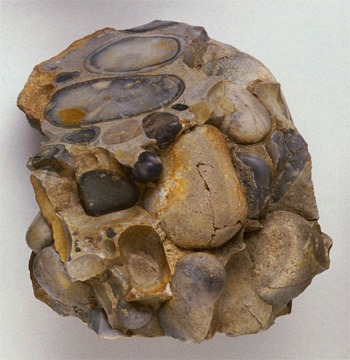
This rock was formed by smaller pieces of rock that settled at the bottom of a lake millions of years ago. What type of rock is this?
a)
Sedimentary
b)
Igneous
c)
Metamorphic
26.
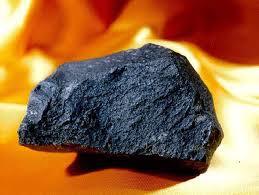
This rock was found near the mouth of a volcano. What type of rock is this?
a)
Sedimentary
b)
Igneous
c)
Metamorphic
27.
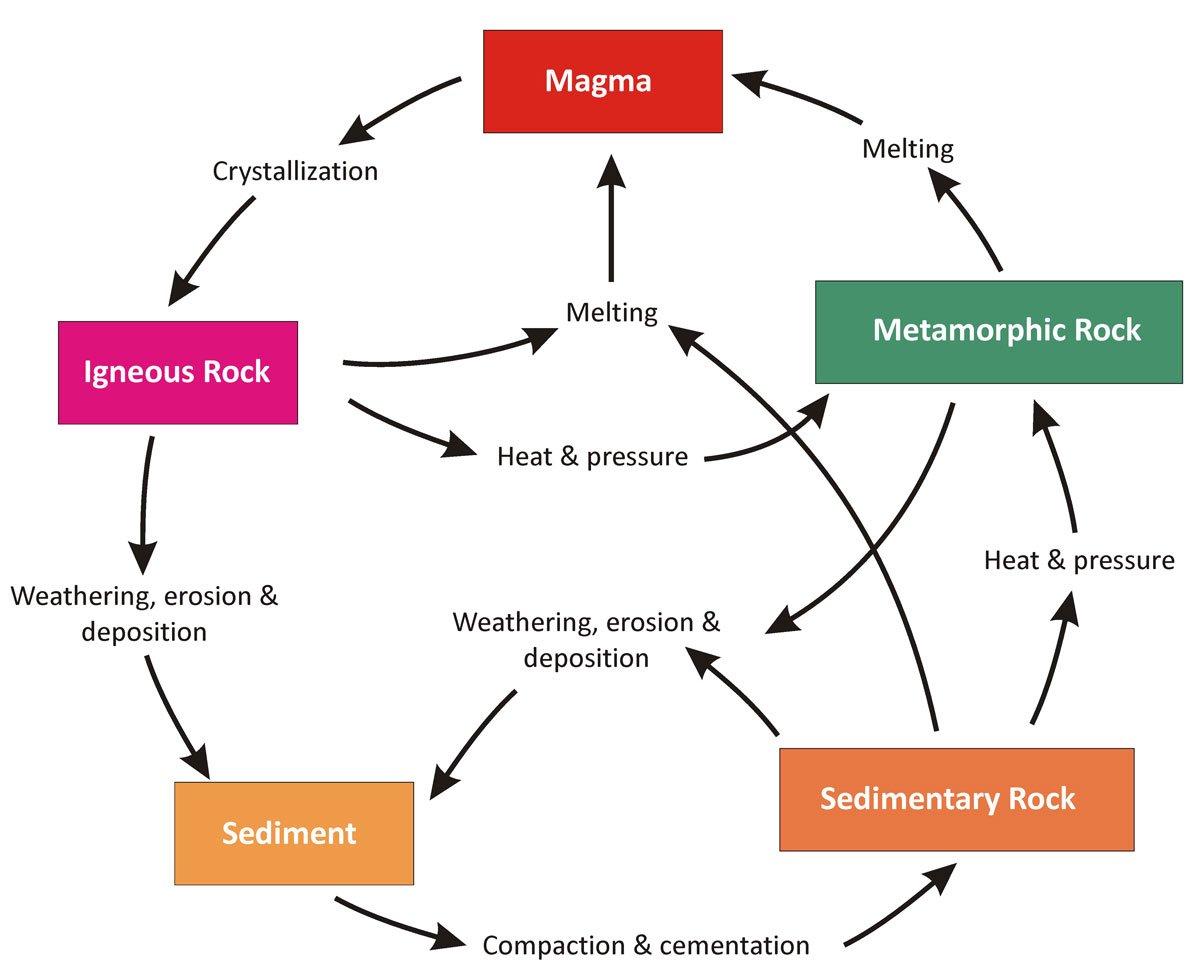
Formed by heat and pressure
a)
Sedimentary
b)
Metamorphic
c)
Extrusive Igneous
d)
Intrusive Igneous
28.
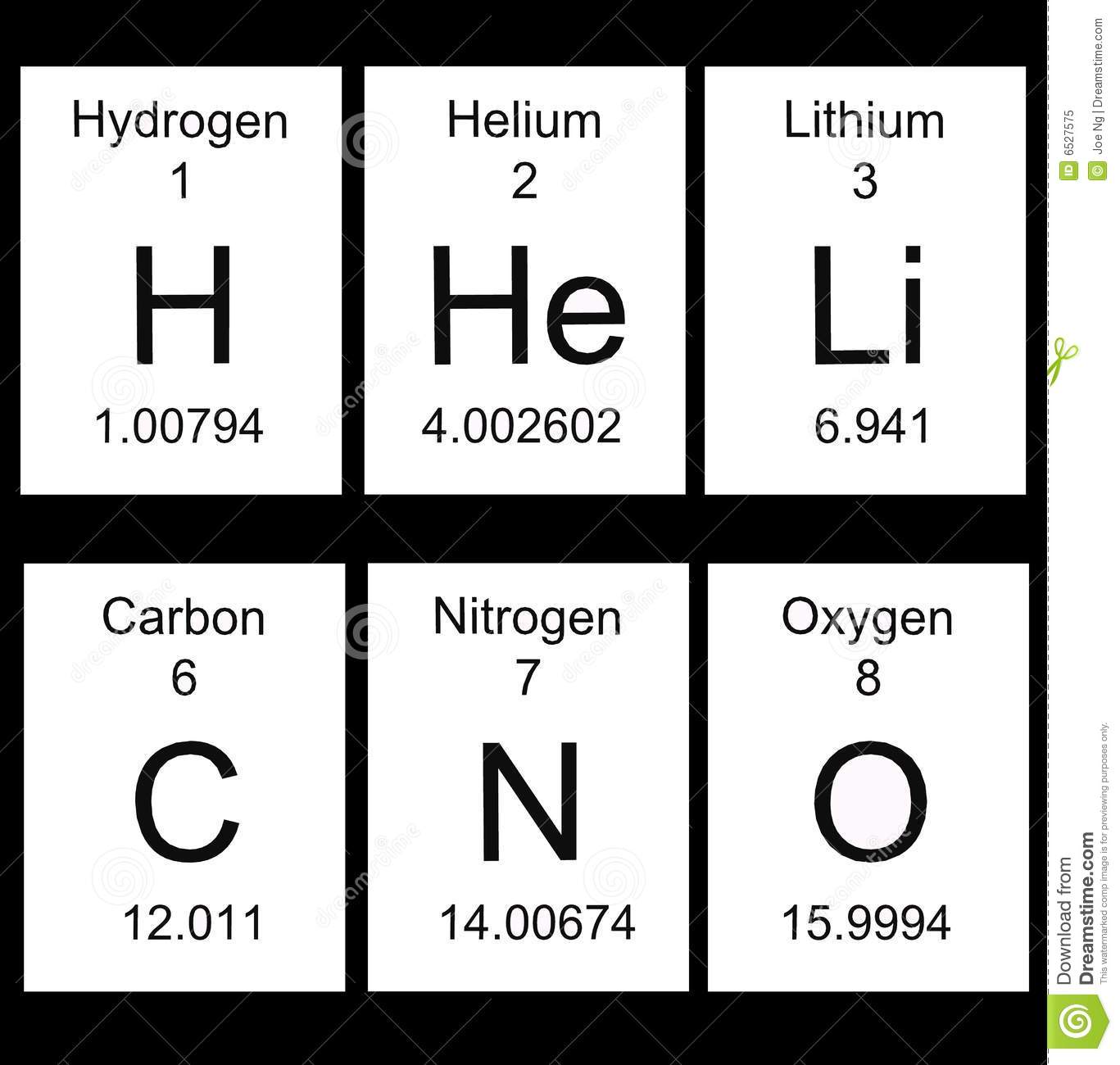
The number at the bottom of each square on the periodic table is the ...
a)
atomic number
b)
atomic mass
c)
chemical symbol
d)
element name
29.
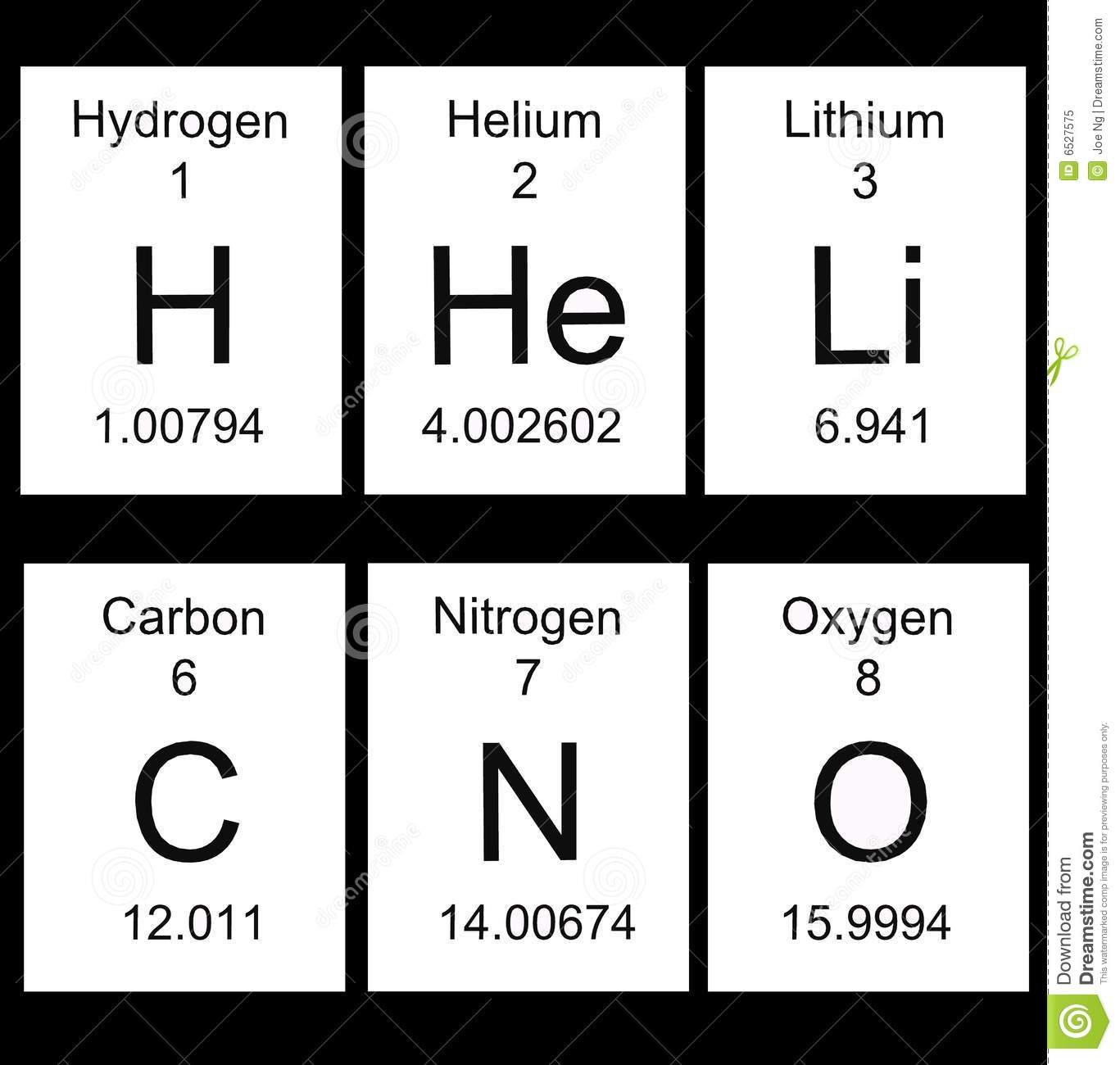
The number at the top of each square on the periodic table is the ...
a)
atomic number
b)
atomic mass
c)
Chemical Symbol
d)
Element Name
30.
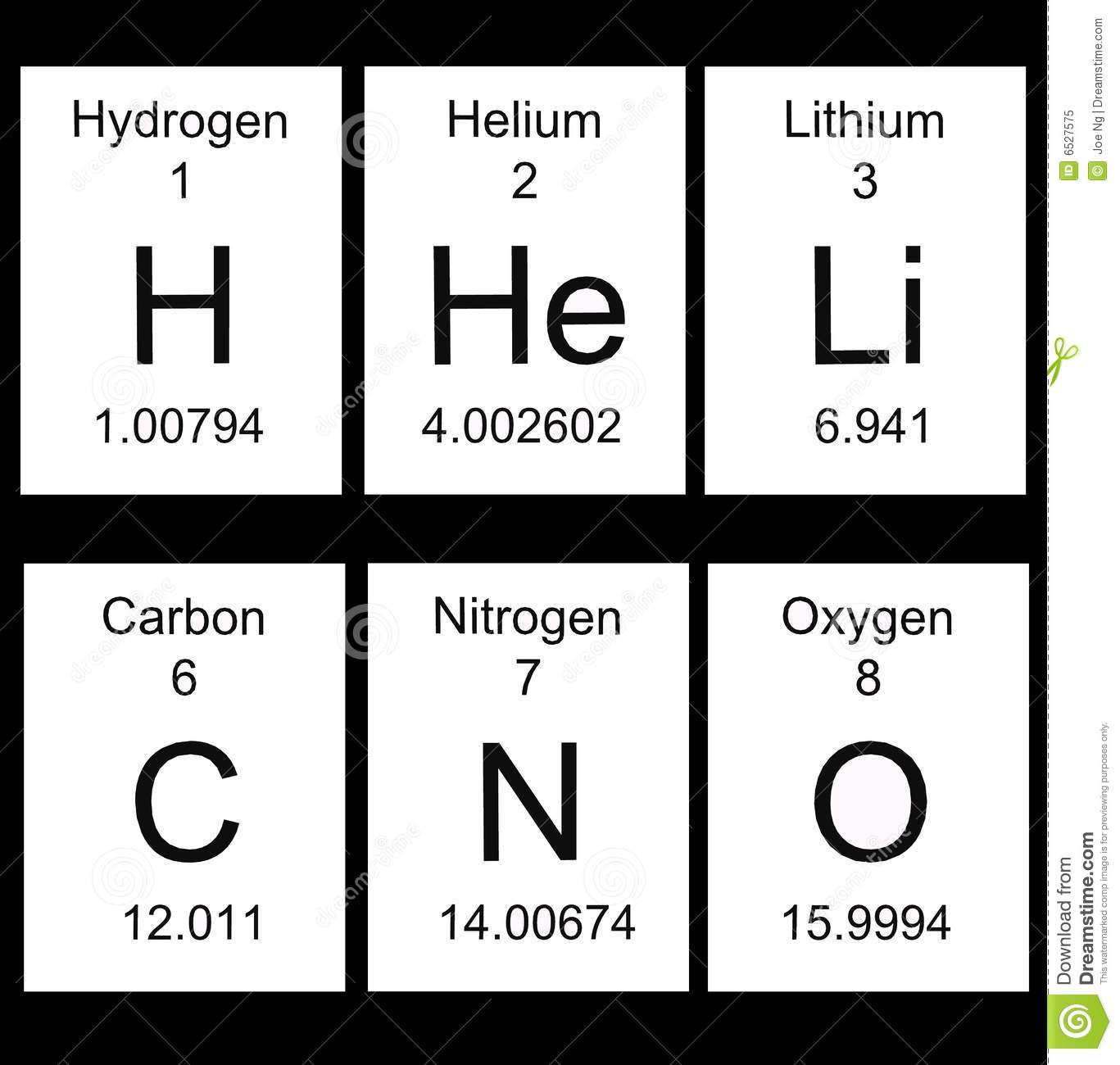
What is the chemical symbol for Lithium?
a)
H
b)
He
c)
Li
d)
N
31.
The atomic number tells you what?
a)
number of electrons
b)
number of protons
c)
number of neutrons
d)
both electrons and protons in an atom.
32.
Which group of the periodic table is composed of inert (not reactive) gases?
a)
alkali metals
b)
alkaline earth metals
c)
halogens
d)
noble gases
33.
Elements which are shiny, conduct electricity and heat are called
a)
metal
b)
nonmetal
c)
metalloid
d)
nonexistent
34.

The atoms along the staircase are called
a)
metals
b)
nonmetals
c)
metalloids
d)
noble gases
35.
Elements in a ..................have similar chemical properties.
a)
period
b)
group
c)
row
36.
The simplest substance is..?
a)
Carbon
b)
An element
c)
Water
d)
A simple compound
37.
A proton is....
a)
A negatively charged subatomic particle
b)
A positively charged subatomic particle
c)
A neutrally charged subatomic particle
d)
The only subatomic particle located in the nucleus
38.
A neutron has a charge of
a)
+2
b)
No charge
c)
-1
d)
+1
39.

What part of the illustration shows Evaporation?
a)
1
b)
2
c)
3
d)
4
40.

What does this symbol on a weather map indicate?
a)
High pressure system
b)
Low pressure system
c)
Cold front
d)
Warm front
41.

What does this symbol indicate on a weather map?
a)
High pressure system
b)
Low pressure system
c)
Cold front
d)
Warm front
42.
What kind of weather is usually associated with a high pressure system?
a)
Sunny weather
b)
Precipitation (rain, snow, etc.)
43.
Which weather tool measures air pressure?
a)
thermometer
b)
barometer
c)
anemometer
d)
psychrometer
44.
This weather tool measures wind speed and direction
a)
thermometer
b)
barometer
c)
anemometer
d)
psychrometer
45.
Which weather tool measures temperature?
a)
thermometer
b)
barometer
c)
psychrometer
d)
anememeter
46.
The boundary between two air masses is known as:
a)
front
b)
storm
c)
climate
d)
flood
47.
Hot air (RISES / FALLS) __________.
a)
RISES
b)
FALLS
48.
Cold air (RISES/ FALLS) _________.
a)
RISES
b)
FALLS
49.
Which condition usually means cloudy, stormy weather?
a)
high pressure
b)
low pressure
50.

name this front
a)
warm front
b)
cold front
c)
stationary front
d)
occluded front
51.

What does this symbol on a weather map indicate?
a)
High pressure system
b)
Low pressure system
c)
Cold front
d)
Warm front
52.

A _____ is a large, swirling, low-pressure system that forms over the Atlantic Ocean.
a)
blizzard
b)
cold front
c)
tornado
d)
hurricane
53.

A violently rotating column of air called a _____ when it comes in contact with the ground.
a)
hurrican
b)
tornado
c)
trade wind
d)
local wind
54.
Rain, snow, sleet, and hail are all forms of _____.
a)
precipitation
b)
condensation
c)
evaporation
d)
climate
55.
When a warm air mass gently slides on top of a cold air mass, and you have drizzly rain and then warmer weather, what type of front is it?
a)
warm front
b)
cold front
c)
occluded front
d)
stationary front
56.

What type of storm front is this?
a)
warm front
b)
cold front
c)
stationary front
d)
occluded front
57.
Approximately how long does it take to cycle from one new Moon to the next new Moon?
a)
a day
b)
a week
c)
a month
d)
a year
58.
The Moon has the greatest effect on Earth’s
a)
year
b)
ocean tides
c)
seasons
d)
daylight hour
59.
The moon is visible to observers on Earth because of
a)
reflected sunlight
b)
absorbed light from Earth’s atmosphere
c)
gases in the Moon’s interior
d)
volcanic eruptions on Moon’s surface
60.

A student drew the pictures below to show how the Moon looked from Earth over a two-week period. The differences shown in the student’s drawings are mostly due to the changing
a)
distance between Earth and the Moon
b)
speed of the Moon in its orbit
c)
position of the Moon in its orbit
d)
position of the observer on Earth
61.
Approximately how long does it take for the Earth to complete one revolution around Sun?
a)
1 year
b)
1 week
c)
1 month
d)
1 day
62.

Letters A, B, C and D in the diagram below represent four positions of the Moon in its orbit around Earth. At which Moon position would a person on Earth see the entire lighted half of the Moon (full-Moon phase).
a)
A
b)
B
c)
C
d)
D
63.

Which diagram best represents the tilt of Earth’s axis in December?
a)
1
b)
2
c)
3
d)
4
64.

The diagram represents the Moon and its orbit around Earth. The arrow labeled X represents the force that keeps the Moon in its orbit.
Which force is represented by X?
Which force is represented by X?
a)
gravity
b)
friction
c)
electricity
d)
magnetism
65.
The length of one day on Earth is determined by how long it takes
a)
the Moon to revolve once
b)
the Moon to rotate once
c)
Earth to rotate once
d)
Earth to revolve once
66.

What motion of Earth is represented by the arrow in the diagram?
a)
roation
b)
revolution
67.

Which Moon phase will usually be seen from Earth when the Moon is in this position?
a)
New Moon
b)
1st Quarter
c)
Full Moon
d)
Last Quarter
68.

Based on the pattern in the data table, at what time did the Moon rise on Wednesday?
a)
10:00 p.m.
b)
10:44 p.m.
c)
11:00 p.m.
d)
11:15 p.m
69.
What is it called when an object orbits around the sun?
a)
Rotation
b)
Revolution
c)
Month
d)
Day
70.
What is it called when an object spins around its axis?
a)
Rotation
b)
Revolution
c)
Year
d)
Month
71.
What two factors effect the force of gravity?
a)
weight and color
b)
mass and distance apart
c)
color and mass
d)
weight and distance apart
72.

The photograph below shows an object in space that has an icy core with a tail of gas and dust extending for millions of kilometers. The object is most likely
a)
a star
b)
an asteroid
c)
a moon
d)
a comet
73.

The diagram represents the Moon and its orbit around Earth. The arrow labeled X represents the force that keeps the Moon in its orbit. Which force is represented by X?
a)
gravity
b)
friction
c)
electricity
d)
magnetism
74.
The length of one day on Earth is determined by how long it takes
a)
the Moon to revolve once
b)
the Moon to rotate once
c)
Earth to rotate once
d)
Earth to revolve once
75.
Approximately how long does it take for the Moon to complete one orbit around the Earth?
a)
1 day
b)
1 week
c)
1 month
d)
1 year
76.
The gravitational force between two objects depends on the distance between the objects and each object’s
a)
mass
b)
volume
c)
pressure
d)
temperature
77.

The diagram below shows the positions of the Sun, Earth, and the Moon as seen from space. Which event is caused by the Moon passing through Earth’s shadow?
a)
a meteor shower
b)
a change of seasons
c)
an eclipse
d)
an earthquake
78.
Rocks are classified as sedimentary, metamorphic or igneous on the basis of the
a)
age of the rock
b)
way the rocks were formed
c)
types of fossils the rocks contain
d)
number of minerals found in the rocks
79.

Which physical property best distinguishes magnetite from pyrite?
a)
luster
b)
streak
c)
color
d)
hardness
80.

Which physical property of the calcite is being tested?
a)
streak
b)
hardness
c)
melting point
d)
reaction to acid
81.
In which type of rock is the fossil imprint of a fern leaf most likely to be found?
a)
igneous
b)
metamorphic
c)
sedimentary
d)
volcanic
82.
The diagram below represents how rock is affected when water enters cracks in rock, freezes, and becomes ice. Which geologic process is represented in the diagram?
a)
faulting
b)
weathering
c)
metamorphism
d)
volcanism
83.

Base your answers to questions on the diagram below and on your knowledge of science. The diagram represents four processes, labeled A, B, C, and D, that occur when water changes phase Which process is represented by B?
a)
condensing
b)
evaporating
c)
freezing
d)
melting
84.

The graph below represents the relationship between the amount of spring rainfall recorded at a pond and the number of frogs in that pond. The data were collected over five spring seasons. What is the difference between the number of frogs in the pond when the rainfall was 5 cm and when the rainfall was 20 cm?
a)
20
b)
40
c)
50
d)
60
85.
A student writes in a laboratory notebook “I placed a piece of iron in a beaker of water and the iron sank to the bottom of the beaker.” What the student wrote in the laboratory notebook is an example of a (n)
a)
observation
b)
prediction
c)
inference
d)
hypothesis
86.

The diagram below shows Earth at four locations in its orbit around the Sun.4. Which motion do the arrows in the diagram represent?
a)
Earth’s rotation
b)
the Sun’s rotation
c)
Earth’s revolution
d)
the Sun’s revolution
87.
Which information would probably be most helpful to someone trying to identify a mineral sample?
a)
location and mass of the sample
b)
shape and texture of the sample
c)
hardness and streak of the sample
d)
color and size of the sample
88.

The sequence shows the steps involved in the formation of
a)
an element
b)
an igneous rock
c)
a fault
d)
a fossil
89.
Which material is primarily a mixture of weathered rock and organic matter?
a)
minerals
b)
soil
c)
ocean water
d)
seashells
90.
Movement of Earth’s crust along plate boundaries produces
a)
fronts
b)
tides
c)
hurricanes
d)
earthquakes
91.
Scientists have discovered fossils of the same organisms in many different parts of the world. These fossils provide evidence that
a)
the continents were once joined together
b)
most life-forms that existed in the past are still present today
c)
most of Earth’s surface was once covered by molten rock
d)
rocks have been transformed from one type to another
92.
Convection currents in Earth’s mantle are believed to be responsible for
a)
ocean currents
b)
crustal plate movements
c)
climatic changes
d)
uneven surface heating
93.
A student placed a rock in a graduated cylinder containing water, causing the water level in the cylinder to increase by 20 mL. This increase represents the rock’s
a)
mass
b)
volume
c)
solubility
d)
temperature
94.
Approximately how long does it take to cycle from one new Moon to the next new Moon?
a)
a day
b)
a week
c)
a month
d)
a year
95.
Which body in our solar system is classified as a star?
a)
Earth
b)
Mars
c)
Venus
d)
Sun
96.
Which statement best explains why the Sun and the Moon appear to be about the same size in the sky?
a)
The Sun and the Moon have the same diameter
b)
The Moon is larger in diameter and farther from Earth than the Sun
c)
The Moon is smaller in diameter and is closer to Earth than the Sun
d)
The Sun and the Moon are the same distance from Earth
97.
Approximately how long does it take for the Earth to complete one revolution around Sun?
a)
1 year
b)
1 week
c)
1 month
d)
1 day
100 %

