
Font size
 Worksheets
Neurons Synapses and Signaling
Total questions: 28
Worksheet time: 14mins

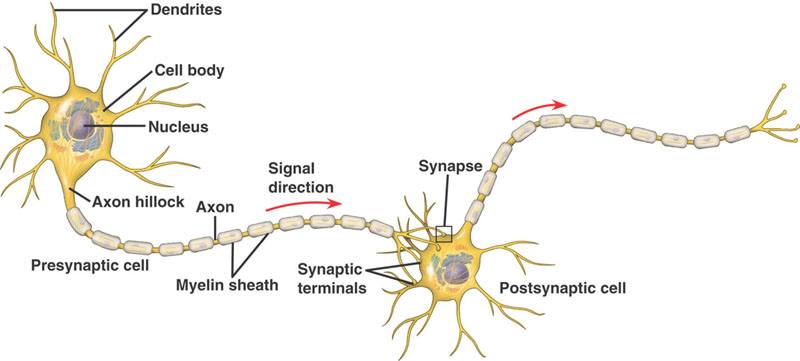
What part of the neuron receives incoming messages from other cells?
nucleus
cell body
dendrites
synaptic terminals

What structure(s) aid in speeding up synaptic transmission across the axon?
Nodes of Ranvier
dendrites
myelin sheath
both Nodes of Ranvier and the myelin sheath
The central nervous system
consists of the brain and spinal cord
consists of the nerves that communicate motor and sensory signals throughout the rest of the body

Structure D represents
a sensory neuron
a motor neuron
an internueron
a sensory receptor

Structure B represents
a sensory receptor
an interneuron
a motor neuron
a response

During which stage of this action potential do sodium ions (Na+) flow through the sodium channels from the outside of the membrane to the inside of the membrane?
threshold
depolarization
repolarization
refractory period

During which stage of the action potential does the membrane return to its resting state?
refraction
depolarization
rising phase of the action potential
falling phase of the action potential
What is released into the synaptic cleft?
neurotransmitters
excitatory neurotransmitters
inhibitory neurotransmitters
all of these are released into the synaptic cleft
The sodium-potassium pump
uses diffusion to attain -70mV
uses ATP to create a membrane differential along the axon
is stimulated by neurotransmitters
is an example of passive transport across a membrane
What generates a nerve impulse from the axon terminal to the dendrite of the next neuron?
Calcium binding with a receptor site
Potassium leaking into the post-synaptic membrane
Neurotransmitter binding with receptor sites
Neurotransmitter being removed from the synapse


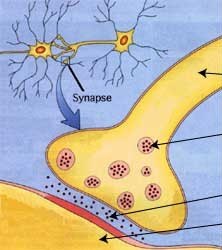
The location of neurotransmitters
axon terminals
dendrites
Schwann cells
cell body
Which of the following best describes a neuron?
Specialized cells that protects the body from any foreign particles
Specialized cell that transports oxygen throughout the cardiovascular system
Specialized cell that functions to transmit electrical impulses within the nervous system
Specialized cells that receive and read signals sent from the body
What are the 3 stages in action potential? Select all that apply.
Depolarization
Repolarization
Refractory period
Resting potential

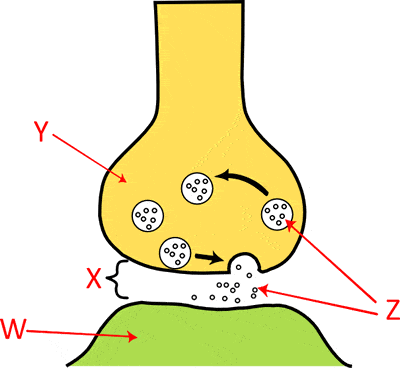

X
Axon Terminal
Neurotransmitters
Dendrite
Synaptic cleft
when does the stimuli cause an action potential?
when it reaches threshold
just below the threshold
just above threshold

