wayground logo

Free Printable Worksheets

NEW

Font size

S
M
L
XL
Worksheets

Bonding and Molecular Geometry

Total questions: 65

Worksheet time: 3hrs 9mins

Name
Class
Date
1.
How many bonds can Hydrogen form?
a)
All the bonds
b)
One bond
c)
4 bonds
d)
Hydrogen can not form bonds
2.

Name the molecular shape of this molecule. (Lone Pairs are not shown.)

a)

Tetrahedral

b)

Trigonal Planar

c)

Bent

d)

Linear

3.
 A lone pair is defined as
a)
A pair of bonding electrons
b)
One non-bonding electron
c)
A pair of non-bonding electrons
d)
A pair of electrons on the central atom
4.
What is the VSEPR theory used to predict?
a)
Bond Strength
b)
Polarity
c)
Molecular Shape
d)
Electronegativity
5.
Which of the following shapes has an unshared pairs of electrons on the central atom? 
a)
Bipyramidal
b)
Bent
c)
Trigonal Planar
d)
Tetrahedral
6.
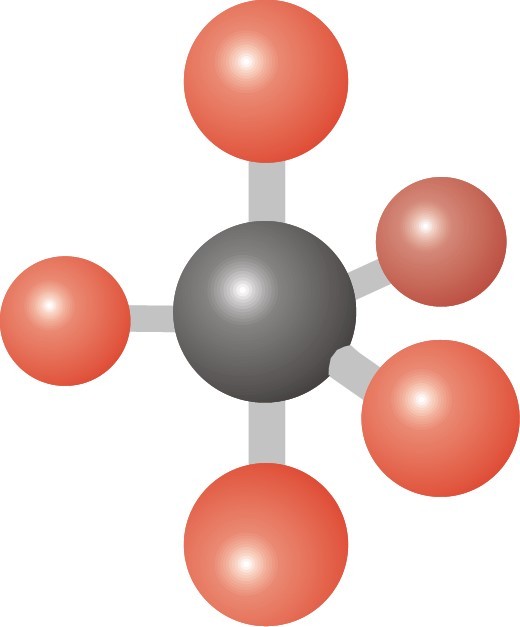
What molecule could this be? 
a)
H2O
b)
CCl4
c)
PCl5
d)
NaCl
7.

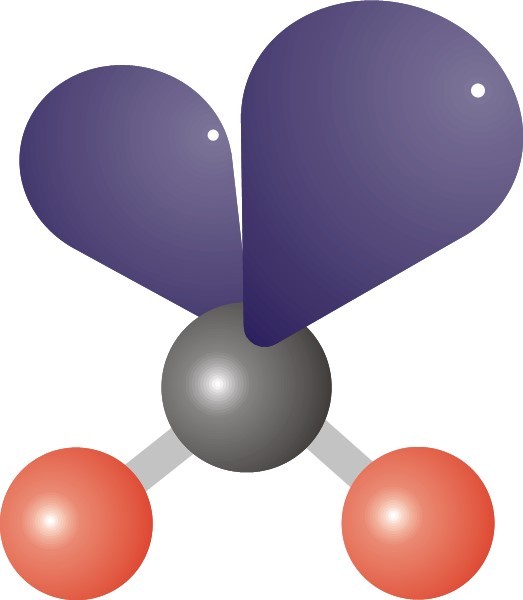
Which molecule could this represent?

a)

CO2

b)

NH3

c)

H2S

d)

CH4

8.

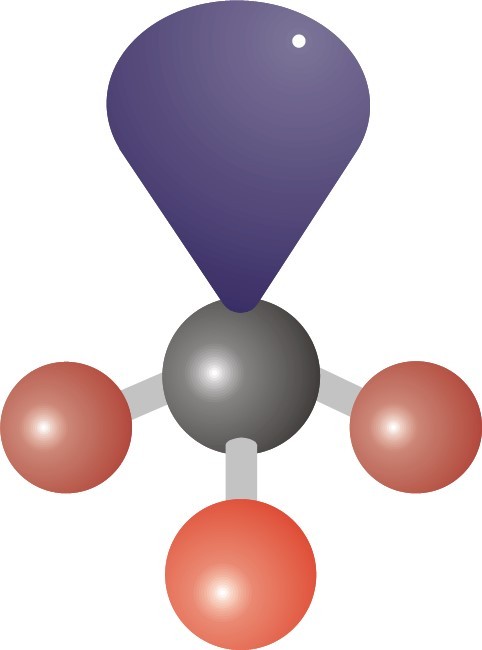
Which molecule could this represent?

a)

H2O

b)

NH3

c)

CO2

d)

CH4

9.
What molecular geometry would PHhave?
a)
Trigonal Planar
b)
Trigonal Bipyramidal
c)
Bent
d)
Linear
10.
A molecule with a lone pair on the central atom would have the same electron and molecular geometry
a)
True
b)
False
11.
How many lone pairs of electrons are on the P atom in PF3?
a)
1
b)
2
c)
3
d)
0
12.

What is the electron domain geometry and molecular geometry (shape) of XeF4 (Lewis structure is shown) ?

a)

tetrahedral, tetrahedral

b)

linear, linear

c)

octahedral, square planar

d)

trigonal bipyramidal, tetrahedral

13.

Consider the molecule below. What is the molecular geometry at each of the 2 labeled carbons (C1 and C2)?

a)

C1 = tetrahedral, C2 = linear

b)

C1 = trigonal planar, C2 = bent

c)

C1 = bent, C2 = trigonal planar

d)

C1 = trigonal planar, C2 = tetrahedral

14.
Will this molecule be polar or nonpolar? CCl4
a)
polar
b)
nonpolar
15.
Will this molecule be polar or nonpolar? H2S
a)
polar
b)
nonpolar
16.
Will this molecule be polar or nonpolar? PH3
a)
polar
b)
nonpolar
17.

This molecule has 4 bonds and 2 lone pairs on the central atom. What is the molecular geometry (shape)?

a)

octahedral

b)

square planar

c)

square pyramidal

d)

tetrahedral

18.

What is the molecular geometry and bond angles for the central oxygen?

a)

Linear, 180o

b)

Trigonal Planar, 120o

c)

Bent , less than 120o

d)

Bent, 109.5o

19.

Is this molecule polar or non polar?

a)

Polar

b)

Non Polar

20.

Is this molecule polar or non polar?

a)

Polar

b)

Non Polar

21.

What is the molecular geometry?

a)

seesaw

b)

tetrahedral

c)

trigonal pyramidal

d)

square pyramidal

22.

What is the molecular geometry of XeF3?

a)

see saw

b)

T shape

c)

trigonal planar

d)

trigonal pyramidal

23.

Which of the following best describes solid silicon dioxide?

a)

A network solid with covalent bonding

b)

a molecular solid with zero dipole moment

c)

An ionic solid

d)

A metallic solid

24.
Which of the following molecules has the largest dipole moment?
a)
CO2
b)
H20
c)
CH4
d)
PH3
25.
Of the following compounds, which is the most ionic?
a)
BrCl
b)
PCl3
c)
Cl2O
d)
CaCl2
26.
CCl4, CO2, PCl3, PCl5, SF6
Which of the following does not describe any of the molecules above?
a)
Trigonal pyramidal
b)
Octahedral
c)
Square planar
d)
Tetrahedral
27.
Which of the following molecules has the shortest bond length?
a)
N2
b)
O2
c)
Cl2
d)
Br2
28.
Which of the following is a nonpolar molecule that contains polar bonds?
a)
NH3
b)
CHF3
c)
CO2
d)
HCl
29.
In covalent bonds, electrons are ___________.
a)
transferred
b)
gained
c)
lost
d)
shared
30.
A diatomic molecule like O2 is always_______ because electrons are shared ________.
a)
nonpolar; equally
b)
polar; equally
c)
nonpolar; unequally
d)
nonpolar; unequally
31.
Which of the following elements has the weakest attraction for electrons in a chemical bond?
a)
S
b)
Cl
c)
O
d)
F
32.
In the diagram shown, what is the total number of electrons shared in the bond between the two carbon atoms?
a)
2
b)
3
c)
4
d)
6
33.
What kind of compound is CO2?
a)
Non-polar molecule with polar bonds
b)
Polar molecule with polar bonds
c)
ionic
d)
polar molecule with non-polar bonds
34.

Which of the molecules contains polar covalent bonds but is NOT itself a polar molecule?

a)

I

b)

II

c)

III

d)

I and III

35.

Polar or non polar?

a)

non polar

b)

polar

36.
Which set contains all polar covalent bonds?
a)
CH, HCl, HF
b)
OH, HCl, HF
c)
HBr, HF, CH
d)
H2, O2, F2
37.

According to the octet rule most elements need _______ valence electrons.

a)

2

b)

8

c)

6

d)

18

38.
Which of the following is the correct Lewis dot structure for the molecule fluorine (F2)?
a)
A
b)
B
c)
C
d)
D
39.
Which of the following is the correct Lewis structure for the compound PBr3?
a)
structure A
b)
structure B
c)
structure C
d)
structure D
40.
When writing Lewis Structures, only __________ electrons are used.
a)
Inner shell
b)
Core 
c)
Valence
d)
Stable
41.
What two types of atoms make a covalent bond?
a)
2 Nonmetals
b)
1 Nonmetal and 1 Metal
c)
2 Metals
d)
2 Noble Gases
42.
Which of the following is an acceptable Lewis structure for CH3Cl?
a)
Option A
b)
Option B
c)
Option C
d)
Option D
43.
Which of the following is the correct Lewis structure for CH2O?
a)
Option A
b)
Option B
c)
Option C
d)
Option D
44.

Which of the following is octahedral in molecular geometry?

a)

SCl6

b)

XeI4

c)

NBr5

d)

CH4

45.
Intermolecular forces are the forces
a)
within molecules
b)
between molecules
46.
In general, substances with stronger intermolecular forces have ___________  boiling points than those with weaker intermolecular forces
a)
higher
b)
lower
47.
Which kinds of substances are held together by intermolecular forces?
a)
metallic substances
b)
ionic substances
c)
molecules (covalent) in solid and liquid phases
d)
molecules (covalent) in the gas phase
48.
Polarity of a molecule is determined by
a)
shape and charge
b)
shape and difference in EN value
c)
difference in EN value and size
d)
difference in EN value and charges
49.
What is the molecular geometry of a molecule with this structure ?
a)
tetrahedral
b)
trigonal pyramid
c)
angular or bent
d)
trigonal plane
50.
T or F: Lone pairs around the oxygen atom of a water molecule play no role in determining its molecular geometry?
a)
True
b)
False
51.

A molecule has 2 electron domains, no lone pairs - what is the molecular geometry?

a)

Linear

b)

Trigonal planar

c)

Tetrahedral

d)

Bent

52.
Which compound would have a high melting point?
a)
CaO
b)
CO2
c)
PI3
d)
SO3
53.
Which substance would not separate when dissolved in water?
a)
CaO
b)
NaCl
c)
PO3
d)
CuI
54.
Which substance would be a poor conductor?
a)
NaCl (s)
b)
CO
c)
Both CO and NaCl(s)
d)
NaCl(aq)
(aq = dissolved in water)
55.
Which of the following is substance held together by only ionic bonds?
a)
H3N
b)
CaCl2
c)
NO2
d)
SCl
56.

What is the polarity and molecular geometry for HF.

(electronegativities --> H = 2.2; F = 4.0

a)

no shape, polar

b)

linear, polar

c)

linear, nonpolar

d)

crystal lattice, ionic

57.
The molecule CH2O would have bond angles of _____.
a)
104.5°
b)
107°
c)
109.5°
d)
120°
58.
What is the measure of a tetrahedral bond angle?
a)
90 Degrees
b)
109.5 Degrees
c)
120 Degrees
d)
180 Degrees
59.

Which of these has a the shortest bond length?

a)

Cl2

b)

H2

c)

N2

d)

O2

60.
Which of the following describes water?
a)
Linear structure, nonpolar
b)
Linear structure, polar
c)
Bent structure, nonpolar
d)
Bent structure, polar
61.
Which of the following is nonpolar?
a)
PH3
b)
H2O
c)
SiO2
d)
SeS2
62.

What is the polarity of this molecule?

a)

polarity

b)

non-polar

c)

polar and non-polar

d)

Cannot be determined.

63.
What type of bond arises from the sharing of 6 electrons between two atoms?
a)
triple bond
b)
double bond
c)
single bond
d)
ionic bond
64.

As the number of covalent bonds between two atoms increases, the distance between the atoms _______ and the strength of the bond between them_________.

a)

increases, increases

b)

decreases, increases

c)

increases, decreases

d)

decreases, increases

e)

is unpredictable

65.

The molecular geometry of the CHF3 molecule is _____________ and the molecule is _____________.

a)

trigonal pyramidal, polar

b)

tetrahedral, non-polar

c)

seesaw, non-polar

d)

tetrahedral, polar

e)

seesaw, polar