wayground logo

Free Printable Worksheets

Font size

S
M
L
XL
Worksheets

Measurement and The Atom Quiz Review

Total questions: 70

Worksheet time: 52mins

Name
Class
Date
1.

1,221 km = ________ m

a)

1,221 m

b)

1,221,000 m

c)

1.221 m

d)

12,210 m

2.

29 mm = ______ m

a)

0.029 m

b)

290 m

c)

0.29 m

d)

0.0029 m

3.

435 mL = _____ cL

a)

4350 cL

b)

43.5 cL

c)

4.35 cL

d)

0.435 cL

4.

117 cm = _____ dm

a)

1.17 dm

b)

0.117 dm

c)

1170 dm

d)

11.7 dm

5.

2319 kL = _______ mL

a)

2,319,000 mL

b)

2,319,000,000 mL

c)

2.319 mL

d)

0.0002319 mL

6.
How would you write 4.3756 x 10in standard form?
a)
437,560,000
b)
0.00043756
c)
43,756
d)
4,3756
7.
How would you write 0.0005 in scientific notation?
a)
50 x 105
b)

5 x 10⁻⁴

c)

5 x 10⁻³

d)
.5 x 103
8.
How would you write -5.6 x 10⁻³ in standard form?
a)
0.0056
b)
-5,600
c)
0.00056
d)
-0.0056
9.
Express the following in scientific notation:
.000457
a)
457 x 106
b)
457 x 10-6
c)
4.57 x10⁴
d)
4.57 x 10⁻⁴
10.
Express the following in scientific notation:
10,030,400,000
a)
1.00304 x 10⁹
b)
1.00304 x 10¹⁰
c)
1.00403 x 10¹⁰
d)
1.00304 x10⁻¹⁰
11.

What is the atomic number?

a)

the number of protons in the nucleus

b)

the number of protons and neutrons in the nucleus

c)

the number of neutrons in the nucleus

d)

the number of protons in the energy levels

12.

What is the mass number?

a)

the number of protons in the nucleus

b)

the number of protons and neutrons in the nucleus

c)

the number of neutrons in the nucleus

d)

the number of protons and electrons in the atom
13.

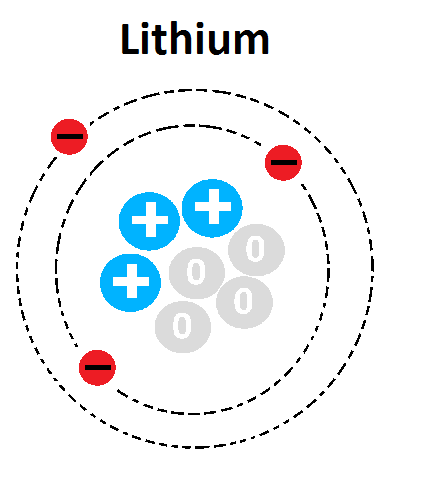
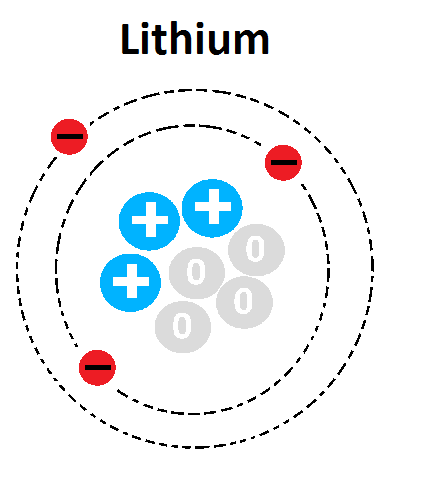
What is the atomic number of this atom?

a)

1

b)

3

c)

4

d)

7

14.

What is the mass number of this atom?

a)

1

b)

3

c)

4

d)

7

15.
Most of the mass in an atom is made up of _____________________?
a)
protons and electrons
b)
protons and neutrons
c)
neutrons and electrons
d)
electrons and quarks
16.
In order for an atom to be neutral what has to be true?
a)
The atom has more protons than neutrons
b)
The atom has more neutrons than protons
c)
The atom has the same number of protons and neutrons
d)
The atom has the same number of protons and electrons
17.

What does the 6 represent?

a)

Atomic mass

b)

atomic number

c)

chemical symbol

d)

element name

18.
How is the number of neutrons in the nucleus of an atom calculated?
a)
Add the number of e- and p+ together
b)
Subtract the number of e- from p+
c)
Subtract the number of p+ from the mass number
d)
Add the mass number to the number of e-
19.
What subatomic particles would you find in the nucleus of an atom?
a)
Protons only
b)
Protons and Neutrons
c)
Neutrons and Electrons
d)
Protons and Electrons 
20.
If an atom has 12 positively charged subatomic particles, which of the following must it also have to be considered a neutral atom?
a)
12 neutrons
b)
12 electrons
c)
12 protons
d)
24 protons and neutrons
21.

An atom has 10 protons, 15 neutrons and 10 electrons what is its mass number.

a)

20

b)

10

c)

35

d)

25

22.

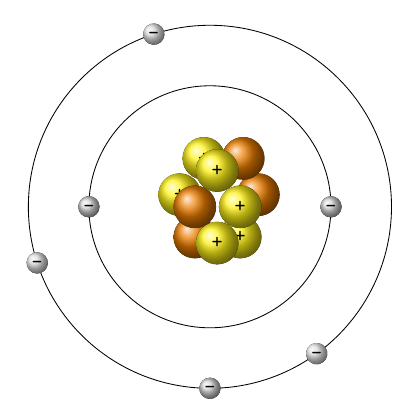
How many electrons does this atom have?

a)

2

b)

4

c)

6

d)

10

23.
An element with a mass number of 11 and an atomic number of 5 has how many neutrons?
a)
11
b)
5
c)
6
d)
16
24.
What is the atomic number of the atom pictured? 
a)
9
b)
10
c)
18
d)
19
25.

Al+3

The +3 tell you the

a)

number of protons.

b)

atomic mass.

c)

charge of the atom.

26.

Al+3

This is an...

a)

Neutral atom

b)

ion

c)

isotope

27.

Which of the following is correct?

a)

Protons are positive, electrons are negative, neutrons are neutral.

b)

Protons are neutral, electrons are negative, neutrons are positive

c)

Protons are negative, electrons are positive, neutrons are neutral

d)

Protons are positive, electrons are neutral, neutrons are negative

28.

When you have an ion of an atom, O-2 for example, what has changed in the atomic structure?

a)

Number of protons

b)

Number of neutrons

c)

Number of electrons

29.

When you two isotopes of an atom, Carbon-12 and Carbon-13 for example, what has changed in the atomic structure?

a)

Number of protons

b)

Number of neutrons

c)

Number of electrons

30.

When you two atoms with different masses, Carbon-12 and Carbon-13 for example, what type of atom do you have?

a)

Neutral atom

b)

Ion

c)

Isotope

31.

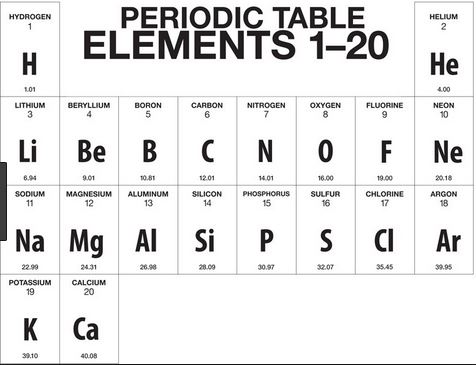
Look at this picture of Argon off the periodic table. Which of the following is true for this element when it is neutral?

a)

18 electrons

b)

40 electrons

c)

22 electrons

d)

21.9 electrons

32.

Look at this picture of Argon off the periodic table. Which of the following is true for this element?

a)

18 protons

b)

40 protons

c)

22 protons

d)

21.9 protons

33.

Iodine-131

The -131 tells you the

a)

number of protons.

b)

atomic mass.

c)

charge of the atom.

34.

who discovered the electron

a)

Dalton

b)

J.J Thomson

c)

Lavoisier

d)

Rutherford

35.

What is the charge of a proton?

a)

Negative

b)

Positive

c)

Neutral

36.

What is the charge of a neutron?

a)

Negative

b)

Positive

c)

Neutral

37.
What is the name of this element?
a)
Helium
b)
Hydrogen
c)
Argon
d)
Silver
38.

How many electrons can fit on the 1st energy level (orbital) for any Bohr Model?

a)

2

b)

6

c)

8

d)

10

39.

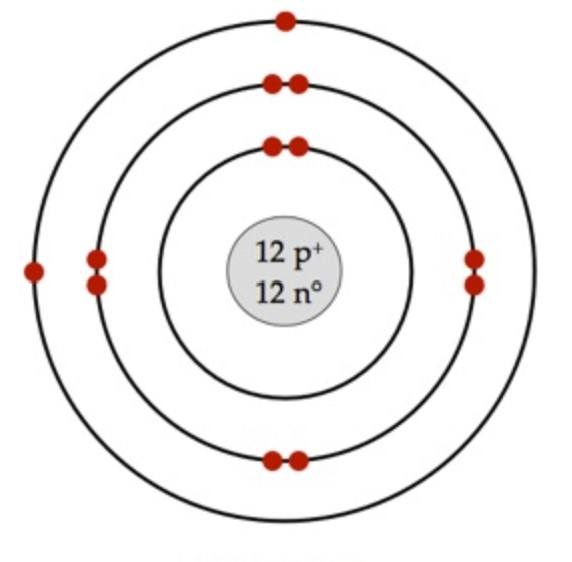
Which element does this Bohr model represent?

a)

Aluminum

b)

Silicon

c)

Magnesium

d)

Cobalt

40.

What element does this Bohr model represent?

a)

Chromium

b)

Magnesium

c)

Carbon

d)

Krypton

41.
How many valence electrons?
a)
2
b)
3
c)
5
d)
10
42.

This could be the dot diagram of

a)

Mg

b)

Cl

c)

C

d)

O

43.

This is a correct dot diagram for nitrogen (N)

a)

true

b)

false

44.
How many electrons should Lithium have around its Lewis dot model?
a)
1
b)
2
c)
3
d)
4
45.

Which Bohr model represents Neon?

a)
b)
c)
d)
46.

How many electrons can go in the Second energy level?

a)

2

b)

8

c)

18

d)

32

47.

How many valence electrons does Aluminum Have?

a)

1 Valence electron

b)

2 Valence electron

c)

3 Valence electron

d)

4 Valence electron

e)

5 Valence electron

48.

How would you draw a Lewis dot diagram for Magnesium?

a)
b)
c)
d)
49.

Which of these is correct?

a)
b)
c)
50.

Potassium-39 has how many neutrons?

a)

19

b)

18

c)

20

d)

21

51.
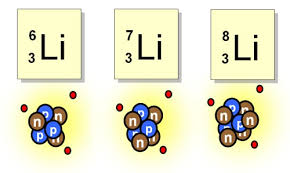
How many neutrons does the isotope of lithium have?
a)
8
b)
3
c)
4
d)
5
52.
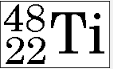
How many protons does this isotope of titanium have?
a)
48
b)
22
c)
26
d)
70
53.
In a correctly written symbol what would be located in the "A" position?
a)
number of neutrons
b)
atomic number
c)
number of electrons 
d)
mass number
54.
which atom has  4 neutrons?
a)
Li-6
b)
Li-7
c)
Li-8
d)
they have the same # of neutrons
55.
Isotopes are atoms of the same element with different #’s of __________ & therefore different __________.
a)
n0 ;  atomic #’s
b)
p+ ; atomic #’s
c)
e- ; atomic masses
d)
n0 ; atomic masses
56.
How many neutrons does the isotope below have?     89 36Kr
a)
53
b)
36
c)
89
d)
125
57.
If X is the symbol for an element, which of the following two symbols represent    isotopes of the same element?     I. 7735X  II. 7733X  III. 8137X  IV. 8135 X
a)
I and II
b)
III and IV
c)
I and IV
d)
I and III
58.
Ions are: 
a)
atoms with a positive or negative charge
b)
atoms with no charge
c)
atoms with ONLY a positive charge
d)
atoms with ONLY a negative charge
59.

76 protons and 114 neutrons

a)

Osmium-114

b)

Osmium-76

c)

Osmium-190

d)

Osmium-190.23

60.
The scientist responsible for "discovering" the nucleus is:
a)
Bohr
b)
Rutherford
c)
Schroedinger
d)
Einstein
61.
Who stated that atoms cannot be divided?
a)
Democritus
b)
Dalton
c)
Thomson
d)
Bohr
62.
In an atom, electrons move in definite orbits around the nucleus.
a)
Thomson
b)
Rutherford
c)
Bohr
d)
Democritus
63.
What scientist is best known for his "Plum Pudding" model of the atom?
a)
J.J. Thomson
b)
Ernest Rutherford
c)
John Dalton
d)
Democritus
64.
Place the following scientists in order, from earliest to latest: 
Rutherford, Dalton, Bohr, Thomson
a)
Dalton, Rutherford, Bohr, Thomson
b)
Thomson, Dalton, Rutherford, Bohr
c)
Dalton, Thomson, Rutherford, Bohr
d)
Bohr, Dalton, Rutherford, Thomson
65.
Rutherford's gold foil experiment provided evidence that...
a)
negative and positive charges are spread evenly throughout the atom.
b)
alpha particles have a positive charge.
c)
gold is not a dense as previously thought.
d)
there is a dense positively charged nucleus at the center of an atom.
66.
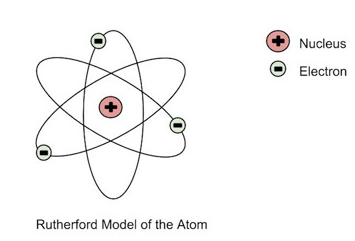
Who came up with the model of an atom pictured?
a)
J.J. Thompson
b)
Ernest Rutherford
c)
Neils Bohr
d)
James Chadwick
67.
Who's model is this? 
a)
Millikan
b)
Rutherford
c)
Thomson
d)
Bohr
68.

Where in an atom are the electrons located?

a)

inside the nucleus

b)

outside the nucleus

69.

The problem with Bohr’s model of the atom is that it doesn’t explain all the behaviors of (a)  

70.

Explain the structure of the atom

a)

There is a tiny nucleus and a large electron cloud filled with empty space

b)

There is a tiny nucleus and a tiny electron cloud

c)

The nucleus is bigger than the electron cloud

d)

The electron cloud is made of protons and electrons, the nucleus has neutrons