
 Worksheets
Type of Bonds
Total questions: 20
Worksheet time: 48mins
Name
Class
Date
1.
When forming an ionic bond, a metal atom
a)
Gains electrons to form a cation
b)
Loses electrons to form a cation
c)
Gains electrons to form an anion
d)
Loses electrons to form an anion
2.
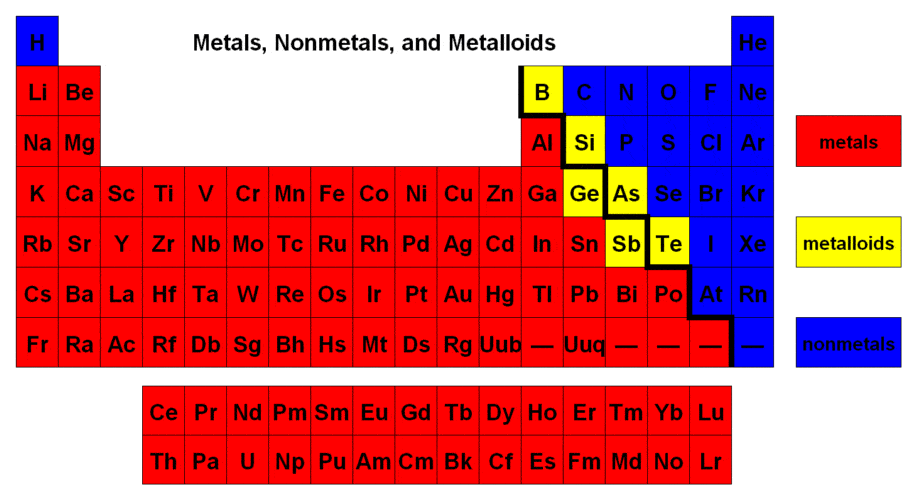
What elements generally make an ionic bond?
a)
metal and nonmetal
b)
2 or more nonmetals
c)
metal
d)
none of the above
3.
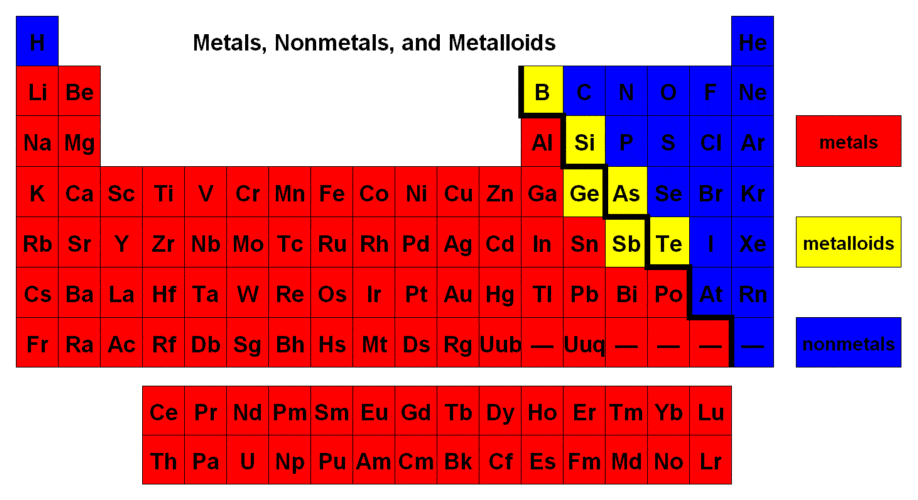
What elements generally make a covalent bond?
a)
metal and nonmetal
b)
2 or more nonmetals
c)
metal
d)
none of the above
4.
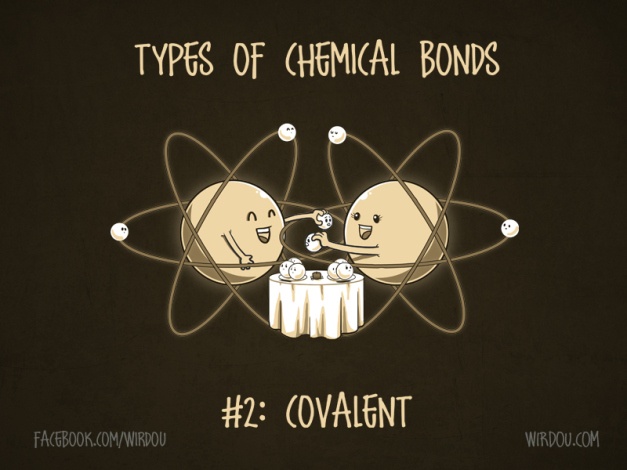
In chemical compounds, covalent bonds form when
a)
the electronegativity difference between two atoms is very large.
b)
electrons are completely transferred between two metals.
c)
pairs of electrons are shared between two nonmetal atoms.
d)
two nonmetal atoms are attracted to each other by opposite charges.
5.
An ionic bond forms when
a)
Valence electrons are shared
b)
a sea of mobile electrons surround the cations
c)
valence electrons are transferred between atoms
d)
none of the above
6.
Predict the bond that will form between Be and F.
a)
Ionic
b)
Covalent
7.
Predict the bond that will form between Se and Cl.
a)
Ionic
b)
Covalent
8.
Predict the bond that will form between Sr and S.
a)
Ionic
b)
Covalent
9.
What is a valence electron?
a)
an electron that is found in the outermost shell of an atom.
b)
an electron found in the innermost shell of an atom.
c)
an electron found in the middle shell.
10.

What type of diagram is this?
a)
Electron Dot Diagram
b)
Bohr Model
c)
Alkali Diagram
d)
Chemical Diagram
11.

How many valence electrons in this structure?
a)
6
b)
5
c)
4
d)
7
12.
A positively or negatively charged particle.
a)
covalent bond
b)
compound
c)
ion
d)
chemical bond
13.
A chemical bond between oppositely charged ions.
a)
compound
b)
ion
c)
covalent bond
d)
ionic bond
14.
Shows an element's combining ability or how many electrons has been gained or lost.
a)
ionic bond
b)
superscript or oxidation number
c)
chemical bond
d)
chemical formula
15.
A chemical bond formed between shared atoms.
a)
chemical bond
b)
covalent bond
c)
oxidation #
d)
ionic bond
16.
Substance made from two or more combined atoms.
a)
ion
b)
covalent bond
c)
ionic bond
d)
compound
17.
Tells what elements a compound contains and the number of those atoms.
a)
compound
b)
ion
c)
chemical formula
d)
ionic bond
18.
Force that holds together atoms in a substance.
a)
compound
b)
ion
c)
chemical bond
d)
ionic bond
19.

How many atoms of Oxygen are in this compound?
a)
4
b)
1
c)
12
d)
7
20.

How many elements make up this compound?
a)
6
b)
4
c)
2
d)
3
100 %

