
 Worksheets
AP Biology Exam Review
Total questions: 25
Worksheet time: 25mins

What type of transmembrane receptor is being shown?
G-protein coupled receptor
tyrosine kinase receptor
gated ion channel
When glucose levels in the blood rise, your brain sends a signal to your pancreas. The pancreas releases insulin, which opens channels in cell membranes to allow glucose to enter the cell, lowering blood sugar levels.
Positive Feedback Response
Negative Feedback Loop
What role do NADH and FADH2 (produced during Glycolysis and Krebs Cycle) play in cellular respiration?
they carry high energy electrons that eventually produce massive amounts of ATP
They carry high energy H+ ions for chemiosmosis
They are waste products and are pushed out of the cell
They don't play any role in cellular respiration and are used in photosynthesis only
The process of glycolysis results in which of the following molecules?
NADH
Pyruvate
Glucose
ATP
If the proton (H+) pump in the thylakoid was not working which molecule could not be made during the light reaction?
NADPH
ATP
Water
Oxygen gas
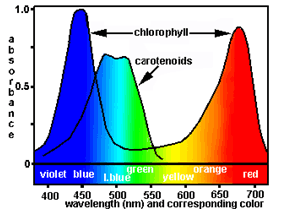
What is one function of the other pigments besides chlorophyll, in the chloroplast?
to block damaging wavelengths of light
to absorb different wavelengths than the chloroplasts
to provide different colors to the leaves
to transfer energy to a separate photosystem beside the one using chlorophyll a and b.
What is the primary function of the light reactions of photosynthesis?
To produce glucose
To produce NADPH and ATP
To use ATP
To produce RuBP

What supplies the electrons that are lost in PS I?
the electrons from PS II
water
glucose
oxygen
What is the function of NADP+?
It absorbs light
It is an electron acceptor
It is a light-reflecting pigment
It acts as long-term energy storage
The light reactions occur in the ________ and the dark reactions take place in the ________.
Chloroplast / thylakoid membrane
stroma / thylakoid
mesophyl / stomata
thylakoid membrane / stroma
Where does the Calvin cycle take place?
stroma of the chloroplast
thylakoid membrane
outer membrane of the chloroplast
interior of the thylakoid membrane
When oxygen is released as a result of photosynthesis, it is a direct by-product of
reducing NADP+
splitting water molecules
chemiosmosis
electron transfer in photosystem II and I
Where on an enzyme does the substrate bind?
active site
allosteric site
C-terminus
N-terminus
What is the function of the electron transport chain between Photosystem II and Photosystem I?
establish electrochemical gradient of protons
to funnel electrons into photosystem I for the Calvin cycle
transport electrons to oxygen to make water
to synthesize ATP using ATP synthase
In the electron transport chain of cellular respiration, where is the electrochemical gradient of protons generated?
cytosol
cristae
matrix
intermembrane space
The function of fermentation is to regenerate ______ so that glycolysis can continue to produce ATP.
NAD+
glucose
lactic acid
ethanol
During chemiosmosis
H+ ions serve as the final electron acceptor
a concentration gradient is generated when H+ ions are passively transported from the matrix to the intermembrane space of the mitochondrion
energy is released as H+ ions move freely across the mitochondrial membrane
ATP is synthesized when H+ ions move through a channel in ATP synthase
Identify the pairing and number of bonds in DNA double helix
A pairs with T (2 bonds) & G pairs with C (3 bonds)
A pairs with G (2 bonds) & T pairs with C (3 bonds)
A pairs with T (3 bonds) & G pairs with C (2 bonds)
A pairs with G (3 bonds) & T pairs with C (2 bonds)
Which two functional groups are always found in amino acids?
amine and sulfhydryl
hydroxyl and carboxyl
carboxyl and amine
phosphate group and nitrogenous base

The endomembrane system includes membrane-based organelles which work together to create, modify, and export cell products like proteins and lipids. These include:
Endoplasmic reticulum, Golgi apparatus, and lysosomes
Mitochondria, chloroplasts, and peroxisomes
Nuclear envelope and several vesicle types
Cytoskeleton, cell wall, and plasma membrane
White blood cells engulf bacteria through what process?
pinocytosis
osmosis
phagocytosis
exocytosis
Which of the following processes occurs in the mitochondria and is crucial for ATP production?
Glycolysis
Krebs Cycle
Photosynthesis
Fermentation
What is the role of ribosomes in a cell?
DNA replication
Protein synthesis
Lipid synthesis
Carbohydrate breakdown
In an experiment, a plant is exposed to light of different wavelengths. Which color of light is least effective for photosynthesis?
Red
Blue
Green
Yellow
Which of the following best describes the function of enzymes in biological reactions?
They increase the activation energy required for the reaction.
They decrease the activation energy required for the reaction.
They are consumed in the reaction.
They act as a substrate in the reaction.

