
 Worksheets
Structure DNA
Total questions: 25
Worksheet time: 25mins
A complex molecule containing the genetic information that makes up the chromosomes.
deoxyribose
deoxyribonucleic acid (DNA)
nucleotide
gene
Two strands of nucleotides wound about each other; the shape of DNA.
helix
spiral
double helix
ladder
This part of the nucleotide helps hold the DNA structure together.
base
deoxyribose
guanine
phosphate
Base that pairs with thymine.
guanine
cytosine
adenine
phosphate
The base that pairs with guanine.
cytosine
adenine
phosphate
thymine
The sugar found in DNA.
phosphate
cytosine
deoxyribose
dextrose
The base that pairs with cytosine.
guanine
thymine
phosphate
adenine
The chemicals that make up the rungs of the DNA ladder.
deoxyribose
phosphate
nitrogen bases
nucleotides
Nucleotides are made of a molecule of deoxyribose, connected to a phosphate & a nitrogen base. They make up one side of the DNA double helix.
true
false
The base that pairs with adenine.
thymine
guanine
cytosine
phosphate
The control center of the cell, containing DNA.
nucleus
ribosome
cell membrane
nucleotide

Which of the following best describes a DNA molecule?
double helix
contains ribose
made of amino acids
contains Uracil
Which of the following units are repeatedly joined together to form a strand of DNA? (This is the MONOMER of DNA.)
amino acids
nucleotides
fatty acids
polysaccharides
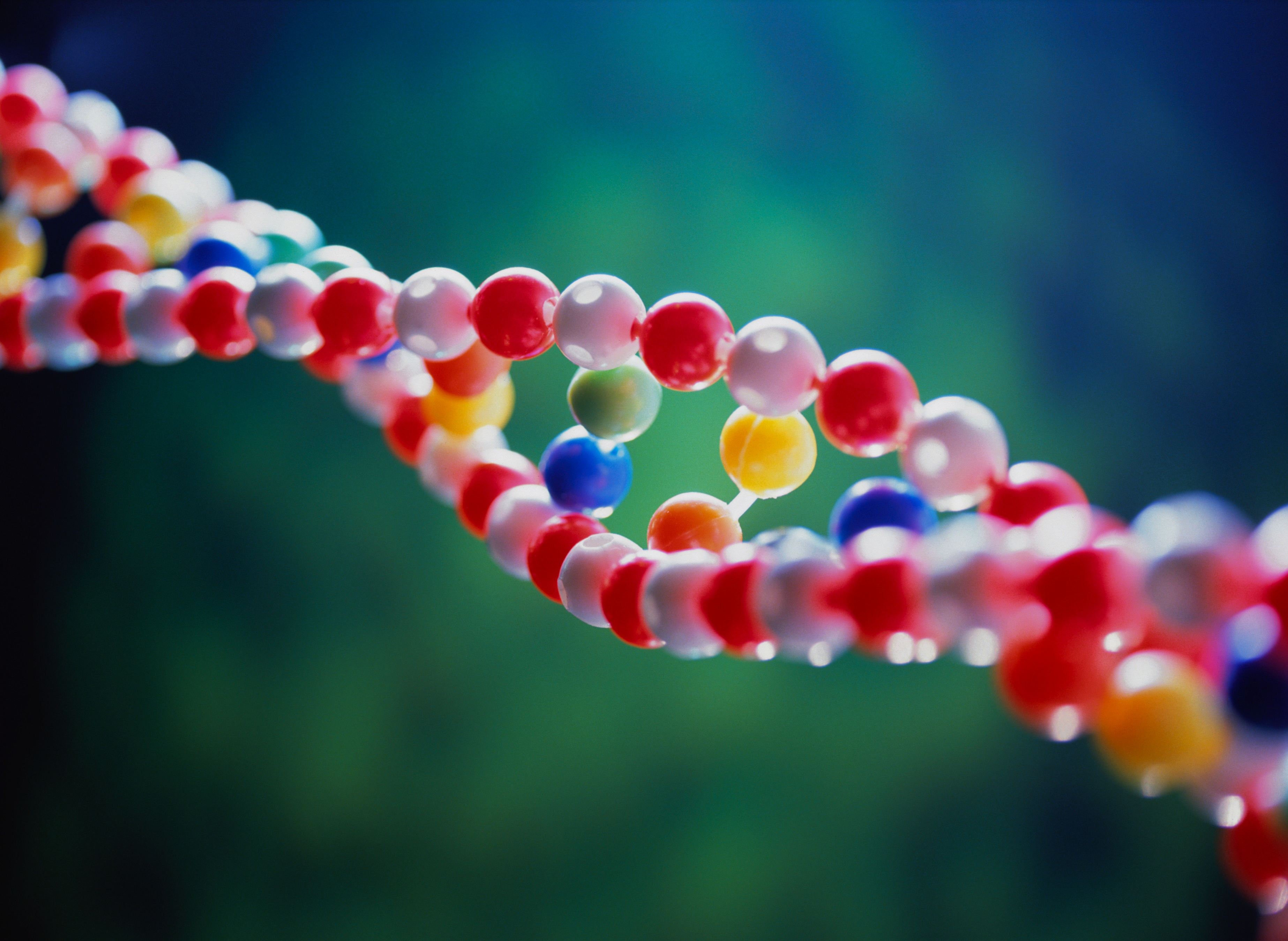
Why is DNA important?
it is very small and very complicated
it's in everything
it serves as the blueprint for traits of all living things
because we eat it every day for energy
What are the 4 nitrogen bases?
adenine, thymine, cytoplasm, and guanine
adenine, thymine cytosine, and guanine
adenine, thymine, cytosine, and gylcerol
adenine, thymine, cytosine, and glucose
Which organelle is DNA usually found in?
cell membrane
vacuole
chloroplast
nucleus
When replication is complete, there are two _____________ DNA modules.
identical
different
similar

What is a section of DNA that codes for a specific protein called?
RNA
replication
gene
protein

A nucleotide is composed of
A phosphate, sugar and nitrogenous base
A protein, protein and Guanine
A phosphate, Adenine, and nitrogenous base
A protein, Adenine and nitrogenous base

Which of the following is a base pair?
Adenine - Cytosine
Cytosine - Thymine
Deoxyribose - Cytosine
Cytosine - Guanine
Which 2 molecules forms the sides (backbone) of the DNA ladder?
deoxyribose and adenine
deoxyribose and a hydrogen bond
sugar and the nucleus
deoxyribose (sugar) and phosphate
What was the shape of DNA called?
Alpha helix
Pleated sheet
Tetrad
Double helix
What is the primary function of DNA in living organisms?
To store genetic information
To provide energy
To transport oxygen
To digest food
Which component of the DNA structure forms the 'rungs' of the DNA ladder?
Phosphate group
Deoxyribose sugar
Nitrogenous bases
Hydrogen bonds
In a DNA molecule, which base pairs with cytosine?
Adenine
Thymine
Guanine
Uracil

