
 Worksheets
Populations and Resources Unit Test
Total questions: 25
Worksheet time: 25mins

A model that shows what eats what in an ecosystem is a
food web
food chain
food fight
food court

a group of the same type of organism living in the same area
population
populist
popcorn
pop music

Check all the things that could be found in an ecosytem.
animals
plants
rocks
streams

when two or more populations use the same resource, such as the same food source
competition
completion
cooperation
consumerism

A resource population is
a population that eats organisms from another population
a population that is eaten by organisms from another population
a population that uses up more energy than other populations
a population that gets it's energy all from plants
A population of consumers is
a population that eats organisms from another population
a population that is eaten by organisms from another population
a population that uses more energy than other populations
a population that gets all its energy from plants
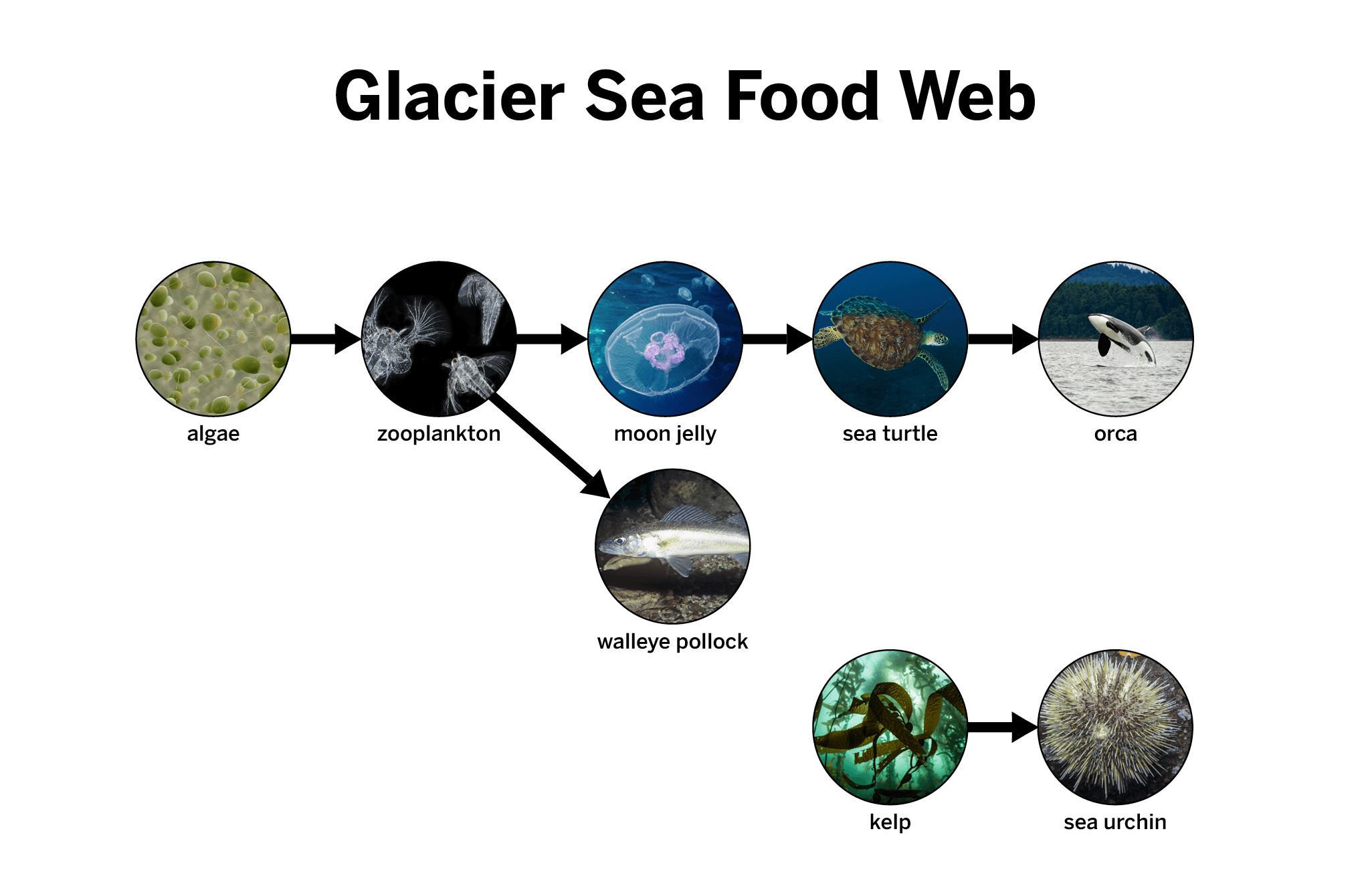
Populations can only be either a resource population OR a consumer population. They cannot be both.
True
False
A consumer population is
a population that eats organisms from another population
a population that is eaten by organisms from another population
a population that uses up more energy than other populations
a population that gets it's energy all from plants

a scientist who studies interactions of organisms with each other and their environment
ecologist
geologist
cosmologist
biologist

What is a population?
a group of the same type of organism living in the same area
a group of similar organisms in an ecosystem
a group of people attending a movie
a group of different types of organisms in the same area

A population that is eaten by organisms from another population is a
resource population
resort population
resident population
respectful population

Which of the following is a type of organism that is a resource population?
grass
mice
lions
krill
Choose all the factors that affect an increase or decrease in a population.
availability of food sources
deaths
births
scientific name
all the living and nonliving things interacting in a particular area
ecosystem
ecologist
exosystem
ecology

Check all the following that are organisms.
elk
soil
bacteria
pine trees

Scientists have been studying the size of three populations in a grassland. In this ecosystem, lizards eat fireflies, and fireflies eat gnats (a type of insect). The data showed that all three populations were stable. Then the lizard population decreased suddenly. What will most likely happen to the size of the firefly population as a result?
increase because there are less lizards eating them.
decrease because there are more lizards eating them.
stay the same
increase because there will be more energy storage molecules available for the fireflies to eat.

In Australia, both opossums and foxes eat rats. The sizes of the populations have been stable for the last 12 years, but recently the size of the opossum population increased. What will likely happen to the fox population?
increase because there will be more rats to make energy.
decrease because the opossum population is taking more energy storage molecules from the rats.
stay the same because there are still energy storage molecules available.
decrease because the opossum population is using the fox population for energy storage molecules.
A population of bluefish lives in the Gulf of Mexico. Over the last 50 years, the size of the bluefish population has decreased. What best explains the decrease in the size of the bluefish population?
A lot of bluefish died and no new bluefish were born.
Fewer bluefish were born than died.
More bluefish were born than died.
The bluefish population is always decreasing because bluefish are always being eaten.

Scientists have been studying the size of three populations in a region. In this ecosystem, lions eat wild pigs, and wild pigs eat frogs. The data showed that all three populations were stable. Then the frog population decreased suddenly. What will likely happen to the size of the wild pig population as a result? The size of the wild pig population will . . .
increase because the wild pigs and lions will find energy storage molecules elsewhere.
decrease because there are less energy storage molecules available.
stay the same because the lions are still stable.

Scientists have been studying the size of three populations in a swampland. In this ecosystem, herons (a type of bird) eat frogs, and frogs eat dragonflies. The data showed that all three populations were stable. Then the dragonfly population increased suddenly. What will likely happen to the frog population as a result? The size of the frog population will . . .
increase
decrease
stay the same

Scientists have been studying the size of three populations in Peru. In this ecosystem, pumas (large wild cats) eat deer, and deer eat grass. The data showed that all three populations were stable. Then the puma population increased suddenly. What will most likely happen to the size of the deer population as a result? The size of the deer population will . . .
increase
decrease
stay the same
Which of the following factors is most likely to cause a decrease in a population's size?
A) Increase in birth rate
B) Increase in death rate
C) Increase in food supply
D) Increase in habitat size
A scientist is studying a population of rabbits in a forest. Over a year, the population increased. Which of the following could explain this increase?
A) More predators moved into the area
B) The birth rate was higher than the death rate
C) The forest area decreased
D) The food supply decreased
In an experiment, a biologist observes that a certain fish population remains stable over several years. What could be a reason for this stability?
A) The birth rate equals the death rate
B) The birth rate is higher than the death rate
C) The death rate is higher than the birth rate
D) The food supply is decreasing
Which of the following scenarios is an example of a real-world application of population dynamics?
A) Studying the effect of a new predator on a deer population
B) Calculating the speed of a car
C) Measuring the temperature of a chemical reaction
D) Observing the phases of the moon

