
Font size
 Worksheets
yuiouy
Total questions: 151
Worksheet time: 4hrs 26mins


Two people walk across a parking lot. Their paths are shown in the image. Who traveled with a larger displacement?
Person A
Person B
They both had the same displacement.

From the figure, what is the displacement?
20 meters
25 meters
15 meters
25 meters NE


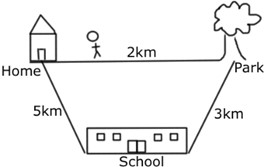
Jerry walked from home to school, then from the school to the park. What is his total distance?
2 km
5 km
8 km
10 km

Which of the following would be a scalar value?
Displacement
Distance
Position
Velocity

A roadrunner travels 100m [East] then 300m [West]. What is its distance?
300 m
200 m
400 m
30 000 m

Dash from the Incredibles runs 5 km [North] and then 20 km [South]. What is its displacement?
15 km [South]
25 km [South]
15 km [North]
25 km [North]

Penelope is initially 100 km [West] of TO. She displaces 250 km [East]. Find final position.
25 km [West]
150 km [East]
350 km [East]
25 000 km [West]

In a 2 000 m race the athletes complete 5 laps around the 400 m long track. Find displacement.
400 m
2 000 m
0 m
4 000 m

Athletes complete 3.75 laps around a 400 m long track ending up 100 m [East]. Find distance.
375 m
400 m
500 m
1500 m
What is the location of an object relative to some reference point called in physics?
Distance
Displacement
Length
Position

A pony travels 1.2 km [W] then 0.5 km [N] and ends up 1.3 km [W 22.6o N]. Find distance.
0.7 km or 700 m
1.3 km or 1300 m
1.7 km or 1700 m
3.0 or 3000m

What type of measured value has magnitude, units and direction?
Vector
Scalar
Qualiative
Quantitive
From an initial position 0m, A person walks 50 meters directly South, stops, and then travels back 32 meters North. Based on their final location, what is their displacement?
28 m [S]
18 m [S]
18 m [N]
82 m [S]

What describes a vector best?
Magnitude
Magnitude and unit
Magnitude, unit, and direction
Direction

I left my house. I walked about 5km to the store. What is my distance?
0km
2.5km
5km
10km
I left my house. I walked about 5km to the store. What is my displacement?
0km
2.5km
5km
10km
I left my house. I walked about 5km to the store. I took the items I bought, and went to my friend's house who lives 5km from the store. What is my distance?
0km
2.5km
5km
10km
I left my house. I walked about 5km to the store. I took the items I bought, and went to my friend's house who lives 5km from the store.
I got bored of my friend, and went back home.
What is my net movement / displacement?
0km
2.5km
5km
10km
What is the difference between distance and displacement?
I left my house and walked 5km to the store, then another 3km to the library. What is my total distance traveled?
3km
5km
8km
10km
After visiting the library 3km away from the store, I returned directly to my house. What is my total distance traveled?
8km
11km
13km
16km
From my house, I walked 5km to the store and then 3km to the library. If I return home by the same route, what is my displacement?
0km
3km
5km
8km
I walked 7km from my house to the park, and then 2km from the park to a cafe. What is my total distance traveled?
5km
7km
9km
10km
After walking 4km to the gym from my house, I walked another 4km back home. What is my displacement?
0km
4km
8km
12km
I walked 3km to the bookstore and then 2km to the cinema from there. If I return home by the same route, what is my total distance traveled?
5km
7km
10km
12km
An object is _____ if its position changes.
in motion
at rest
a reference point
a frame of reference
Reference point is
moving
non moving
changing
speed
Which change its position?
moving objects
non-moving objects
We can describe a moving object by using anything that stays in place as _______________.
position
motion
reference point
A tree along a highway can be used as a reference point for moving objects.
true
false
The pencil is next to the notebook. What does the underlined word describes?
Reference Point
Position
The building is in the middle of the city. What does the underlined word describes?
Reference Point
Position
Which change its position?
moving objects
non-moving objects
Which never changes its position?
moving objects
non-moving objects
It can be used as ___________ to describe a moving object?
compass
reference point
direction
We can describe a moving object by using anything that stays in place as _______________.
position
motion
reference point
A tree along a highway can be used as a reference point for moving objects.
true
false
There is always a change in position when an object moves
true
false
The speed of moving vehicle may be described as fast or slow.
true
false
A reference point will tell you about the speed of a moving object
true
false
A reference point helps you describe the position of a moving object.
true
false
Street science bridges traffic lights and buildings are example of reference point.
true
false
A moving car can be used as a reference point to describe the position of a moving motorcycle.
true
false
Objects move in different directions at different speeds.
true
false
Living things around you can be used as reference points.
true
false
Your body is in motion when you're sitting down
true
false

#1 Show all your work on your answer document. speed = distance/time
2 m/s
0.5 m/s
2 mi/hr
500 m/s

#2 Show all your work on your answer document.
400 m/min
0.0025 m/min
3600 mi/hr
40 m/s

#3 Show all your work on your answer document.
55 mi/hr
0.018 mi/hr
0.018 hr/mi
220 mi/hr

#4 Show all your work on your answer document.
4.5 m/s
0.22 m/s
175 m/s
11250 m/s

#5 Show all your work on your answer document.
4.25 ft/min
0.24 ft/min
68 ft/min
21 ft/min

#6 Show all your work on your answer document. (Average speed = total distance / total time)
1000 mi/yr
100,000 mi/yr
100 mi/yr
.001 mi/yr

#7 Show all your work on your answer document. (Average speed = total distance / total time)
5 km/min
5 m/s
0.2 km/min
0.2 m/s

#8 Show all your work on your answer document. (Average speed = total distance / total time)
2 km/min
20 m/s
0.5 km/min
200 m/s

#9 Show all your work on your answer document. (Average speed = total distance / total time)
1.6 km/min
1.6 m/s
0.625 km/min
0.625 m/s

#10 Show all your work on your answer document. (Average speed = total distance / total time)
6.25 km/min
21 m/s
0.16 km/min
100 m/s
What two measurements are needed to calculate average speed?
Distance and Time
Volume and Mass
Mass and Time
Speed and Distance
What is the formula for average speed?
Average Speed = Total Time undefined Total Distance
Average Speed = Total Time + Total Distance
Average Speed = Total Distance ÷ Total Time
Average Speed = Total Distance × Total Time
Cesar drove from Houston to Dallas in 4 hours. Dallas is roughly 250 miles NW of Houston. What was his average speed?
1000 mph
62.5 mph
55 mph
60 mph

Which truck pulled 2,000 pounds at the average speed of 2 yards per minute?
Chevy
Dodge
Nissan
Ford
Runner A ran 12 miles in 4 hours and Runner B ran 9 miles in 3 hours. Which runner had the greatest average speed?
Runner A
Runner B
Both runners had the same average speed.
You are practicing for an upcoming 100-meter dash and documenting average speed to see your growth. Trial one you ran at 14 seconds, trial two was at 13.8 seconds, and trial three was at 13.2 seconds. What is the combined average speed of all three trials? (round answer to hundredth place – to the second decimal)
7.58 meters/second
7.14 meters/second
7.32 meters/second
7.25 meters/second

What is the average speed of the Worm's Journey?
2.25 meters/minute
2 meters/minute
1 meter/minute

Jose Altuve is at batting practice for the Houston Astros.
What was the average speed of the baseball for his third hit as it traveled in the air?
32 m/sec
20.7 m/sec
24 m/sec
27 m/sec

Jose Altuve is at batting practice for the Houston Astros.
What was the average speed of all three hits?
32 m/sec
20.7 m/sec
24 m/sec
27 m/sec

Using the information in the graph, what is the average speed Josh’s car traveled to get home?
8 km/hour
160 km/hour
16 km/hour
40 km/hour
The S.I. unit of average speed is
m/s
km/h
m/s2
m2/s
The average velocity of the Earth for one complete year is
zero
circumference of the orbit
diameter of the orbit
cannot be determined from the given data
If an object changes its velocity from 2 m/s to 4m/s in 10s, its acceleration is__________m/s2
0.02
2
0.2
0.6
The ratio of total distance to total time is called
average velocity
average speed
acceleration
displacement
The ratio of change in velocity with respect to time is called
displacement
speed
accleration
distance
The distance - time graph for a moving object is a straight line parallel to the time axis. The object is (a)
For uniform motion the distance time graph will have a (a) slope
If in a v-t graph the graph line is parallel to time axis, it denotes that the body is in (a)
The slope of a v-t graph gives the (a)
The area under a speed-time graph with the time axis gives the (a)

What does this graph represent?
Constant Speed
Deceleration
Acceleration
Not moving

According to the graph how far does the person travel in the first 5 seconds?
2m
0m
10m
5m

What is the person doing from 5 seconds to 10 seconds?
Walking at a constant speed
Not moving
Running fast
Walking slow

Select the times that the object is NOT moving according to the graph. (Could be more than one)
0-10 minutes.
10-20 minutes.
20-30 minutes.
30-40 minutes.

How long did it take this object to travel 10 m?
0 s
15 s
10 s
20 s

How long did it take this object to travel back to its reference/starting point?
20 s
60 s
30 s
100 s

Calculate the average speed between 0 and 10 hours.
2 km/h
3 km/h
1 km/h
5 km/h

Calculate the average speed of the object between 1 and 3 seconds.
20 m/s
1 m/s
30 m/s
12 m/s

According to the graph what was the average speed?
0 m/s
0.8 m/s
1.2 m/s
12 m/s

Total distance divided by total time, for an object shows:
acceleration
the size of one's toupee
absolute speed
average speed

A change in ________ in a certain amount of time is motion.
speed
appearance
position
weight


Jose wandered 4 km at 2 km/hr. How long did Jose wander?
2 hours
8 hours
0.5 hours
2 km

Explain the motion from 0-1s
Stationary
Constant speed
Constant acceleration
Non-constant acceleration
Explain the motion from 1-3s
Stationary
Constant speed
Constant acceleration
Non-constant acceleration
Explain the motion from 3-5s
Stationary
Constant speed
Constant acceleration
Non-constant acceleration
Explain the motion from 5-7s
Stationary
Constant speed
Constant acceleration
Constant deceleration
Explain the motion from 7-8s
Stationary
Constant speed
Constant acceleration
Constant deceleration
Explain the motion from 8s onwards. The blue line runs along the x-axis. Hint: What is the velocity from 8s onwards.
Stationary
Constant speed
Constant acceleration
Constant deceleration

Where is the acceleration the highest?
0-1s
1-3s
3-5s
Where is the deceleration the highest?
5-7s
7-8s

Explain the motion
Stationary
Constant speed
Constant acceleration
Non-constant acceleration
The acceleration from 0-1s is (a) m/s2.
The acceleration from 3-5s is (a) m/s2.
The deceleration from 5-7s is (a) m/s2.
Calculate the total distance traveled in the first 1s.
(a)
Calculate the total distance traveled in the first 3s.
(a)
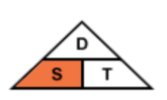
D = 50 miles
Time = 2 hours
What is the Speed?
Hint: Use the Density Triangle.
50 miles/hour
100 miles/hour
25 miles/hour
2 miles/hour
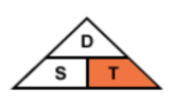
Distance = 500 miles
Speed = 50 miles/hour
How much TIME did it take to travel 100 miles at a speed of 50 miles/hour?
Hint: Use the Density Triangle
0.5 hours
5,000 hours
10 hours
2 miles
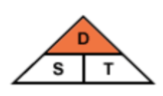
Speed = 60 miles/hour
Time = 4 hours
Distance = ?
Hint: D = S×T
64 miles
240 miles
120 miles
15 miles

Speed = ?
Distance = 400 meters
Time = 40 seconds
Hint: Divide numbers that are over one another.
10 m/s
16,000 m/s
0.1 m/s
100 m/s

Speed = ?
Distance = 100 meters
Time = 200 second
Hint: Divide numbers that are over one another.
20,000 m/s
0.2 m/s
2 m/s miles
0.5 m/s

Fast
Slow

Fast
Slow

Fast
Slow
Stopped

Who's Faster?
Barkus
Arctica

Speeding Up
Slowing Down

Speeding Up
Slowing Down

D = 50 miles
Time = 2 hours
What is the Speed?
Hint: Use the Density Triangle.
50 miles/hour
100 miles/hour
25 miles/hour
2 miles/hour
Distance = 500 miles
Speed = 50 miles/hour
How much TIME did it take to travel 100 miles at a speed of 50 miles/hour?
Hint: Use the Density Triangle
0.5 hours
5,000 hours
10 hours
2 miles
Speed = 60 miles/hour
Time = 4 hours
Distance = ?
Hint: D = S×T
64 miles
240 miles
120 miles
15 miles
Speed = ?
Distance = 400 meters
Time = 40 seconds
Hint: Divide numbers that are over one another.
10 m/s
16,000 m/s
0.1 m/s
100 m/s
Speed = ?
Distance = 100 meters
Time = 200 second
Hint: Divide numbers that are over one another.
20,000 m/s
0.2 m/s
2 m/s miles
0.5 m/s
Fast
Slow
Fast
Slow
Fast
Slow
Stopped
Who's Faster?
Barkus
Arctica
Speeding Up
Slowing Down
Speeding Up
Slowing Down

