
Font size
 Worksheets
American Revolution Quiz
Total questions: 100
Worksheet time: 2hrs 55mins
What was the Catholic Church promising if you bought indulgences?
automatic entrance into Heaven
predestination
charity
A chance to fight in the 30 years war
Which of the following was a belief of Martin Luther?
Money was the root of all evil in the world
Man is saved by grace through Faith
Good works is required to earn a person salvation
Heaven is reserved for the selected few who earn God's favor on earth
English King who formed the Church of England (Anglican Church)?
King Henry IV
King Henry VI
King Henry VIII
King Henry IX

Why did England break with the Church?
Martin Luther's influence spread throughout country
John Calvin set up his theocracy in one the towns
The king wanted a divorce and Church said no
The England did not break from the Catholic Church
What year was Queen Elizabeth I born?
1547
1533
1603
1633
For how many years did Queen Elizabeth I rule England?
44 years
45 years
50 years
55 years
Why was Elizabeth's mother beheaded?
She was an awful queen and the people of England disliked her
She got captured by England's enemy
She wasn't beheaded
Henry VIII accused her of treason
The authorized version of the bible.
King James Version
New American Standard Bible
New English Bible
New International Version.
Spelling system was established in _________
17th century
15th century
16th century
14th century
The authorized version of the bible.
King James Version
New American Standard Bible
New English Bible
New International Version.
Who took place as a ruler after Queen Elizabeth 1's father and brother died?
Mary
Victoria
Elizabeth
Anne
Mary is Catholic while Elizabeth is ______________.
Christian
Buddhist
Muslim
Protestant
Choose as many as apply: Some of the organisms imported to the New World from Europe had welcome results. These included
horses
pigs
cattle
ostritch
sheep

The Triangular Trade
The Columbian Exchange
The Middle Passage
Colonial Expansion

Chocolate (Cacao beans) is from the...
New World
Old World
Why did European economies grow during the 1500s?
Demand for manufactured goods in the Americas increased wages paid to workers.
The large supply of resources from the Americas led to an increase in trade.


When did Columbus make his first voyage to the New World?
1492 AD
1492 BC
1490 BCE
1490

What came from the New World? (select all that apply)
Maize (Corn)
Potatoes
Tomatoes
Turkeys
Cocoa (Chocolate)
Which of the following describes the Columbian Exchange?
The exchange of people, plants, animals, diseases and ideas from Old World to New World and from New World to Old World
The sending of people, plants, animals, diseases and ideas from the Old World to New World only
The sending of people, plants, animals, diseases and ideas from the New World to Old World only
The sending of people, plants, animals, diseases and ideas from South America to North America only
Jamestown failed to make a profit until colonist John Rolfe introduced a new type of___________ that sold well in England.
corn
cheese
money
Tabacco
Why did the colonists in Virginia use indentured servants?
The cost of using slaves was extremely high
Living in towns led to a low demand for workers
Colonists suffered high death rates which led to labor shortages.
The government rewards colonists who used them with lower taxes.
Why was the Toleration Act of 1649 important?
It provided some religious freedom to the colonists.
It stopped ALL religious conflict in English Colonies.
It officially ended practice of slavery in the colonies.
It limited the size of land grants that were given.

Who was John Smith?
Colonist, Leader
Lumberjack
Pirate
Married Pocahantas
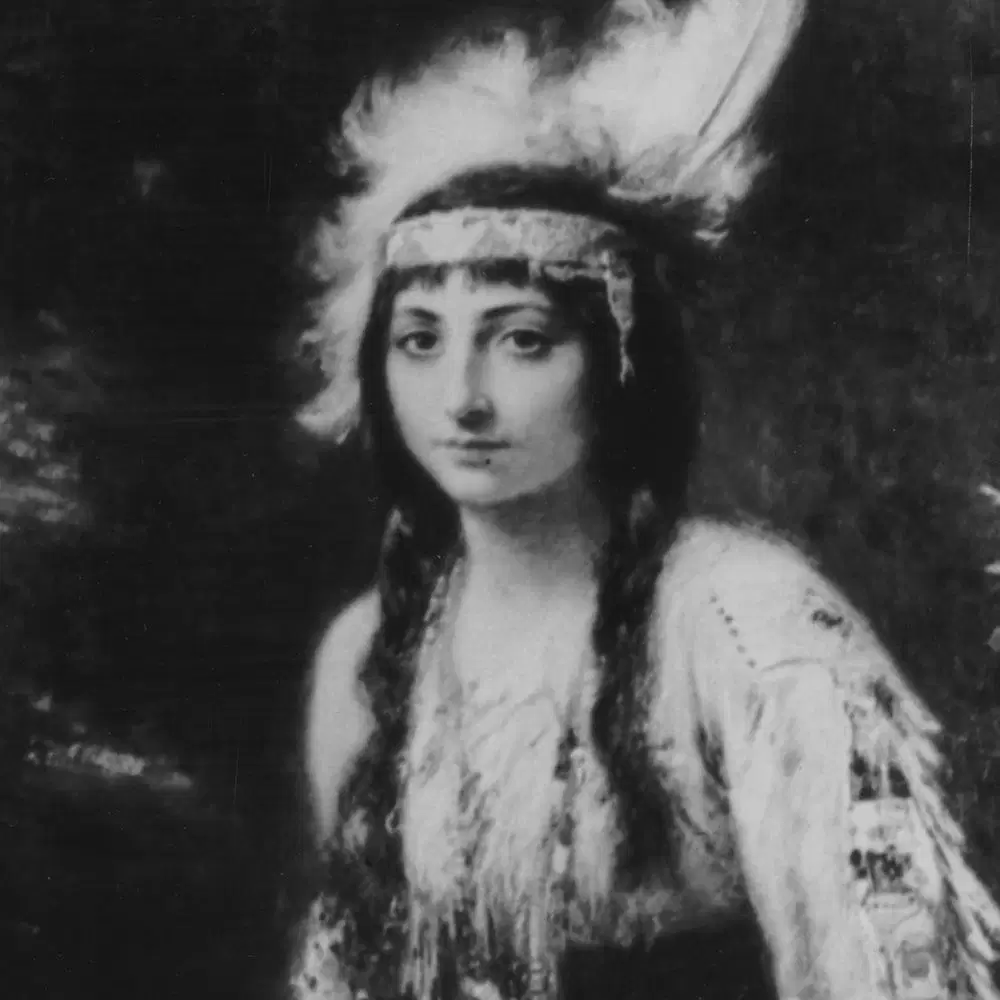
Who was Pocahontas? And who did she marry?
Daughter to Chief of the Powhatan/ Married John Smith
Colonist/ Wasn't married
Colonist/ Married to John Rolfe
Daughter to Chief o the Powhatan/ Married John Rolfe
Why were enslaved Africans in high demand?
Needed a large workforce.
They were used for peaceful negotiations.
They used slaves to introduce African culture to the Europeans.
Used to control population in Africa.
What year did the colonist settle in Jamestown?
1607
1706
1608
1886
What was the name of the group of men who were financially investing in the colony?
King James Industries
Captain Smith and Sons
The Virginia Company of London
The Jamestown Initiative
The practice of farming.
brackish
agriculture
palisade
cash crop
a written contract issued by a government giving the holder the right to establish a colony.
charter
cash crop
House of Burgesses
Mayflower Compact
A person who sold his or her labor in exchange for passage to America.
Pilgrims
Puritans
Indentured Servant
Anne Hutchinson
The English formed colonies. A colony is ___________________.
A large group of people living together.
A place where people go to work.
A small community of people.
A place to raise livestock.
The state where Jamestown is located is the state of ___________.
Maryland
New Jersey
Pennsylvania
Virginia

The Mayflower Compact was written to establish the colony of
Plymouth
Jamestown
Virginia
Cape Cod

The Mayflower Compact is NOT a colonial charter because it wasn’t
written before the colony formed.
an actual primary source document.
the ruler’s permission to colonize.
signed by the people of the colony.
In September of 1620, how may people set sail from England on the Mayflower?
About 2000
About 165
About 100
About 25
What was the Mayflower?
A high-speed race boat
A tug boat
A cruise ship
A larger merchant ship
What caused the end of the Aztec Empire?
Disease killed most of the population
Spanish soldiers(under Cortez) captured their capital city
Loss of crops led to starvation
The Incas invaded their land
The Maya, Aztec, and Inca civilizations all had what type of religion?
Monotheistic
Protestant
Polytheistic
Catholic
Which civilization was located in the rain forests of Mexico and Central America?
Aztec
Maya
Peruvian
Inca
Which civilization, located in South America, practiced high altitude farming?
Aztec
Maya
Olmec
Inca
What was the economy of the Aztec empire based on?
farming
herding
metalworking
manufacturing

Which Latin American civilization is located here?
Inca
Maya
Aztec
Toltec
Match the following
an economic theory that held that colonies helped a country become wealthy by providing raw materials
and markets for goods produced in the home country
Mercantilism
to make people obey a rule or law
enforce
to carry in or bring out in a secret way
smuggle
the lawmaking body of British government
Parliament
to rise up against a government; a dramatic change
revolution
This put Great Britain in debt, and they expected colonists to help pay it off.
(a)
The concept of taking raw materials from overseas colonies and turning them into finished goods and selling those to other countries for major profits.
(a)
He was the Primary writer of the Declaration of Independence.
(a)
The reaction of the colonists with regard to the newly imposed Tea Act.
(a)
This happened after angry colonists confronted British soldiers in the streets of Massachusetts.
(a)
Select the two primary reasons why people from Britain came to America.
Religious Freedom
Economic Reasons
Freedom of Speech
To find gold
This is how poor people were able to get to America.
Joint-Stock Companies loaned them the money
They agreed to work for 3 years once they arrived
They borrowed money from the Catholic Church
They snuck onto the boats
This person was appointed by the King to oversee the colonies.
(a)
This was the first battle of the American Revolution.
(a)
When writing the Declaration of Independence, this Enlightenment thinkers' ideas were heavily used.
(a)
This was the first document written by our Founding Fathers to guide our country after the American Revolution. It was a failure...
(a)
This was signed by both sides to officially end the American Revolution.
(a)
Salons helped to spread...?
Enlightenment thinking
Coffee Cups
The King's laws
Catholic scripture
Which of the following believed the sun was the center of the universe?
Copernicus and Galileo
Catholic Church
In A Vindication of the Rights of Women, she argued for the education of women.
KIran Kahlon
Mary Wollstonecraft
Susan B. Anthony
Ida Wells
John Locke believed that people have natural rights which include life, liberty, and...?
money
faith
property
pursuit of happiness
Whose thinking influenced Thomas Jefferson most when he wrote the Declaration of Independence?
Hobbes
Montesquieu
Penn
Locke
Who said, “I disapprove of what you say, but I will defend to the death your right to say it.”
Rousseau
Kant
Hobbes
Voltaire
The Declaration of Independence was written by
Thomas Jefferson
Patrick Henry
Benjamin Franklin
John Adams
What famous phrase is included in the Declaration of Independence?
"Give me liberty or give me death."
"All men are created equal."
"Life, liberty and the pursuit of happiness."
"We the People."
When did the colonies declare independence from Britain?
July 4, 1775
July 4, 1776
July 4, 1783
July 4, 1787
Why did the British believe they could win in the South?
Loyalists were numerous in the back country
Colonial troops were concentrated in Massachusetts and New York
The had greater Indian support
There was easier access for their superior Navy
Great Britain made its central location
Richmond
New York
Philadelphia
Boston
The Battle of Saratoga brought much needed help from the
French
Japanese
Germans
Italians
In 1787, Congress awarded John Paul Jones the Congressional Gold Medal in honor of his “valor and brilliant services” during the Revolutionary War. Which accomplishment was Congress recognizing?
British colonists objected to the Proclamation of 1763 because they —
Which excerpt from the Declaration of Independence best explains why colonists were unhappy about their lack of representation in the British parliament?



