
 Worksheets
AP Gov Review
Total questions: 105
Worksheet time: 56mins

Please pick the Amendment below that best matches this description:
A well regulated Militia, being necessary to the security of a free State, the right of the people to keep and bear Arms, shall not be infringed.
5th Amendment
2nd Amendment
3rd Amendment
4th Amendment

Please pick the Amendment below that best matches this description:
No search or seizure without a warrant.
5th Amendment
6th Amendment
7th Amendment
4th Amendment
The debates between Federalists and Anti-Federalists were primarily about which of the following issues?
The right of the people to rebel
The existence of slavery
The scope of power of the central government
The need to establish a standard currency
Which of the following statements about gerrymandering is true?
It has been banned by United States Supreme Court decisions starting with Baker v. Carr
It was used traditionally to maintain urban control of the House of Representatives.
It can be used by a political party to draw boundary lines to control as many districts as possible.
It guarantees greater constituency control over elected representatives.
Which of the following statements about the Senate is true?
Each state is represented in the Senate according to its population.
The Senate, unlike the House, has a Rules Committee.
The Senate is more responsible than the House for initiating appropriations legislation.
Individual senators can exercise substantial influence over the legislative process.
The role Congress plays in ensuring that executive branch agencies are carrying out their legislated responsibilities is known as
judicial review
legislative oversight
executive privilege
bicameralism
All of the following are ways that the legislative branch can check the powers of the executive branch EXCEPT:
Congress may pass a law declaring a presidential action unconstitutional.
The Senate may refuse to approve a presidential appointment.
Congress may override a presidential veto.
Congress may remove the president through its impeachment and conviction powers.
Advocates of shifting the task of drawing United States House districts from state legislatures to independent commissions are likely to claim which of the following as an advantage of independent commissions?
Independent commissions are more likely to create majority-minority districts districts where they are appropriate.
Independent commissions are more likely to create districts where minor parties are victorious.
House districts drawn by independent commissions are immune from challenges by the United States Department of Justice.
Independent commissions significantly reduce the influence of partisan gerrymandering in the redistricting process.
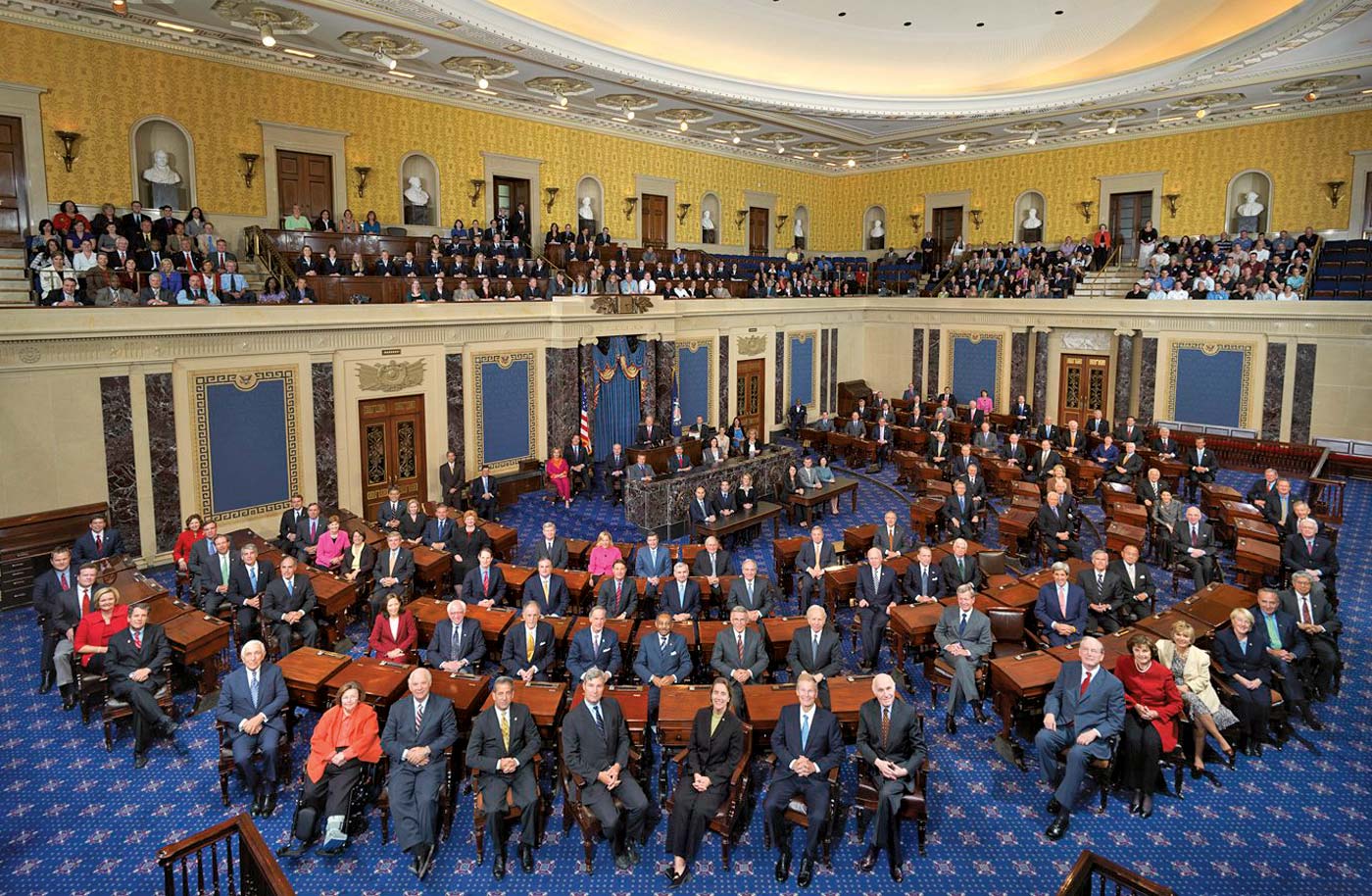
Which of the following is NOT true of the Congress?
Each house determines its own leadership and rules
Terms of Congress last for two years
Congress is unicameral in nature
Only the president may call special sessions of Congress
After a national census has been taken, changes in population distribution cause the changing of congressional seats among the states. This effect is commonly called
Congressional redistricitng
Apportionment
Gerrymandering
Repportionment
Which of the following best describes a nonlegislative power of Congress?
Power to declare war
Power to tax
Impeachment power
Power to regulate commerce
drawing the boundaries of legislative districts in bizarre or unusual shapes to favor one party
lizarding
partisan districting
gerrymandering
sleazy
Your individual freedoms listed in the Bill of Rights are known as your
civil rights
civil liberties
The due process guarantee can be found in
5th Amendment
6th Amendment
14th Amendment
5th and 14th Amendments
The government may not curb or censor expression before the fact; this is known as
symbolic speech
commercial speech
prior restraint
sedition
An American Socialist distributes pamphlets discouraging young men from signing up for the draft during WW1.
Tinker v. Des Moines
Brandenburg v. Ohio
McDonald v. Chicago
Schenck v. United States
Contains clauses addressing : citizenship, privileges and immunities, due process, and equal protection under the law.
5th Amendment
7th Amendment
10th Amendment
14th Amendment
Established in Schenck v. United States decision.
time, place, and manner restrictions are legal
strict scrutiny test
clear and present danger rule
Lemon Test
Public school students wear armbands to protest the Vietnam War.
Schenck v. United States
Gitlow v. New York
Tinker v. Des Moines
McDonald v. Chicago
The right of an individual to keep and bear arms is incorporated.
Gitlow v. New York
McDonald v. Chicago
Barron v. Baltimore
Tinker v. Des Moines
Protection from unreasonable search and seizure
2nd Amendment
3rd Amendment
4th Amendment
5th Amendment
Expression by conduct is known as
marketplace of ideas
prior restraint
symbolic speech
bad tendency
The Pentagon Papers case; Daniel Ellsberg release classified documents about the Vietnam War for publication; Nixon tries to stop the papers from publishing the documents.
U.S. v. Nixon
Washington Post v. Nixon
New York Times v. United States
Woodward v. Bernstein
Which of the following receives the most protection?
political speech
libel
slander
fighting words
This clause of the First Amendment prevents the government from creating a national religion, nor may it sanction or favor a religion.
Due Process Clause
Establishment Clause
Free Exercise Clause
Elastic Clause
This clause of the First Amendment prevents government from interfering in the practice of one's religion.
Establishment Clause
Due Process Clause
Elastic Clause
Free Exercise Clause
SCOTUS rules that a non-denominational prayer provided by the New York Board of Regents violated the 1st Amendment Establishment clause.
New York Times v. United States
Engel v. Vitale
Brown v. Board of Education
Schenck v. United States

The Tenth Amendment to the Constitution has been interpreted by the Supreme Court to
prevent states from taxing agencies of the federal government
reserve powers to the states
allow for the burning of the flag as an expression of protest

Which of the following is commonly identified as a failure of the Articles of Confederation?
The judicial branch was elected and did not consistently adhere to rule of law.
The executive branch was granted too much power over the legislature.
The national government lacked an effective power to raise revenue.

A liberal response to the “strained resources” of local government most likely would include
a reduction of federal income taxes so that state and local governments can use those resources
less federal regulation and more authority for local school boards to create curricula and standards
an increase in federal spending on public education and more programs aimed at helping lower-income communities

Which of the following constitutional principles best explains why there is variation among states on the use of capital punishment?
Checks and balances
Federalism
Separation of powers

Which of the following is the most accurate interpretation of the political cartoon?
State governments have used the Tenth Amendment to override the federal government’s mandates.
State governments prefer federal funding but do not want federal oversight over how the money is spent.

Which of the following policies would the states most likely prefer according to the political cartoon?
Categorical grants
Block grants
Federal mandates

The Americans with Disabilities Act, which provides protections for the disabled, is an example of
a federal mandate
dual federalism
state supremacy

According to the clear and present danger test, speech may be restricted
when it incites violent action
when it lacks a political purpose
whenever the United States is at war

In which of the following scenarios would a presidential veto most likely be upheld?
The President has the support of the Supreme Court.
Two-thirds of the representatives and senators are members of the same party as the President.

The decision in United States v. Lopez (1995) reflected new ideas about federalism at the time that can be best characterized by which of the following?
A consolidation of power in the national government based on national supremacy
A delegation of power from the federal government to state governments, increasing state and local sovereignty

Of the following, the most significant difference between the Constitution of 1787 and the Articles of Confederation was that the Constitution...
provided for a strong national government with many powers, while the Articles created a weak central government with few independent powers
made states sovereign over the national government, while the Articles were based on national sovereignty
Civil rights include the fundamental right of people to be:
given a trial by jury.
treated equally under the laws and policies of government.
given precedence for certain jobs
treated better than the majority
In the Fourteenth Amendment, the clause deals with civil rights
equal protection
separate but equal
necessary and proper
due process
The was passed in 1990 and helped to protect disabled Americans from discrimination at work.
Rehabilitation Act
Administrative Procedure Act
Americans with Disabilities Act
Occupational Safety and Health Act
The Supreme Court ruled in Dred Scott v. Sanford that former slaves and the descendants of slaves were:
unable to obtain land because they were not citizens
unable to obtain an education because they were not born in the United States
equired to be segregated in schools based on race
not U.S. citizens and did not have the same rights as U.S. citizens
The Thirteenth Amendment was created to:
give African Americans the right to vote
provide reparations to former slaves
ensure that African Americans were paid the same wages as Caucasians
completely end slavery in the United States
African Americans gained the right to vote after the Amendment passed in 1870.
13th
14th
15th
19th
Legal segregation is a type of segregation supported by:
custom
consensus
law
the NAACP
De jure segregation is segregation that is:
illegal
written in to law
allowed by both races
accepted by state law only
is a type of segregation that is a personal preference
Cultural segregation
Personal segregation
De facto segregation
De jure segregation
Affirmative action is a policy designed to help address the consequences of:
previous discrimination
Brown v. Board of Education
current discrimination
Gratz v. Bollinger
Which of the following best reflects the philosophy expressed in Thomas Hobbes' Leviathan that the framers eventually drew on to shape the government of the United States?
Without a social contract, man lives a life that is "nasty, brutish, and short."
The state exists only to serve the will of the people.
Political leaders are appointed by God and have divine right to rule.
"If men were angels, no government would be necessary."
Which of the following ideologies consists of an emphasis on community and family and government playing a more limited role?
libertarianism
conservatism
socialism
liberalism
Which of the following is a true statement about the role of the media in providing citizens with information?
There has been an increase in social media and Internet news consumption by the public, causing the top five media conglomerates to have greater control over public opinion.
Demand for instantaneous news reporting has led to the growth of 24-hour news operations and a shift to online media consumption.
Investigative reporting dominates the news because it is less expensive than political commentary.
The media is increasingly controlled by the major political parties, who determine which stories are covered by the press.
James Madison's model of government is based on the idea that
a system of checks and balances is not necessary.
the majority should have direct control of the government.
states should retain most powers.
the power of the government's institutions should be separated.
Each state must recognize official documents and civil judgments rendered by the courts of other states due to
the necessary and proper clause.
the supremacy clause.
the full faith and credit clause.
the federal system.
Federalist #51 focuses on the topic of
factions and the dangers of tyranny in the American government.
the Bill of Rights.
the branches of government and their independence from one another.
the power of state and local governments.
"Dual federalism" refers to the fact that
both the national and state governments can levy taxes on citizens.
there is a distinct line between policies surrounding public education and private education in the states.
the Constitution provides two layers of government in the nation- the national and the state.
there are two distinct eras in American history- the era before cooperative federalism and the era since the development of cooperative federalism.
One reason that minority groups are more likely to favor liberal policies is that they
have greater distrust in the government.
usually belong to a high socioeconomic class.
have benefited from federal social programs in the past.
typically pay more in federal income taxes.
The Federal Election Campaign Act did all of the following EXCEPT
require strict disclosure.
ban the use of soft money.
limit campaign spending and contributions.
create the Federal Election Commission.
Which of the following statements accurately summarizes the reasoning for the decision in Baker v. Carr (1962) ?
To ensure equal protection under the law, there should be an equal number of rural and urban districts in a state.
Congressional redistricting must involve traditionally excluded groups in the process or it violates the equal protection clause.
There should be redistricting every ten years at the federal level, but the state can choose not to redistrict at the state and local levels.
Because rural districts had fewer people, representation was unevenly distributed; thus, Baker was denied equal protection under the law.
Miranda V. Arizona set what precedent?
Peaceably protesting in schools
a non segregated education (overturned Plessy)
You must have your rights read to you upon arrest
Separate but equal
The Anti-Federalists' oppoisition to the Constitution was predicated on the belief that a strong central government would
empower the general public and undermine government officials
create states that were free to act in their own interests
not be an effective way to deal with other nations
strip states and individuals of their rights and the authority to make laws

What is Judicial Review?
The courts can review laws and declare them unconstitutional
Judges have a review system for some court cases
The courts have the ability to reverse a decision
14th Amendment
Separate but Equal=Bad
Schools
1954
US v Lopez
Brown v Board of Education
Roe v Wade
Plessy v Ferguson
Necessary and Proper Clause
Supremacy Clause
National Bank
1819
McCulloch v Maryland
Marbury v Madison
US v Nixon
Bush v Gore
14th Amendment
Equal Representation
Racial Gerrymandering
1993
New York Times v US
Mapp v Ohio
Baker v Carr
Shaw v Reno
6th Amendment
Florida
No legal counsel
1963
Miranda v Arizona
Gideon v Wainwright
Schenck v US
US v Lopez
4th Amendment
14th Amendment
Abortion
1973
Roe v Wade
Regents of the University of California v Bakke
Bush v Gore
Engle v Vitale
14th Amendment
Equal Representation
1 person = 1 vote
1962
Tinker v Des Moines
Baker v Carr
Plessy v Ferguson
McDonald v Chicago
1st Amendment
Freedom of the Press
Newspapers
1971
Schenck v US
US v Nixon
Citizens United v Federal Election Committee
New York Times v US
1st Amendment
Freedom of Religion
Freedom to practice their religion
1972
Engle v Vitale
Wisconsin v Yoder
Miranda v Arizona
Dred Scott v Sandford
1st Amendment
Establishment Clause
Schools
1962
Engle v Vitale
Brown v Board
Wisconsin v Yoder
Mapp v Ohio
Article III
Established Judicial Review
Judges didn't get their judgeships
1803
Plessy v Ferguson
Dred Scott v Sandford
McCulloch v Maryland
Marbury v Madison
1st Amendment
Free Speech
World War I Draft
1919
Shaw v Reno
Schenck v US
Us v Nixon
New York Times v US
2nd Amendment
Guns ok for self-defense
2nd Amendment applies to state and local governments
2010
Korematsu v US
District of Columbia v Heller
US v Lopez
McDonald v Chicago
Article I
Commerce Clause
Not 2nd Amendment
1995
US v Lopez
Hazelwood v Kuhlmeier
Mapp v Ohio
Texas v Johnson
A person casting her vote for the challenger based on her displeasure with the incumbent is an example of which type of voting?
Retrospective
Prospective
Rational-choice
Party-line
Buddy will vote for absolutely anybody as long as they are Republican. Buddy’s behavior is typical of which type of voting?
Retrospective
Prospective
Rational-choice
Party-line
What is the most likely result in states that require photo ID for voting?
Lower voter turnout, especially among low income and older populations
Increased voter turnout
No effect on voter turnout
A significant decrease in instances of voter fraud
What is the best predictor of how a person will vote in an election?
Gender
Income level
Character of the candidates
Party identification
What is the primary purpose of a political party?
To influence public policy
To gain power by winning elections
To unite the nation
To establish a one world government
All of the following are functions of political parties EXCEPT
GOTV and mobilization
Recruit and nominate candidates
Establish a party platform
Lobby congressmen and their staffs
All of the following are barriers to third party success EXCEPT
Single member congressional districts
State laws banning minor parties
Winner-take-all
Plurality system
Which of the following highlights a difference between political parties and interest groups?
Interest groups are always nonpartisan
Only political parties engage in fundraising
Only interest groups recruit and nominate candidates for office
Interest groups are focused on a narrower set of issues than a political party
Which of the following best describes an iron triangle?
A political party, interest groups, and a PAC
President, congress, and Supreme Court
A symbiotic relationship between an interest group, a congressional committee, and a bureaucratic agency
Federal, state, and local governments
How is a social movement different from an interest group?
Less focus on leadership, more on individual action
More reliant on corporate donations
More organized
Employ well-played lobbyists
The Electoral College is an example of which model of democracy?
Participatory democracy
Pluralist democracy
Elite democracy
Direct democracy
Which of the following statements about campaign finance is FALSE?
PACs and Super PACs are allowed to independently spend an unlimited amount of money
Citizens United paved the way for the creation of Super PACs
Corporations and unions can give an unlimited amount of money to PACs
Most PAC contributions are made to incumbent candidates
What is a result of today’s consumer-driven and ideologically oriented news programming?
People are mostly exposed to sources that reaffirm their biases
People are better informed
People have fewer options and ways to receive news
There is increased political unity and out political discourse has never been loftier

