
 Worksheets
Unit 5 Review (65)
Total questions: 65
Worksheet time: 16hrs 15mins
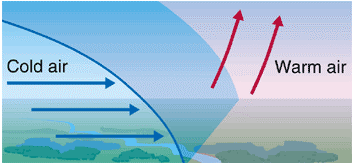
Movement of water between the land, bodies of water, and living things.
Evaporation
Ground water
Water Wheel
Water Cycle

Plants (__________) draw water (___________) and nutrients from the soil (___________) and release water vapor into the atmosphere.
biosphere; hydrosphere; geosphere
hydrosphere; biosphere; geosphere
biosphere; atmosphere; hydrosphere
cryosphere; biosphere; hydrosphere

In any marine biome, the major interaction of Earth's spheres is the _________ with the _____________.
biosphere; atmosphere
cryosphere; biosphere
biosphere; hydrosphere
hydrosphere; geosphere

Which of these BEST describes the relationship between the atmosphere and hydrosphere?
the atmosphere and hydrosphere have no relationship
the hydrosphere grows due to the formation of volcanoes
the solid layer of the hydrosphere is located in the atmosphere
evaporation brings water into the atmosphere and condensation brings it back to the hydrosphere

The relationships between Earth's various systems affect everything from climate to formation of landforms. Which statement BEST describes the relationship between Earth's hydrosphere and atmosphere?
Varied land temperature is a result of the spheres' interaction, which affects weather patterns.
The spheres' interaction affects global sea temperatures, resulting in the formation and melting of ice.
Earth's tectonic plates are affected by this relationship, which can create earthquake activity.
The interaction between the spheres affects elevated landforms, and is responsible for volcano eruptions.
When nitrogen is returned to the soil when dead plants decompose, the interaction is between which two spheres?
Hydrosphere and geosphere
Cryosphere and geosphere
Biosphere and geosphere
Biosphere and atmosphere
The cryosphere has a great impact on climate around the globe as it interacts with the __________ and ___________.
geosphere and biosphere
atmosphere and hydrosphere.
hydrosphere and geosphere.
polarsphere and atmosphere.
This is the layer of gases surrounding the planet Earth that is retained by Earth's gravity.
atmosphere
geosphere
hydrosphere
lithosphere
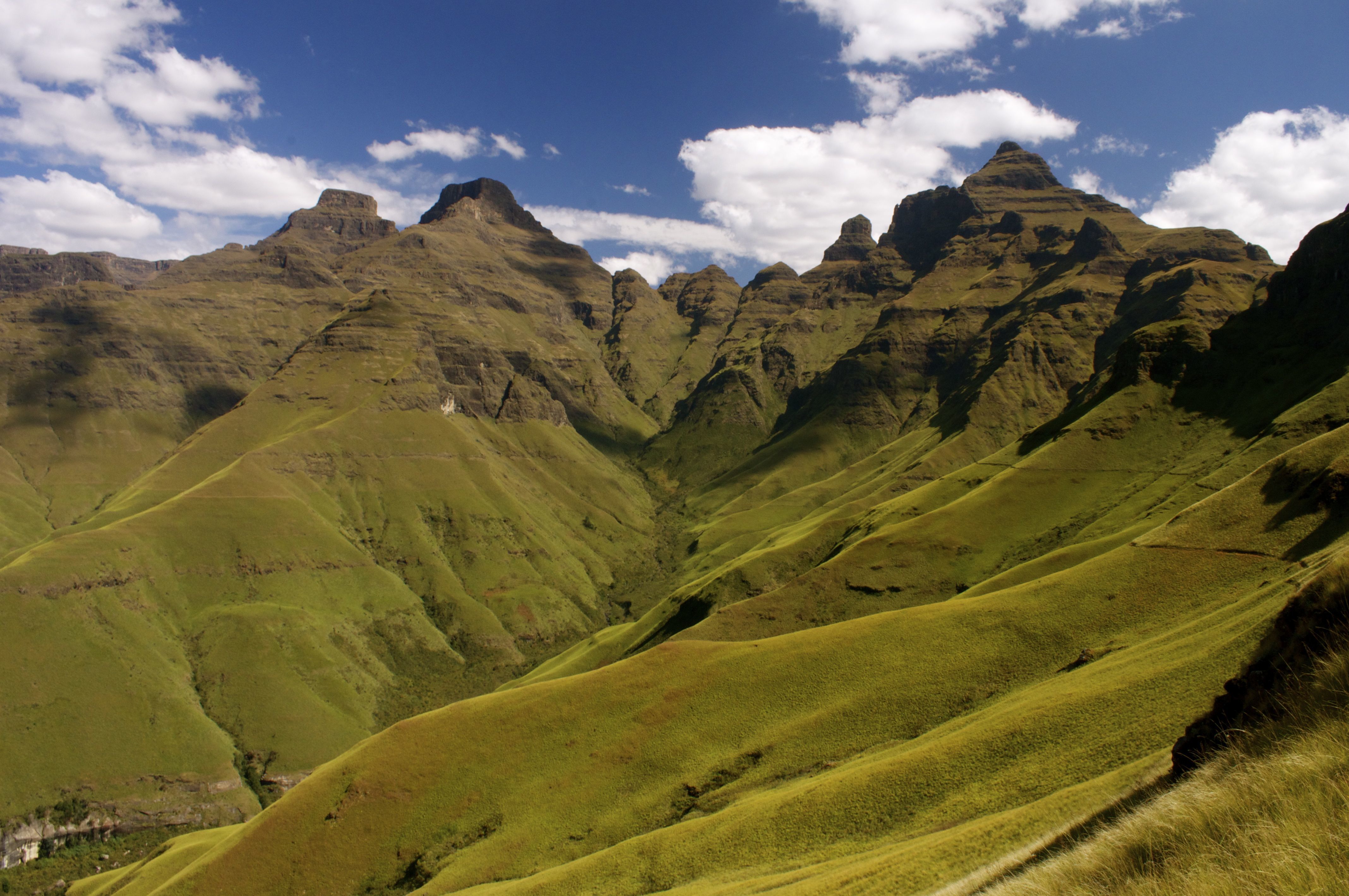



This is part of the....
Geosphere
Atmosphere
Hydrosphere
Biosphere

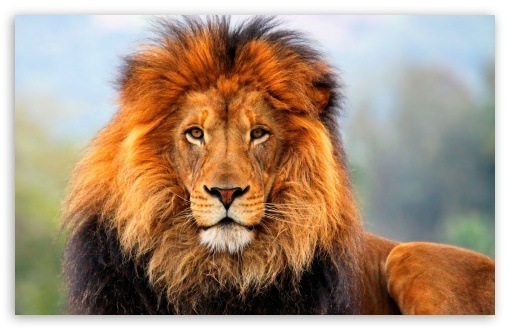
This is part of the....
Geosphere
Atmosphere
Biosphere
Hydrosphere

This is part of the....
Hydrosphere and Atmosphere
Biosphere
Biosphere and Geosphere
Geosphere & Atmosphere
If it's a hot day outside, which statement is definitely true?
The air molecules are moving slower.
There are more clouds in the sky.
There is less energy in the air.
There is more energy in the air.

Which type of air is more dense?
Warm air
Cold air
Warm air _________ because it is _______ dense than the air around it.
rises, less
rises, more
falls, less
falls, more
Cold air _________ because it is _______ dense than the air around it.
rises, less
rises, more
falls, less
falls, more
Which of the following best describes the relationship between air temperature and relative humidity?

The maximum temperature is (a) , which happens in (b) .
The minimum temperature is (c) , which happens in (d) .

The temperature has a (a) trend from March to July,
and a (b) trend from August to November.

The temperature has a (a) trend from March to July,
and a (b) trend from August to November.

This location gets
All four seasons
Wet/Dry Seasons
Spring Summer Fall

Lines that show warmest temperatures in December and January means...
Near Equator
Northern Hemisphere
Southern Hemisphere
Coldest Hemisphere

Lines that show consistent temperature year round means...
Near Equator
Northern Hemisphere
Southern Hemisphere
Rainy Hemisphere

This climate graph is probably from which ecosystem?
Tropical Rainforest
Tundra
Desert
Temperate Forest

This climate graph is probably from which ecosystem?
Tropical Rainforest
Tundra
Desert
Temperate Forest

This climate graph is probably from which ecosystem?
Tropical Rainforest
Tundra
Desert
Temperate Forest

This climate graph is probably from which ecosystem?
Tropical Rainforest
Tundra
Desert
Temperate Forest

What two pieces of data can you get from a climate graph?
humidity and precipitation
cloud cover and precipitation
temperature and precipitation
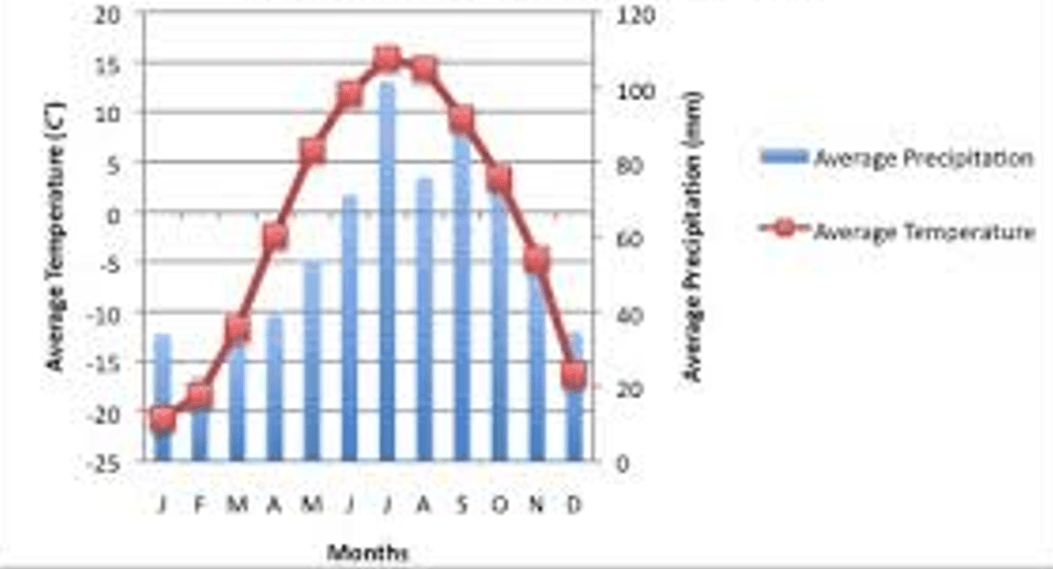

Temperature on a climate graph is shown with a ___________.
BAR
LINE

Taller bars on a climate graph show _________________.
MORE precipitation
HIGHER temperatures
LOWER temperatures

Which climate has the lowest precipitation level?
Climate A
Climate B
Climate C
none of the climates are low
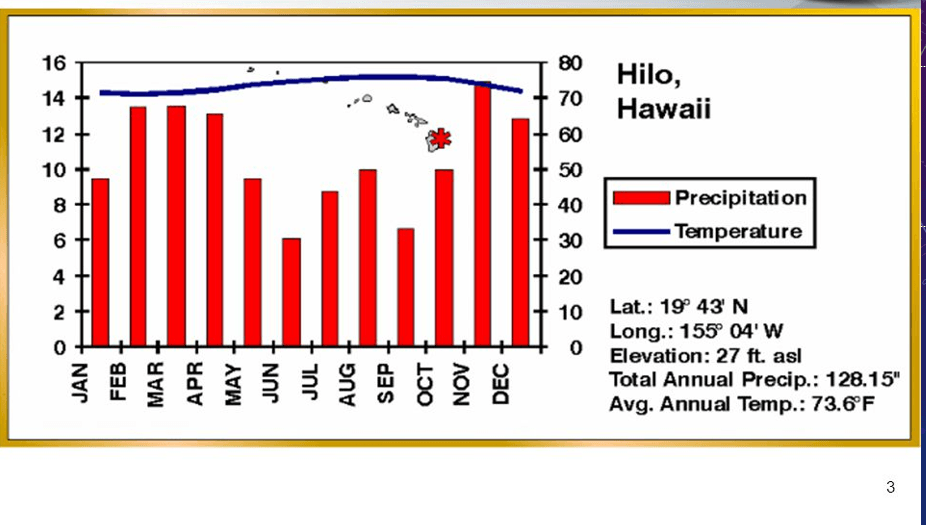
When does the least precipitation occur?
February - March
April - May
June - July
November - December

Which climate graph shows a LOWER temperature in June?
Graph A
Graph B

Which climate graph shows MORE precipitation in May?
Graph A
Graph B
In a Low, air generally exhibits ascending motion. The rising air experiences ___________ atmospheric pressure. The ascending air ___________ and its temperature ___________ .
increasing, expands, decreases
decreasing, expands, decreases
decreasing, is compressed, decreases
increasing, is compressed, increases
Warm air can hold ______________________ moisture (water) than cool air.
more
less
the same amount of

