wayground logo

Free Printable Worksheets

NEW

Font size

S
M
L
XL
Worksheets

Grade 6 Science - Electricity Ontario

Total questions: 61

Worksheet time: 43mins

Name
Class
Date
1.
A particle that carries a negative electric charge is called a(n) ______.
a)
neutron
b)
atom
c)
proton
d)
electron
2.
An example of a voltage source is a _____.
a)
voltmeter
b)
battery
c)
resistance
d)
switch
3.
A circuit that is connected to Earth is said to be _____.
a)
series
b)
parallel
c)
grounded
d)
discharged
4.
Your hair might be attracted to your comb as your hair and the combe become oppositely charged.
a)
true
b)
false
5.
Electrical resistance is low in a good conductor.
a)
true
b)
false
6.
A circuit breaker contains a thin strip of metal that melts if too much current passes through it.
a)
true
b)
false
7.
The flow of electricity in a circuit-
a)
current
b)
flow
c)
circuit
8.
Electricity that flows in a closed path is called a
a)
path
b)
current
c)
circuit
9.
To complete a circuit the switch must be
a)
unattached
b)
open
c)
closed
10.
Two batteries in a circuit make the lights in the circuit brighter than one battery.
a)
true
b)
false
11.
If the lights are on, the circuit is
a)
closed
b)
open
12.
If the lights are off, the circuit is
a)
closed
b)
open
13.
In a parallel circuit the current
a)
makes one circle
b)
stays in one path
c)
splits and goes through two components
14.
Two types of circuits are
a)
parallel and magnetic
b)
electromagnetic and series
c)
series and parallel
15.
The flow of electricity requires a
a)
complete path
b)
incomplete path
c)
insulated current
16.
When socks get stuck to towels in your dryer, this is an example of________________
a)
current electricity
b)
static electricity
17.
What is the major difference between static electricity and current electricity?
a)
Current electricity involves a continuous flow of neutrons; static electricity is a sudden transfer of protons
b)
Current electricity can be deadly; static electricity is almost always safe
c)
In current electricity, there's a single transfer of electrons; in static electricity, there's a steady flow of electrons
d)
Current electricity involves a flow of electrons; static electricity involves a single transfer of electrons
18.
True or False, Lighting is a form of static electricity.
a)
True
b)
False
19.

Static means ____________.

a)

moving

b)

not moving

20.
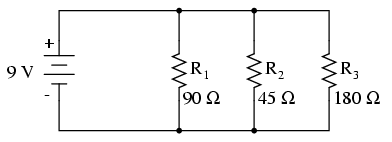
This is an example of a _______ circuit
a)
open
b)
series
c)
parallel
d)
square
21.
This is an example of a ______ circuit
a)
Series
b)
Parallel
c)
Open
d)
Dihexihedral
22.
what kind of circuit is this?
a)
parallel
b)
series
c)
chris barton
d)
open
23.
This circuit has more than one loop. When one light goes out, the others stay on. 
a)
closed circuit
b)
series circuit
c)
parallel circuit
d)
open circuit
24.
This object transforms mechanical energy into electrical energy
a)
Circuit
b)
Generator
c)
Motor
d)
Battery
25.
Which part of a circuit allows electrical current to flow between the battery and light bulb?
a)
load
b)
power source
c)
resistor
d)
conductor
26.
A coil of wire spinning around a magnet or a magnet spinning around a coil of wire can form___
a)
a permanent magnet
b)
an iron core
c)
a turbine
d)
an electric current
27.
A coil of wire spinning around a magnet or a magnet spinning around a coil of wire can form___
a)
a permanent magnet
b)
an iron core
c)
a turbine
d)
an electric current
28.
This type of energy is stored in a battery 
a)
chemical
b)
mechanical
c)
electrical
d)
thermal
29.
Which of the following do you need in order to form a circuit?
a)
power source
b)
conductor
c)
resistor/load
d)
all of these
30.

What is the name of this electrical component called?

a)

Ammeter

b)

Voltmeter

c)

Bulb

d)

Resistor

31.

What is the name of this electrical component called?

a)

Bulb

b)

Resistor

c)

Voltmeter

d)

Ammeter

32.

What is the name of this electrical component called?

a)

Resistor

b)

Battery

c)

Switch

d)

Resistor

33.

What is the name of this electrical component called?

a)

Bulb

b)

Resistor

c)

Switch

d)

Battery

34.

What is the name of this electrical component called?

a)

Bulb

b)

Resistor

c)

Switch

d)

Battery

35.

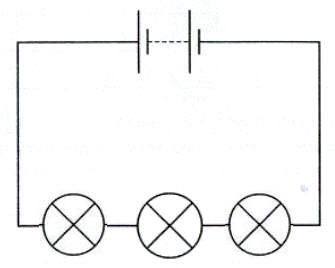
The circuit diagram shows 3 light bulb in series. What happens when one of the light bulb blows.

a)

The remaining bulbs remain on.

b)

The remaining bulbs are off.

c)

The remaining bulbs becomes brighter.

d)

The remaining bulbs becomes dimmer.

36.

The circuit shows three bulb in parallel. What happens when one of the light bulb is spoilt.

a)

The remaining bulbs remain on.

b)

The remaining bulbs are off.

c)

The bulbs become brighter.

d)

The bulbs become dimmer.

37.

Why is overloading a socket dangerous?

a)

It consumes too much electricity.

b)

A lot of energy is wasted.

c)

Over heating and fire may occur.

d)

The wires can become entangled.

38.

What is the danger of broken insulation?

a)

People can get electric shock.

b)

Appliances will be damage.

c)

A lot of energy is wasted.

d)

Heat is generated.

39.

What is the danger of broken insulation?

a)

People can get electric shock.

b)

Appliances will be damage.

c)

A lot of energy is wasted.

d)

Heat is generated.

40.

What physical quantity does voltmeter measures?

a)

Power

b)

Voltage

c)

Current

d)

Resistance

41.
Two objects with LIKE static charges will
a)
attract each other
b)
even out in the end
c)
repel each other
d)
cause a spark
42.
Which subatomic particle has a POSITIVE charge?
a)
Proton
b)
Neutron
c)
Electron
d)
Nucleus
43.
Which subatomic particle has a NEGATIVE charge?
a)
Proton
b)
Neutron
c)
Electron
d)
Nucleus
44.
Is it possible to CREATE electrons?
a)
Yes, that's what static electricity is.
b)
No, you can move them, but they are never created or distroyed.
c)
Sometimes, it depends on the voltage.
d)
Sometimes, it depends on the element.
45.
"Static" comes from the Greek word meaning:
a)
stay
b)
discharge
c)
electricity
d)
noise
46.
wood is a _____?
a)
conductor
b)
insulator
47.
brass is a _____?
a)
insulator
b)
conductor
48.
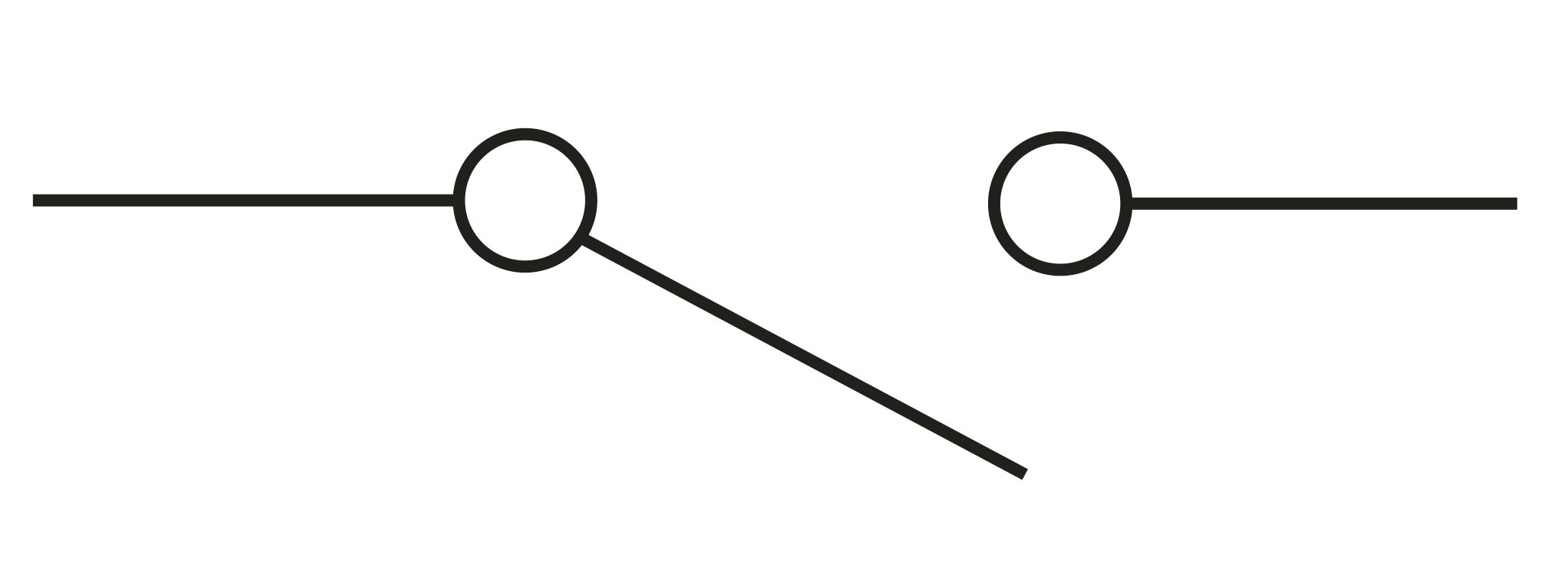
this is the symbol for a _____?
a)
switch
b)
light 
c)
battery
d)
wires
49.

The flow of electric charges is

a)

voltage

b)

current

c)

resistance

d)

electricity

50.
Fossil fuels are nonrenewable  resources because they
a)
take millions of years to form
b)
are easily replaced
c)
are in high demand
d)
don't pollute the air
51.
The source of energy that comes from the intense heat beneath Earth's surface is
a)
nuclear fusion
b)
geothermal energy
c)
solar energy
d)
chemical energy
52.
All of the following are renewable except
a)
uranium
b)
solar
c)
hydropower
d)
food crops (biomass)
53.
The original source of energy for fossil fuels comes from the
a)
sun
b)
Earth's crust
c)
geothermal energy
d)
oceans
54.
Moving water, tides, and dams are examples of
a)
hydropower
b)
fossil fuels
c)
geothermal energy
d)
radiant energy
55.
When steam or water are used to turn a turbine, it can generate
a)
electricity
b)
oil
c)
geothermal energy
d)
uranium
56.
According to the graph, what sector is the greatest user of energy?
a)
industry
b)
commercial
c)
transportation
d)
residential
57.

Energy that comes from the sun is called

a)

karma energy

b)

wind energy

c)

heat energy

d)

solar energy

58.

Electricity is

a)

the heat in an atom

b)

the movement of charged particles

c)

not important

d)

made by neutral particles

59.
According to the Law of Conservation of Energy, energy cannot be _________ or ____________. 
a)
destroyed, destroyed
b)
created, saved
c)
created, destroyed
d)
lost, found
60.
Which type of energy results from rubbing your hands together?
a)
light
b)
electrical
c)
gravitational
d)
thermal
61.

This circuit may or may not light up the bulb.

a)

Will light

b)

Won't light