
Font size
 Worksheets
Photosynthesis/Respiration Test Review
Total questions: 35
Worksheet time: 18mins
Autotrophs differ from heterotrophs in that only autotrophs
require carbon dioxide for cellular respiration
release oxygen as a product of cellular respiration
synthesize nutrients using carbon dioxide and water
break down sugars to assemble other molecules
Which type of organism helps to reduce atmospheric carbon dioxide?
carnivores
producers
decomposers
herbivores
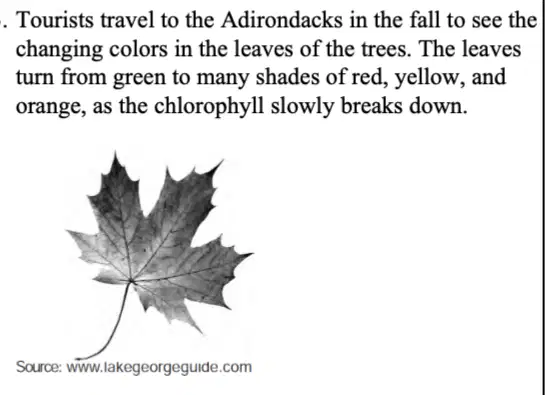
A decrease in green chlorophyll in the chloroplasts will directly result in
an increase in the glucose and oxygen produced
a decrease in the glucose and oxygen produced
an increase in the glucose and a decrease in the carbon dioxide produced
a decrease in the glucose and an increase in the carbon dioxide produced
Photosynthesis and cellular respiration both involve the gases carbon dioxide and oxygen. Which statement best identifies how these gases are involved in the two processes?
Photosynthesis and cellular respiration both use carbon dioxide and release oxygen.
Cellular respiration uses oxygen and releases carbon dioxide, while photosynthesis uses carbon dioxide and releases oxygen.
Cellular respiration uses carbon dioxide and releases oxygen, while photosynthesis uses oxygen and releases carbon dioxide.
Photosynthesis and cellular respiration both use oxygen and release carbon dioxide.
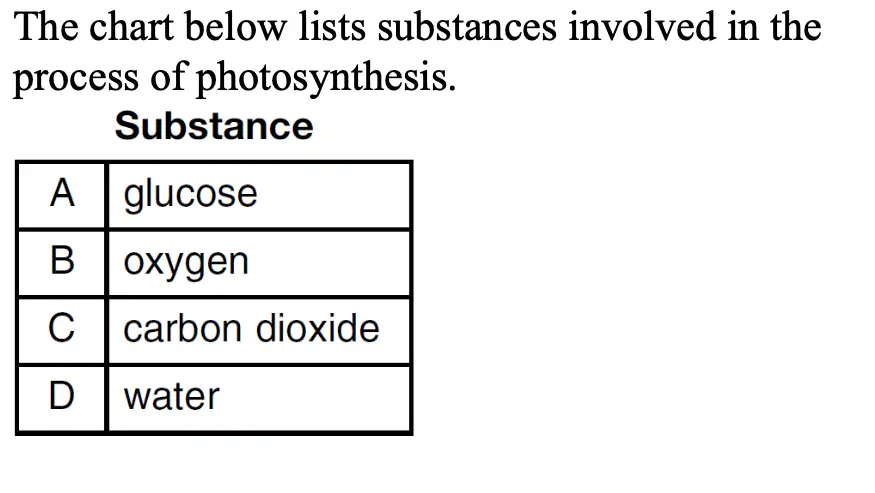
Which statement best describes how these substances interact in photosynthesis?
A) A and B combine to produce C and D.
B) B and C combine to produce A and D.
C) C and D combine to produce A and B.
D) A and C combine to produce B and D.
During the process of photosynthesis, energy from the Sun is converted into
chemical energy in the bonds of inorganic molecules
chemical energy in the bonds of organic molecules
enzymes used to produce inorganic molecules
enzymes used to produce organic molecules
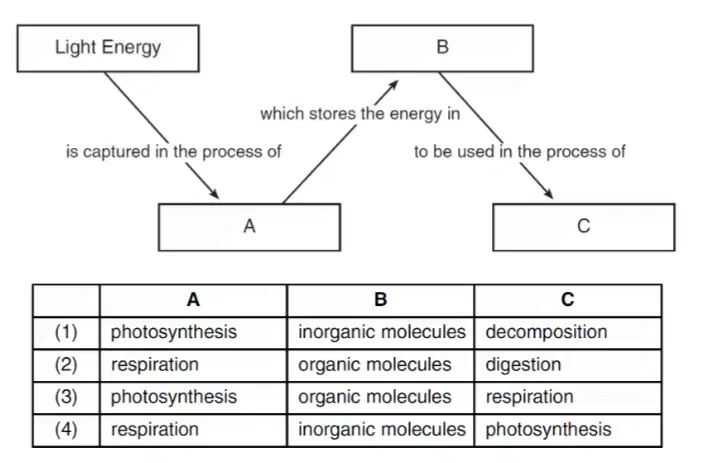
Which set of terms best identifies the letters in the diagram below?
1
2
3
4
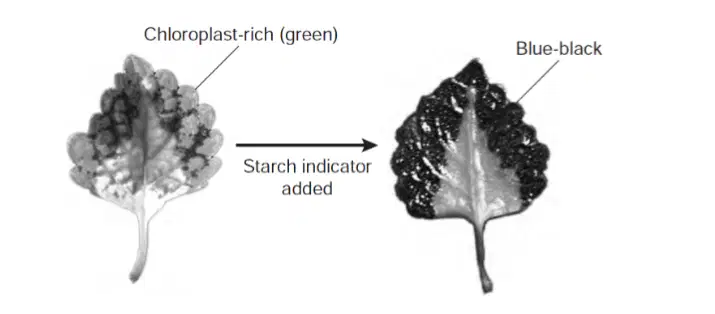
Coleus is a type of plant that has many variations in its leaves. Many coleus plants have chloroplast-rich areas on the edge of the leaf. Other areas in the middle lack chloroplasts. A student exposed the coleus leaf to sunlight. Later, starch indicator was added to the entire leaf. The diagram below shows the result of the experiment.
Which statement is a valid claim, supported by evidence from this experiment?
Chloroplasts are necessary for the production of starch indicator
Starch indicator causes leaves to produce oxygen.
Chloroplasts are necessary for the production of starch.
Water is necessary for the production of starch.
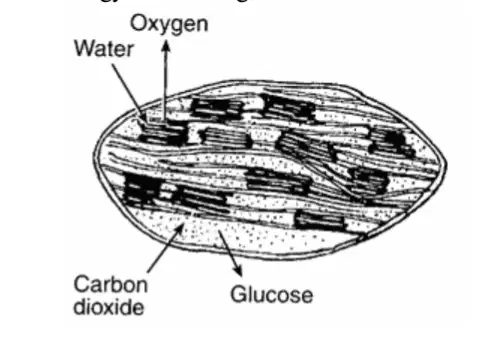
The diagram below illustrates the movement of materials involved in a process that is vital for the energy needs of organisms. The process illustrated occurs within
chloroplasts
mitochondria
ribosomes
vacuoles
The presence of which organelles would identify a cell as a plant cell?
nuclei
lysosomes
chloroplasts
cilia
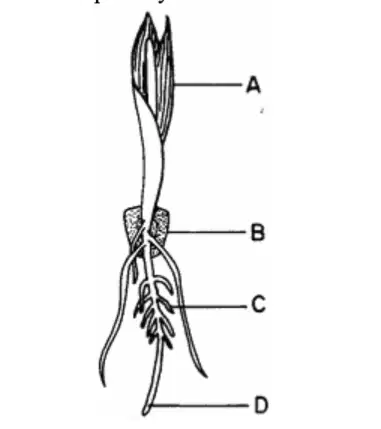
In the diagram of a young corn plant below, which letter indicates a structure that is adapted for carrying out the chemical reactions of photosynthesis?
A) A
B) B
C) C
D) D
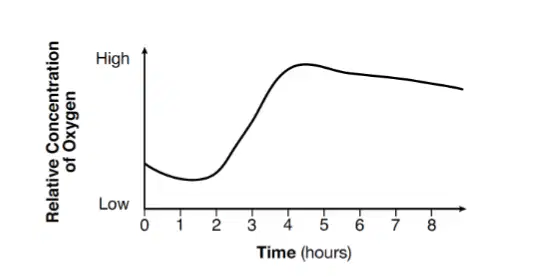
A live plant was placed in a closed container in a lab. Sensors were set up to monitor the levels of oxygen in the container over several hours. During the 8 hours studied, the plant performed
photosynthesis, only
respiration, only
both photosynthesis and respiration
neither photosynthesis nor respiration
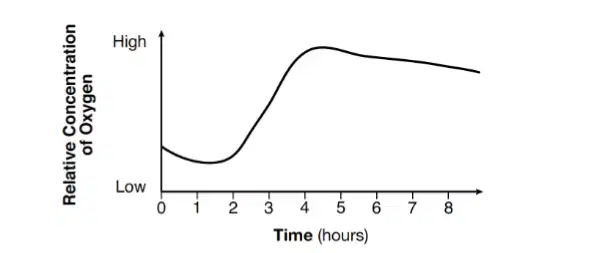
At which hour were the lights turned on in the lab?
8
2
0
4
The cells of some organisms contain both chloroplasts and mitochondria. Which statement describes what would happen in these cells if they were moved from a light environment to a dark one?
The amount of oxygen present would decrease and the amount of carbon dioxide would increase.
The amount of glucose present would increase and ATP would no longer be available.
The amount of carbon dioxide present would decrease and ATP would continue to be synthesized.
The amount of oxygen present would increase and the amount of glucose available would decrease.
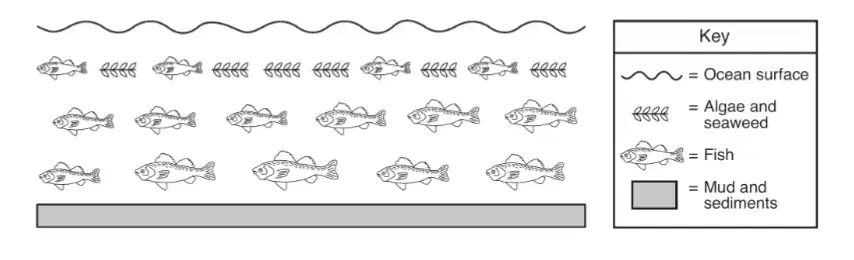
An ecosystem is represented below. The organisms represented as algae and seaweed are found in the area shown due to which factor?
pH
sediment
light intensity
colder temperature
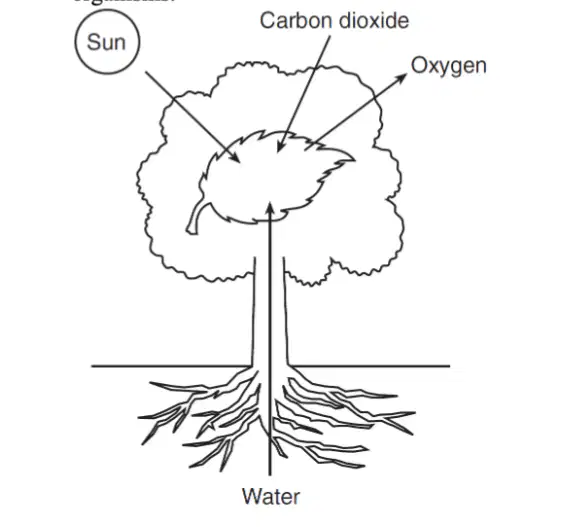
Which statement concerning this process is correct?
The process represented is respiration and the primary source of energy for the process is the Sun.
The process represented is photosynthesis and the primary source of energy for the process is the Sun.
This process converts energy in organic compounds into solar energy which is released into the atmosphere.
This process uses solar energy to convert oxygen into carbon dioxide.
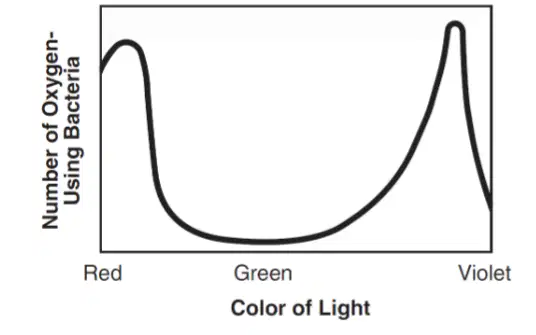
The graph below shows the results of an experiment in which a container of oxygen-using bacteria and strands of a green algae were exposed to light of different colors.
Which statement best explains the results of this experiment?
The rate of photosynthesis is affected by variations in the light.
In all environments light is a vital resource.
The activities of bacteria and algae are not related.
Uneven numbers and types of species can upset ecosystem stability.

Which life process carried out by a green plant is represented in the diagram below?
respiration
photosynthesis
digestion
replication
An athlete might believe that there is a benefit to blood doping with red blood cells because it
could improve the delivery of oxygen to the muscles
could increase the amount of training necessary
would help to deliver necessary nutrient molecules to the cells
would help an athlete to fight disease
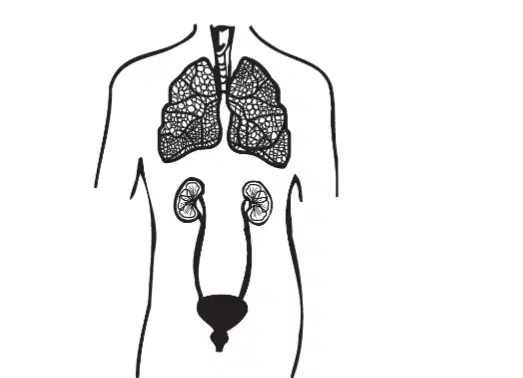
The diagram below shows part of the human body with some organs that help to carry out the removal of wastes. The energy necessary to perform this function comes directly from the
exchange of H2O and O2 during respiration
blood flowing through the organs
ATP molecules produced during cellular respiration
water that is eliminated by the organs
The energy used to obtain, transfer, and transport materials within an organism comes directly from
ATP
DNA
sunlight
starch
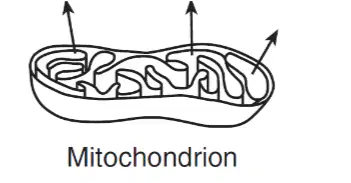
The release of which substance is represented by the arrows?
glucose
oxygen
carbon dioxide
DNA
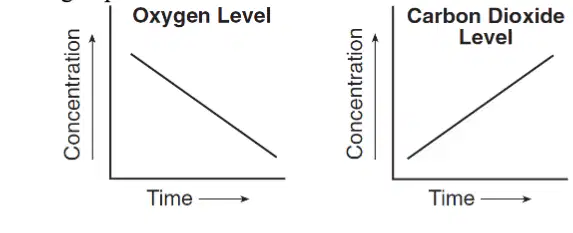
The graphs below show the changes in the relative concentrations of two gases in the air surrounding a group of mice. Which process in the mice most likely accounts for the changes shown?
active transport
evaporation
respiration
photosynthesis
Living organisms must be able to obtain materials, change the materials into new forms, remove poisons, and move needed material from one place to another. Many of these activities directly require
energy released from ATP
carbohydrates formed from receptor molecules
the synthesis of DNA
the breakdown of energy-rich inorganic molecules
To remain healthy, organisms must be able to obtain materials, change the materials, move the materials around, and get rid of waste. These activities directly require
energy from ATP
the replication of DNA
nutrients from inorganic sources
manipulation of altered genes
In nature, during a 24-hour period, green plants continuously use
carbon dioxide, only
both carbon dioxide and oxygen
oxygen, only
neither carbon dioxide nor oxygen
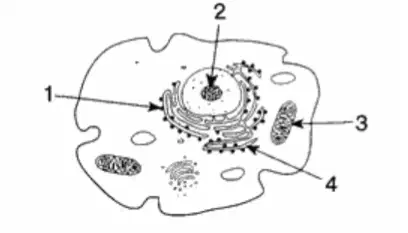
In the diagram of a cell shown below, which number indicates the structure in which most of the enzymes involved in aerobic cellular respiration function?
A) 1
B) 2
C) 3
D) 4
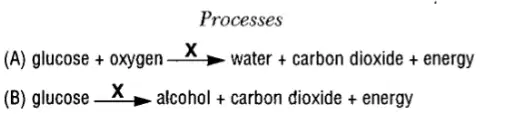
Base your answer to the following question on the two processes represented below and on your knowledge of biology. In both processes, the X represents
catalysts
hydrogen acceptors
monosaccharides
hormones

Which letters indicate substances needed by the leaf to carry out the process of aerobic cellular respiration?
A) A and C
B) B and C
C) C and D
D) B and D
The transfer of energy from nutrients to ATP is accomplished most directly by the process of
cyclosis
diffusion
cellular respiration
glucose synthesis
A cell in the leaf of a corn plant contains more chloroplasts than a cell in the stem of a corn plant. Based on this observation, it can be inferred that, when compared to the cell in the stem, the cell in the leaf
synthesizes more sugar
has a higher chromosome count
produces fewer proteins
uses less carbon dioxide
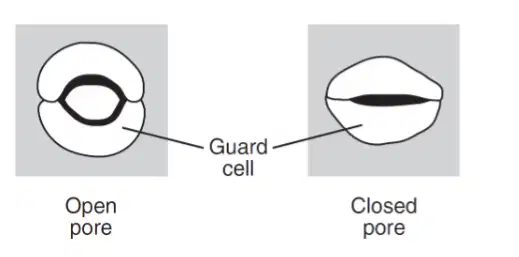
The diagram below represents a change in guard cells that open and close pores in a plant. This change directly helps to
increase heterotrophic nutrition
absorb minerals
regulate water loss
reduce seed production
The equation below represents a summary of a biological process. carbon dioxide + water → glucose + water + oxygen This process is completed in
mitochondria
ribosomes
cell membranes
chloroplasts
Most scientists agree that a large asteroid struck Earth around 65 million years ago. The impact sent large amounts of fine dust particles into the atmosphere, which reduced the amount of sunlight reaching the planet. This event would have the most immediate effect on
herbivores
decomposers
carnivores
autotrophs
Which phrase is an example of autotrophic nutrition?
a cow eating grass in a field
a mushroom digesting a dead log
an apple tree making its own food
a tapeworm feeding in the body of a dog

