
 Worksheets
OSHA 10 Final Exam Review
Total questions: 100
Worksheet time: 51mins
What is the mission of OSHA?
To ensure safe and healthful working conditions by setting and enforcing standards
To provide financial assistance to unemployed workers
To regulate international trade policies
To oversee the education system in the United States
What should be done to ensure ladder safety?
Ensure the ladder is on stable ground
Use a ladder that is too short
Overreach while on the ladder
Ignore the ladder's weight limit
Identify the elements of a Fire Protection Plan.
Fire detection systems, fire suppression systems, and emergency evacuation procedures
Fire detection systems, water supply systems, and electrical wiring
Fire suppression systems, emergency lighting, and building design
Emergency evacuation procedures, building design, and electrical wiring
Under what conditions might shelter-in-place be necessary in an emergency situation?
During a chemical spill
When there is a fire
In case of a flood
During a power outage
Why is it important to understand the risks and hazards associated with fires?
It prevents accidents from occurring in the first place
It makes it easier to keep workers in good physical fitness
Employers don't have to pay hazard fees
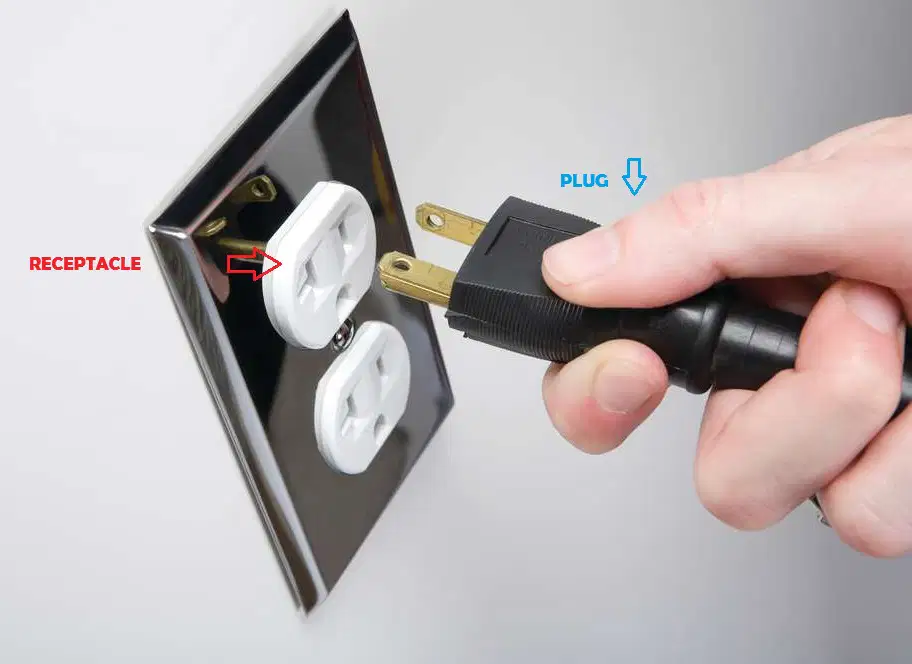
Your co-worker Boston is about to place a plug into a wall receptacle with his hand on the plug. Should you stop Boston?
Yes, because you should never place your hand on the plug while you plug it into a wall receptacle.
Yes, because you should always plug it into an extension cord, not a wall receptacle.
No, Boston is using a safe method of plugging in the cord.
What are the major electrical hazards that can cause injury or death?
Electrocution, electrical burns, and electrical fires
Only electrical fires
Only electrocution
None of the above
What are the responsibilities of an employer regarding PPE?
Provide PPE to employees
Ensure PPE is used correctly
Maintain PPE in good condition
Ignore PPE requirements
What type of eye protection should be used to prevent injuries from flying particles?
Eye protection such as safety goggles or face shields should be used to prevent injuries from flying particles.
Regular eyeglasses are sufficient to prevent injuries from flying particles.
No eye protection is needed when dealing with flying particles.
A simple cloth mask can prevent injuries from flying particles.
Which class of hard hat provides protection up to 20,000 volts?
Class A
Class B
Class C
Class D
What should you use to protect your feet from falling objects and hazardous liquids?
Steel-toed boots
Sandals
Sneakers
Barefoot
Identify types of material handling equipment.
Forklifts, Cranes, Slings
Conveyor Belts, Pallet Jacks, Dollies
Excavators, Bulldozers, Backhoes
Drills, Saws, Hammers
What is the most common injury when working with machines?
Cuts
Amputations
Bruises
Burns
The following are main responsibilities of someone under OSHA's standards: monitor hazards, keep records or workplace injuries and illnesses, and provide specific equipment, such as PPE. Whose responsibilities are these?
you, the worker
your co-workers
your employer
the government
You work for a company as one of their cleaning staff. Since you are working with a new cleaning product, you've begun to realize you have headaches and blurry vision by the end of your shifts. Do OSHA regulations give you the right to access your exposure records?
Yes
No
Your co-worker Alayna thinks your employer punished her by excluding her from a prize drawing after she was injured at work, even though she followed all work-site safety rules. How long does Alayna have to file the complaint with OSHA?
3 days
10 days
15 days
30 days
If a fixed ladder extends more than 24 feet, who is allowed to work on it?
Supervisors on a job site
Senior workers on a job site
Any worker, as long as they have been given proper orientation and PPE
Qualified climbers with additional training
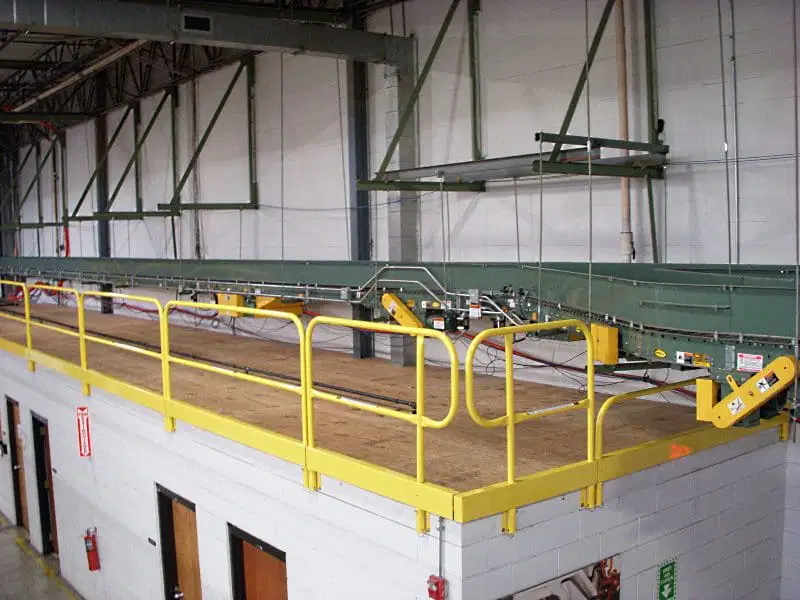
What is a barrier along the open sides of stairways and platforms that prevents falling called?
Guardrail
Banister
Top Rail
Toeboard
Your worksite has a stairwell, without a section of railing. Whose responsibility is it to make this area free from a fall hazard?
you, the worker
your co-workers
your employer
the government
Does an Emergency Action Plan (EAP), only contain information on what happens during an emergency?
Yes
No
Why is it important to understand the risks and hazards associated with fires?
It prevents accidents from occurring in the first place
It makes it easier to keep workers in good physical fitness
Employers don't have to pay hazard fees
What determines what type of extinguisher to use on a fire?
The type of fire
What is available on the worksite
How many employees are near the fire
How much smoke is in the air
Your co-worker in Boston is about to place a plug in a wall receptacle with his hand on the plug. Should you stop Boston?
Yes, because you should never place your hand on the plug while you plug it into a wall receptacle
Yes, because you should always plug it into an extension cord- not a wall receptacle
No. Boston is using a safe method of plugging in the cord.
Yvonne is having an electrician come to her site to work on a piece of machinery. As an employer, what does she need to ensure before the electrician begins to work on the equipment?
lockout and tagout the equipment's electrical circuits
purchase liability insurance for the equipment
confiscate the keys to the machinery
install a GFCI or an AEGCP for the equipment's electrical circuits
Some overhead powerlines have a protective covering that protects them from exposure to the elements. Does this covering also protect you, the worker, from electrocution?
Yes
No
Valencia will be working around chemicals that can splash and get into her eyes. What type of PPE should she be sure to wear?
steel toed boots
goggles or safety glasses
leather palm gloves
respirator
Micah has just started his first job. Who is responsible for training him on the use of PPE in his workplace?
himself
a co-worker
OSHA
his employer
Under what circumstances is it more likely that you will have hearing damage?
long exposure to low noise levlels
short exposures to low noise levels
long exposures to high noise levels
Employers are required to provide Safety Data Sheets (SDSs) of all hazardous chemicals for their employees. To support this, the law requires that manufacturers and distributors are responsible for providing SDS. Based on this information, who else would be responsible for providing SDS?
barge captains
pilots
importers
transport supervisors
Chemical manufacturers are required to provide warning labels to anyone who purchases or uses their chemical for work purposes. What else are chemical manufacturers required to provide?
gloves
Safety Data Sheets
keychains
flyers
Howard has worked with a cleaning solution for over a decade that gives off strong fumes. Over time, Howard has developed a cough that won't go away and has become more sensitive to sunlight. What kind of exposure is this considered?
Acute
Chronic
Deadly
No Effect
Your employer has asked you to remove old metal plating from a worksite. The metal plating is heavy and has sharp edges. What PPE should you use? (Select ALL that apply.)
respirator
steel toed boots
gloves
safety glasses
Robert is scheduled to begin working with forklifts in two weeks. He will turn 18 two days before he operates a forklift for the first time. Will Robert be old enough to be a forklift operator?
Yes, you can be a forklift operator at 18
No, you must be 21 before you can operate a forklift
In addition to environmental factors, what determines which type of sling you should use?
the type of crane
where you work
what's available at your worksite
the type of load
Machine movement can be divided into two main categories- one of which is motions. What is the other category?
type
actions
power
One of the main safeguarding methods is using guards. What is the other main safeguarding method?
pictorials
types
devices
levers
When can you use special hand tools instead of guards to avoid the point of operation on a machine?
You can never use special hand tools as a substitute for guards.
You can always use special hand tools as a substitute for guards.
You can only use special hand tools in certain cases as a substitute for guards.
Training is considered what type of control?
PPE
Engineering
Administrative
A musculoskeletal disorder is an injury of the muscles, tendons, ligaments, etc., that can be caused or aggravated by work tasks, such as lifting or pushing. Which of the following is another example of a work task that could lead to the development of a musculoskeletal disorder?
pulling
sitting in a neutral posture
keeping your muscles relaxed
drinking plenty of water

You're working at a job site that has puddles of water all around it. Could the water be a source of biological hazards?
Yes
No

Which of these is a method by which a bloodborne pathogen can be transmitted?
skin injury
dry skin contact
blunt force trauma
bruising
An important purpose of OSHA is to ____.
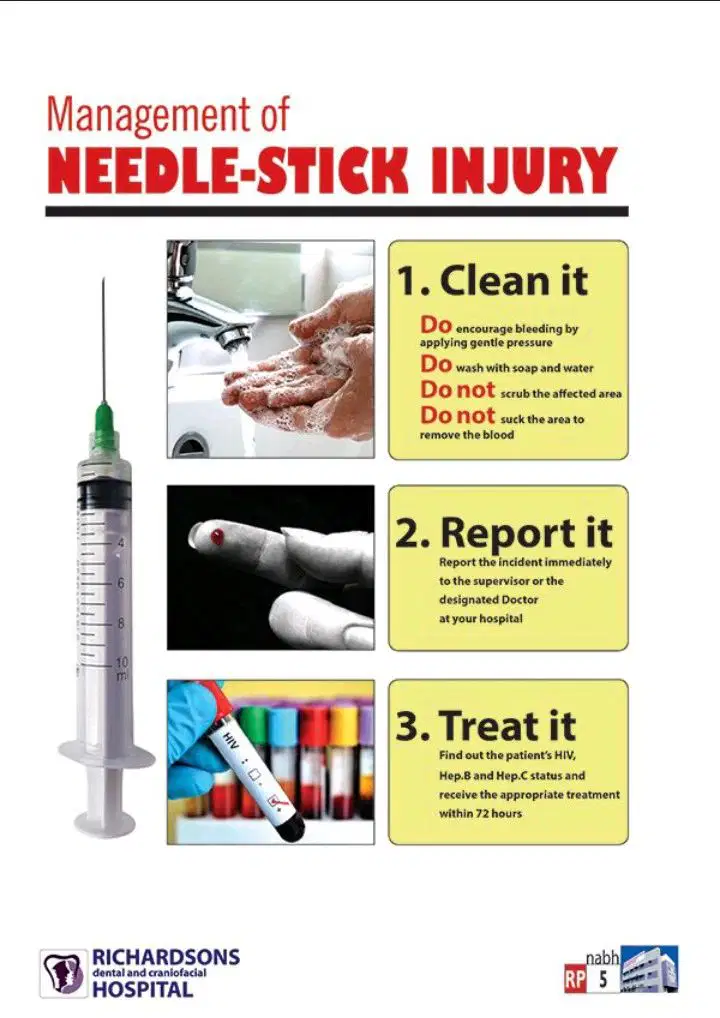
Mani has accidentally stuck himself with a needle on a used syringe. The first thing he did was to immediately wash the area with soap and water. Did Mani do the right thing?
Yes, you should immediately wash the area around a sharps injury with soap and water.
No, you should immediately report the injury before washing the area.
No, you should have the blood tested before washing it away.
No, you should blot the area with dry tissue before washing.
Your employer is required to provide you with a vaccine if you may have been exposed to bloodborne pathogens. Which vaccine is this?
IPV
Hepatitis B
Varicella
dTap

Imura lifts a box by bending at the knees, then slowly standing up and holding the box away from her body. Is this an effective and safe lifting technique?
Yes, because she bent at the knees.
Yes, because she held the box away from her body.
No, because she bent at the knees.
No, because she held the box away from her body.
How can you reduce the likelihood of being injured? (Select ALL that apply.)
Use tools to reduce the need to perform repetitive actions
Use ergonomic props
Take breaks
Use low vibration tools
Rotate through tasks
A good posture is one that places the least amount of _____ on the muscles and joints.
flexibility
pressure
pain
stress
Janel's car runs out of gas in the middle of a busy highway. Which of the four main causes of accidents is involved in this situation?
driver
vehicle
weather conditions
roadway
You heard something shift and fall onto the floorboard in the back of your vehicle, so you turn to see what it is. Which type of distraction is this?
Visual
Auditory
Biomechanical/ Manual
Cognitive
You're driving across the country on a roadtrip. How often should you take breaks- at a minimum?
Every 30 minutes
Every hour
Every 2 hours
Every 4 hours
Who could be a victim of workplace violence? (Select ALL that apply.)
construction workers
retail workers
line cooks
auto mechanics
Employers can get involved in preventing workplace violence. Who else can help prevent workplace violence?
clients
perpetrators
employees
Falyn has noticed that one of the people in her store has remained in the same area for twenty minutes, isn't looking at the merchandise, and keeps reaching in his pocket, which makes her think this customer has the potential to become violent. Who should she talk to about this?
the customer in question
her co-workers
her supervisor
no one
Absenteeism and decreased productivity are both indirect costs for workplace accidents. Which of the following is considered another indirect cost?
fees
lawsuits
poor customer relationships
Successful safety and health programs involve incident investigations and reviews of controls. What else do safety and health programs involve?
regular inspections
lack of documentation
no control methods
Employers can prevent or control workplace hazards by developing emergency plans and evaluating the effectiveness of existing controls. In addition to these actions and the steps in the hierarchy of controls, what should an employer do to prevent or control workplace hazards?
use a hazard control plan
hire an effective lawyer to protect the facility
allow workers to directly interact with the hazard
The primary purpose of OSHA is to:
Collect fines from employers
Set and enforce workplace safety standards
Provide insurance to injured workers
Regulate international trade
When must employers provide PPE to workers?
Only if workers request it
Whenever hazards cannot be eliminated or controlled through engineering or administrative controls
Only for new employees
Once a year
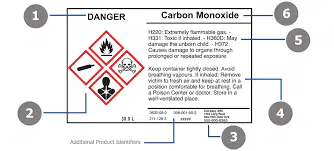
Which hazard communication element uses pictograms to convey information?
MSDS, or Material Safety Data Sheet
SDS, or Safety Data Sheet
GHS Labeling, or the Globally Harmonized System of Classification and Labeling of Chemicals
Lockout/Tagout
The term “lockout” in lockout/tagout means:
Removing workers from a hazardous area
Physically locking a machine’s energy source in the off position
Tagging equipment for maintenance
Shutting off lights
A fire classified as Class C involves:
Flammable liquids
Ordinary combustibles
Electrical equipment
Metals
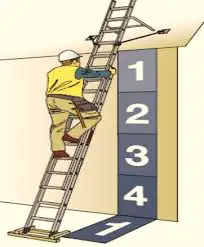
When using a portable ladder, the base should be set out:
1 foot for every 2 feet of ladder height
1 foot for every 4 feet of ladder height
2 feet for every 8 feet of ladder height
Flat against the wall

Which document lists a chemical’s hazards and safe handling procedures?
PPE log
Incident report
Safety Data Sheet
Safety Manual
Which type of hazard includes repetitive motion and awkward postures?
Physical
Chemical
Ergonomic
Biological
OSHA requires that injury and illness records be kept for:
3 years
5 years
10 years
1 year
What is the minimum height at which fall protection is generally required in General Industry?
2 ft
4 ft
6 ft
8 ft
Which of the following is NOT a form of personal protective equipment?
Hard hat
Safety harness
Safety glasses
Air ventilation system
Who is responsible for providing a safe and healthful workplace?
OSHA inspectors
The employer
The employees
Local fire department
The best method to control a hazard is:
PPE
Administrative controls
Engineering controls
Job rotation
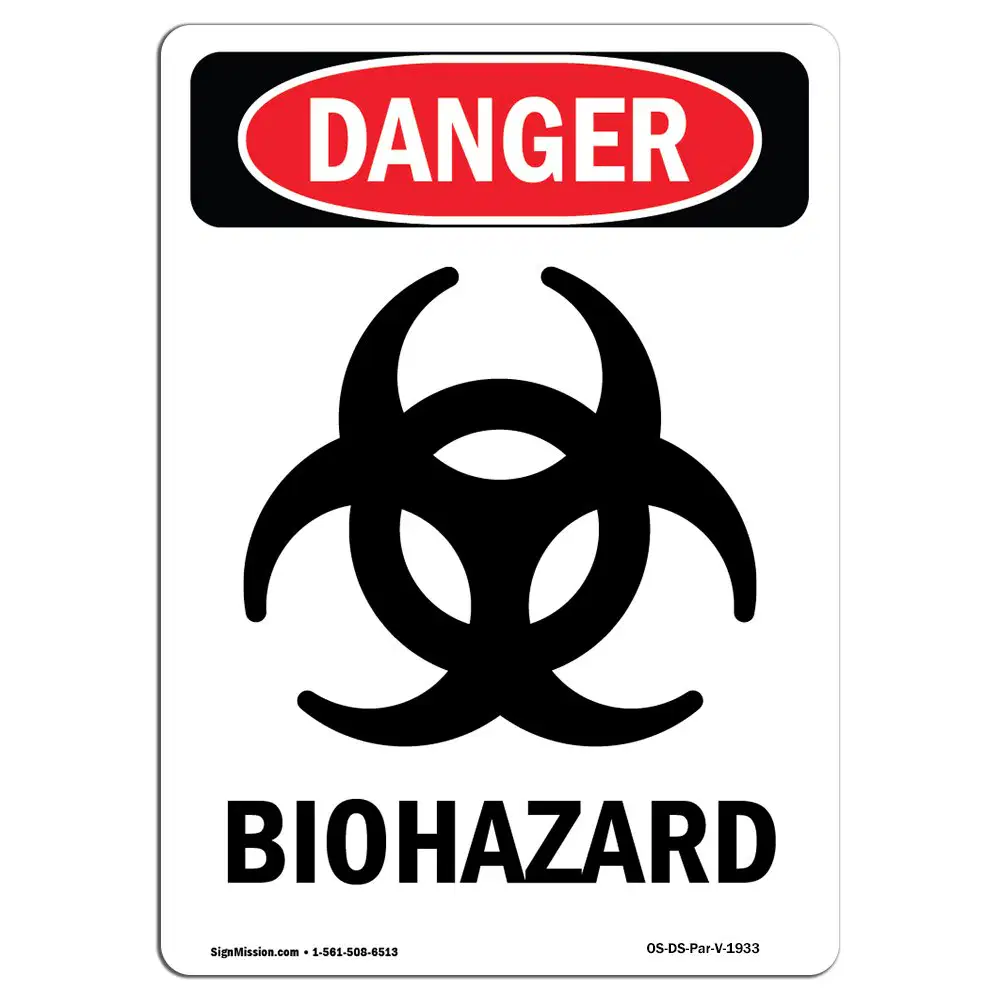
If you see a “Danger” sign, it means:
Immediate hazard that will cause death or serious injury
General precaution
Possible minor injury
Company policy reminder
Which OSHA program protects workers from retaliation for reporting safety concerns?
Whistleblower Protection Program
Employee Rights Act
Hazard Pay Law
Incident Prevention Program
The “Right to Know” rule refers to:
Your right to know your wages
Your right to know about workplace hazards and chemicals
Your right to know your supervisor’s salary
Your right to know when you will be promoted
A near miss is:
An incident where no one was injured, but could have been
An unimportant event
A minor accident
A hazard that has already been fixed
Which class of hard hat provides protection from high voltage electrical hazards?
Class A
Class B
Class C
Class D
What is the primary purpose of machine guarding?
To make the machine look professional
To protect workers from moving parts
To prevent theft
To reduce noise
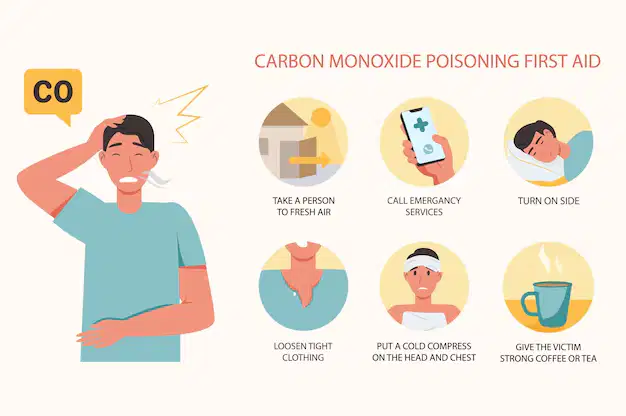
If you suspect carbon monoxide exposure, you should:
Continue working until a supervisor arrives
Leave the area immediately and get fresh air
Drink water
Remove your PPE
Which of the following is a biological hazard?
Loud noise
Viruses
Hot surfaces
Moving machinery
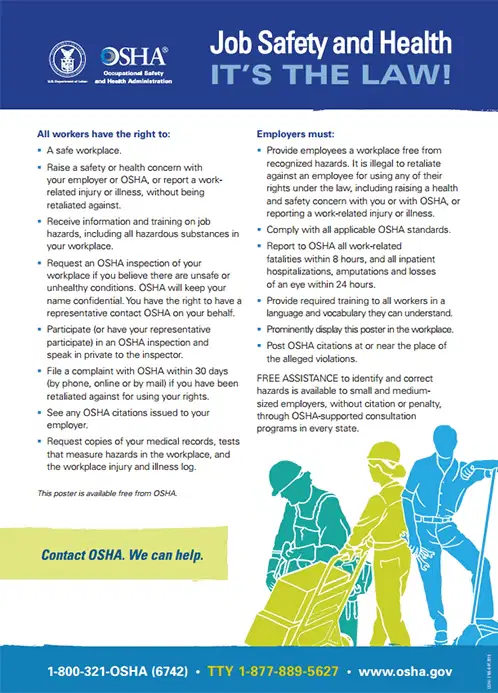
The OSHA poster “Job Safety and Health – It’s the Law” must be:
Mailed to OSHA annually
Displayed in a prominent workplace location
Included in the employee handbook only
Sent to all employees by email
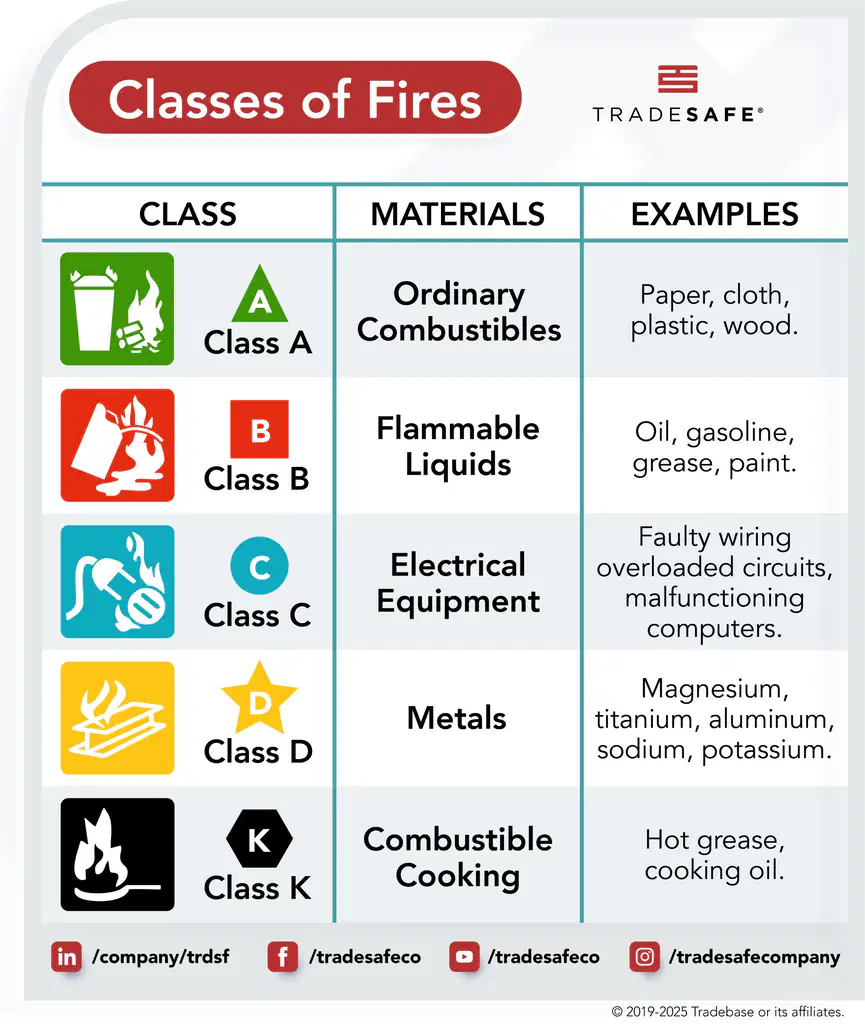
Which type of extinguisher is used for combustible metals?
Class A
Class B
Class D
Class K
An example of an engineering control is:
Training
Wearing gloves
Installing ventilation systems
Posting warning signs
What is the purpose of a Job Hazard Analysis (JHA)?
To evaluate worker performance
To identify hazards before they cause harm
To determine wage rates
To schedule shifts
If PPE becomes damaged during use, you should:
Continue working until the shift ends
Repair it with tape
Replace it immediately
Give it to a co-worker
Which of the following is a form of administrative control?
Installing guardrails
Changing work schedules to limit exposure
Using earplugs
Replacing a noisy machine with a quieter one
OSHA’s mission includes all of the following EXCEPT:
Assisting employers and employees with compliance
Setting and enforcing standards
Providing medical care to injured workers
Providing training, outreach, and education

Which hazard class is represented by a flame pictogram under GHS (Globally Harmonized System of Classification and Labeling of Chemicals)?
Oxidizers
Flammables
Corrosives
Gases under pressure
When should you report a workplace injury?
At the end of the week
Immediately after it occurs
Only if medical treatment is needed
Only if OSHA requests it
The OSHA standard for exit routes requires that:
Exit doors must open toward the inside
Exit routes must be unobstructed and clearly marked
Exit routes must be used only during fire drills
Exit routes can be locked from the outside

In a hazard control hierarchy, PPE is considered:
The most effective control
The least effective control
Equal to engineering controls
Optional for trained workers
Which of the following is an example of a physical hazard?
Fumes
Excessive noise
Viruses
Poor posture

Which fire extinguisher is best for cooking oil and grease fires?
Class A
Class B
Class K
Class D
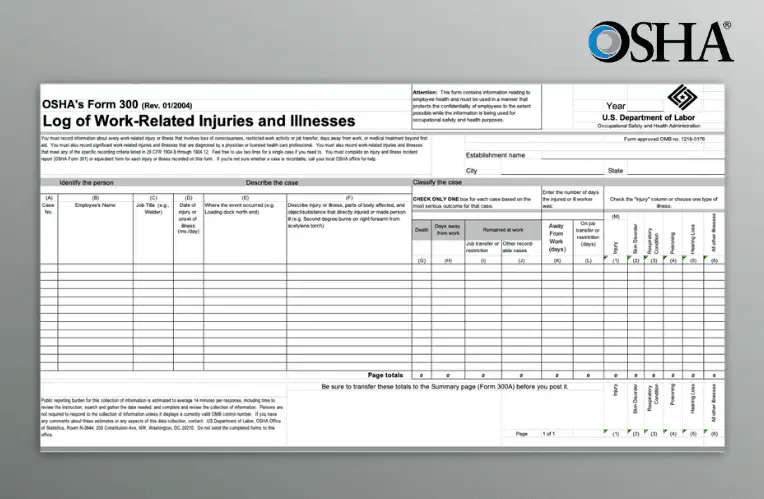
Which OSHA form is used to record work-related injuries and illnesses?
OSHA 200
OSHA 300
OSHA 500
OSHA 600
The main reason to conduct regular safety inspections is to:
Satisfy OSHA
Identify and correct hazards before accidents happen
Train new employees
Reduce insurance rates
An unguarded floor opening must be protected by:
Yellow caution tape
A warning sign only
A standard railing or cover
A rope barrier
Which of the following is considered an engineering control for noise hazards?
Rotating employees between noisy and quiet jobs
Installing noise-dampening equipment
Requiring workers to wear earplugs
Training workers about hearing loss
In OSHA terms, a “competent person” is someone who:
Can recognize hazards and has the authority to correct them
Has worked for the company for at least 5 years
Holds a safety degree
Is an OSHA inspector
How often should fire extinguishers be inspected visually?
Monthly
Quarterly
Every 6 months
Annually
Which of the following is a requirement for storing flammable liquids?
Store them in any available cabinet
Store them in a well-ventilated flammable liquid storage cabinet
Store them near electrical panels for easy access
Store them in the break room
Which of the following is an example of a workplace housekeeping practice?
Keeping aisles clear of clutter
Posting evacuation routes
Wearing a hard hat
Installing machine guards
The term “material handling” refers to:
Writing chemical safety procedures
Moving, storing, and controlling materials
Lifting weights at the gym
Cleaning equipment after use
Which hazard is most likely to cause slips, trips, and falls?
Loud noise
Poor lighting and wet floors
Repetitive motion
Welding fumes

