wayground logo

Free Printable Worksheets

Font size

S
M
L
XL
Worksheets

Quiz: Enzymes

Total questions: 17

Worksheet time: 17mins

Name
Class
Date
1.
What is a substance called if it speeds up a chemical reaction?
a)
reusable
b)
catalyst
c)
specific
d)
fragile
2.

Enzymes are an example of

a)

Lipids

b)

Carbohydrate

c)

Protein

d)

Nucleic Acid

3.
Each enzyme only has 1 substrate that will fit its active site.  What is this called?
a)
reusable
b)
catalyst
c)
specific
d)
fragile
4.
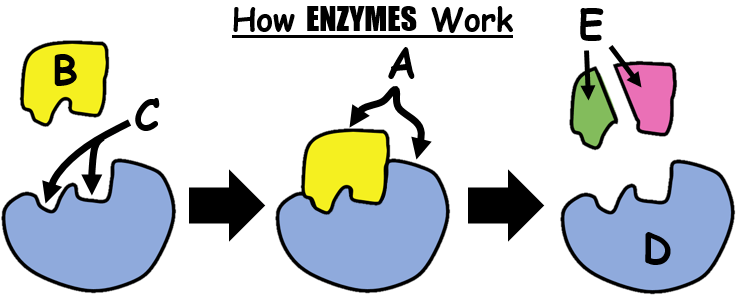
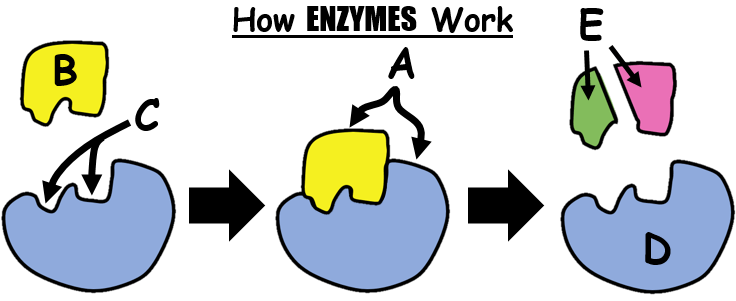
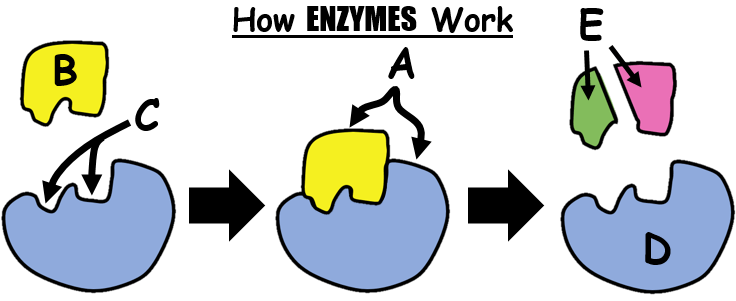
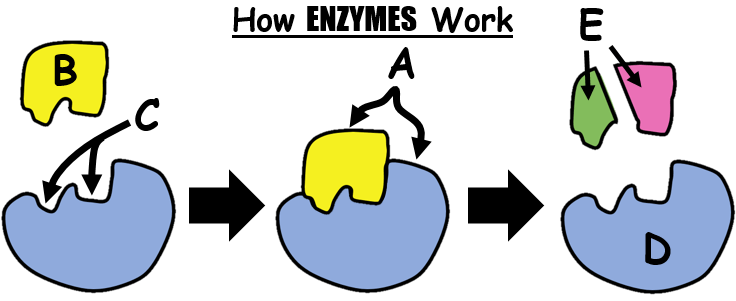
Letter D...
a)
active site
b)
enzyme
c)
substrate
d)
products
5.
Letter B...
a)
active site
b)
enzyme
c)
substrate
d)
products
6.
Letter C...
a)
active site
b)
enzymes
c)
substrate
d)
products
7.
Letter E...
a)
active site
b)
enzyme
c)
substrate
d)
products
8.
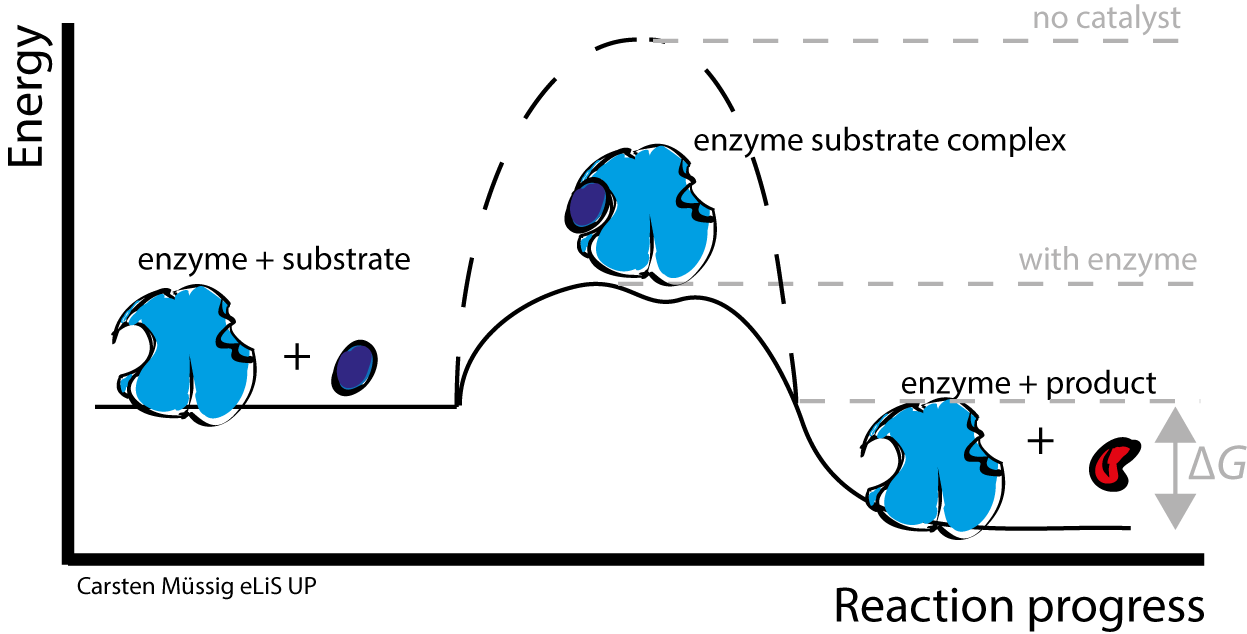
An enzyme speeds up a reaction by
a)
lowering the activation energy.
b)
raising the activation energy.
c)
releasing energy.
d)
absorbing energy.
9.

What happens when enzymes are heated to a high temperature?

a)

The enzymes die.

b)

The shape of the enzyme are changed and it denatures

c)

The enzymes' amino acid sequence changes.

d)

The enzymes remain the same

10.
Which enzyme is most efficient in a basic solution?
a)
A
b)
B
11.
What happens to an enzyme when it is denatured?
a)
Activation energy is lowered.
b)
It becomes stronger.
c)
It loses its shape.
d)
Activation energy is raised.
12.

Match the following Macromolecules to its structure

a)
1.

Carbohydrate

b)
2.

Lipid

c)
3.

Nucleic Acids

d)
4.

Protein

13.

Enzyme can be used again and again

a)

True

b)

False

14.

Enzymes act on many different substrates

a)

True

b)

False

15.

Please identify which pH levels belong to which of the categories of Acids, Bases, or Neutral.

Categorize the following

pH is less than 7

pH is greater than 7

pH is equal to 7

Acid
Base
Neutral
16.

Enzymes can both build up or break down a substrate

a)

True

b)

False

17.

Which of the following is a common model used to describe enzyme-substrate interaction?

a)

Lock and key model

b)

Fluid mosaic model

c)

Bohr model

d)

Rutherford model