
 Worksheets
Feb. 7 Biology Summative
Total questions: 17
Worksheet time: 42mins
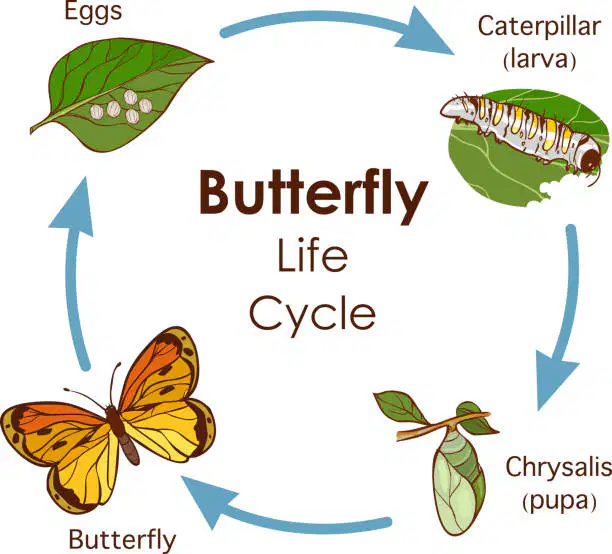
Which characteristic of life is best shown by this diagram?
DNA is the genetic code in an organism
An organism is made of one or more cells
An organism responds to changes in its environment
Changes occur in an organism as it grows and develops
Which statement is true of all living organisms?
The convert sunlight into chemical energy
They consume other organisms for nourishment
Their genes have instructions for building proteins
Their genetic material is found in the nucleus
Which statement is a hypothesis?
The presence of an enzyme increased the reaction rate.
The reaction rate increased 100% once the enzyme was introduced.
Introducing an enzyme into a reaction did not increase the rate of the reaction.
When an enzyme is introduced into a reaction the reaction rate will increase by 100%.
The idea that living things can come from nonliving matter, for example "Fish come from mud", is called:
Spontaneous generation
Metabolism
Homeostasis
Evolution
Check all that apply. Which of the following are examples of an organism maintaining homeostasis?
Shivering when cold
Sweating when hot
Fever - an immune response when sick
Vomiting - releases toxins and wastes
A plant does not have enough water stored in it so it begins to wilt (droops). What is the stimulus and what is the response?
Stimulus: not enough water
Response: plant wilts
Stimulus: plant wilts
Response: not enough water
Stimulus: sunlight
Response: wilting because it's dry
Stimulus: too much water
Response: plant grows taller
At a doctor's appointment, a one month old baby weighs 8 lbs and is 18 inches long. That baby was 7 lbs and 17 inches long at birth. This is an example of ...
all living things being made of cells.
all living things maintaining homeostasis.
all living things growing and developing.
all living things responding to stimuli.

Which type of bond is strongest?
Covalent
Ionic
When an atom looses an electron it
becomes more negative
becomes a positive ion
becomes a negative atom
becomes an isotope


Label the following items using the image provided.
Match the following
Cells
All living things are made of one or more
DNA
All living things have genetic material.
Reproduce
All living things have offspring
Grow
All living thing increase in size, develop and die
What is the difference between a molecule and a compound?
Molecules are larger than compounds
Molecule is more generic and can include elements in which two or more of the same atom are chemically bonded
Compounds always contain carbon and hydrogen whereas molecules can contain other elements
Compounds contain chemical bonds whereas molecules do not have any chemical bonds

