
 Worksheets
Benchmark 24/25 Review
Total questions: 78
Worksheet time: 2hrs 41mins
answer the 4 questions down below
tectonic plates that make up the continents
the process of one tectonic plate sliding beneath another
oceanic plates
tectonic plates that make up the ocean floor
transform boundaries
boundaries where tectonic plates slide past each other horizontally
convergent boundaries
boundaries where tectonic plates collide or come together
Match the following images with vocabulary.

Continental Drift

Divergent Boundary

Transform Boundary

Convergent Boundary
Select all that are TRUE about Continental Drift.
Supercontinent was known as Continental Ridge
Supercontinent was known as Pangaea
Pangaea was the area between continents
Continental Ridge was the area between continents
Select all that are TRUE about Tectonic Plates.
Creates Divided Boundary
Creates Divergent Boundary
Creates Convergent Boundary
Creates Concave Boundary
Select all that are TRUE about Divergent Boundary.
Forms Pacific Ring of Fire
Plates will move toward each other
Plates will move away from each other
Forms Mid-Atlantic Ridge
(a) was proposed by (b) and suggested that the (c) are in constant motion.
Continental drift
Alfred Wegener
continents
Harry Hess
Seafloor Spreading
oceans
(a) was proposed by (b) and suggested that the (c) are in constant motion.
Continental drift
Alfred Wegener
continents
Harry Hess
Seafloor Spreading
oceans

Subduction means.....
one plate goes under another plate
two plates slide past each other
two plate collide and form folded mountains
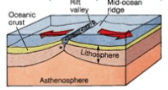
divergent
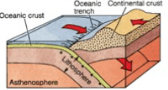
convergent
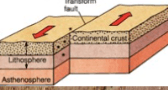
transform
Organize these options into the right categories
only earthquakes
mid-ocean ridge
rift valley
mountains
volcanoes
trench
At which plate boundary is new crust formed?
divergent
convergent
continental
transform
What types of landforms are formed at convergent boundaries?
PICK TWO
volcanoes
new crust
Trenches
rift valley
At which boundary is crust neither consumed or created?
divergent
convergent
transform
oceanic

The majority of the world's earthquakes and volcanoes occur along the _ .
(a)

states that younger rock is found above older rock when comparing undisturbed sedimentary rock layers
law of superposition
trace fossil
matter can't be created or destroyed
atoms


Which of the following orders the rock layers accurately from oldest to youngest?
1, 2, 3, 4, 5
5, 4, 3, 2, 1
2, 3, 4, 5, 1
1, 2, 3, 5, 4


In what position will it be winter in the southern hemisphere
1
2
3
4

At what position will it be summer in the Southern hemisphere.
1
2
3
4
This word describes how the earth spins.
rotation
revolution
orbit
hemisphere
This word describes how the earths travels around the sun.
solstice
axis
rotation
revolution
If we split the earth into two halves at the equator then we would have two........
equinox
solstice
axis
hemispheres

It is summer.
It is spring.
It is winter.
It is fall.

revolution
orbit
rotation
tilt of the axis

When the Northern Hemisphere of Earth is leaning away from the Sun, what season is the Southern Hemisphere experiencing?

How many Hydrogen atoms (H) are in two molecules of H2O?
4
How many elements are in C6H12O6?
1
2
3
4
How many atoms of carbon (C) are in two molecules of C6H12O6?
3
6
12
24
Element or Compound?
H2O
Element
Compound
Which of the following is a compound?
Co
O2
C
CO2
Which is the correct formula for:
3 Hydrogen (H)
1 Sulfur (S)
4 Oxygen (O)
H3SO4
HSO4
H4S3O
H2O

The blue numbers in the image below represent _______
I don't know, and don't want to try
Coefficients
Subscripts
none of the answers are correct
How many TOTAL atoms are in:
H2SO4
6
5
7
3
How many atoms of Sodium (Na) are in 6NaCl?
1
12
3
6

In this image, the symbol to the right of the arrow (in black) are called _______.
Products
Reactants
Subscripts
Coefficients
What are the products?
NH3 -------> N2 + H2
N2 + H2
N2
H2
NH3
All of the following are chemical changes except:
Iron rusting
Water evaporating
Wood burning
Food rotting

How many hydrogen atoms are there?
1
4
5
6

How many molecules of methane are there?
0
1
2
4

How many atoms of carbon are there?
0
1
2
3
CH4 is an example of a--
chemical equation
chemical formula
chemical reaction
chemical symbol
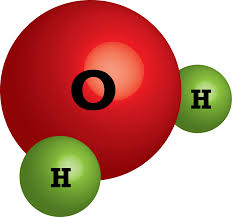
What is the correct chemical formula for the compound pictured?
H2
H2O
O2
H2O2
Which of the models best represents CaCO3?


What molecule is shown?
CO2
NH4
H2O
O2H

What molecule is shown?
NH4
N1H4
N1H3
NH3
Which formulas below have coefficients of 4? Check all that apply.
4CO2
4CH4
4H2O2
4Br3

Which chemical formula below matches the image shown here?
2H2O
H4O2
4H2O
2HO

Which chemical formula below matches the image shown here?
2H2O
H2O2
4H2O
2HO
3H2O
Which image below matches this chemical formula?


How many Ca (Calcium) atoms are found in Ca(OH)2?
5 atoms
3 atoms
2 atoms
1 atom
Does the equation H2+O2 →H2O follow the Law of Conservation of Mass?
Yes, because the atoms are equal.
No, because more info is needed.
No, because there are more atoms in the product.
No, because there are more atoms in the reactant.

In this reaction, how much CO2 is produced?
42 g
24 g
23 g
No grams produced
If there are 4 Hydrogen atoms on the reactant side, how many Hydrogen atoms will be on the product side?
More information is needed to answer
6 atoms
4 atoms
2 atoms
What is the part of the chemical equation in green called?
Fe + S → FeS
Reactants
Products
Yield
Chemical equation
What is the right part of a chemical equation called...
2H2 + O2 → 2H2O
Reactants
Products
Yield
Chemical Equation
Which of the following would provide the evidence that the number of atoms present before a chemical reaction is equal to the number of atoms present after the chemical reaction?

According to the law of conservation of mass, how much mercury was present in the mercury (II) oxide?
55.8 g
64.2 g
60.0 g
126.0 g

Which chemical equation supports the law of conservation of mass?
Equation (a)
Equation (b)
Equation (c)
Equation (d)
Solve for the unknown mass: 6.1 g + ? g = 9.1 g
15.2
3 g
15.2 g
3

According to the law of conservation of mass, how much zinc was present in the zinc carbonate?
256 g
88 g
104 g
40 g
The law of conservation of mass states that ________
the total mass of reactants is more than the total mass of products
the mass of a chemical reaction is not constant
the mass of a chemical reaction remains constant
the total mass of reactants is less than the total mass of products

