
 Worksheets
Chemistry Spring Final Exam Review
Total questions: 80
Worksheet time: 3hrs 52mins
What do you use when converting from moles of Fe to atoms of Fe?
Coefficient Ratio
Avogadro's Number
Molar mass
Conservation of Mass
476 grams
460 grams
452 grams
462 grams
B2H6 + 3 O2 -->2 HBO2 + 2 H2O
What mass of O2 will be needed to burn 36.1 g of B2H6?
13.8 g O2
3.86 mol of O2
124 g O2
4 Al + 3 O2 –> 2 Al2O3 How many moles of aluminum would be needed to completely react with 45 grams of O2?
1.05 moles
3.75 moles
1.875 grams
1.875 moles
In a chemical reaction, the mass of reactants ___.
is less than the mass of products
is greater than the mass of products
has no relationship to the mass of products
is equal to the mass of products
What is the limiting reactant if 10 moles of NH3 react with 16.0 moles of NO?
4 NH3 + 6 NO --> 5 N2 + 6 H2O
LR: NH3 and ER: 1 mol NO
LR: NO and ER: 1 mol NH3
LR: NH3 and ER: 2 mol NO
LR: NO and ER: 2 mol NH3
P4 + 3 O2 --> P4O6
What is the limiting reactant is 3 moles of P4 react with 8 moles of O2?
LR: P4 and ER: 0.33 mol O2
LR: O2 and ER: 0.33 mol P4
LR: P4 and ER: 0.67 mol O2
LR: O2 and ER: 0.67 mol P4
What best explains why a student might end up with a percent yield of over 115%?
Actual yield is too large; contamination
Actual yield is too small; spilt product
Actual yield is too large; spilt product
Actual yield is too small; contamination
What do you use when converting from moles of Fe to grams of Fe?
Coefficient Ratio
Avogadro's Number
Molar mass
Conservation of Mass
What do you use when converting from moles of Fe to moles of FeCl2?
Coefficient Ratio
Avogadro's Number
Molar mass
Conservation of Mass
How many molecules of H2O are in 4 moles of H2O?
6.02 x 10²³
8
4
2.4 x 1024
How many atoms of H are in 4 molecules of H2O?
6.02 x 10²³
8
4
2.4 x 1024
Heat is measured in
Joules
Grams
degrees Celsius
Joules per gram Celsius
The specific heat(c) of copper is 0.39 J/g °C. What is the temperature change (∆T) when 100 Joules of heat ( ΔH ) is added to 10 grams?
0.0039 °C
3.9 °C
390 °C
25.64 °C
-3.9 °C

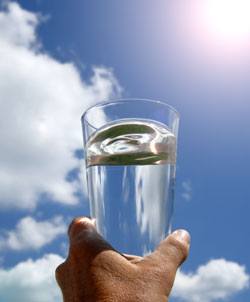
The temperature of a glass of cold water will eventually...
Equal the temperature of the surrounding environment.
Always be colder than the surrounding environment.
Become warmer than the surrounding environment.
Never change temperature.
A chemical reaction that absorbs heat from the surroundings is said to be __________ and has a __________ ΔH .
endothermic; positive
endothermic; negative
exothermic; negative
exothermic; positive
The specific heat (c) of platinum is 0.13 J/g °C. What heat ( ΔH ) is needed to raise a 5 g ring 15 °C?
576.9 J
-576.9 J
2.56 J
23.1 J
9.75 J

A cold pack is placed on Karl's head after he is elbowed during a wrestling match. _____ Energy will be transferred from _______
Cold; pack to head
Heat; pack to head
Cold; head to pack,
Heat; head to pack

Which metal would increase temperature the fastest?
Zn, lowest specific heat
Cu, lowest specific heat
Sn, lowest specific heat
Mn, highest specific heat
Si, highest specific heat
Ammonium nitrate is added to water in a plastic bag. You feel the outside of the bag and it turns really cold. The reaction IN the bag is _________________.
Exothermic, absorbing heat from the surroundings
Endothermic, absorbing heat from the surroundings
Exothermic, releasing heat to the surroundings
Endothermic, releasing heat to the surroundings
Energy needs to be _____________ to break bonds and ____________ to form bonds.
absorbed; released
absorbed; absorbed
released; released
released; absorbed

What is the activation energy (EA) of the reaction?
250 kJ
100 kJ
200 kJ
150 kJ
50 kJ
Eventually all the clothes in your closet will end up on the floor because _____.
Enthalpy tends to increase
Entropy tends to increase
Enthalpy tends to decrease
Entropy tends to decrease
A physical change of solid ice to liquid water is ___________.
exothermic and increases entropy
endothermic and increases entropy
exothermic and decreases entropy
endothermic and decreases entropy
The following reaction: 2 H2 (g) + O2 (g) --> 2 H2O (g) _____ entropy because _________ moles produced.
increases; less
decreases; less
increases; more
decreases; more
Systems in nature tend to undergo changes toward
lower energy and less disorder
lower energy and more disorder
higher energy and less disorder
higher energy and more disorder
Consider the following equations.
Mg(s) + O2(g) → MgO(s) ∆H = –602 kJ
H2(g) + O2(g) → H2O(g) ∆H = –242 kJ
What is the ∆H value (in kJ) for the following reaction?
MgO(s) + H2(g) → Mg(s) + H2O(g)
-844
-360
+360
+844
Determine the entropy of the following reaction of PCl5 (g) --> PCl3 (g) + Cl2 (g) given that
So PCl5 (g) = 364.2 J/molK
So PCl3 (g) = 311.6 J/molK
So Cl2 (g) = 223.1 J/molK
- 452.7 J/K
+ 452.7 J/K
+ 170.5 J/K
- 170.5 J/K
What information do we need to perform a calculation of Gibbs Free Energy?
Enthalpy of the reaction.
Entropy of the reaction.
The temperature of the reaction in Kelvin.
All of the above are needed.
What is a spontaneous process ?
slow process
fast process
process that needs an external intervention to occur
process that does not need external intervention to occur / keep happening
Which combination of ΔH and ΔS ALWAYS results in a spontaneous reaction?
+ΔH and +ΔS
+ΔH and -ΔS
-ΔH and -ΔS
-ΔH and +ΔS
2 Pb(NO3)2 --> 2 PbO + 4 NO2 + O2
Synthesis
Decomposition
Single replacement
Combustion
Single
Replacement
Using the activity series, Li + NiNO3 -->
Ni + Li(NO3)2
NO3 + LiNi
LiNiNO3
No Reaction
In single replacement reactions .............
Metals replace nonmetals
Nonmetals replace metals
metals replace metals
nonmetals replace nonmetals
Precipitates occur when a(n) ____________ forms.
Soluble compound
Insoluble compound
soluble or insoluble compound
gas
When Mg is added to HCl, Mg replaces H. What do you see?
Color change
Precipitate formation
Energy change
Gas formation
Balance __NO2 --> __N2 + __O2
1, 1, 1
2, 1, 1
1, 2, 1
2, 1, 2
Reactions that have hydrocarbons (CH4) and oxygen as reactants and carbon dioxide and water as products
Conservation of Mass
combustion
double replacement
decomposition
A neutralization is a special type of _______ where a salt and water are produced.
decomposition
synthesis
single replacement
double replacement
Burning something does not necessarily mean combustion. When you placed Mg in the flame it became bright white _____ and formed gray ash ____.
Absorbing light; MgO
Emitting light; MgO
Absorbing light; Mg
Emitting light; O
Emitting light; Mg

When you have H-Cl, what is the polarity?
nonpolar
polar; arrow towards H
ionic
polar; arrow towards Cl

When you have Li-O, what is the polarity?
nonpolar
polar; arrow towards Li
ionic
polar; arrow towards O
When you have F-F, what is the polarity?
nonpolar
polar
ionic
The electrons in a polar covalent molecule are ...
shared equally
shared unequally
transferred
None of the Above
In a polar bond, the electrons gather around...
The atom with the Greatest Electronegativity
The atom with the Lowest Electronegativity
Each atom Equally
None of the Above
A diatomic molecule like O2 is always _____ because electrons are shared _____
nonpolar; unequally
polar; equally
nonpolar; equally
polar; unequally
Why does hexane not dissolve in water?
Hexane is polar and water is nonpolar.
Hexane is nonpolar and water is nonpolar.
Hexane is polar and water is polar.
Hexane is nonpolar and water is polar.
Which of the following liquids would NOT mix with water?
Vegetable oil
Food coloring
Maple syrup
Vinegar
The ___________ of the soap molecule attracts water while its _______ is attracted to fat and grease.
head; tail
tail; head
center; outside
outside; center
Methane, CH4, is a gas at room temperature while Octane, C8H18, is a liquid because ________
Methane has more polarity.
Octane has more polarity
Octane has more dispersion.
Methane has more dispersion.
Why do water molecules attract one another?
Because of the slightly positive regions and slightly negative regions
Due to the positive regions attracting other positive regions
Due to the negative regions attracting other negative regions
None of the above

What electronegativity trend is shown in this periodic table?
Electronegativity increases as you go up and to the left.
Electronegativity increases as you go down and to the left.
Electronegativity increases as you go up and to the right.
Electronegativity increases as you go down and to the right.

How does this picture demonstrate the sharing of electrons?
two weak atoms sharing equally
two weak atoms sharing unequally
two strong atoms sharing equally
two strong atoms sharing unequally
one strong atom and one weak atom sharing unequally
Soap is "soap" because it attracts ________.
both polar and nonpolar substances
only polar substances
only nonpolar substances
no substances

This molecule has _______ bonds and is considered ________.
polar; polar
nonpolar; polar
polar; nonpolar
nonpolar; nonpolar
________________________ have the strongest intermolecular forces of attraction.
Dipole- Dipole
Dispersion
Hydrogen Bonding
False; only if asymmetric
False; only if symmetric
How does soap affect the surface tension of water?
Soap increases surface tension, so more soapy drops fit on the penny than drops of regular tap water.
Soap decreases surface tension, so more soapy drops fit on the penny than drops of regular tap water.
Soap increases surface tension, so fewer soapy drops fit on the penny than drops of regular tap water.
Soap decreases surface tension, so fewer soapy drops fit on the penny than drops of regular tap water.
Which of the following elements does NOT obey the octet rule?
Nitrogen
Oxygen
Potassium
Hydrogen

Explain why water is attracted to a negatively charged balloon.
Positive O's attract to the balloon.
Positive H's repel the balloon
Negative O's repel the balloon
Positive H's attract to the balloon
A type of chemical that forms solutions that taste sour, due to high concentrations of positive hydrogen ions
acid
base
salt
pH

The table shows the pH of several solutions. Which solution is the most acidic?
vinegar
milk
water
bleach
Four substances were tested for pH, lemon juice (pH 2), baking soda (pH 9), bleach (pH 12), and milk (pH 6). Which of the following correctly lists the substances from most basic to acidic?
lemon juice, milk, baking soda, bleach
bleach, baking soda, milk, lemon juice
milk, lemon juice, baking soda, bleach
baking soda, bleach, lemon juice, milk

At what pH would all three indicators appear as yellow?
1.7
2.7
4.7
8.7
If a solution has a pH of 1.5, then litmus would turn
red
purple
blue
yellow
__Ag2O →__ Ag +___O2
Balance this equation
__Al +__HCl -->__H2 +__AlCl3
2, 6, 3, 2
it is already balanced
4, 12, 3, 4
2, 1, 4, 5
What does the Law of Conservation of Mass state?
Matter is created and destroyed in a chemical reaction.
Matter is neither created nor destroyed, just transferred.
Matter is only destroyed in a chemical reaction.
Matter can be transformed into energy.
SO2
SO3
SO4
S2O
Pb5Cr5O20
In a chemistry class, Avery, Oliver, and Sophia were given different pairs of compounds and asked to identify which pair has the same empirical formula. Can you help them find the correct pair?
NaCrO4 and Na2Cr2O7
C2H4O2 and C6H12O6
C3H6O3 and C2H6O2
CH4 and C2H6
Matching and pairing your socks ______________
Increases entropy
Decreases entropy
Increases enthalpy
Decreases enthalpy
changes nothing.

