
 Worksheets
Cell Unit Practice
Total questions: 35
Worksheet time: 20mins
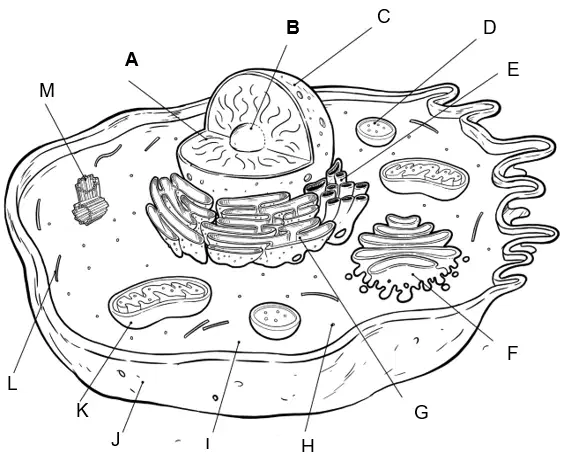
The structure indicated by the letter C in Model 1 (animal cell) is called ________.
nucleus
nucleolus
chromatin
nuclear envelop
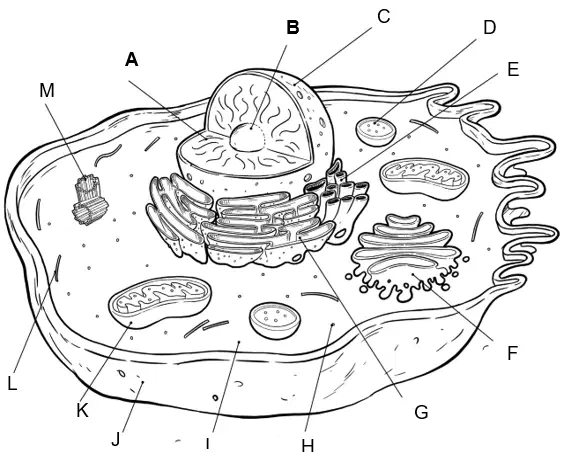
The structure indicated by the letter G in Model 1 (animal cell) is called ________.
mitochondria
rough Endoplasmic Reticulum
lysosome
Golgi apparatus
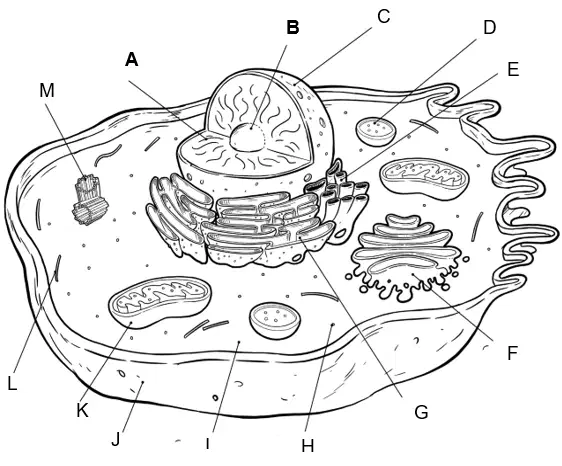
The structure indicated by the letter I in Model 1 (animal cell) is called ________.
cytoplasm
rough Endoplasmic Reticulum
ribosome
Golgi apparatus
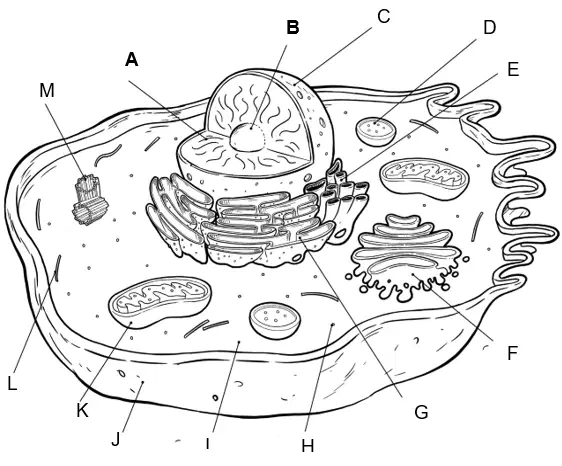
The structure indicated by the letter J in Model 1 (animal cell) is called ________.
cytoplasm
cell (plasma) membrane
ribosome
Golgi apparatus
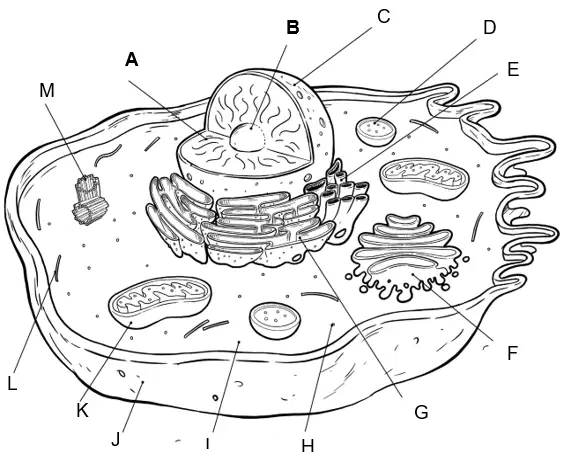
The structure indicated by the letter K in Model 1 (animal cell) is called ________.
cytoplasm
cytoskeleton
centriole
mitochondria
In a eukaryotic cell, the region between the plasma membrane and the nucleus, which is a jelly-like substance that holds everything together, is called __________.
cytoplasm
nucleus
chloroplast
ribosome
Which of the following is NOT a function of the nucleus?
stores DNA
controls the activities of the cell
contains the information needed to make proteins
processes, sorts, and ships proteins where needed
Which of the following is a function of the cell (plasma) membrane?
makes proteins
stores water, salts, proteins, and carbohydrates
holds all organelles in place
controls which materials enter and leave the cell
Which of the following organelles makes proteins using instructions that come from the nucleus?
ribosome
lysosome
centrioles
mitochondrion
An organelle in a cell that converts glucose (sugar) into ENERGY (ATP) is _____________________.
ribosome
Golgi apparatus
nucleus
mitochondrion
Eukaryotic cells contain specialized membrane-bound structures that perform important cell functions. These structures are called ______________.
DNA
organelles
Cytoplasm
ATP (energy)
The cell (plasma) membrane contains protein channels that help move materials from one side to the other. Which of the following cell transport processes use these protein channels?
simple diffusion
osmosis
active transport and facilitated diffusion
Which of the following cell transports requires an input of energy from the cell?
diffusion
osmosis
facilitated diffusion
active transport
Molecular pumps (Na+ and K+ ions) move ions through the membrane against (up) a concentration gradient during ______________.
Diffusion
Osmosis
Active transport
Large molecules such as glucose (sugar) move across the cell (plasma) membrane through special protein channels during ________________.
active transport
facilitated transport
osmosis
Which type of cell transport is best for moving molecules such as oxygen and carbon dioxide quickly into or out of the cell?
Diffusion
Active Transport
Osmosis
The cell nucleus works like:
the human brain.
the homecoming dance.
the protein factories.
the security guard.
The cell membrane works like
the welcoming committee.
the protein factories.
the security guard.
the UPS truck.
The receptor proteins, which are embedded in the membrane, work like
the principal at West High.
the welcoming committee.
the protein factories.
the security guard.
How are your cells (eukaryotes) different from bacteria (prokaryotes)?
Eukaryotes are unicellular; prokaryotes are multicellular.
Eukaryotes have a nucleus; prokaryotes do NOT.
Prokaryotes have various specialized organelles; eukaryotes do NOT.
Prokaryotes have an endoplasmic reticulum; eukaryotes do NOT.
Plant and animal cells differ mostly in that:
only plant cells have a cell wall and chloroplasts.
only plant cells have ribosomes attached to the endoplasmic reticulum.
only animal cells have mitochondria.
only animal cells have a nucleus.
Unicellular and multicellular organisms are made up of pre-existing cells. Which of the following is NOT made of cells?
plants
bacteria
you
sand
Which of the following is NOT a principle of cell theory?
Cells are the basic unit of life.
All cells have membrane-bound organelles and a nucleus.
All cells come from pre-existing (other) cells.
All living organisms are made of cells.
There are four main structures that all cells (prokaryotes and eukaryotes) have in common. Which of the following structures is NOT found in all cells?
cell membrane
cytoplasm
Genetic material - DNA
Golgi body/apparatus
The main function of the cell wall is to:
protect the plant cell and maintain its shape.
store DNA.
direct the activities of the cell.
help the cell move.
Which of the following organelles convert light energy (from the sun) into chemical energy (glucose/sugar) stored in food?
mitochondria
cytoplasm
nucleus
chloroplast
An organelle that acts as the "janitor" of the cell, containing digestive enzymes to break down food molecules, waste products, and old cells.
ribosome
lysosome
vacuole
Endoplasmic reticulum
Which of the following cell transport processes describes the movement of water across a selectively permeable membrane?
osmosis
active transport
passive transport
facilitated diffusion
In a laboratory, a student placed red blood cells in a hypertonic solution, which has a higher concentration of solute and less solvent. Based on the principle of OSMOSIS, what will happen to the red blood cells if left for 24 hours?
The water will move out of the cells and the cells will shrivel.
The water will move out of the cells and the cells will stay the same size.
The water will move into the cells and the cells will swell and burst.


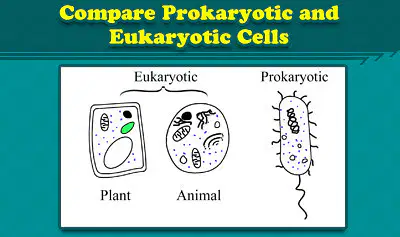
Which two structures does the eukaryotic cell have that the prokaryotic cell does not?
Ribosomes and chloroplasts
mitochondria and a nucleus
Chromosomes and cytoplasm
flagella and a cell membrane


Prokaryotic, because it has a nucleus
Eukaryotic, because it has a nucleus
Prokaryotic, because it does not have a nucleus
Eukaryotic, because it does not have a nucleus

