
 Worksheets
Ancient Egypt Unit Test B
Total questions: 25
Worksheet time: 13mins
Name
Class
Date
1.
Which of the following statements most accurately describes the direction of the Nile River?
a)
The Nile starts in the south and flows to the north.
b)
The Nile starts in the west and flows to the east.
2.
Why did the majority of the ancient Egyptians settle around the Nile Delta?
a)
The area received a lot of rainfall each year for growing crops.
b)
The buildup of soil made the land great for agriculture.
3.
Why did the ancient Egyptians live along the Nile River?
a)
The Egyptians did not have the necessary technology for irrigation.
b)
The Egyptians lived in the desert and could not depend on rainfall.
4.
Why was the pharaoh considered the most important leader in ancient Egypt?
a)
The people believed that the pharaoh was a god.
b)
The people elected the pharaoh to serve as their ruler.
5.
What was the primary reason for mummification in ancient Egypt?
a)
Mummies were valuable as decorations and could be sold for a lot of money.
b)
The belief that a person’s body must still exist so the spirit can go to the afterlife.
6.
Why were the pyramids filled with gold, jewelry, and other valuable possessions of the pharaoh?
a)
The pyramids were museums that preserved and displayed Egyptian history for educational purposes during ancient times.
b)
The pyramids were storage areas for these materials so the pharaoh’s spirit could enjoy them in the afterlife.
7.
How were historians able to use the Rosetta Stone to decode hieroglyphics?
a)
It had an answer key that showed the translation for each hieroglyphic.
b)
It had the same statement written in both hieroglyphics and Greek.
8.
How does the transfer of power work in a dynasty?
a)
The title of pharaoh is given to a new ruler according to the voting results of the people.
b)
The title of pharaoh is passed down to a younger relative or another chosen successor.
9.
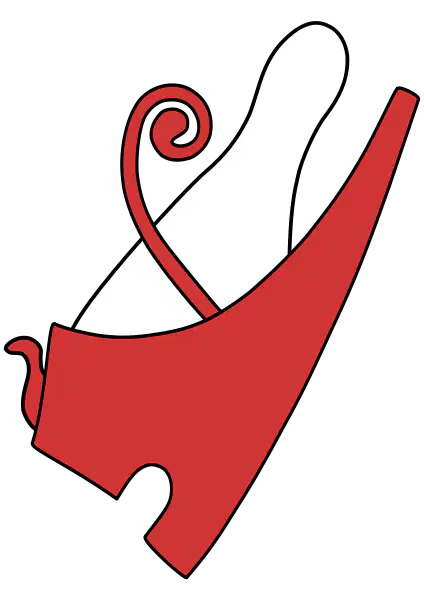
Which statement best describes the artifact in this image?
a)
The artifact was a crown that symbolized the unity between Upper Egypt and Lower Egypt.
b)
The artifact was a gift from Kush to Egypt to celebrate friendship between the two civilizations.
10.
True or False: The Great Pyramid of Giza was built during the reign of Ramesses the Great, who was the most famous pharaoh from the Old Kingdom.
a)
True
b)
False
11.
Which position in Egypt’s social hierarchy included builders, carpenters, jewelers, metalworkers, painters, sculptors, and stonecutters?
a)
artisans
b)
merchants
12.
True or False: Ancient Egypt was originally divided into two separate kingdoms; the northern half was called Upper Egypt and the southern half was called Lower Egypt.
a)
True
b)
False
13.
What was the most common job in ancient Egypt?
a)
artisan
b)
farmer
c)
scribe
14.
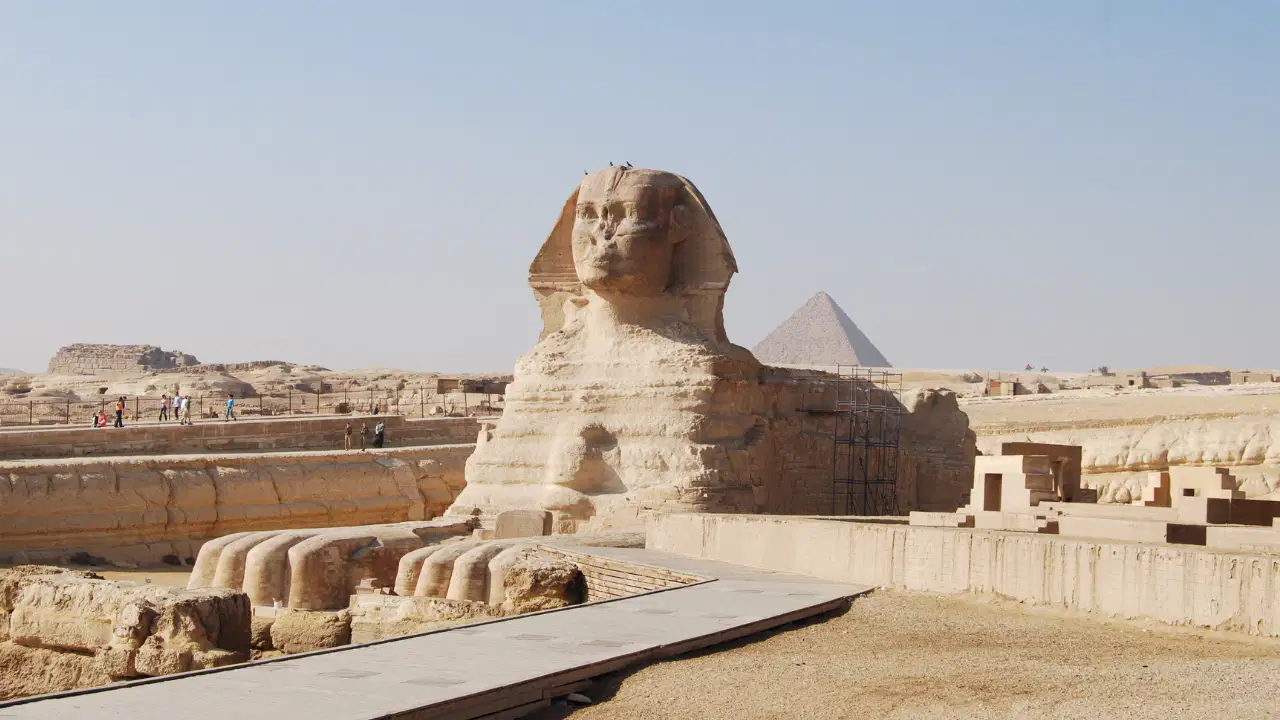
Which of the following is the name of the limestone statue with the head of a pharaoh and the body of a lion?
a)
Great Sphinx
b)
Tomb of Tutankhamun
15.

Which image shows the temple that was built in honor of the pharaoh Hatshepsut?
a)
Choice A
b)
Choice B
c)
Choice C
d)
Choice D
16.

Which image shows Abu Simbel, which was a temple built in honor of the pharaoh Ramesses II?
a)
Choice A
b)
Choice B
c)
Choice C
d)
Choice D
17.
Who was the god of the sun that created the world and people in Egyptian mythology?
a)
Ma'at
b)
Ra
18.
What were the powers of the god named Anubis in Egyptian mythology?
a)
mummification & cemeteries
b)
wisdom & writing
19.

Which of the following images shows an example of hieroglyphics?
a)
Choice A
b)
Choice B
c)
Choice C
d)
Choice D
20.

Which region of Egypt is circle on the map?
a)
Upper Egypt
b)
Lower Egypt
21.

Which river runs through Egypt?
a)
Tigris
b)
Nile
22.
Which description best explains Egyptian religion?
a)
Egyptians believed that there was only one and God and his name was Allah.
b)
Egyptians were polytheistic and believed that the Pharaoh was a god.
23.
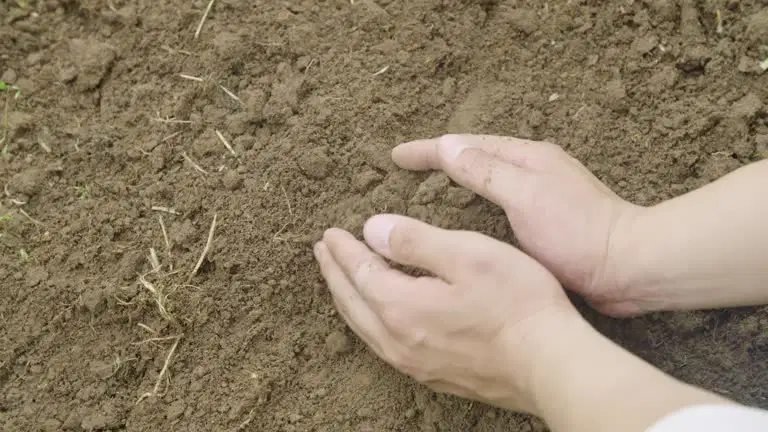
What is silt?
a)
nutrient rich soil found near rivers
b)
desert sand
24.

What is hieroglyphics?
a)
A type of ancient Egyptian music
b)
The ancient Egyptian writing system
25.

Structure with triangular sides that rise to a point.
a)
Pyramid
b)
Ziggurat
100 %

