
 Worksheets
Understanding Cell Transport Mechanisms
Total questions: 31
Worksheet time: 48mins
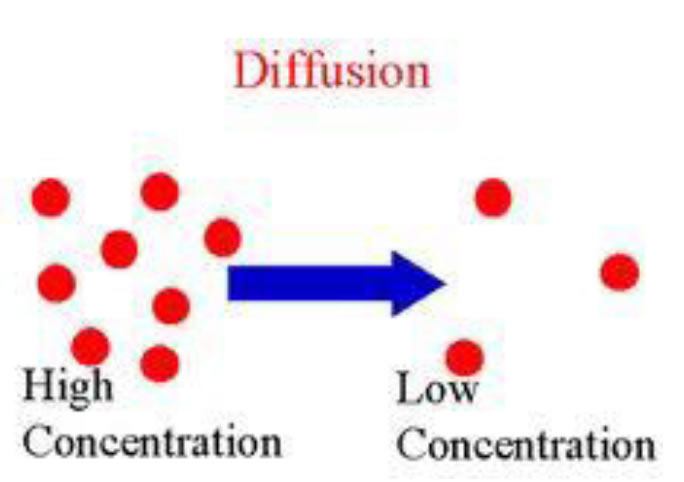
What is the process by which molecules spread from an area of high concentration to an area of low concentration?
Osmosis
Diffusion
Facilitated diffusion
Active transport
Which term describes the movement of water across a semipermeable membrane from a region of low solute concentration to a region of high solute concentration?
Diffusion
Osmosis
Active transport
Facilitated diffusion
What is the term for the difference in concentration of a substance across a space?
Isotonic
Hypertonic
Concentration gradient
Hypotonic
Which solution has the same solute concentration as the cell, resulting in no net movement of water?
Isotonic
Hypertonic
Hypotonic
Supersonic
What happens to a cell placed in a hypertonic solution?
It swells
It shrinks
It remains the same
It bursts
Which type of solution causes a cell to swell due to water intake?
Isotonic
Hypertonic
Hypotonic
Supersonic
What is the process called when molecules move across a cell membrane with the help of a protein, but without energy input?
Active transport
Facilitated diffusion
Osmosis
Simple diffusion
Which of the following is NOT a characteristic of facilitated diffusion?
Requires energy
Uses transport proteins
Moves substances down their concentration gradient
Is a passive process
In which type of solution is the concentration of solutes higher outside the cell than inside?
Isotonic
Hypertonic
Hypotonic
Supersonic
Which of the following processes is primarily responsible for the uptake of glucose in cells?
Simple diffusion
Facilitated diffusion
Osmosis
Active transport
Cellular energy required for active transport comes directly in the form of _________.
glucose
lipids
ATP
NADPH
Active transport requires cellular energy and moves substances from area of ________________ concentration to ______________ concentration.
low, low
low, high
high, low
high, high
Endocytosis and exocytosis both use energy to engulf substances with the cell membrane. However, _____________ brings substances into the cell, while ____________ takes substances out of the cell.
endocytosis, exocytosis
exocytosis, endocytosis
endocytosis, endocytosis
exocytosis, exocytosis

The solution surrounding the cell in Diagram B, would be defined as:
hypertonic
hypotonic
isotonic





Passive Transport means
Energy is used
No energy is used
Energy is created
Which type of passive transport uses proteins to help molecules pass through the membrane?
An example of facilitated diffusion is
CO2 and O2 exchange in the lungs
Glucose transport
Na+ / K+ Pumps
Endocytosis

What is this structure?
cell membrane
plasma membrane
vesicle
vacuole

This picture is a representation of what type of transport?
Osmosis because it is diffusing through a protein from an area of high concentration to low concentration.
Facilitated diffusion because it is diffusing through a protein from an area of high concentration to low concentration.
Facilitated diffusion because it is diffusing through a protein from an area of low concentration to high concentration.
Simple diffusion because it is diffusing through a protein from an area of high concentration to low concentration.

