
 Worksheets
Landmark of Supreme Court cases
Total questions: 57
Worksheet time: 51mins
The case established the Court’s power of judicial review. The Court had the duty of interpreting the law. If the court identifies a law in conflict with the Constitution, the law is invalid.
Marbury V. Madison
Tinker v. Des Moines
Hazelwood School District v. Kuhlmeier
Miranda v. Arizona
Ruled that suspects must always be informed of their rights before interrogation. Police must read suspects their “Miranda Rights”
Miranda v. Arizona
In Re Gault
Gideon v. Wainwright
Tinker v. Des Moines
Ruled that racial segregation did not violate right to “equal protection,” (14th Amendment). Facilities provided to each were “separate but equal.” Segregation strengthened across south.
Brown v. Board of Education
Plessy v. Ferguson
Gideon v. Wainwright
In Re Gault
Ruled racially segregated public schools violated “equal protection.” Facilities provided to African-Americans inferior, not equal. First step toward ending racial segregation in South.
Brown v. Board of Education
Plessy v. Ferguson
Gideon v. Wainwright
In Re Gault
The SCOTUS (Supreme Court of the United States) decided that slaves were property and could not sue ensuring that slaves had no rights because they were considered property and not humans.
Marbury v Madison
Dred Scott v Sanford
Plessy v Ferguson
McCulloch v Maryland
This ruling said that people of African descent, whether or not they were slaves, could never be citizens of the United States, and that Congress had no authority to prohibit slavery in federal territories.
Brown vs Board of Ed
Gibbons v. Ogden
Furman v. Georgia
Dred Scott v. Sandford
The name of the main person involved int his case is
Eduardo Miranda
Ernesto Miranda
Elberto Miranda
Emilio Miranda
The right to remain silent falls under which amendment?
1st Amendment
4th Amendment
5th Amendment
6th Amendment
8th Amendment
The Court decided that a state supported school could use race as a basis for admission, though it ruled that quotas were illegal. Bakke was admitted.
Texas v. Johnson, 1991
Tinker v. Des Moines School District, 1969
Roe v. Wade, 1973
Regents of California v. Bakke,1978
Ruled racially segregated public schools violated “equal protection.” Facilities provided to African-Americans inferior, not equal. First step toward ending racial segregation in South.
Brown v. Board of Education
Plessy v. Ferguson
Gideon v. Wainwright
In Re Gault
What year was the Miranda vs. Arizona case decided by the Supreme Court?
1966
1982
1954
1975
What is the significance of the Miranda vs. Arizona case in terms of criminal procedure?
The Miranda vs. Arizona case limited the right to legal counsel
The Miranda vs. Arizona case allowed law enforcement to conduct searches without warrants
The Miranda vs. Arizona case abolished the right to remain silent
The Miranda vs. Arizona case established the requirement for law enforcement to inform individuals of their rights upon arrest, known as Miranda rights.
What is the main purpose of the Miranda rights?
To inform individuals of their constitutional rights before being interrogated by law enforcement.
To prevent individuals from being arrested
To guarantee a fair trial
To provide legal advice to suspects
What is the consequence if law enforcement fails to inform a suspect of their Miranda rights?
The suspect will be immediately released
The suspect will be fined
The statements made by the suspect may be deemed inadmissible in court.
The suspect will be given a warning
What is the lasting legacy of the Miranda vs. Arizona case in the U.S. legal system?
Establishment of Miranda rights
Establishment of Marbury v. Madison case
Introduction of the Emancipation Proclamation
Creation of the Bill of Rights
What does "due process" in the context of criminal justice primarily ensure?
That the government has the power to take away rights.
That laws are applied fairly and consistently.
That all criminal cases are tried in a federal court.
That criminals receive the maximum penalty.
Which of these cases did NOT deal with the rights of the accused?
Gideon v. Wainwright
In re Gault
Dred Scott v. Sanford
Miranda v. Arizona
Which case dealt with the rule of law and said even the President must follow the law?
Plessy v. Ferguson
in re Gault
United States v. Nixon
Marbury v. Madison
Which case said only citizens can sue in court?
Miranda v. Arizona
Dred Scott v. Sanford
United States v. Nixon
Marbury v. Madison
What was Watergate?
A nice hotel in Washington, DC
The code name for a secret informant
A dam in Washington, DC
The Republican's headquarters for the 1972 election
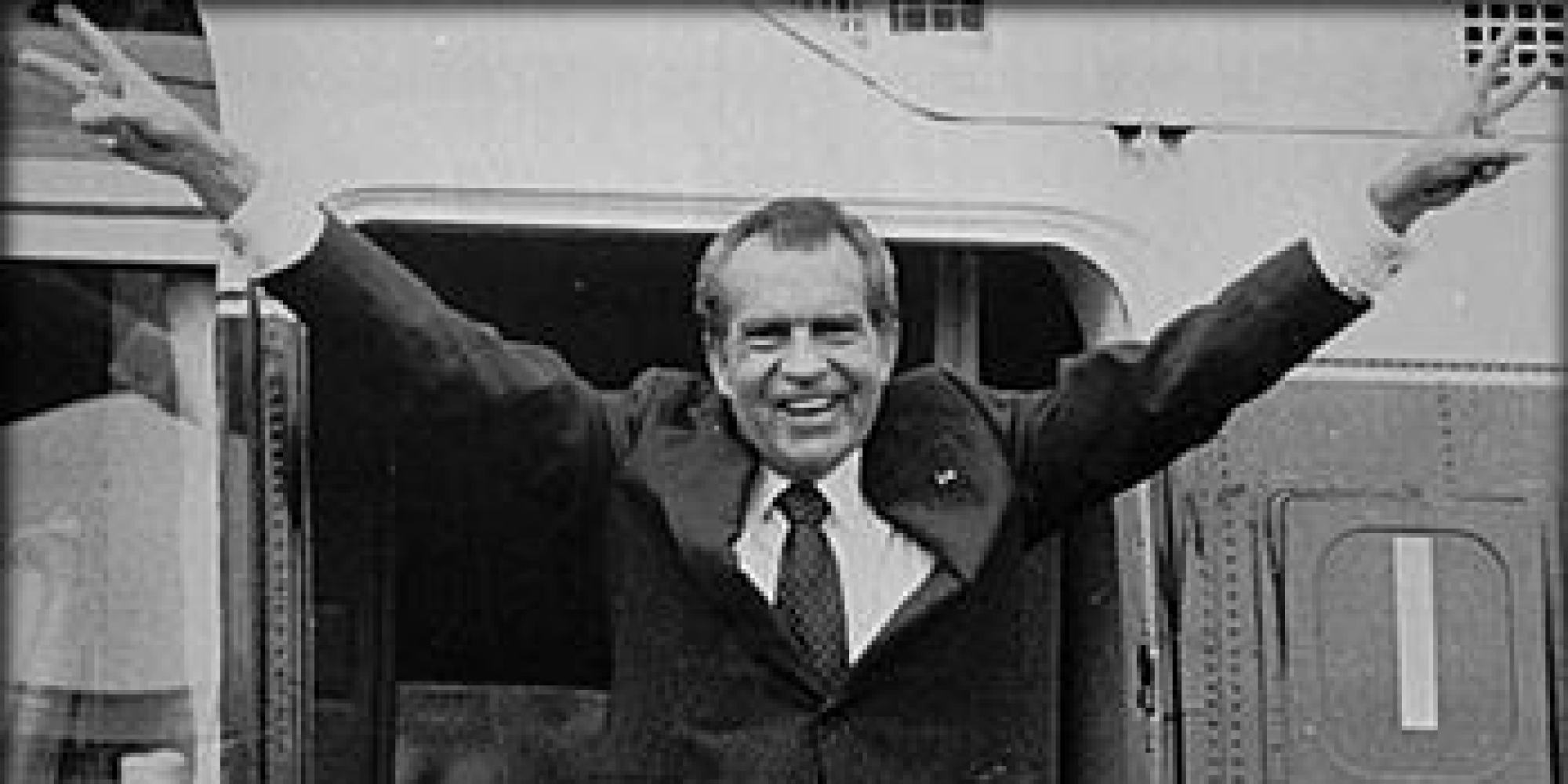
Nixon was impeached from presedency.

Who was the 37th President of the United States?
Richard Nixon
John F. Kennedy
Lyndon B. Johnson
Gerald Ford
What major scandal led to Nixon's resignation?
Watergate Scandal
Iran-Contra Affair
Teapot Dome Scandal
Lewinsky Scandal
What was Nixon facing that led to his decision to resign?
Impeachment trial
Re-election campaign
Health issues
Financial crisis

What building is being portrayed as a giant tape recorder here?
Capitol Records Tower
Mar-a-Lago
Supreme Court
Watergate Hotel
White House
True or False: President Nixon resigned from office.
True
False
What did a U.S. District Court judge subpoena, but Nixon claimed executive privilege and refused to turn over?
surveillance of the break-in at the Watergate building
transcripts of conversations between Nixon and the directors of the FBI and CIA
recorded conversations from inside the White House
What did Homer Plessy do that got him arrested?
He sat in the whites only part of the bus.
He took a seat in the whites only car of a train.
He sat at a whites only section of a lunch counter.
All of the above
Plessy and the other members of his organization were trying to challenge
the Brown v. Board of Education case
Segregation (Jim Crow Laws)
Reconstruction
Equal pay for equal work
The 14th amendment is meant to give U.S. citizens what?
Equal protection under the law
Due process (the right to have the gov't the respect all your rights)
Citizenship by birth on U.S. land
all of the above
Which word means something that "follows the law"?
legal
illegal
What was the ruling law on school segregation prior to Brown v. Board of Education of Topeka, Kansas in 1951?
Segregation of students by race was unconstitutional.
Schools could not be segregated by race.
Schools may be separated by race as long as they were equal in quality.
All forms of segregation were considered illegal.
What was the main question before the U.S. Supreme Court in Brown v. Board of Education?
Whether the schools in Topeka were set up the same.
Whether the 'separate but equal' doctrine violated African-American students' equal protection rights.
Whether the schools in Topeka were segregated by race.
Whether the feeling of inferiority among students was justified.
Legalizes affirmative action, however, race cannot be used as a factor in college admission.
Engel v. Vitale
Gregg v. Georgia
Schenck v. U.S.
Regents of the Univ of CA v. Bakke
Legalizes the death penalty
U.S. v. Nixon
Gideon v. Wainwright
Gregg v. Georgia
Texas v. Johnson
Allows for executive priviledge, but not in criminal cases
U.S. v. Nixon
Schenck v. U.S.
Korematsu v. U.S.
Texas v. Johnson


Which of the following U. S. Supreme Court decisions addressed affirmative action?
Regents of the University of California v. Bakke (1978)
Brown v. Board of Education (1954)
Gideon v. Wainwright (1963)
Plessy v. Ferguson (1896)
This ruling reaffirmed the Supreme Court's commitment to the continued use of the death penalty in the United States
Gregg v. Georgia, 1976
Abington v. Schempp, 1963
In re Gault, 1966
Hazelwood School
District v. Kuhlmeier,
Choose the 2 due process amendments below.
6th
14th
5th
12th

