
NEW
Font size
 Worksheets
Driving Test Questions class 2
Total questions: 35
Worksheet time: 18mins
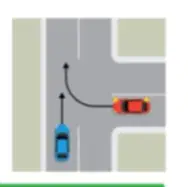
Does the driver of the blue car have to give way?
Yes
No
You are waiting at a railway level crossing and the red lights continue to flash after the train has passed. What should you do?
Check both ways and then drive on
Wait for 15 seconds and then drive on
Drive on carefully while the lights are still flashing
Stay stopped until the lights stop flashing

What does this traffic signal mean?
Stop if you can do so safely
Drive on before the signal changes to red
Stop only if traffic is in the way
Drive on because the signal will turn green
What must you do if glass falls on to the road from your vehicle?
Tell a police officer
Sweep it up within 24 hours
Sweep it up straight away if you can do so safely
Sweep it up within 2 hours
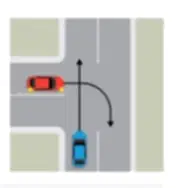
Does the driver of the blue car have to give way?
No
Yes
Before making a lane change to your left, you must signal for at least 3 seconds. What else must you do?
Use your vehicle brake lights to warn other road users
Use your vehicle hazard lights to warn other road users
Ensure that there are no oncoming vehicles
Check your blind spot before moving left
What is the maximum width allowed for a vehicle (other than an agricultural vehicle) including its load?
2.55 metres or 1.275 from the longitudinal centre line
4.55 metres or 3.255 from the longitudinal centre line
3.55 metres or 2.275 from the longitudinal centre line
1.55 metres or 0.25 from the longitudinal centre line
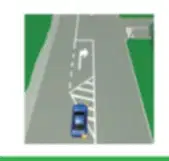
What do these road markings mean?
Turning vehicles should avoid all road markings and use the left-hand lane
Turning vehicles drive straight over all road markings and wait to turn right.
All vehicles can make a U-turn at these road markings
Turning vehicles should enter turning lane at arrows and avoid striped area
Which of your vehicles lights do you have on if you are driving in fog?
Park lights on
Hazard lights on
Headlights on dip
Headlights on high beam
What is the tare weight of the vehicle?
The weight of the fuel and the load
The weight of the load
The vehicle’s unladen weight
The weight of load and the vehicle
What is the maximum overall length for a heavy rigid vehicle including it’s load not towing a trailer?
9.5 metres
11.5 metres
12.6 metres
8.5 metres
You see a pedestrian carrying a white cane crossing the road. What should you do?
Rev the engine to let them know that you are waiting
Speed up and pass in front of them
Turn on the vehicle hazard lights and drive on
Take extra care and allow them to cross the road in their own time
What should you do if the vehicle behind you wishes to pass?
Move to the centre so that they cannot pass
Speed up so that they will not need to pass
Move as far to the left side of the road as is safe
Slow down and signal right.
Anchor points to which the lashings are secured must have a strength of at least:
1 ½ x the rated strength of the lashings
½ x the rated strength of the lashings
2 x the rated strength of the lashings
1 x the rated strength of the lashings
When driving at night, which vehicle lights should you turn on?
Headlights
Hazard lights
Interior lights
Park lights
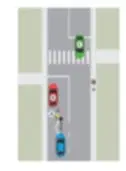
You are the driver of the blue car. Of the 4 hazards marked, which one is most likely to require you to take urgent action?
A
B
C
D
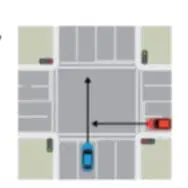
Does the driver of the blue car have to give way?
Yes
No
What is the speed limit for vehicles passing a school bus that has stopped to let children on or off?
50 km/h
20 km/h
30 km/h
40 km/h
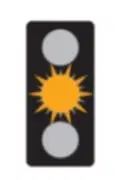
What does one or more yellow lights flashing at traffic signals mean?
Move to the left-hand side of the road
Stop until the lights no longer flash
Drive on but increase your speed
Be careful and apply the give way rule
Uncovered, loose bulk loads are liable to fall from the vehicle if they are higher than ___mm below the side of the vehicle body.
150 mm below any side of the vehicle body
100 mm below any side of the vehicle body
200 mm below any side of the vehicle body
50 mm below any side of the vehicle body
When must you signal that you are turning to the right?
3 seconds or more before you turn
Only if there are vehicles in front of you
As you are turning
Only if there are vehicles following behind you
What is the maximum height from the ground permitted for a vehicle including its load?
4.3 metres
4.25 metres
4 metres
3.55 metres
What is the purpose of the 2-second rule?
To ensure the speed limit is observed
To provide a safe following distance between vehicles traveling at the same speed
To avoid gridlocks in congested driving areas
To ensure that vehicles have sufficient stopping time when approaching intersections
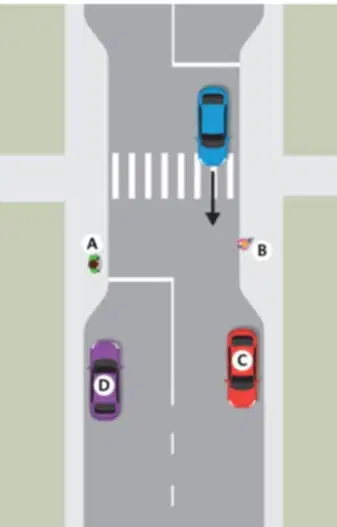
You are the driver of the blue car. Of the 4 hazards marked, which one is most likely to require you to take urgent action?
A
B
C
D
You are driving on a road with marked lanes and you are in the lane with an arrow showing a left turn only. What must you do?
Turn left
Turn right
Not signal
Drive straight ahead
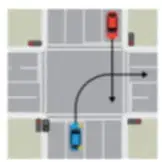
Does the driver of the blue car have
to give way?
No
Yes
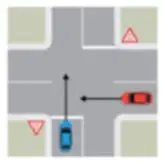
Does the driver of the blue car have to give way?
Yes
No
If a driver is subject to work time requirements, what is the maximum period of work time permitted in any cumulative work day?
10 hours
11 hours
13 hours
12 hours
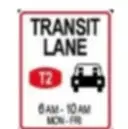
On a Transit Lane sign, what does T2 mean?
There are two transit lanes ahead
Vehicles that use the lane must have two passengers
Only two vehicles are permitted on the transit lane at any time
Vehicles that use the lane must have at least two people.
When traffic is merging, what is a good rule to follow?
Slow down to 40 km/h
Let 2 vehicles in and then go
Let 1 vehicle in and then go
Speed up to make room behind
If a driver (other than a taxi driver) is subject to work time requirements, what is the maximum continuous period of work time allowed before a minimum ½ hour break is required?
3 ½ hours
4 ½ hours
6 ½ hours
5 ½ hours
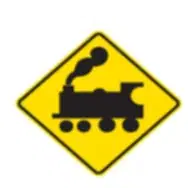
What does this sign mean?
Railway station ahead
Railway level crossing ahead
Children's playground ahead
Railway museum ahead
What is the combined rated strength of lashings placed over rigid loads on heavy motor vehicle where loaded against a headboard?
1 x the weight of the load
1 ½ x the weight of the load
2 x the weight of the load
2 ½ x the weight of the load
How many logbooks must a driver maintain?
Only one logbook at a time
A logbook for each vehicle driven
Separate logbooks for hours worked and distances travelled
A logbook for themselves and for their employer
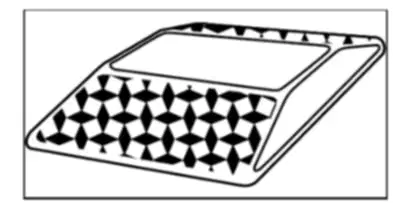
What is shown by a white reflector (cat’s eye) placed on the road?
The left side of the road
The centre of the road
No passing
The far right side of the road

