
Font size
 Worksheets
Unit 9: Changes to Global Climate Review
Total questions: 45
Worksheet time: 26mins
Fresh water can be produced by removing the salt from ocean water using a process called ______________.
salt water cleanup
water purification
desalination
wastewater treatment

How do the oceans contribute to the amount of Oxygen in the Earth's atmosphere?
Fish in the ocean produce oxygen.
Phytoplankton in the ocean produce oxygen through the process of respiration.
Phytoplankton in the ocean produce oxygen through the process of phtosynthesis.
There is no oxygen production in the ocean.
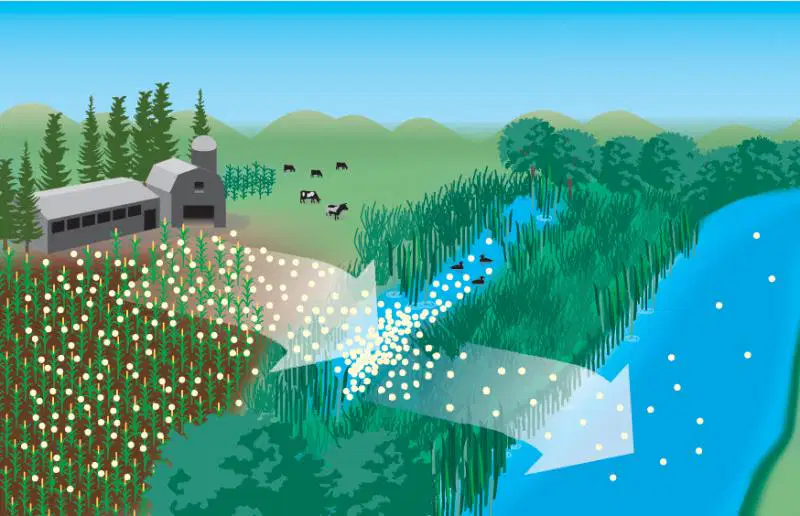
What is a fertilizer runoff?
When fertilizer runs into a body of water.
When water makes fertilizer.
When algae grows rapidly.
The industrial production of fertilizers.

What happens when a fertilizer runoff happens?
Fish get bigger.
Algae grow rapidly.
The water becomes very clear.
The oxygen level in the water increases.

What happens to the fish if there is fertilizer runoff?
The fish thrive because of increase in Nitrogen and Phosphorous.
The fish die because of lack of oxygen.
Nothing happens to the fish.
The fish thrive because there is more algae to eat.
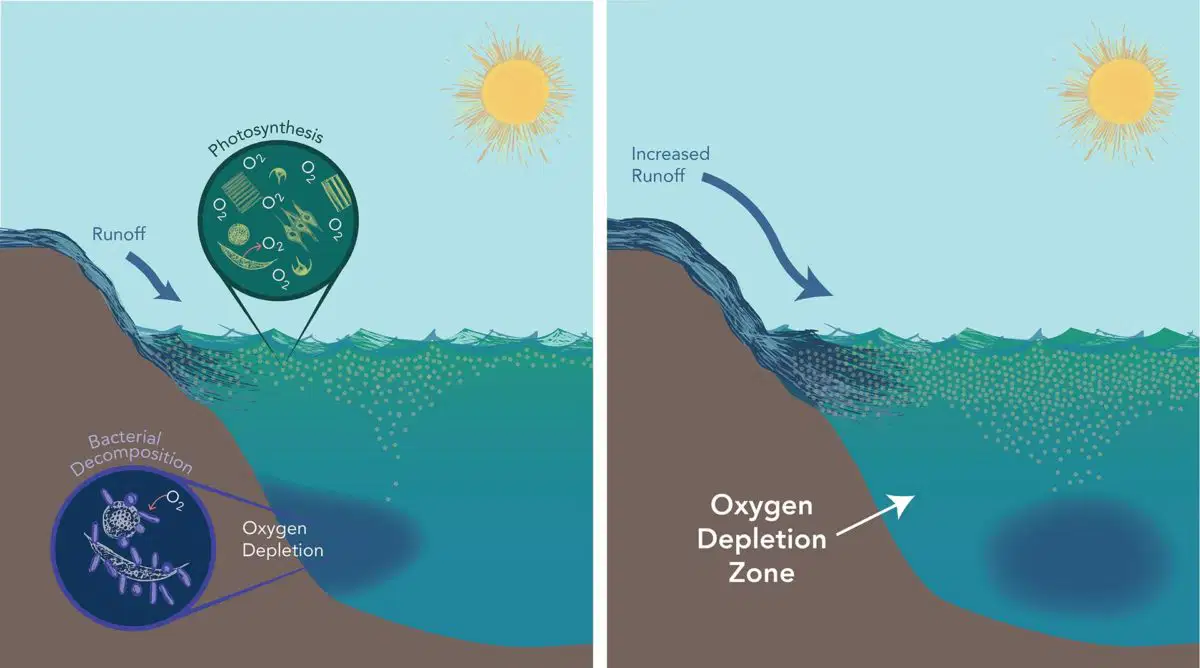
Which of the following is the cause of dead zones in the ocean?
An increase in the number of fish.
An increase in runoff from fertilizer
An increase in oxygen
A decrease in oxygen
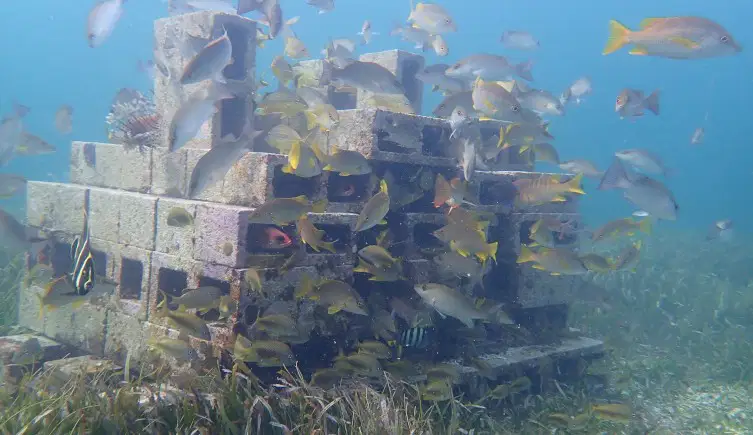
What is one way humans are trying to positively impact the ocean?
Fishing
Creating artificial reefs
Harvesting oil and natural gas
Transporting goods in ocean vessels
How do human activities such as overfishing impact ocean systems?
They increase the biodiversity of marine life.
They can lead to the depletion of fish populations.
They have no significant impact on ocean systems.
They help in the natural regeneration of coral reefs.
Which of the following is a way humans depend on ocean systems?
For mining coal.
For fresh drinking water through desalination
For transportation and trade.
For growing wheat.
What is one effect of oil spills on ocean systems?
They fertilize the ocean floor.
They create new habitats for marine life.
They can harm marine animals and plants.
They have no effect on ocean systems.
How does plastic pollution affect ocean systems?
It decomposes quickly and enriches the water.
It provides food for marine animals.
It can entangle and harm marine life.
It has no impact on ocean systems.
Is the following an example of a positive or negative impact on the earth's ocean systems?
An increase in carbon emissions means the oceans are absorbing more carbon dioxide which results in more acidic ocean water.
Positive Human Impact on Ocean Systems
Negative Human Impacts on Ocean Systems
Is the following an example of a positive or negative impact on the earth's ocean systems?
Fishing regulations create fishing seasons (time of year people are allowed to fish) to allow fish the opportunity to reproduce and increase species population.
Positive Human Impact on Ocean Systems
Negative Human Impacts on Ocean Systems
Is the following an example of a positive or negative impact on the earth's ocean systems?
Fertilizers from farms runoff into rivers and create dead zones at the mouth of rivers in our world's oceans.
Positive Human Impact on Ocean Systems
Negative Human Impacts on Ocean Systems
Is the following an example of a positive or negative impact on the earth's ocean systems?
Artificial reefs placed on the seafloor enhance marine life by creating new reef habitats.
Positive Human Impact on Ocean Systems
Negative Human Impacts on Ocean Systems
Is the following an example of a positive or negative impact on the earth's ocean systems?
Warmer global temperatures have caused glaciers to melt resulting in higher ocean levels which displace humans and destroy wetlands.
Positive Human Impact on Ocean Systems
Negative Human Impacts on Ocean Systems
Is the following an example of a positive or negative impact on the earth's ocean systems?
Warmer ocean waters create more frequent and stronger storms
Positive Human Impact on Ocean Systems
Negative Human Impacts on Ocean Systems
How can a large meteor impact influence the Earth's climate?
A. by creating large waves in the ocean
B. by releasing greenhouse gases into the atmosphere
C. by throwing dust and particles into the atmosphere, which can block sunlight.
What is the role of greenhouse gases in the Earth's climate?
A. They help keep the Earth’s temperature stable by trapping heat.
B. They reflect sunlight away from the Earth, causing cooling.
C. They are released only during volcanic eruptions.
How can changes in ocean currents influence climate?
A. They can change temperature patterns, making some areas warmer and others cooler.
B. They have no impact on the climate.
C. They only affect the weather in coastal areas.

Increased melting ice in Greenland, marked by the star, has caused lots of fresh, cold water to disrupt the Gulf Stream. Which location on the map is most likely to experience a colder climate as a result?
Location A
Location B
Location C
Location D
Based on scientific evidence, which of the following statements correctly describes these influences? Select ALL that apply.
Changes in ocean currents can affect global climate patterns, such as causing warmer or cooler temperatures in different regions.
The absorption of greenhouse gases, like carbon dioxide, helps keep the Earth's temperature stable.
An increase in greenhouse gases can lead to global warming by trapping more heat in the atmosphere.
Cutting down large forests (deforestation) can result in:
little to no changes
more homes for animals
less plants to absorb carbon dioxide, a greenhouse gas
An example of the carbon sink is?
trees
fossil fuels

Forests are carbon sinks because they remove carbon dioxide from the atmosphere through ____________.
combustion
respiration
photosynthesis
decomposition
Combustion
Respiration
Photosynthesis
Decomposition

How do animals receive carbon?
Photosynthesis
They absorb it from the atmosphere
The Sun
They eat other plants and animals
Organisms that do not decompose can be buried underground to become ____________, and thus remove carbon from the atmosphere.
water
nutrients
air
fossil fuels

How does carbon get from animals and back into the atmosphere? (CHOOSE ALL THAT APPLY)
Respiration
After they die, they are broken down by decomposers
Photosynthesis
Through fossilisation

What is decomposition?
the movement of carbon from the nonliving environment into living things and back
a compound made from carbon and oxygen
a chemical reaction that breaks down dead plants and animals

What are fossil fuels
Coal, oil, natural gas, and other fuels that are ancient remains of plants and animals.
a chemical reaction that breaks down dead plants and animals
the release of harmful materials into the environment
the movement of carbon from the nonliving environment into living things and back
Open System
Product
Carbon Cycle
Natural Resource

A forest, ocean, or other natural environment that takes more carbon out of the atmosphere than they add to it.
photosynthesis
carbon sink
fossil fuels

A natural situation in which heat is retained in Earth's atmosphere by carbon dioxide, methane, water vapor, and other gases
greenhouse effect
carbon dioxide
carbon cycle
When you drive a car, it releases carbon dioxide into the atmosphere through the process of...
Photosynthesis
Respiration
Combustion
Decomposition
This process usually occurs in the ground when the organic carbon in dead organisms is converted to carbon dioxide
Decomposition
Combustion
Photosynthesis
Respiration
You are inhaling oxygen right now. What process is this?
Photosynthesis
Respiration
Combustion
Decomposition

