
 Worksheets
Matter Quiz Review (Conductors/Insulators, Matter, and Phy/Chem)
Total questions: 58
Worksheet time: 4hrs 35mins
True or False: elements AND compounds are pure substances.
True
False
In which mixture can you see all of the parts?
homogeneous
heterogeneous
Identify which images are HETEROGENEOUS MIXTURES! (Check all that apply)


Solutions are ___________ mixtures.
Solid
Homogenous
Heterogeneous
Gas
A material with a particular chemical makeup
mixture
pure substance
hetogeneous
homogeneous
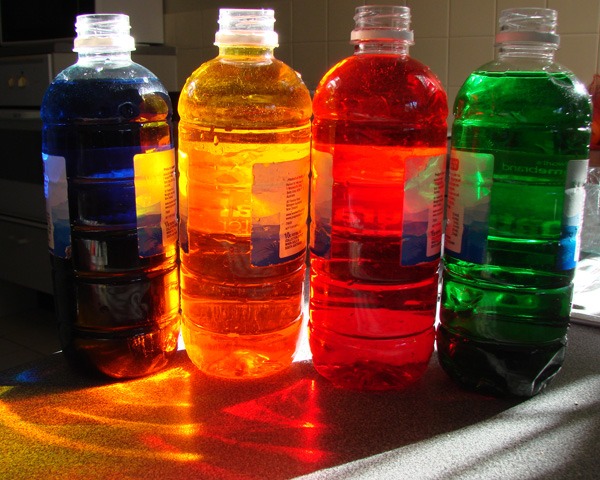

Which of the following is an example of a solution?
salt in water
sand and water
rocks and water
pebbles and water

Sand in Water
Solution
Suspension
Colloid

Vinegar
Solution
Suspension
Colloid
Which of the following is the best example of a homogeneous mixture?
honey
guacamole
trail mix
chicken noodle soup
Which sample shows a mixture?


Each substance keeps its own properties in this type of matter:
element
compound
mixture
pure substance
Which sample shows a pure substance?


Which of the following is a mixture?
Glucose (C6H12O6)
Salt Water (NaCl + H2O)
Iron (Fe)
Gold (Au)


element
compound
heterogeneous mixture
homogeneous mixture
Salt (NaCl)
Element
Compound
Mixture
H2 + Mg
Element
Compound
Mixture
Magnesium
Element
Compound
Mixture
H2O
Element
Compound
Mixture
Hydrogen gas
Element
Compound
Mixture
2 or more different substances that are physically together is called...
element
compound
mixture
solute
Jay combines water, sugar, and lemon juice to form lemonade. What type of substance was made?
Element
Molecule
Mixture
_____ - made up of two or more elements chemically bonded together.
Element
Compound
Mixture
Which of the following is a homogeneous mixture?
Pure platinum bar
Salt water
Carbon dioxide
All phases changes are considered...
physical and therefore relate to mixtures.
chemical and therefore relate to compounds.
physical and therefore relate to elements.
chemical and therefore relate to molecules.
Colloids are examples of...
heterogenous mixtures
homogenous mixture
compounds
pure substances
True or False: Each part of a mixture keeps its properties when mixed.
True
False
Elements may be found as
Single Atoms Only
Molecules Only
Single Atoms or Molecules
H2SO4
NaCl + H2O
Kool-aid
Distilled Water
Match the following
H2
Ni
H2O
SrO

Use the Image to answer the question.
II is a (a)
III is a (b)
IV is a (c)
Match the following
Colloid
Medium Particle Size
Solution
Small Particle Size
Suspension
Large Particle Size
Match the following
Suspension
Forms Layers Quickly
Solution
Never Forms Layers
Colloid
Forms Layers Overtime
How can I increase the surface area of a solute I want to dissolve?
Break it into smaller pieces
Stir faster
Increase the temperature


What is true about insulators. SELECT ALL THAT APPLY
They transfer energy poorly
They transfer energy well
They feel cold/hot if touched
They feel room temperature when touched
What is true about conductors. SELECT ALL THAT APPLY
They transfer energy poorly
They transfer energy well
They feel cold/hot if touched
They feel room temperature when touched
Which statement is true.
Thermal energy flows from objects with a high temperature to objects with low temperature.
Thermal energy flows from objects with high heat to objects with less heat.

If your hand is 25oC and you have heat energy of 200J, Obj A will feel
Cold, because the energy is transfering to the object from you.
Cold, because the energy is transfering to you from the object.
Hot, because the energy is transfering to the object from you.
Hot, because the energy is transfering to you from the object.
If your hand is 25oC and you have heat energy of 200J, Obj B will feel
Cold, because the energy is transfering to the object from you.
Cold, because the energy is transfering to you from the object.
Hot, because the energy is transfering to the object from you.
Hot, because the energy is transfering to you from the object.

What is a physical property of these strawberries?
Red
Rotten
Flammable

Determine if the following is a physical or chemical property
Solubility
Ductility
Density
Tarnish
Oxidation
Combustion
pH
Determine if the following is a physical or chemical change.
A paper is ripped in half
Salt is dissolved in water
A silver chain tarnishes
Vinegar reacts with baking soda.
A metal pan rusts

