
Font size
 Worksheets
Unit 6-Forms of Energy
Total questions: 20
Worksheet time: 2hrs 40mins
Min tapes a piece of string to each of two ping-pong balls. He hangs the balls so that they are close to one another but do not touch. Later, he finds that they have pulled together. They are now touching. What reasoning could explain why the two balls are now touching?
They have both lost their charges.
They have gained opposite charges.
They have both gained a positive charge.
They have both gained a negative charge.
Curtis uses a wool cloth to give a balloon a negative charge. Which claim and reasoning describes what will happen when he holds the balloon near the wall, and why?
The balloon will stick to the wall because a negatively charged object is attracted to an uncharged object.
The balloon will stick to the wall because a negatively charged object is attracted to another negatively charged object.
The balloon will not stick to the wall because a negatively charged object is repelled by an uncharged object.
The balloon will not stick to the wall because a negatively charged object is repelled by another negatively charged object.
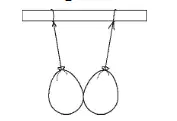
Aisha wanted to know how positive and negative charges affect balloons. The balloons shown below are part of her investigation. What are the charges on the balloons?
They are both positive.
They are both negative.
They are both uncharged.
One is positive, and one is negative.
What form of energy cooks food in a solar cooker?
chemical energy
electrical energy
light energy
mechanical energy
To conserve energy or if they don’t have a clothes dryer, some people hang their laundry outside to air dry. Which of the following is the most optimal day to hang laundry?
a cold, rainy day
a cold, cloudy day
a warm, sunny day
a warm, cloudy day
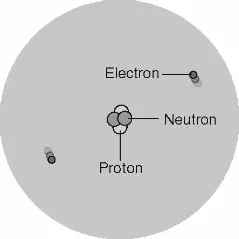
An electron is the particle most easily removed from an atom. What is the electric charge of a neutral atom from which an electron has been removed?
F. negative
G. neutral
H. nucleus
I. positive
Why do two socks sometimes stick together in a dryer?
A. Both socks have a positive charge.
B. Both socks have a negative charge.
C. Protons move from one sock to another.
D. Electrons move from one sock to another.
Which is true about how a charged object interacts with a neutral object?
The charged object becomes uncharged.
The neutral object remains neutral.
They repel each other.
They attract each other.
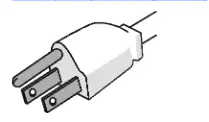
In a three-pronged plug, one flat prong carries current from the supply that enters the electrical outlet, and the other returns the current to the service panel of the building. The round prong helps protect
people from electrical shocks.
What has a purpose similar to that of the round prong?
a magnet
a generator
the plug's plastic covering
the holes in the flat prongs
A material that allows an electric current to flow through it is an electrical conductor. A material through which an electric current cannot flow easily is called an insulator.
Which claim best describes the difference between an insulator and a conductor?
An insulator has a static charge, and a conductor does not.
A conductor contains more electrons than an insulator.
A conductor is a metal, and an insulator is any material that is not a metal.
An insulator does not have electrons that are free to move, and a conductor does.
An electric clock in a classroom will not run if it is not plugged into an electric outlet. What does the clock get from the electric current from the outlet?
batteries
chemicals
energy
time of day
Which energy transformation occurs when a fan is plugged into a wall?
heat energy into motion energy
electrical energy into sound energy
energy of motion into sound energy
electrical energy into energy of motion
You use energy transformations every day. Which of these is a way that you would use the transformation of electrical energy to motion energy?
watching your favorite show on television
taking an elevator to the top of a tall building
listening to your MP3 player while you walk to school
turning on the lamp on your desk so you can see to do your homework
Darrell made toast for breakfast by putting a slice of bread into the toaster and turning it on. Which energy transformation did he use to make a piece of toast?
heat energy into electrical energy
electrical energy into heat energy
light energy into electrical energy
electrical energy into light energy
An object that has thermal energy can lose some of that energy. Which answer describes an example of the thermal energy of a material decreasing?
eggs cooking in a pan
water freezing into ice
snow melting in the spring
a ball bouncing on the floor
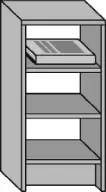
The picture below shows a book sitting on a shelf. Which type of energy does the book have because it is on the shelf?
chemical
electrical
kinetic
potential
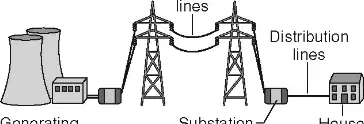
At which part of this grid is electrical energy produced from other types of energy?
substation
distribution line
transmission lines
generating station
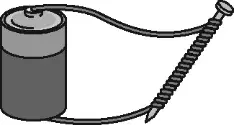
The diagram below shows a simple electromagnet. What effect does decreasing the number of coils around the nail have on the strength of the electromagnet?
It becomes weaker.
It becomes stronger.
It remains the same strength.
It depends how many coils are removed.
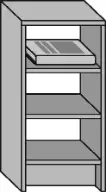
Suppose someone caused the book to fall from the shelf to the ground. Compared to the total sum of kinetic and potential energy the book has while on the shelf, about how much would it have when it is halfway from the shelf to the ground?
no energy
half as much
twice as much
the same amount
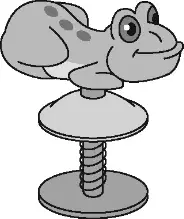
The picture below shows a spring toy. If you push down the toy and then release it, the toy would pop up through the air. Which types of energy does the spring toy have as it flies through the air?
electrical and thermal
kinetic and potential
potential and electrical
thermal and kinetic

