
 Worksheets
Q3 CA Review
Total questions: 75
Worksheet time: 2hrs 36mins
Temperature is a(n)
Biotic Factor
Abiotic Factor
Weather is a(n)
Biotic factor
Abiotic factor
Fungi are
Biotic factors
Abiotic factors
A plant is a(n)
Biotic factor
Abiotic factor
An animal is a(n)
Biotic factor
Abiotic factor
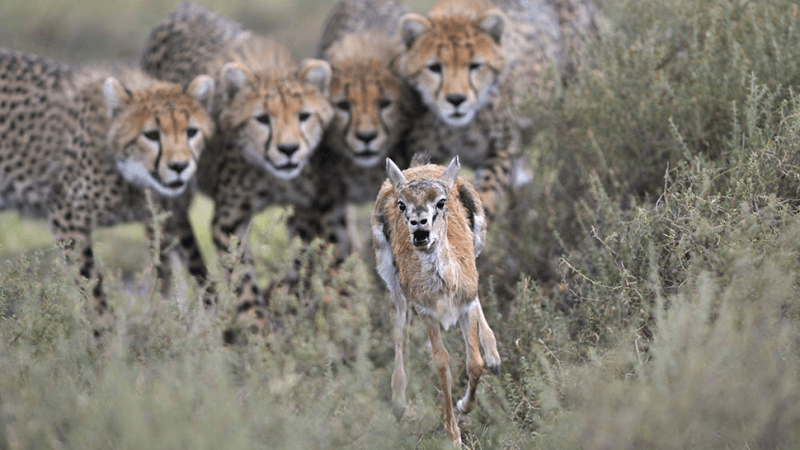
Hawks and owls eat the same type of food and struggle with one another to get their food. What is this an example of?
Competition
Biotic factor
Symbiosis
Population

A self-contained living thing.
Organism
Population
Abiotic factor
Ecosystem
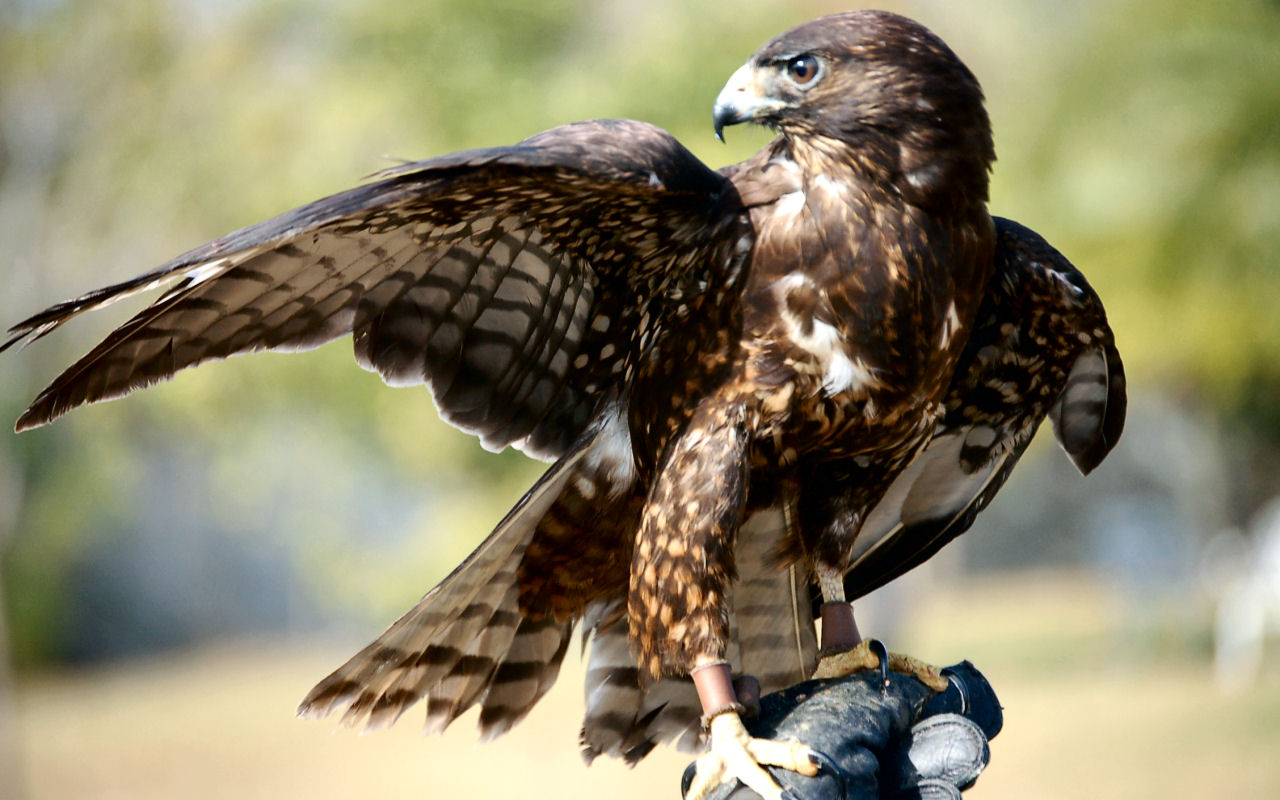
Hawks and brown bears live together in the same habitat. There will be competition between the hawks and the brown bears only if which of the following is true?
Brown bears hibernate during the winter while hawks remain active.
Pesticides in the fish population affect hawks’ eggs and decrease their population.
Both brown bears and hawks feed on the same species of fish.
Both Shanna and Savanna feed on the same species of snakes.
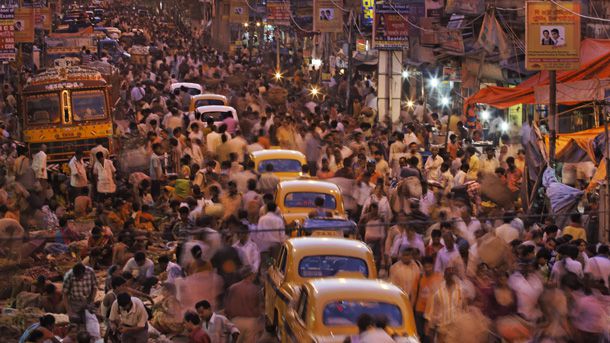
An increase in which of the following factors is likely to contribute to competition between two members of the same species living in a certain habitat?
Available food resources
Population of the species
Annual snowfall
Overall size of the habitat
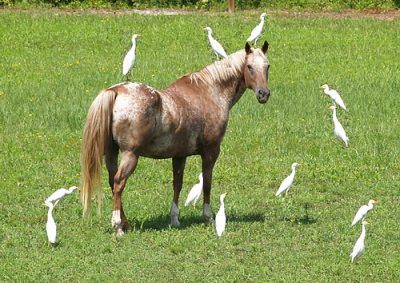
Competition becomes more important as the number of individuals ______ or the availability of resources _________.
increases, decreases
increases, increases
decreases, increases
decreases, decreases
Who was responsible creating a microscope that discovered bacteria?
George Washington
Anton Van Leeuwenhoek
Thomas Edison
Robert Hooke
What FIRST scientist is responsible for discovering and naming the Cell?
Robert Hooke
Isaac Newton
Anton van Leeuwenhoek
Matthias Schleiden and Theodore Schwann discovered that all living things are made up of ________________.
bones
plants
animals
cells
Choose a statement that is incorrect about Cell Theory:
Cells are only found in plants and animals
Cells are the smallest and most basic unit of life
All cells are made from preexisting cells
All organisms are made of 1 or more cells
Based on the diagram below, what characteristic is required for a cell to be considered eukaryotic?
A eukaryotic cell must contain membrane bound organelles such as a nucleus.
A eukaryotic cell must have chlorophyll making it possible for the cell to photosynthesize.
A eukaryotic cell must have ribosomes.
A eukaryotic cell will never have a cell wall.

What basic characteristic divides the organisms in Kingdom A from Kingdom B?
The organisms in Kingdom A are all multicellular and those in Kingdom B are unicellular.
The organisms in Kingdom A are all unicellular and those in Kingdom B are multicellular.
The organisms in Kingdom A are all autotrophic and those in Kingdom B are heterotrophic.
The organisms in Kingdom A are all heterotrophic and those in Kingdom B are autotrophic.

What is the term used to describe a characteristic that helps an organism survive in its environment and reproduce?
Evolution
Variation
Adaptation
Traits

When animals migrate, this is a ________________ adaptation.
structural
behavioral

A walking stick insect blends in with its environment. What term describes this adaptation?
Hibernation
Internal adaptation
Camouflage
Migration

How does camouflage benefit an organism?
Helps the organism build shelter.
Allows the organism to sleep for many months during the winter.
Helps the organism get good sleep at night.
Allows organism to blend in with its environment in order to hunt or avoid being hunted.

How many total atoms in the following equation?
ClN6Fe2
6
8
10
9
How many atoms of Carbon are in this equation?
HʒC5O4
3
1
5
4
How many atoms of Calcium are in this equation?
H3O5CaCl7
3
5
1
7
Identify the Coefficient.
3BeH5Si8
5
3
1
8
Identify the subscripts.
4Fe5K2
4
5
2
1
How many atoms of Hydrogen are in this equation?
5Cl2H5
10
2
5
25
The substance being dissolved is called the ________
solvent
solid
solute
solvate
When no more solute dissolves the solution is _________
supersaturated
unsaturated
saturated
supercalifragilisticexpialidocious
A solution in which the solute completely dissolves.
saturated solution
unsaturated solution
supersaturated solution
How do we make a dilution?
Add more solute
Remove solute
Remove solvent
Add more solvent
True or False
The rate of dissolving of a solute in a solvent is faster when the solute and solvent are stirred.
True
False
Jackson is making dinner and is trying to dissolve salt into a pot of water. The salt is dissolving slowly. What should Jackson do to speed up the rate of dissolving?
He should put larger salt particles in the water.
He should heat the water to a higher temperature.
He should completely stop stirring the pot of water.
He should slow down the speed he is stirring the pot.
What combination would dissolve a solid solute the fastest?
high temperature, no stirring
no heat, no stirring
sugar cube, no heat
high temperature, stirring
In which cup will the salt dissolve more slowly?

0 meters
If a puppy runs across a park at a speed of 15 m/s. The puppy has a time of 5 seconds. How far did the puppy run?
75 m
30 m
45 m
105 m
speed in a given direction
velocity
average speed
instantaneous speed
speed
Which of the following is an acceptable velocity measurement?
25 m/s North
25 m/s
25 m
25 m North
Distance
Displacement
The airplane flew 300 miles.
Distance
Displacement

Which is true about this graph?
The displacement of the object is 200 m
The distance traveled by the object is 200 m
The distance traveled by the object is 0m
The displacement of the object is 0 m
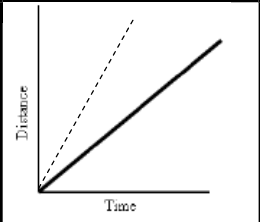

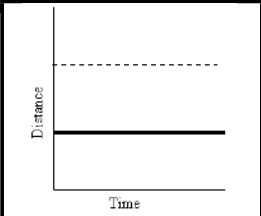
Match the description to the graph:
"The speed of the car moves fast and then decreases to a stop."


What is happening at C?
Stationary
Accelerating
Constant motion

What was occurring from point B to point C?

What is the unit to MEASURE force?
Kilogram
Meter
Pounds
Newton
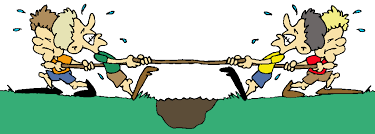


Forces that have a net force of zero Newtons
Balanced force
Unbalanced force


According to Newtons first law, an object in motion will ___________________ unless an unbalanced force acts on it.
stop
accelerate
stay in motion
stay at rest

In the picture, the blocks are flying out of the truck based on Newton's first laws because .....
object in motion stays in motion
object at rest stays at rest
of inertia
force mass and acceleration

A magician pulls a tablecloth out from under dishes and glasses on a table without disturbing them is an example of newtons first law because
an unbalanced force acts on an object
an object in motion stays in motion until an unbalanced force acts on it
an object at rest remains at rest until an unbalanced force act on it
A balanced force acts on an object

Where is the object stopped?
A
B
C
D
Where is the object moving back to the origin?
A
B
C
D
Where is the object moving away from the origin at the quickest speed?
A
B
C
D
What is the speed of the object during segment B?
0.5 m/s
1.3 m/s
2 m/s
2.5 m/s
A student walks 50 meters in 100 seconds. Calculate the speed.
0.5
0.5 m/s
500 m/s
2 m/s
A turtle crawls at a pace of 2 m/hr. How long does it take for the turtle to crawl 10 m?
20
0.2 hr
200 hr
5 hr

