
Font size
 Worksheets
Life Cycle/Constellation Test Review
Total questions: 42
Worksheet time: 37mins

All stars begin their life in a
Main Sequence
Nebula
Protostar
Black Dwarf


We live in the...
Andromeda Galaxy
Milky Way Galaxy
Pleiades Star Cluster
Seven Sisters
A region in spacetime beyond where events cannot affect an outside observer, this is the point at which there is no return and time is said to standstill because gravity becomes so strong, nothing can escape it
accretion disk
event horizon
supernova
escape velocity
What are the types of black holes?
What is a primordial black hole?
Black holes created by a white dwarf
Black holes that form from the collapse of massive stars in the last 1000 years
1st black holes to exist after the big bang
Black holes that spin
What are supermassive black holes?
masses that have 3-5 solar masses
masses ranging from millions to billions of solar masses
How do we know black holes exist if we cant see them?
We observe Jets, weird motion, and falling objects into the black hole.
We observe Transfer of material, nebulas, and white dwarfs.
We observe no change in gravity, falling objects into a black hole, and redshift.
We observe many planets, jets, and cocoon nebulas.
What is a quasar?
A black hole that is getting dimmer and brighter throughout time
A supermassive black hole that is the most luminous object and is pointed towards Earth.
A neutron star that has died.
supermassive black hole that is the most luminous object in the universe.
What is a blazar?
A black hole that is getting dimmer and brighter throughout time
A supermassive black hole that is the most luminous object and is pointed towards Earth.
A neutron star that has died.
supermassive black hole that is the most luminous object in the universe.
A pulsar is a
Neutron star
black hole
Nebula
White dwarf
If you are on the path of a pulsar what will we observe from Earth?
We will observe a low stream of x ray waves
What are magnetars?
(a) formed after supernova with 1.4 times the mass of our sun
(b) Stars with regular pulse of light
(c) Supernova with 3x the mass of our sun
(d) black hole with jets pointing towards Earth
(e) neutron star with extreme magnetic fields
Which celestial object experiences starquakes?
Magnetars
Pulsars
Choose all stages that are part of the life cycle of an Average Star.
Choose all the stages that are part of the life cycle of a Massive Star.
If the surviving core after a supernova is less than 3 solar masses, it becomes a ______.
If the surviving core after a supernova is greater than 3 solar masses, it becomes a ______.
Match the following
Event horizon
surface of black hole nothing can escape
Singularity
Center of a black hole
Accretion Disk
Light source of a black hole
Photon Sphere
Rings around black hole
Particle Jet
Matter moved away from black hole
How many named constellations are there?
80
84
88
92
TRUE or FALSE. Constellations that are only seen for a part of the year are called seasonal constellations.
TRUE
FALSE
A group of stars that form a pattern in the sky when viewed from earth is called a _____________.
galaxy
solar system
planet
constellation
Huge glowing balls of gases made up of mostly hydrogen and helium are called ____________.
hemisphere
stars
planets
comets
The southern hemisphere uses what constellation as a reference and starting point
Southern Cross
The northern hemisphere uses what constellation as a reference and starting point
Ursa Minor
Andromeda
In which directions do stars rise and fall?
Why do we see different constellations during different times of the year?
the stars that make up constellations form different patterns throughout the year
the stars move out of view of the Earth in different seasons
the stars get closer to and farther from the Earth during the year
the Earth revolves around the sun giving us a different view into space each season
Which of the following causes seasonal changes on Earth?
Choose all that apply.
the Earth rotates on its axis
the Earth revolves around the sun
the Earth is tilted on its axis
the Earth moves closer to and farther away from the sun throughout the year
the moon revolves around the Earth.
The constellation Leo is visible in the northern hemisphere in the summer, but not the winter. Which explains why we can't see Leo in the winter?
the constellation Leo moves to another solar system during the winter
the stars that make up Leo change positions and form a new pattern in the winter
during the winter, Leo is located on the daytime side of the Earth, so we can't see it
during the winter, Mars blocks the constellation Leo so we can't see it
Why do we see different constellations during different seasons?
The constellations move.
Some of the stars disappear.
We are looking out at different parts of the galaxy.
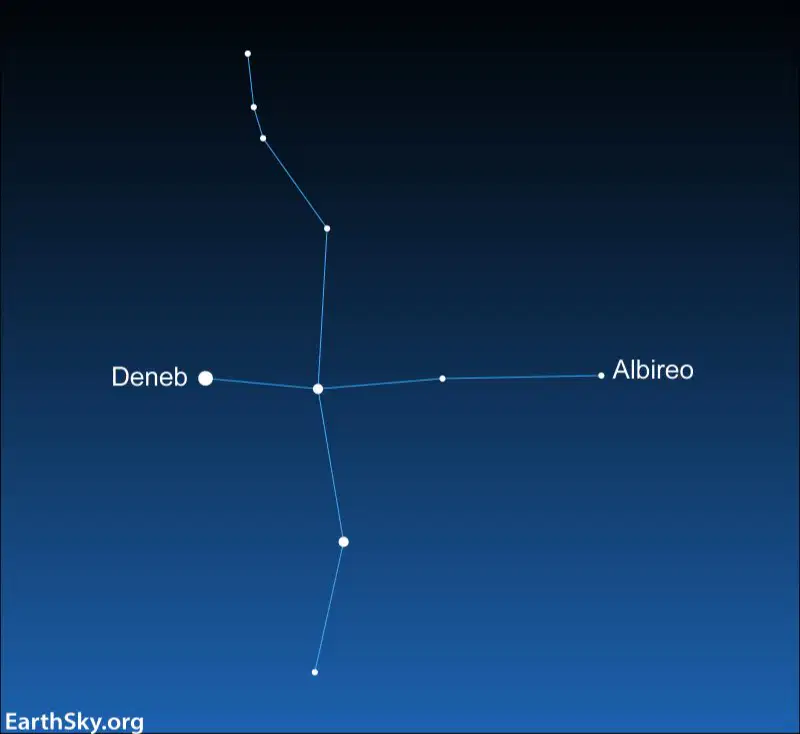
Which constellation is this?
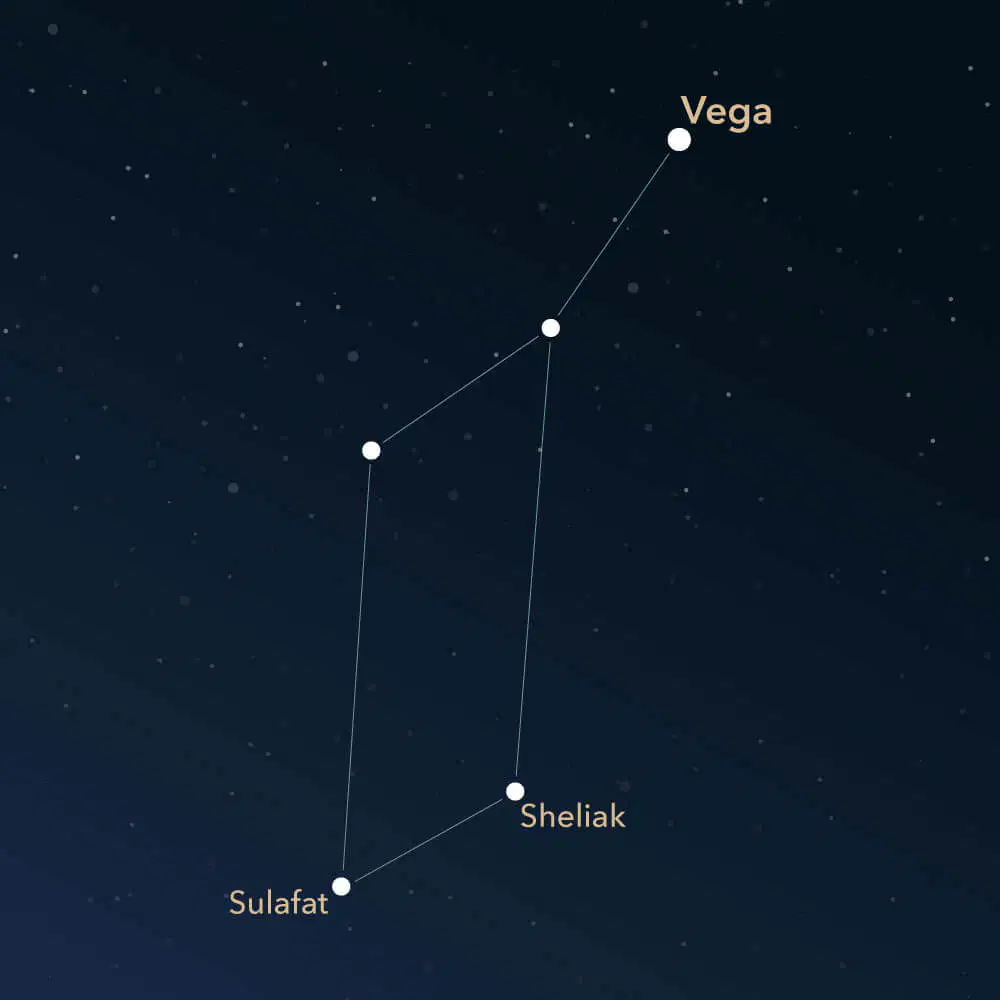
What constellation is this?
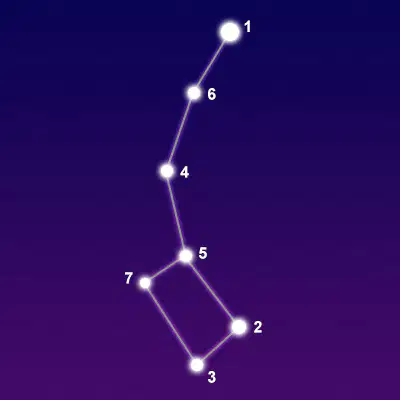
What constellation is this
Ursa Minor

What constellation is this?
Centaurus


Organize these options into the right categories
Rigel
Betelgeuse
Vega
Sheliak
Pollux
Castor
Polaris
Urodelus

