wayground logo

Free Printable Worksheets

Font size

S
M
L
XL
Worksheets

Environmental Science Makeup for 2nd 9 Weeks

Total questions: 42

Worksheet time: 2hrs 35mins
Name
Class
Date
1.
Which biome is the driest?
a)
Desert
b)
Tundra
c)
Taiga
d)
Rainforest
2.
Identify an a example of an abiotic factor?
a)
Panda
b)
Turtle
c)
Butterfly
d)
sunlight
3.
Which biome is characterized by low temperatures and low amounts of rainfall?
a)
tundra
b)
desert
c)
temperate deciduous forest
d)
tropical rain forest
4.
One characteristic feature of tundra is that only the surface thaws in the summer and refreezes in the winter, leaving a layer of permanently frozen subsoil.  This characteristic is known as
a)
glaciation
b)
permafrost
c)
crystallization
d)
soilfrost
5.
This biome contains mostly spruce trees and Douglas firs, which are both evergreen.  The winters are long and cold and the summers are short and rainy.  The soil is very rich.  Moose and elk live here.  This biome is classified as a
a)
taiga
b)
tundra
c)
deciduous forest
d)
temperate forest
6.
Areas defined by their geographical location and ecological similarity are called?
a)
ecozones
b)
biotopes
c)
biomes
d)
biodomes
7.
What are the key features of the Tundra?
a)
cold winter, thin acidic soil, evergreen trees
b)
treeless, permafrost, cold dark winters
c)
ong cool summers, short dark winters, migrating animals
d)
many evergreen trees, short moist summers, long snowy winters
8.
Biotic factors of an ecosystem are:
a)
non-living
b)
plants
c)
living thing
d)
soil
9.
Type of forest biome near the equator; receives a lot of rain; temperatures are warm all year.
a)
desert
b)
tropical rain forest
c)
arctic
d)
temperate rain forest
10.

Biome with plants and grasses, but no trees.

a)

grassland

b)

desert

c)

forest

d)

arctic tundra

11.

Biome with many different species of cacti and reptiles and very little rainfall.

a)

Desert

b)

Temperate Rainforest

c)

Tropical Rainforest

d)

Arctic Tundra

12.

Which biome contains large populations of grazing herbivores, few species of birds, and deep, rich soil?

a)

tropical rain forest

b)

desert

c)

deciduous forest

d)

grassland

13.

Forest biome with many different trees, mosses and ferns; most trees lose and regrow their leaves each year.

a)

temperate rainforest

b)

biome

c)

desert

d)

grassland

14.

Which biome is represented by the rainfall amounts in letter C?

a)

desert

b)

prairie

c)

deciduous forest

d)

tropical rain forest

15.
These gases, such as carbon dioxide, trap heat in the Earth's atmosphere causing global warming
a)
Global warming gases
b)
Hot House gases
c)
Green House gases
d)
Thermal pollution
16.
A particular golf course is using large amounts of nitrogen fertilizer. What process could move this nitrogen into a local stream?
a)
volatilization
b)
nitrogen fixation
c)
runoff
d)
ammonification
17.
What converts nitrogen into a useable form for plants and animals?
a)
bacteria
b)
fungi
c)
rain
18.
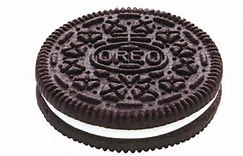
An oreo cookie weighs 20 grams.  It gets crushed into crumbs for a recipe.  How much do its crumbs weigh?
a)
15 grams
b)
25 grams
c)
20 grams
19.
What is the only process that removes carbon from the atmosphere?
a)
combustion
b)
cellular respiration
c)
photosynthesis
d)
decomposition
20.
Where is carbon stored in the environment?
a)
Fossil fuels
b)
Wood of trees
c)
Calcium carbonate (shells and bones)
d)
All of the above
21.
The process of plants losing water through their leaves is called ____.
a)
condensation
b)
evaporation
c)
transpiration
d)
exhaling
22.
Carbon dioxide is added to the atmosphere by
a)
Burning fossil fuels 
b)
Cellular respiration
c)
Decomposing organic matter
d)
All answers are correct
23.

The carbon in coal, oil, and natural gas came from

a)

the combustion of fossil fuels

b)

the remains of dead organisms

c)

carbon-fixing bacteria in swamp soil

d)

carbon dioxide dissolved in ocean water

24.

Nitrogen fixation is the process in which certain bacteria convert nitrogen gas into

a)

liquid nitrogen

b)

nitrates

c)

nitrites

d)

ammonia

25.

The water cycle is driven by

a)

water

b)

wind

c)

the sun

d)

Earth's rotation

26.

What cycle are fossil fuels part of ?

a)

carbon

b)

oxygen

c)

nitrogen

d)

phosphorus

27.

What is the largest reservoir for water?

a)

the ocean

b)

rocks and minerals

c)

the atmosphere

d)

glaciers

28.

What is the largest reservoir for nitrogen?

a)

the ocean

b)

rocks and minerals

c)

the atmosphere

d)

bacteria

29.

In an ecosystem, what happens to the atoms of certain chemical elements, such as carbon, oxygen, and nitrogen?

a)

They move into and out of living systems.

b)

They are only found in abiotic factors.

c)

They move out of living systems and do not return.

d)

They move into living systems and remain there.

30.

A place where matter/nutrients are collected/stored.

a)

A lake

b)

A reservoir

c)

A cloud

d)

The atmosphere

31.

A mosquito with a mass of 2.5 grams dies and is decomposed. How much of its matter is either used by the decomposer or returned to the Earth?

a)

10%

b)

0%

c)

100%

d)

50%

32.

Law of conservation of mass states that

a)

matter is neither created nor destroyed

b)

matter is destroyed

c)

matter is created

d)

matter does not change

33.
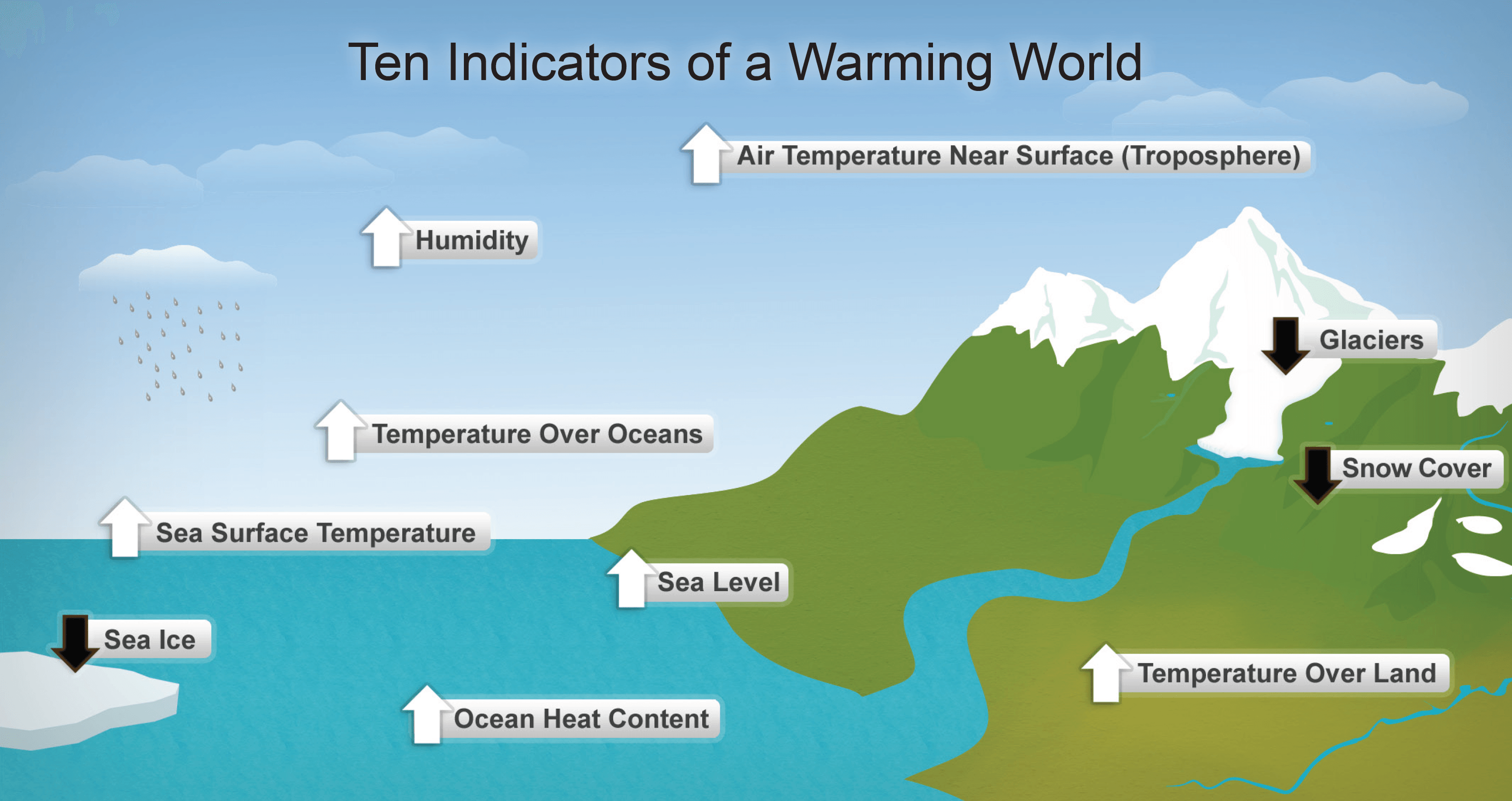
Which of the following is NOT an effect of Global Warming?
a)
Polar ice caps will melt.
b)
Coastal regions will be covered with rising sea levels.
c)
Some areas will experience serious droughts
d)
The Earth's rotation will slow down and eventually stop
34.
The main human activity that releases greenhouse gases is
a)
using bottled water
b)
burning fossil fuels
c)
texting on cellphones
d)
eating meat
35.
What is the mixture of gases surrounding the Earth called?
a)
carbon
b)
concentration
c)
atmosphere
d)
emissions
36.
Things you can do to help decrease global warming include:
a)
Eat more ice cream.
b)
Keep your freezer door open.
c)
Keep your air conditioner on high.
d)
Turn off your lights when you’re not using them.
37.
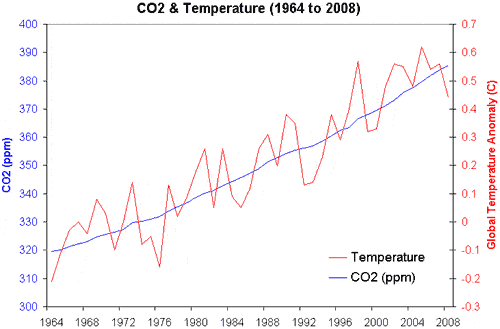
The graph below shows CO2 emissions and temperatures from 1909 to 1949.  What conclusion is best supported by the graph?
a)
There is no relationship between carbon dioxide concentrations and temperatures
b)
As carbon dioxide concentrations increase, temperatures increase
c)
As carbon dioxide concentrations increase, temperatures decrease
d)
As carbon dioxide concentrations decrease, temperatures increase
38.
The greenhouse gas having the greatest role in human-caused global warming is
a)
methane
b)
carbon dioxide
c)
CFCs (chlorofluorocarbons)
d)
ozone
39.
Which layer of the atmosphere do we live in?
a)
Troposphere
b)
Stratosphere
c)
Thermosphere
d)
Ionosphere
40.

Choose all of the leading contributors of carbon dioxide that are contributing to global warming.

a)

forest fires

b)

human breathing (respiration)

c)

car exhaust

d)

factory pollution

41.

Which of the following are greenhouse gases?

a)

Carbon dioxide

b)

Methane

c)

Nitrogen Oxide

d)

All answers are correct

42.

In general, what happens to the climate (of the Earth) if more greenhouse gases are released (through human activities and natural occurrences) into the atmosphere?

a)

Average temperature goes up

b)

Average temperature goes down

c)

Average temperature remains the same

d)

None of the above