
 Worksheets
Water, Weather & Climate
Total questions: 17
Worksheet time: 17mins
Two kids are arguing about their science lesson they had on evaporation.
Bobby says a cup of water poured on the concrete always takes 30 minutes to evaporate.
Suzy says that it could take more or less time, it depends on the outside temperature & wind.
Who is right?
Bobby
Suzy
Not enough information to decide.
How long has the water cycle been happening?
(a)
Why do plants & animals need adaptations?
To make things more interesting and beautiful.
Scientists have no clue.
It helps them to survive in their environment.
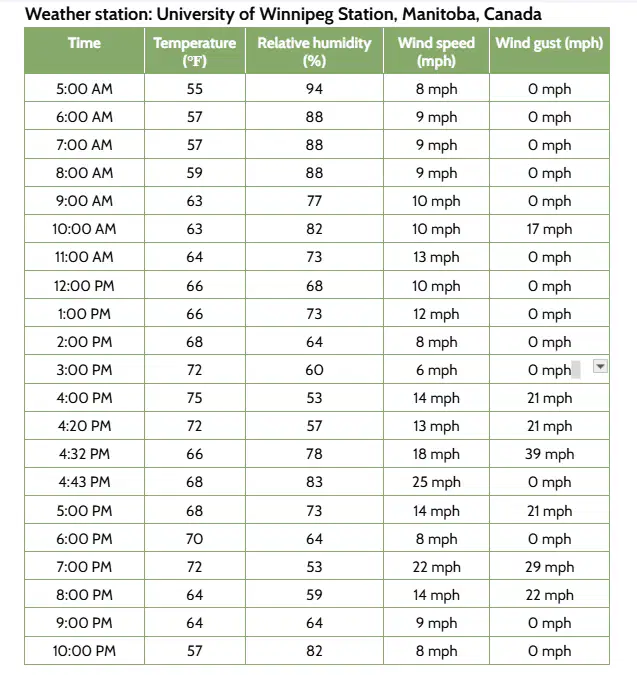
According to the data table when did it most likely hail?
Around 10am
Around 12 noon
Around 4:30 pm
Not enough data to determine.
What are 2 factors that usually occur around the time hail falls?
Air temperatures are below freezing & there's very little wind.
Air temperatures rise up really high & absolutely no wind.
Air temps dip down before rising & wind speeds increase.
It must be snowing earlier in the day & sunset has just happened.
Why are the North & South Poles so cold?
They have lots of wind, and wind is always cold.
They don't recieve much direct sunlight.
Polar bears & penguins need it to be cold to survive.
There aren't many cities with concrete to hold in the heat.

This is a park in Mesa, AZ. It's a really hot day. While playing tag Jeremy's flip flops broke and he can't wear them to walk to the car.
Where would be the coolest spot to walk on?
The black road.
The concrete in the sun.
The grass.
The concrete, but only in the shady areas.
Are all ground coverings (dirt, grass, concrete, fake turf) the same temperature in the same location?
yes
no

Which line of data is probably gathered from the same citiy on the same day for 12 years?
red
blue
not enough information to determine

If you gathered low temperature data for the 15th of every month of the year, in one city,
what pattern should you see?
(Jan. 15, Feb. 15, March 15, April 15, May 15........)
They should go up or down depending on which season of the year it is.
They should stay relatively the same if you're in the same city.
There's no way to predict this data.
The numbers should add be even.
Felipe is going on vacation for Spring Break. His family will be headed to the desert sand dunes to ride motorcycles and later they will go fishing at a lake up in the mountains by his grandparent's house. Which location would he probably need his jacket most?
mountains
desert sand dunes
Why is it typically warmer at the ocean than it is at higher elevations?
The air molecules are closer together (higher pressure) so the heat is trapped.
It's closer to Earth's core and the core is hot.
The sand wants to be hot.
The wildlife needs it to be warm.
Pyongyang, North Korea is located at about 39°N of the equator and an elevation of about 16 meters above sea level.
Luanda, Angola is located at about 8°S of the equator with the same elevation of about 16 meters above sea level.
Which place probably has a cooler climate?
Not enough info to predict
They'd be about the same because they are at the same elevation.
Which term describes what's happening outside right now in Mesa, AZ?
Weather
Climate
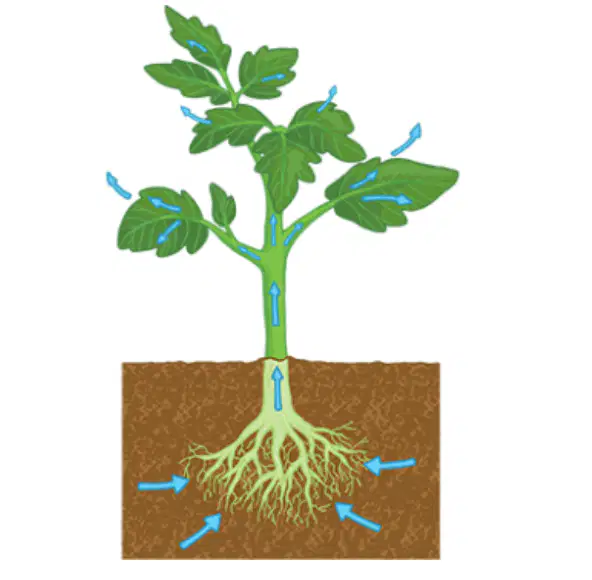
What's the process of water leaving a plant called?
precipitation
evaporation
transpiration
condensation
The weather forecast says that tomorrow's high will be around -2⁰F and there's 85% chance of precipitation. Which type is most likely to occur under those conditions?
rain
snow
hail
no way to tell
Why does a saquaro have wide shallow roots?
There's not much rain so they need to be spread out to absorb the little bit of water that falls.
The dirt is too hard for them to grow deeply
There are rattlesnakes in holes deep underground and they stop the roots from going downward.
They are one of the largest "trees" in the world so they need to be balanced on both sides to not fall down during a wind storm.

