
 Worksheets
AS Business - 2.4 Resource Management-24-25
Total questions: 54
Worksheet time: 27mins
The importance of production in resource management is:
It ensures efficient use of resources.
It leads to resource depletion.
It has no impact on resources.
It complicates resource management.
Productivity in the context of business efficiency is defined as:
The ratio of output to input in a business process.
The total revenue generated by a business.
The number of employees in a company.
The amount of time spent on a task.
Capacity utilisation is a measure of what?
The maximum output a company can produce
The actual output compared to potential output
The total revenue generated by a company
The number of employees in a company
How does stock control contribute to effective resource management?
By reducing waste and optimizing inventory levels
By increasing production costs
By complicating supply chain processes
By decreasing product quality
Describe the role of quality management in business operations.
Ensures products meet customer expectations and regulatory requirements
Focuses solely on increasing production speed
Is only concerned with financial performance
Has no impact on customer satisfaction
Explain the concept of 'Production, productivity, efficiency' in resource management. Include aspects such as volume/value of what is produced, rate or production, quality, and waste minimisation.
Production refers to the volume or value of what is produced, productivity is the rate of production, and efficiency involves quality and waste minimisation.
Production is the rate of production, productivity is the volume or value of what is produced, and efficiency involves only waste minimisation.
Production and productivity are the same, focusing on the rate of production, while efficiency is about quality.
Production is about quality, productivity is about waste minimisation, and efficiency is about the volume or value of what is produced.
What is 'Stock control' and why is it important in resource management? Discuss aspects like quantity stock needed, when it is needed, and waste minimisation.
Stock control is the process of managing inventory to ensure the right quantity is available at the right time, minimizing waste and optimizing resource management.
Stock control is a financial strategy to maximize profits by investing in stocks.
Stock control is a method of controlling employee performance in a company.
Stock control is a marketing strategy to increase product visibility.
Describe 'Quality control' in the context of resource management. Include quality management and continuous improvement (Kaizen).
Quality control in resource management involves ensuring resources meet quality standards, incorporating quality management practices and continuous improvement (Kaizen).
Quality control in resource management is solely about meeting deadlines.
Quality control in resource management focuses only on cost reduction.
Quality control in resource management is unrelated to quality management and continuous improvement.
Capacity utilisation is defined as:
The ratio of actual output to potential output.
The total cost of production.
The time taken to produce goods.
The number of employees in a company.
Stock control benefits a business by:
Reducing waste and improving efficiency
Increasing employee turnover
Decreasing customer satisfaction
Raising operational costs
Describe buffer stocks and their role in quality assurance.
Buffer stocks are reserves of a commodity that are used to stabilize its price and ensure its availability.
Buffer stocks are used to increase the production of goods beyond their demand.
Buffer stocks are reserves of a commodity that are used to decrease its price and reduce its availability.
Buffer stocks are used to eliminate the need for quality checks in production.
Explain the concept of total quality management and its impact on business.
Total Quality Management (TQM) is a management approach that seeks to improve quality and performance which will meet or exceed customer expectations.
Total Quality Management (TQM) is a financial strategy focused on maximizing profits.
Total Quality Management (TQM) is a marketing strategy aimed at increasing brand awareness.
Total Quality Management (TQM) is a human resources approach to employee satisfaction.
Analyse the factors affecting different aspects of managing business resources and their impact on profitability.
Factors affecting business resources include financial management, human resources, and technology.
The impact on profitability is solely determined by market conditions.
Managing business resources has no impact on profitability.
Only external factors affect the management of business resources.
What is cost leadership in the context of competitiveness?
A strategy to become the lowest cost producer in the industry
A method to increase product prices above competitors
A focus on differentiating products from competitors
A strategy to target a niche market segment
What is the definition of Production in resource management?
The process of creating goods and services using resources.
The allocation of resources to various departments.
The management of human resources in an organization.
The distribution of finished products to consumers.
What does Output equal in the context of resource management?
The total amount of resources available
The efficiency of resource utilization
The final product or result of resource utilization
The process of allocating resources
Which of the following is important for maintaining efficiency in resource management?
Increasing costs
Optimizing quality
Reducing quantity
Ignoring stock control
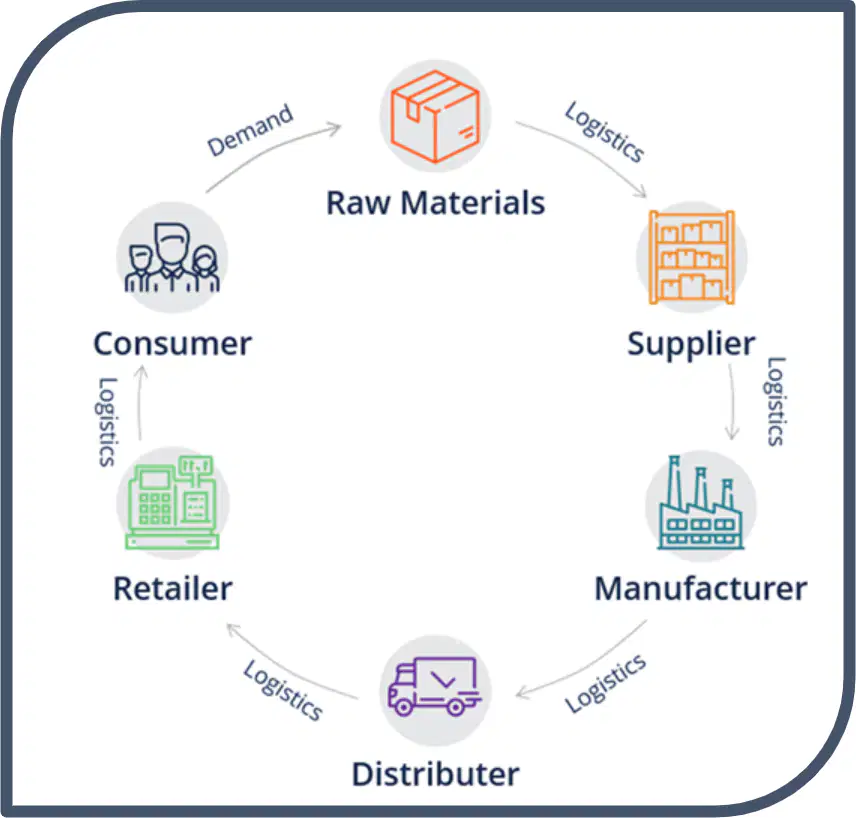
What is the journey that the production process takes called?
Logistics
Supply Chain
Distribution
Manufacturing
Fill in the blank: The land, labour, equipment, staff, finances that a business uses during this process are their '________'.
resources.
assets.
liabilities.
investments.
Resources can be tangible or intangible. True or False?
True
False
Fill in the blank: Production is the transformation of these resources into ________ goods and services.
finished
raw
incomplete
unprocessed
What is the primary sector concerned with?
Services
Manufacturing
Raw materials
Knowledge-based activities
Which sector involves manufacturing?
A) Primary
B) Secondary
C) Tertiary
D) Quaternary
What type of activities does the quaternary sector include?
Raw materials
Manufacturing
Services
Knowledge-based, high tech
Fixed capital includes which of the following?
Machinery
Land
Labour
Entrepreneurship
What are the components of human resources?
Recruitment, Training, Payroll, Employee Relations
Marketing, Sales, Product Development
Finance, Accounting, Auditing
Customer Service, IT Support, Logistics
What is retained profit in the context of financial resources?
Retained profit is the portion of net income that is kept by the company rather than distributed to its shareholders as dividends.
Retained profit is the total revenue generated by a company in a fiscal year.
Retained profit is the amount of money borrowed by a company from financial institutions.
Retained profit is the initial capital invested by the founders of the company.
What does working capital refer to in internal finance?
The total assets of a company
The difference between current assets and current liabilities
The long-term debt of a company
The equity capital of a company
Investment capital in financial resources is:
the funds used to acquire assets and grow a business
the interest earned on savings
the total revenue of a company
the expenses incurred by a business
Asset-based finance, such as leasing, in financial resources is:
a method of financing where the loan is secured by assets
a type of unsecured loan
a form of equity financing
a government grant
What are examples of intellectual property in other resources?
Patents, trademarks, and copyrights
Fruits, vegetables, and grains
Mountains, rivers, and lakes
Cars, bikes, and buses
Which of the following is a characteristic of a labor-intensive business strategy?
A) High need for staff
B) Heavy machinery
C) Automation
D) Low need for staff
What is the formula for calculating Labour Productivity?
Output / Labour Hours
Labour Hours / Output
Output + Labour Hours
Labour Hours - Output
What is the formula for calculating Capital Productivity?
Output / Capital Input
Capital Input / Output
Labor Input / Capital Input
Output + Capital Input
What is the approach of Quality Control?
Reactive
Proactive
What is the approach of Quality Assurance?
Reactive
Proactive
In Quality Control, when are goods checked?
After production
Before production
In Quality Assurance, when is the product tested?
After production
Before production
Production in the context of resource management refers to:
The process of creating goods and services using resources.
The distribution of resources among various sectors.
The consumption of goods and services by consumers.
The storage and preservation of resources for future use.
Productivity in resource management refers to:
The ratio of output to input in a production process
The total amount of resources available
The speed at which resources are consumed
The quality of resources used
Efficiency in terms of resource management is defined as:
The ability to maximize output with minimum input.
The process of using more resources to achieve less.
The method of increasing costs to improve quality.
The strategy of reducing time by increasing resources.
What is 'Lean production'?
A method to increase production by adding more resources
A strategy to reduce waste and improve efficiency
A technique to enhance marketing strategies
A financial model for cost reduction
Explain the concept of 'Kaizen'.
Kaizen is a Japanese term meaning 'change for better' or 'continuous improvement'.
Kaizen is a method of rapid prototyping in software development.
Kaizen is a financial strategy for maximizing profits.
Kaizen is a type of martial arts practiced in Japan.
What does 'Just-in-time' mean in resource management?
A method to increase inventory levels
A strategy to reduce waste by receiving goods only as they are needed
A technique to improve employee productivity
A system to enhance customer satisfaction
Economies of scale can be described as:
The cost advantage that arises with increased output of a product.
The decrease in production costs as a result of outsourcing.
The increase in production costs due to higher demand.
The financial loss incurred when a company expands.
What is meant by 'Stock control'?
A method to manage inventory levels
A financial strategy for stock investment
A marketing technique for product promotion
A customer service approach
What is 'Waste minimization'?
A process to reduce waste generation
A method to increase waste
A technique to recycle waste
A strategy to dispose of waste
Lead time is defined as:
The time taken to complete a process or fulfill an order.
The cost associated with producing a product.
The quality of a product or service.
The number of units produced in a given time.
Capacity utilisation refers to:
The maximum output a company can produce under normal conditions
The percentage of potential output that is actually being achieved
The total production capacity of a company
The amount of resources used in production
What is 'Mothballing'?
A method of preserving unused equipment by storing it safely
A technique for catching moths
A type of dance move
A cooking method involving mothballs
Describe 'Outsourcing'.
Outsourcing is the practice of hiring external firms to handle work normally performed within a company.
Outsourcing is the process of selling goods and services to another country.
Outsourcing is the act of merging two companies into one.
Outsourcing is the strategy of investing in new technologies to improve production.
What is 'Redeployment'?
A process of assigning employees to different roles or tasks within the same organization.
A method of hiring new employees from outside the organization.
A strategy for reducing the workforce by laying off employees.
A technique for training employees for their current roles.
Define 'Quality control'.
Quality control is the process of ensuring products meet certain standards.
Quality control is a financial audit process.
Quality control is a method of marketing.
Quality control is a type of customer service.
What is 'Total quality management (TQM)'?
A management approach to long-term success through customer satisfaction.
A financial strategy for maximizing profits.
A marketing technique for increasing brand awareness.
A software development methodology.

