
NEW
Font size
 Worksheets
Quiz on National Science Day-2025
Total questions: 20
Worksheet time: 7mins
Who is known as the "Missile Man of India?
a) Homi Bhabha
b) Vikram Sarabhai
c) A.P.J. Abdul Kalam
d) C.V. Raman
India’s first indigenously developed vaccine for COVID-19 ?
a) Covaxin
b) Sputnik V
c) Covishield
d) Novavax
Which was India’s first interplanetary mission ?
a) Chandrayaan-1
b) Mangalyaan
c) Gaganyaan
d) Chandrayaan-3
According to NEP-2020, what is the focus of science education?
a) Rote learning
b) Critical thinking and application-based learning
c) Textbook-based teaching
d) Theoretical concepts only
Critical thinking in science involves:
a) Blindly accepting facts
b) Questioning and analyzing evidence
c) Memorization only
d) Following authority
Which Indian city is known as the “Silicon Valley of India” for technological innovation?
a) Hyderabad
b) Bengaluru
c) Pune
d) Chennai
What is the primary goal of India’s National Science Day?
a) To inspire students to take up Science as a career.
b) To promote scientific temper and innovation
c) To commemorate discovery of Raman Effect
d) All the above
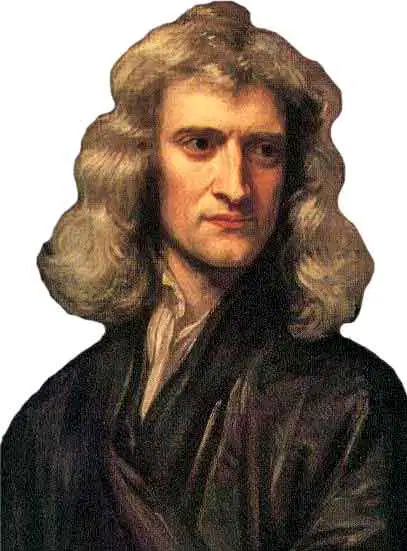
Identify the Scientist:
a) M. Faradey
b) I. Newton
c) A. Einstein
d) C. Darwin
Which initiative promotes "Startup India" for innovation and entrepreneurship in India?
a) Make in India
b) Skill India
c) Atal Innovation Mission
d) Digital India
National Science Day is dedicated to?
a) Dr. APJ Abul Kalam
b) Vikram Sarabhai
c) Sir C.V. Raman
d) S. Ramanujan
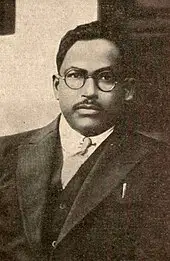
Identify the Indian Scientist:
a) S.N. Bose
b) V. Sarabhai
c) M.S. Swaminathan
d) M. Saha
Which initiative promotes scientific research and innovation among school students in India?
a) Vigyan Jyoti
b) INSPIRE
c) Vidyanjali
d) Atal Tinkering Labs
Which new-age technology is revolutionizing medicine and healthcare?
a) Blockchain
b) 5G
c) Virtual Reality
d) Artificial Intelligence
What is the theme of National Science Day 2023?
a. Future of Science, Technology and Innovation
b. Indigenous Technologies for Viksit Bharat
c. Global Science for Global Wellbeing
d. Integrated Approach in S&T for Sustainable Future
______________ is popularly known as Human Computer.
a. P.C. Mahalanobis
b. S. Ramanujan
c. Aaryabhat
d. S. Devi
Who is known as the father of India’s Green Revolution?
a) Dr. A.P.J. Abdul Kalam
b) M.S. Swaminathan
c) Homi Bhabha
d) Jagadish Chandra Bose
Which scientist from Odisha is known for his contributions to chemistry and the Indian chemical industry?
a) Dr. Trilochan Pradhan
b) Prafulla Chandra Ray
c) Gopal Chandra Mitra
d) Debendra Mohan Bose
Meghnad Saha is known for his work in which field?
a) Quantum Mechanics
b) Nuclear Physics
c) Astrophysics
d) Organic Chemistry
A group of students in Class 9 is given a project to create a model showcasing an innovative solution for clean energy. Some students suggest using solar panels, while others propose wind energy. However, they struggle to decide which option would be more efficient for their region.
Question: As their science teacher, how would you guide them in making a scientific decision?
a) Ask them to memorize the advantages of both methods from their textbook.
b) Encourage them to conduct research, collect data on sunlight and wind availability in their region, and test small working models.
c) Tell them to choose solar energy because it is more commonly used.
d) Advise them to select wind energy without any further analysis.
Under the new National Education Policy (NEP-2020), a school wants to introduce interdisciplinary learning in science education. They plan to integrate subjects like physics, environmental science, and technology with real-world applications. A teacher is designing a lesson on "Sustainable Cities of the Future."
Question: Which of the following teaching methods best aligns with the NEP-2020 approach?
a) Conducting a lecture-based session on sustainability theories without student involvement.
b) Asking students to research sustainable cities and present their findings in a report.
c) Encouraging students to create models of smart cities using scientific concepts, technology, and local environmental factors in a group project.
d) Making students memorize scientific definitions related to urban development.

