
 Worksheets
HSPS Unit 6: Study Deck #1
Total questions: 35
Worksheet time: 30mins

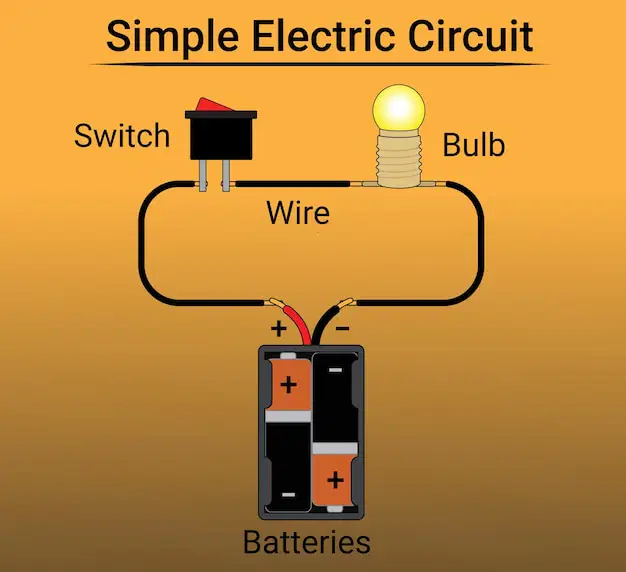
What is the role of a switch in an electrical circuit?
To open or close the circuit
To increase the voltage
To convert electrical energy into light
To store electrical energy
Which choice describes the behavior of an electric charge?
Like charges attract. Unlike charges repel.
Like charges repel. Unlike charges attract.
Like charges attract. Unlike charges attract.
Like charges repel. Unlike charges repel.

Which of these is caused by static electricity?
A magnet attracts a paper clip
Glue holds two pieces of paper together
Socks taken from a clothes dryer stick together
Ice sticks to a car’s windshield
What is the difference between a series circuit and a parallel circuit?
A parallel circuit has only one path for electricity to flow
A series circuit has multiple paths for electricity to flow
A series circuit has only one path for electricity to flow
A parallel circuit does not allow electricity to flow


What type of circuit is this?
Series
Parallel
Simple

When an object gains electrons it becomes __________
Neutral
Positively charged
Negatively charged
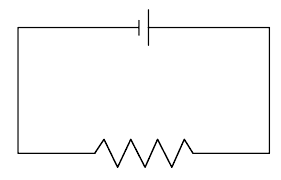

If the current through a circuit is 2 A and the resistance of a light bulb in the circuit is 10 Ohms, what is the voltage across the light bulb?
5 V
12 V
20 V
This circuit has a 7.8 volt battery and the resistor is 6 ohms. How many amps are running through the circuit?
1.3 Amps
.8 Amps

If a toaster produces 12 ohms of resistance in a 120-volt circuit, what is the amount of current in the circuit?
5A
10A
15A
20A
What is the function of a resistor in an electrical circuit?
To convert electrical energy into chemical energy
To store electrical energy
To resist the flow of electricity
To increase the current
An object that loses its extra charge and becomes neutral again has been...
charged
induced
discharged
electroscoped
Connecting a conductor to Earth's surface so that the charges can flow safely to the ground is called...
Grounding
Charging by induction
Charging by friction
What happens in a short circuit?
The resistance is very high, preventing current flow
The current flows with very little resistance
The circuit is open and electricity cannot flow
The circuit is incomplete and electricity cannot flow
Determine how the following factor would affect the amount of resistance: longer wire
increase resistance
decrease resistance
would not affect resistance
In a series circuit, how is the brightness of a light bulb affected when another bulb is connected?
It gets brighter
It stays the same
It gets dimmer
It goes out
Voltage, or electrical pressure, is measured in
Amperes
Ohms
Volts
Watts
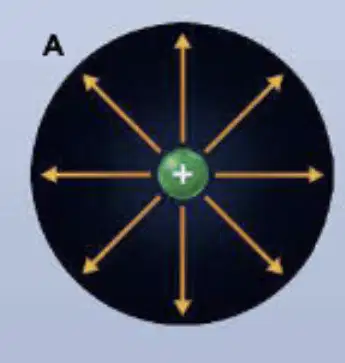
Which statement best describes how electric fields behave near positively charged particles?
The electric field points toward the positively charged particle.
The electric field points away from the positively charged particle.
The electric field does not interact with the positively charged particle.
The electric field forms closed loops around the positively charged particle.
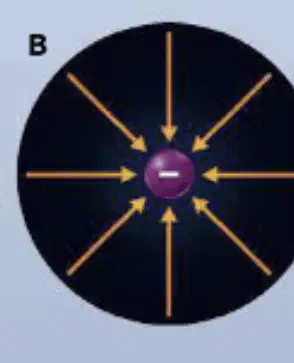
Which statement best describes how electric fields behave near negatively charged particles?
The electric field points toward the negatively charged particle.
The electric field points away from the negatively charged particle.
The electric field does not interact with the negatively charged particle.
The electric field forms closed loops around the negatively charged particle.

