wayground logo

Free Printable Worksheets

Font size

S
M
L
XL
Worksheets

Muscles

Total questions: 75

Worksheet time: 51mins

Name
Class
Date
1.
A ______________________ attach bones to each other at joints.
a)
Ligament
b)
Bone
c)
Joint
d)
Cell
2.
A ______ is a strong connective tissue that attaches muscle to bone.
a)
Tendon
b)
Ligament
c)
Cartilage
3.
The type of muscle contraction where the muscle tenses but does not shorten.  
a)
Isometric
b)
Isotonic
c)
Contraction
d)
relaxation
4.
When a muscle shortens under tension, it is called_______
a)
isotonic eccentric contraction
b)
isotonic concentric contraction
c)
isometric concentric contraction
d)
isometric eccentric contraction
5.
As the athlete lowers the weights, his biceps undergo-
a)
isometric concentric contraction
b)
isotonic eccentric contraction
c)
isometric contraction
6.
During the upward phase (pressing) which muscle is undergoing concentric contraction?
a)
biceps
b)
triceps
c)
abdominals
d)
quads
7.
During the downward phase of the squat, which muscle is undergoing eccentric contraction?
a)
quads
b)
hamstrings
c)
abdominals
d)
shoulders
8.
Holding barbells out in a sustained motion would be a...
a)
Isometric contraction
b)
Isoinertial contraction
c)
Eccentric contraction
d)
Concentric contraction
9.

Name this muscle

a)

Biceps Femoris

b)

Gluteus Maximus

c)

Semitendinosus

d)

Vastus Medialis

10.
a)
Trapezius
b)
Gluteals
c)
Deltoid
d)
Hamstring
11.
a)
Abdominal
b)
External Oblique
c)
Pectorals
d)
Trapezius
12.
a)
Latissimius Dorsi
b)
Trapezius
c)
Triceps
d)
Erectors
13.

Name the muscle labelled A

a)

Hamstring

b)

Quadriceps femoris

c)

Gluteus

d)

Gastrocnemius

14.
When a muscle contracts, it _______
a)
gets longer
b)
gets shorter
c)
gets thinner
d)
grows hair
15.
a)
Abdominal
b)
External Oblique
c)
Erectors
d)
Satorius
16.
a)
Hamstring
b)
Quadriceps
c)
Gastronecmius
d)
Satorius
17.
a)
Hamstrin
b)
Quadricep
c)
Tibialis Anterior
d)
Gastrocenmius
18.
a)
Latissmius Dorise
b)
Erectors
c)
Deltoids
d)
Abdominal
19.

What muscle is the arrow pointing to?

a)

Biceps

b)

Triceps

c)

Lats

d)

Quads

20.

What muscle is the arrow pointing to?

a)

Pectoralis (Pecs)

b)

Biceps

c)

Triceps

d)

Lats

21.
a)
Quadriceps
b)
Satorius
c)
Hamstring
d)
Gastronecmius
22.

What muscle is the arrow pointing toward?

a)

biceps

b)

traps

c)

pecs

d)

triceps

23.

What are the primary muscles used for push ups?

a)

Rectus Abdominis

b)

Pectorals

c)

Obliques

d)

Deltoids

24.

What are the primary muscles used for planks?

a)

Obliques

b)

Trapezius

c)

Rectus

Abdominis

d)

Pectorals

25.
a)
Trapezius
b)
Pectorals
c)
Sternocleidomastoid
d)
Quadricep
26.
a)
Biceps
b)
Triceps
c)
Occuli
d)
Trapezius
27.
What is the biggest muscle in your body?
a)
femur
b)
Gluteus Maximus
c)
Gluteus
d)
Biceps
28.
What is the biggest tendon in your body and where is it?
a)
Achille's Tendon, ankle
b)
Achille's
c)
Brain
d)
Achilles' Tendon, Spinal Cord
29.
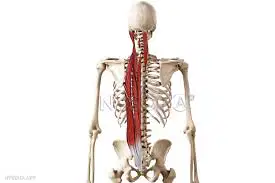
a)

Latissimius Dorsi

b)

Erector spinae

c)

Deltoid

d)

Trapezius

30.

What do smooth muscle and cardiac muscle have in common?

a)

they're both found in the heart

b)

they are both under our control

c)

they are involuntary muscles

d)

they have nothing in common

31.
What are the 3 types of muscles?
a)
Skeletal, muscular, ligament
b)
Skeletal, smooth, cardiac
c)
Smooth, Cellular, Cerebrum
d)
Cardiac, smooth, brain stem
32.

Callum plays for the school team. When kicking a ball during extension at the knee, which is the antagonist?

a)

Hamstring

b)

Quadriceps

c)

Gastrocnemius

d)

Obliques

33.

Alan is shrugging his shoulders which muscles causes this movement?

a)

Deltoid

b)

Trapezius

c)

Abdominals

d)

Obliques

34.
Which muscle group contracts to create shoulder abduction?
a)
Pectoral
b)
Deltoid
c)
Trapezius
d)
Quadriceps
35.

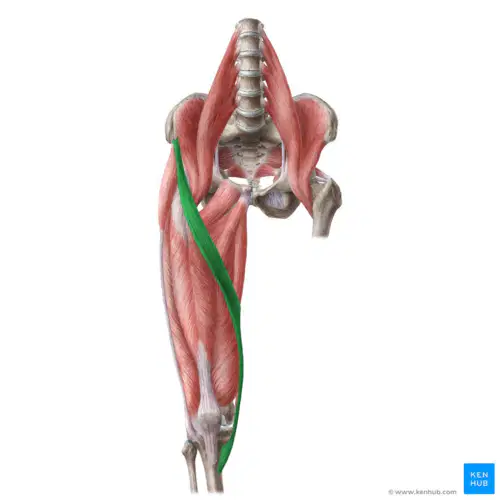
ID

a)

adductor group

b)

sartorius

c)

quadriceps

36.

ID

a)

sartorius

b)

adductor group

c)

quadriceps

37.

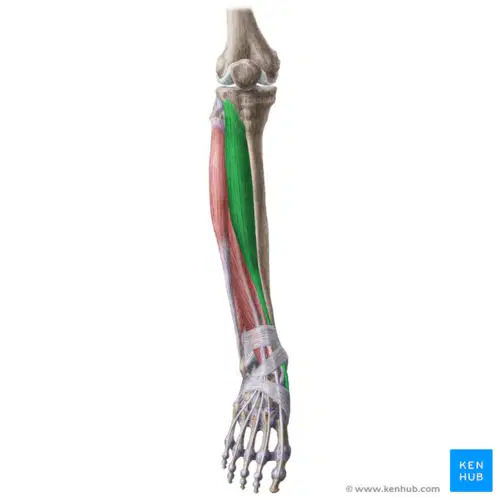
ID

a)

tibialis anterior

b)

peroneus group

c)

gastrocnemius

38.
Which muscle is #4?
a)
rectus femoris
b)
biceps femoris
c)
vastus lateralis
d)
sartorius
39.
Which muscle is #5?
a)
vastus laterlis
b)
vastus medialis
c)
gracilis
d)
sartorius
40.
Which muscle is #6?
a)
vastus lateralis
b)
vastus medialis
c)
rectus femoris
d)
gracilis
41.
Which muscle is #3?
a)
semimembranosus
b)
semitendinosus
c)
biceps femoris
d)
gastrocnemius
42.
Which muscle is #5?
a)
semitendinosus
b)
semimembranosus
c)
biceps femoris
d)
gracilis
43.
Which muscle is #6?
a)
semitendinosus
b)
semimembranosus
c)
biceps femoris
d)
gracilis
44.
Which muscle is #8?
a)
soleus
b)
gastrocnemius
c)
biceps femoris
d)
gracilis
45.
Which muscle is #3?
a)
tibialis anterior
b)
extensor digitorum longus
c)
gastrocnemius
d)
soleus
46.
The Vastus medialis, intermedius, lateralis and rectus femoris make up the...
a)
Hamstrings
b)
Calf muscles
c)
Quadriceps muscles
d)
Abdominal muscles
47.
What muscle is located on the back of the upper leg?
a)
Carpals
b)
Deltoid
c)
Triceps
d)
Hamstrings
48.
What is the muscle in the front of the lower leg called?
a)
Pelvis
b)
Tibialis Anterior
c)
Bicep
d)
Sternocleidomastoid
49.
The quadriceps muscle is located...
a)
behind upper leg
b)
stomach
c)
arm
d)
front upper leg
50.
 What muscle is this?
a)
Adductor Magnus
b)
Rectus Femoris 
c)
Gracilis
d)
Biceps Femoris
51.
calf muscle
a)
soleus
b)
tibialis anterior
c)
gastrocnemius
d)
fibularis longus
52.

What is the name of this muscle?

a)

deltoid

b)

brachialis

c)

triceps

d)

biceps brachii

53.

What is the name of this muscle?

a)

deltoid

b)

brachialis

c)

triceps

d)

biceps

54.

This muscle straightens / extends your leg

a)

bicep

b)

tricep

c)

quadricep

d)

hamstring

55.

This muscles straightens / extends your arm

a)

bicep

b)

tricep

c)

quadricep

d)

hamstring

56.

This muscles bends / flexes your arm

a)

bicep

b)

tricep

c)

quadricep

d)

hamstring

57.

Triangular muscle found at the back of your neck

a)

trapezius

b)

deltoid

c)

latissimus dorsi

58.

2 muscles at your elbow joint?

a)

bicep and tricep

b)

quadricep and hamstring

c)

gluteals and his flexors

d)

tibialis anterior and gastrocnemius

59.

Chest muscles

a)

abdominals

b)

intercostal muscles

c)

sternocleidomastoid

d)

pectorals

60.

What muscle points your toes, known as plantar flexion

a)

gastrocnemius

b)

tibialis anterior

61.

Some people call this muscle their groin

a)

hip flexor

b)

quadricep group

c)

hamstring group

d)

gluteals

62.

These muscles help us breathe

a)

bicep

b)

tricep

c)

intercostal muscles

d)

rotator cuffs

63.

Which muscle covers your shoulder joint?

a)

bicep

b)

tricep

c)

deltoid

d)

rotator cuff

64.

Where is flexors and extensors located

a)

arm

b)

heart

c)

leg

d)

stomach

65.

Which muscle releases your arm from puling

a)

extensor

b)

flexor

66.

What is the action of pectoralis major

a)

Adduction

b)

Stabilize the Scapula

c)

Flex the arm

d)

Assists in upward rotation

67.

Isometric contraction is also known as

a)

Astonic contraction

b)

Static contraction

c)

Meristematic contraction

d)

Isotonic contraction

68.

What is the point if attachment to the bone to which the muscles in anchored

a)

The point of origin

b)

The point of insertion

c)

The point of disertion

69.
Compresses abdomen, laterally rotates trunk.
a)
External oblique
b)
Internal oblique
c)
Transversus abdominus
d)
Rectus abdominus
70.
Adducts, extends, and medially rotates arm, pulls shoulder inferiorly.
a)
Trapezius
b)
Latissimus dorsi
c)
Diaphragm
d)
Quadratus lumborum
71.
Flexes lumbar vertebrae, compresses abdomen.
a)
External oblique
b)
Internal oblique
c)
Transversus abdominus
d)
Rectus abdominus
72.
Abducts scapula.
a)
External oblique
b)
Internal oblique
c)
Rectus abdominus
d)
Serratus anterior
73.
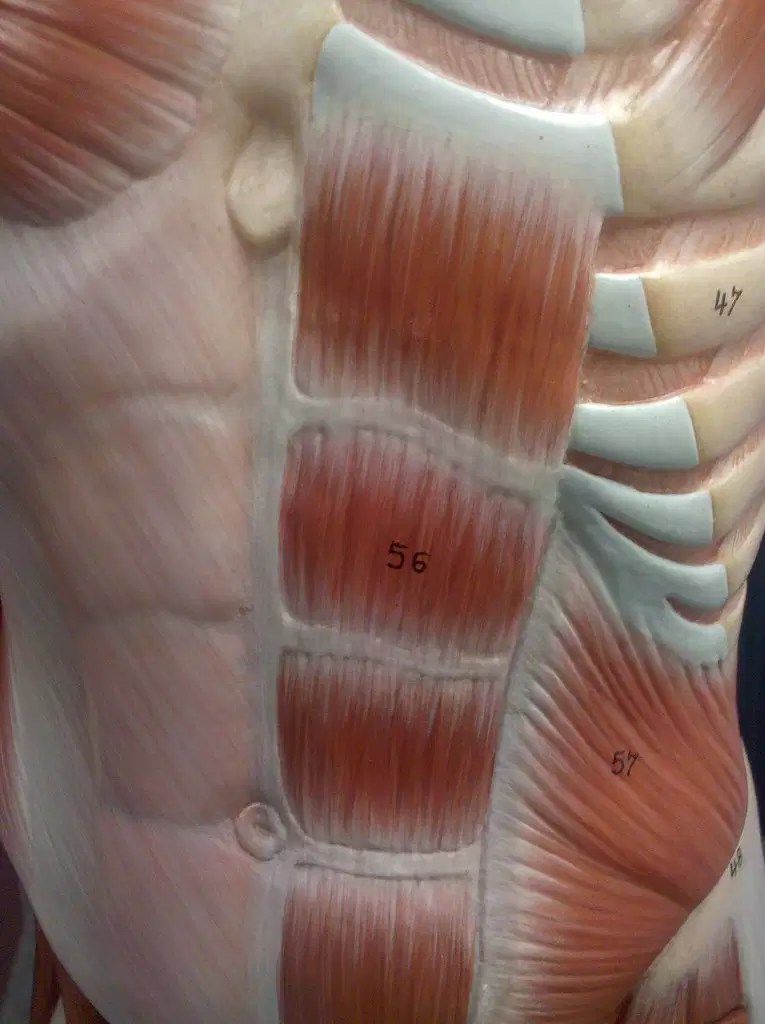
Identify the muscle below (56).
a)
External oblique
b)
Internal oblique
c)
Transversus abdominus
d)
Rectus abdominus
74.
Identify the muscle below.
a)
Pectoralis minor
b)
Pectoralis major
c)
Diaphragm
d)
Serratus anterior
75.
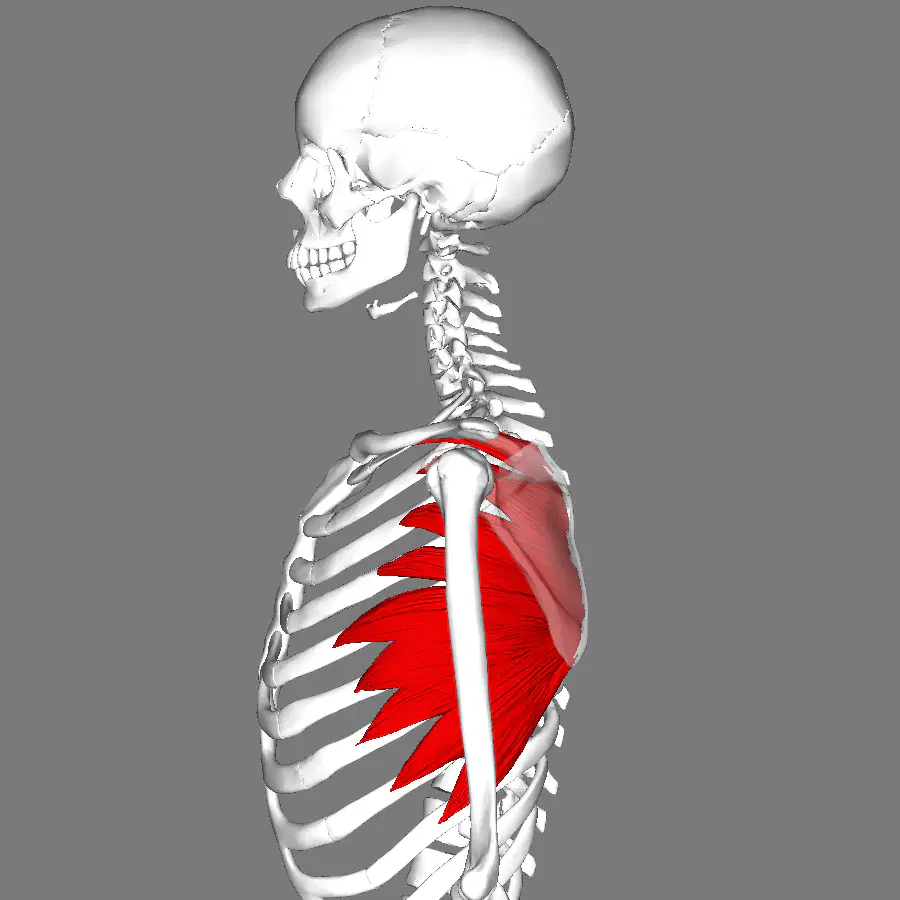
Identify the muscle below.
a)
Erector spinae
b)
Iliocostalis
c)
Longissimus
d)
Spinalis