
 Worksheets
Focus of the Course: Object-Oriented Software Development
Total questions: 79
Worksheet time: 47mins
What is problem solving in the context of Object-Oriented Software Development?
A process of identifying and resolving issues within a software system using object-oriented principles.
A method of designing user interfaces for software applications.
A technique for optimizing database queries in software systems.
A strategy for marketing software products to potential customers.
Explain program design, implementation, and testing in Object-Oriented Software Development.
Program design involves planning the structure and components of the software, implementation is the process of writing the code, and testing ensures the software works as intended.
Program design is the process of writing the code, implementation involves planning the structure, and testing is optional.
Program design and implementation are the same, and testing is only done if there is time.
Program design is only about aesthetics, implementation is about coding, and testing is not necessary.
Which of the following are object-oriented concepts in software development?
Encapsulation, Inheritance, Polymorphism, Abstraction
Encapsulation, Inheritance, Compilation, Abstraction
Encapsulation, Iteration, Polymorphism, Abstraction
Encapsulation, Inheritance, Polymorphism, Aggregation
Define classes, objects, encapsulation, inheritance, and polymorphism in Object-Oriented Software Development.
Classes are blueprints for creating objects, objects are instances of classes, encapsulation is the bundling of data with methods, inheritance is a mechanism to create a new class using existing classes, and polymorphism allows methods to do different things based on the object it is acting upon.
Classes are instances of objects, objects are blueprints for creating classes, encapsulation is the separation of data and methods, inheritance is a mechanism to create unrelated classes, and polymorphism restricts methods to a single function.
Classes and objects are unrelated, encapsulation is the exposure of data, inheritance prevents class creation, and polymorphism is the uniformity of methods.
Classes are blueprints for creating objects, objects are instances of classes, encapsulation is the exposure of data, inheritance is a mechanism to create unrelated classes, and polymorphism restricts methods to a single function.
The role of graphical user interfaces in Object-Oriented Software Development is to:
facilitate user interaction with the software
increase the complexity of the software
reduce the need for object-oriented principles
eliminate the need for coding
How is the Java programming language used in Object-Oriented Software Development?
Java is used for procedural programming only.
Java supports object-oriented principles like inheritance, encapsulation, and polymorphism.
Java is not suitable for Object-Oriented Software Development.
Java is only used for web development.
Which of the following are components of a computer?
Monitor, Keyboard, Mouse
Monitor, Keyboard, Car
Monitor, Keyboard, Refrigerator
Monitor, Keyboard, Table
Computers store and manipulate information using:
Binary code
Analog signals
Mechanical parts
Chemical reactions
Computer networks are:
a collection of interconnected devices
a type of software
a programming language
a single computer
The Internet and the World Wide Web are:
the same thing, both referring to the global network of computers
different; the Internet is the global network of computers, while the World Wide Web is a system of interlinked hypertext documents accessed via the Internet
different; the Internet is a system of interlinked hypertext documents, while the World Wide Web is the global network of computers
different; the Internet is a type of web browser, while the World Wide Web is the global network of computers
Programming and programming languages are:
Methods to create software and applications
Types of computer hardware
Ways to design physical products
Techniques for data storage
An introduction to Java is:
A programming language
A type of coffee
A dance style
A musical instrument
What is an overview of object-oriented concepts?
Object-oriented concepts include encapsulation, inheritance, and polymorphism.
Object-oriented concepts are only used in Java programming.
Object-oriented concepts are not applicable in modern programming.
Object-oriented concepts are the same as procedural programming.
Computer Processing is the execution of instructions by a computer's CPU. What is the primary function of the CPU in this process?
To execute instructions
To store data
To manage input/output devices
To provide power to the computer
Describe the different Hardware Components of a computer.
CPU, RAM, Hard Drive, Motherboard, GPU
Operating System, Software Applications, Drivers
Keyboard, Mouse, Monitor, Printer
Internet, Email, Social Media, Cloud Storage
What are Networks in the context of computer science?
A collection of interconnected devices that can communicate with each other
A type of software used for data analysis
A programming language used for web development
A hardware component used in computers
The Java Programming Language is known for its:
simplicity and readability
complex syntax
lack of portability
limited library support
What are the steps involved in Program Development?
Planning, Analysis, Design, Implementation, Testing, Maintenance
Design, Coding, Debugging, Testing, Deployment
Requirement Gathering, Design, Coding, Testing, Maintenance
Analysis, Design, Implementation, Testing, Evaluation
Which of the following best explains the principles of Object-Oriented Programming?
Encapsulation, Inheritance, Polymorphism, Abstraction
Functions, Loops, Variables, Conditions
Data Structures, Algorithms, Complexity, Optimization
Syntax, Semantics, Compilation, Execution
What are the physical, tangible parts of a computer called?
Software
Hardware
Program
Data
Fill in the blank: A program is a series of _________.
instructions
pictures
songs
games
Which of the following is an example of hardware?
Program
Data
Keyboard
Instructions
True or False: A computer requires both hardware and software to function.
True
False
What is the function of the Central Processing Unit (CPU)?
Stores data permanently
Executes program commands
Connects to the internet
Manages user input
The Main Memory is synonymous with _______.
RAM
ROM
Cache
Hard Disk
Which of the following is an input device?
Monitor screen
Central Processing Unit
Main Memory
Touch screen
Fill in the blank: The ________ is responsible for processing data in a computer.
Central Processing Unit
Graphics Processing Unit
Random Access Memory
Hard Disk Drive
Which device is used to display output to the user?
A) Keyboard
B) Monitor screen
C) Mouse
D) Touch screen
Fill in the blank: The ________ is used to input data by typing.
Keyboard
Mouse
Monitor
Printer
Which of the following devices can be used for both input and output?
Mouse
Touch screen
Main Memory
Central Processing Unit
What is the role of secondary memory devices?
Fill in the blank: Information is moved between main and _______ memory as needed.
secondary
primary
cache
virtual
Which of the following is a secondary memory device?
Central Processing Unit
Main Memory
Hard Disk
Monitor
What is the role of system software?
Helps people carry out tasks using a computer
Helps the computer carry out basic operating functions
Manages internet connections
Provides entertainment options
What is the role of application software?
Helps the computer carry out basic operating functions
Manages hardware resources
Helps people carry out tasks using a computer
Controls network security
What are some examples of Operating Systems?
Windows, macOS, Linux
Microsoft Office, Adobe Photoshop, Google Chrome
Intel, AMD, ARM
Python, Java, C++
Which of the following are examples of Application Programs?
Microsoft Word
Google Chrome
Adobe Photoshop
All of the above
A Graphical User Interface (GUI) is:
a text-based interface
a command-line interface
an interface that allows users to interact with electronic devices through graphical icons and visual indicators
a programming language
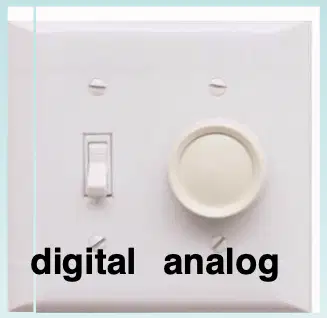
What is the difference between analog and digital information?
Fill in the blank: Analog information is ______, in direct proportion to the data represented.
continuous
discrete
random
intermittent
Explain how computers store information digitally.
Computers store information using binary code, which consists of 0s and 1s.
Computers use analog signals to store information.
Computers store information using quantum bits.
Computers store information in DNA sequences.
What is the numerical representation of the character 'H'?
72
65
80
90
What character is represented by the number 105?
i
a
b
c
Fill in the blank: The character ',' is represented by the number ____.
44
45
46
47
Which number represents the space character?
32
44
72
105
What is the numerical representation of the character 'e'?
101
102
103
104
Once information has been digitized, it is represented and stored in memory using the _________.
appropriate data structure.
binary code.
file system.
memory address.
What is a single binary digit (0 or 1) called?
Byte
Bit
Nibble
Word
Devices that store and move information are cheaper and more reliable if they have to represent only _________.
one type of information
multiple types of information
complex data structures
various formats
A single bit can represent two possible states, like a light bulb that is either on (1) or off (0). True or False?
True
False
Permutations of bits are used to store _________.
data
numbers
images
sounds
How is data stored in memory?
Memory is partitioned into a specific number of cells
Memory is stored in a single block
Memory is stored randomly
Memory is stored in a cloud
Digits 0 and 1 are ______ digits.
binary
decimal
octal
hexadecimal
Convert the decimal number 0 to its binary equivalent.
0
1
10
11
Convert the decimal number 1 to its binary equivalent.
1
10
11
0
Convert the decimal number 2 to its binary equivalent.
10
01
11
00
Convert the decimal number 3 to its binary equivalent.
11
10
01
00
Convert the decimal number 4 to its binary equivalent.
100
101
110
111
Convert the decimal number 5 to its binary equivalent.
101
100
110
111
Convert the decimal number 6 to its binary equivalent.
110
101
111
100
Convert the decimal number 7 to its binary equivalent.
111
110
101
100
Convert the decimal number 8 to its binary equivalent.
1000
1001
1110
1010
Convert the decimal number 9 to its binary equivalent.
1001
1010
1100
1111
Convert the decimal number 10 to its binary equivalent.
1010
1001
1100
1110
Convert the decimal number 11 to its binary equivalent.
1011
1100
1001
1110
What character does the binary code 01001000 represent?
H
A
B
C
What is the binary code for the character 'A'?
01000001
01000010
01000011
01000100
Which of the following binary codes represents the character 'Z'?
01011010
01111010
01110101
Fill in the blank: The binary code 00100001 represents the character ____.
What are the possible permutations for 1 bit?
0
1
0 and 1
None of the above
What are the possible permutations for 2 bits?
00, 01, 10, 11
00, 01, 10
01, 10, 11
00, 11
What are the possible permutations for 3 bits?
000, 001, 010, 011, 100, 101, 110, 111
000, 001, 010, 011, 100, 101, 110
000, 001, 010, 011, 100, 101
000, 001, 010, 011
What are the possible permutations for 4 bits?
16
8
32
24
How many items can be represented by 1 bit?
2 items.
1 item.
4 items.
8 items.
How many items can be represented by 2 bits?
4 items.
2 items.
8 items.
16 items.
How many items can be represented by 3 bits?
8 items.
4 items.
16 items.
32 items.
How many items can be represented by 4 bits?
16 items.
8 items.
32 items.
4 items.
How many items can be represented by 5 bits?
32 items.
16 items.
64 items.
8 items.
How many bits would you need to represent each of the 50 United States using a unique permutation of bits?
5 bits
6 bits
7 bits
8 bits

