
 Worksheets
Quiz on Historical Views of the Universe
Total questions: 53
Worksheet time: 27mins
What was the old view of the universe known as?
Heliocentrism
Geocentrism
Relativism
Quantum Theory
Who were the main supporters of the geocentric theory?
Copernicus and Galileo
Newton and Einstein
Aristotle and Ptolemy
Kepler and Brahe
Who was the Polish clergyman and astronomer who challenged geocentrism in "On the Revolutions of the Heavenly Bodies"?
Johannes Kepler
Tycho Brahe
Nicolaus Copernicus
Galileo Galilei
What does heliocentrism state about the Earth's movement?
Earth revolves around the Moon
Earth revolves around the Sun
Earth is stationary
Earth revolves around Mars
What did Johannes Kepler formulate?
Laws of gravity
Laws of planetary motion
Laws of thermodynamics
Laws of relativity
According to Kepler's laws, how do planets move as they approach the sun?
More slowly
At a constant speed
More rapidly
In a straight line
What tool did Galileo Galilei use for astronomical observation?
Microscope
Telescope
Sextant
Astrolabe
What theory did Galileo provide irrefutable evidence for using his observations?
Geocentric theory
Heliocentric theory
Theory of Relativity
Quantum theory
Which laws did Newton combine to form the law of universal gravitation?
Kepler's laws, Galileo's laws, and his own concept of gravity
Einstein's theories, Kepler's laws, and Galileo's laws
Galileo's laws, Einstein's theories, and his own concept of gravity
Kepler's laws, Einstein's theories, and his own concept of gravity
How did Newton view the universe?
As a big machine
As a chaotic system
As a random collection of stars
As a mystical entity
Whose ideas dominated Western thought until Einstein's discoveries in the early twentieth century?
Galileo
Copernicus
Newton
Kepler
What did Bacon argue controlled experimentation would lead to?
Random results
Unreliable data
Accurate conclusions
Uncontrolled variables
What did Descartes begin with in his Deductive Method?
Accepting all customs
Doubting all notions of authority or customs
Following traditional beliefs
Ignoring logical reasoning
What did Bacon's Inductive reasoning and Descartes's Deductive reasoning become?
Opposing methods
Unrelated theories
Complimentary parts of the scientific method
Outdated practices
Who sponsored the scientific societies mentioned in the document?
Local communities
Governments/monarchs
Private companies
Religious institutions
Which monarch patronized the Royal Society of London for Improving Natural Knowledge?
King Henry VIII
Queen Elizabeth I
King Charles II
King George III
Which group within the Catholic Church was open to science despite the general resistance to innovation?
A) Dominicans
B) Franciscans
C) Jesuits
D) Benedictines
How did Protestant theologians generally view scientific discoveries compared to Catholic theologians?
A) More rigid and unyielding
B) More liberal and open
C) Completely opposed
D) Indifferent
Which scientist is mentioned as retaining traditional beliefs while still engaging with science?
A) Galileo
B) Copernicus
C) Newton
D) Kepler
Who established the humoral theory?
William Harvey
Andreas Vesalius
Galen
Paracelsus
What did Galen believe caused disease?
Imbalance in the four body humors
Poor blood circulation
Lack of dissection
Toxic substances
Which of the following is associated with William Harvey?
Dissection of cadavers
Theory on blood circulation
Humoral theory
Toxicology
Who is known as "the father of toxicology"?
Galen
William Harvey
Andreas Vesalius
Paracelsus
What was Andreas Vesalius known for?
Establishing the humoral theory
Studying blood circulation
Dissecting and studying cadavers
Developing toxicology
Which thinker linked the Scientific Revolution to the Enlightenment?
Isaac Newton
Voltaire
John Locke
René Descartes
What did John Locke claim about philosophy?
It was unrelated to science
It was a discipline subject to the scientific method
It was purely theoretical
It was only about ethics
According to the Blank Slate Theory, what is essential for human development?
Wealth
Education
Innate talent
Social status
Who were the Philosophes?
Abstract philosophers
A group of thinkers and writers who created enlightened ideas
Political leaders
Religious figures
What was the primary focus of the individuals mentioned in the document?
Exposing societal problems and proposing solutions
Developing new scientific theories
Creating artistic masterpieces
Establishing new religious practices
What did these individuals believe should be relied upon to improve society?
Miracles
Reason
Tradition
Superstition
What did the concept of "Progress" involve according to the learning material?
Discovering laws of economics and government
Increasing military power
Expanding territorial boundaries
Enhancing artistic expression
Which personal freedoms were associated with the concept of "Liberty"?
Freedom of speech, religion, trade
Freedom of movement, education, health
Freedom of assembly, press, privacy
Freedom of work, travel, expression
Who was referred to as the "Prince of the Philosophes"?
Voltaire
Rousseau
Montesquieu
Diderot
What does "Ecrasez L’infame" translate to in English?
Crush the infamous thing
Embrace the unknown
Defend the truth
Celebrate the victory
What was the purpose of the Encyclopedia created by Diderot?
To compile all the knowledge of his time
To promote religious teachings
To support monarchy
To entertain the masses
How did the Encyclopedia contribute to society?
It helped spread the Enlightenment
It supported the monarchy
It discouraged scientific inquiry
It promoted religious intolerance
What concept, greatly influencing the American Constitution, involves a divided government to protect individual rights?
Checks and Balances
Federalism
Separation of Powers
Judicial Review
Which philosopher presented ideas in the novel "Emile"?
Voltaire
Jean-Jacques Rousseau
Thomas Hobbes
Immanuel Kant
According to Rousseau, how should education be tailored?
Standardized for all
Based on age
Individualized
Focused on memorization
In Rousseau's view, how do individuals enter into a social contract?
With their rulers
With one another
With corporations
With religious leaders
What did Rousseau believe about children's nature?
Children are naturally bad
Children are naturally good
Children are naturally indifferent
Children are naturally selfish
What is the concept of "General Will" as described in the text?
The power of a single ruler
Any action that is right and good for all
The will of the military
The decision of a council of elders
Which revolutions were greatly influenced by the ideas mentioned in the text?
Russian and Chinese Revolutions
American and French Revolutions
Industrial and Technological Revolutions
English and Spanish Revolutions
What did Rousseau and other Philosophes aim to defend and change?
Economic policies
Military strategies
Individual freedom and social order
Religious doctrines
What was unique about Rousseau's perspective during the Enlightenment?
He trusted reason and science.
He distrusted reason and science.
He focused solely on cold logic.
He rejected emotions and spontaneity.
What did Deism believe about God?
God is actively involved in daily life.
God is like a cosmic clockmaker.
God intervenes frequently in the universe.
God is an emotional being.
Which of the following was a characteristic of Deism?
Emotional involvement in human affairs.
Belief in miracles and divine intervention.
Lack of emotion and reliance on natural laws.
Rejection of scientific principles.
How did the Enlightenment view religion?
As a public matter of concern
As a private matter
As a political tool
As an economic strategy
What did most philosophes believe should be extended to women?
Wealth and property
Liberty and equality
Military service
Religious leadership
What did philosophes argue regarding women's access?
Women should be excluded from education
Women should have access to education and intellectual life
Women should focus only on domestic duties
Women should be restricted to religious studies
Which Enlightenment thinker made a distinction between a public sphere dominated by men and a private sphere dominated by women?
Jean-Jacques Rousseau
John Locke
Voltaire
Immanuel Kant
What contradiction did some Enlightenment thinkers point out regarding freedom?
Advocating freedom from governments but maintaining control over women
Promoting religious freedom but restricting speech
Supporting economic freedom but opposing political rights
Encouraging scientific progress but banning new ideas
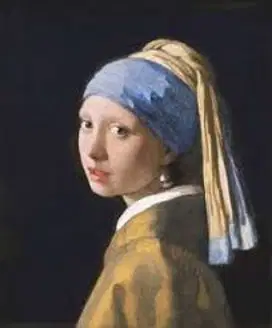
Can you identify the art style and the artist of the following piece?
Dutch Paintings
Jan Vermeer
Neoclassicism
Jacques-Louis David
French Pantheon Architecture
Diego Velasquez – Portrait of Pope Innocent X
Gian Bernini – Apollo and Daphne

