wayground logo

Free Printable Worksheets

Font size

S
M
L
XL
Worksheets

World War I review

Total questions: 29

Worksheet time: 15mins

Name
Class
Date
1.
Pride in one's nation, promoting its causes, cultures and interests is called ______________.
a)
militarism
b)
nationalism
c)
imperialism
d)
alliances
2.
Prior to the outbreak of WWI, many nations doubled the size of their armies. This is an example of _______________ .
a)
Imperialism
b)
Militarism
c)
Nationalism
d)
Socialism
3.
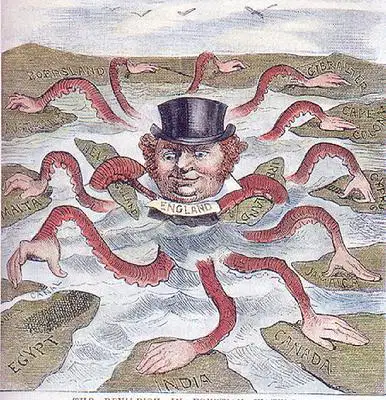
A policy of extending a country's power and influence through diplomacy or military force is called _________.
a)
Socialism
b)
Militarism
c)
Alliances
d)
Imperialism
4.
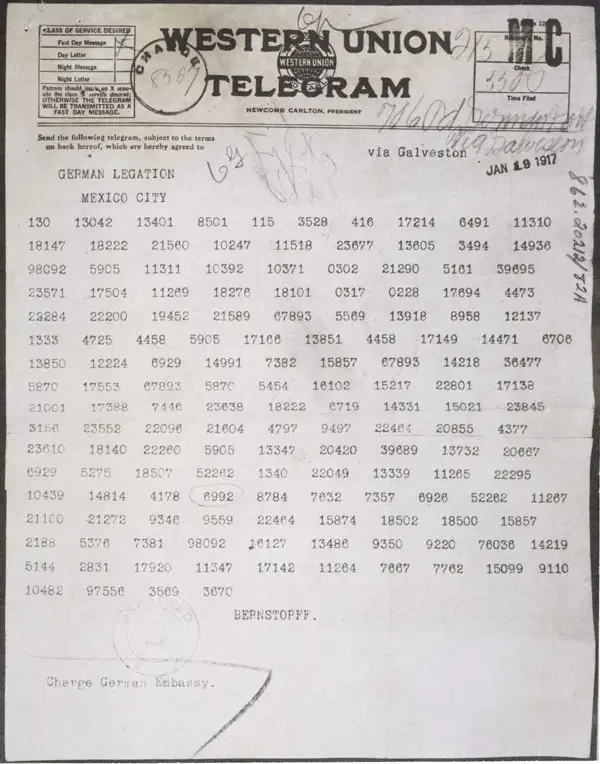
A coded message sent January 16, 1917, by the German foreign secretary to the German minister in Mexico that stated that if Germany went to war with the United States, Germany promised to help Mexico recover the territory it had lost during the 1840s, including Texas, New Mexico, California, and Arizona. What was the name of this famous coded message?
a)
League of Nations
b)
Zimmerman's Telegram
c)
Treaty of Paris
d)
Treaty of New Mexico
5.
Defense agreements among nations are known as ____________.
a)
militarism
b)
alliances
c)
imperialism
d)
confederates
6.
What policy did the US have for not getting involved in foreign affairs?
a)
Isolationism
b)
Appeasement
c)
Imperialism
d)
Containment
7.
What were President Woodrow Wilson’s goals for peace after World War I called?
a)
Treaty of Versailles
b)
Emancipation Proclamation
c)
Fourteen Points
d)
Schifflen Plan
8.
Which statement about World War I technology is most correct?
a)
The new technology led to fewer refugees being displaced from their homes during the conflict.
b)
The new technology created deadlier weapons which led to increased military casualties in battles fought during the conflict.
c)
The new technology led to smaller nations joining large empires following the conflict.
d)
The new technology led to a reduced focus on transportation improvements following the conflict.
9.
This document, signed in 1919, placed total blame for World War I on one country. It included harsh punishments which led to World War II. Which document placed blame for WWI on Germany?
a)
Treaty of Paris
b)
Treaty of Versailles
c)
Zimmerman Treaty
d)
14 Points
10.
What was the name of the WWI alliance which included France, Great Britain, and later the United States?
a)
Allied Powers
b)
Atlantic Powers
c)
Central Powers
d)
European Powers
11.
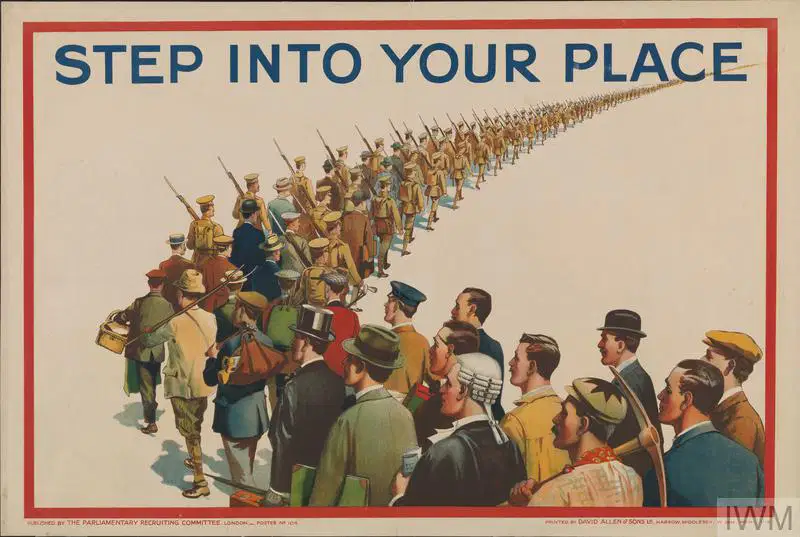
Which of the following was NOT one of the three main purposes of WWI propaganda in the U.S.?
a)
To encourage citizens to buy liberty bonds to help pay for the war
b)
To encourage citizens to volunteer to serve in the war
c)
To encourage women to serve overseas as soldiers in the trenches
d)
To encourage national pride among citizens
12.
What was the Schlieffen Plan?
a)
Germany's plan to avoid a 2 front war by defeating France quickly before Russia could mobilize for war.
b)
It was the first time the Germans used chlorine gas on the Western Front causing 29,000 British casualties.
c)
The American troops would remove German forces from Allied territory.
13.
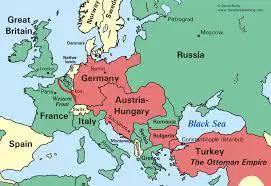
Who were the Central Powers during WWI?
a)
Italy, Romania, Serbia
b)
France, The United Kingdom, and Russia
c)
Germany, Austria-Hungary, Bulgaria, and The Ottoman Empire
14.
The German attack on a passenger liner called the _______________ . This vessel was carrying many American and British passengers that was sunk by a German torpedo and caused an international outrage.
a)
Titanic
b)
Lusitania
c)
S.S. Minow
d)
S.S. Maine
15.
The Treaty of Versailles placed total blame for World War I on one country. It included harsh punishments which led to World War II. Which country was blamed by the treaty?
a)
Germany
b)
Russia
c)
Serbia
d)
France
16.
Why did Russia leave the war?
a)
The Bolshevik Revolution overthrew the Czar and they signed a treaty with Germany.
b)
They were worried about an invasion from Poland, and needed to conserve their forces.
c)
They did not want take on German forces anymore.
17.
What effect did American soldiers have on World War I?
a)
U.S. slowed down the war causing it to extend for 2 more years.
b)
U.S. and Germany negotiated to end the war if they U.S. soldiers came to reduce tensions.
c)
U.S. provided fresh troops to push the allies to victory
18.
Many WWI soldiers suffered from a painful condition of the feet caused due to being under cold water or mud for long periods of time and marked by blackening and death of surface skin.
a)
Water log foot
b)
Trench foot
c)
Athlete's foot
d)
Foot fungus
19.
When World War I began, the official United States policy was
a)
to enter on the side of the Allied Powers
b)
to remain militarily and politically neutral
c)
the enter on the side of the Central Powers
d)
to support the Central Powers by providing war materials
20.
Written response question: Your response needs to be at least 6-9 sentences. There needs to be an introduction sentence, 5 sentences identifying the information needed, and a concluding sentence. Each sentence should blend into the next sentence - NOT an abrupt change of thought. Do not use first person (No "I" statements. Example: I think the causes of World War I are .... ). Identify and explain the MAIN causes of World War I. There are 5 MAIN causes that need to be identified in this paragraph.
4 lines
21.
Extra Credit: What were American soldiers called during WWI?
a)
milkmen
b)
paperboys
c)
doughboys
d)
minutemen
22.
Extra Credit: Built in 1915, it carried a crew of three and could travel as fast as 3 mph, what was the nickname of the first tank prototype developed for WWI?
a)
Big Bertha
b)
Big Guy
c)
Fat Man
d)
Little Boy
e)
Little Willie
23.
A 1917 diplomatic proposal from the German Empire for Mexico to join in an alliance with Germany.
a)
Trench Warfare
b)
Lusitania
c)
Zimmerman's Telegram
d)
The Great War
24.

Which event is considered the immediate cause of World War I?

a)

The Bolshevik Revolution

b)

The signing of the Treaty of Versailles

c)

The assassination of Archduke Franz Ferdinand

d)

The sinking of the Lusitania

25.

What was the primary purpose of the League of Nations?

a)

To promote international trade

b)

To prevent future wars through collective security

c)

To establish colonial territories

d)

To support the Central Powers

26.

Naval submarines operated by Germany. They were efficient fleet weapons against enemy naval warships, they were most effectively used in an economic warfare role (commerce raiding) and enforcing a naval blockade against enemy shipping.

a)

War ships

b)

U-boats

c)

Sussex

d)

US boats

27.

Tactical warfare using substances (such as incendiary mixtures, smoke, or gases) with irritant, burning, poisonous, or asphyxiating properties

a)

trench warfare

b)

unrestricted sub warfare

c)

chemical warfare

d)

hand to hand combat warfare

28.

A type of combat in which the opposing sides attack, counterattack, and defend from relatively permanent systems of ditches dug into the ground.

a)

chemical warfare

b)

submarine warfare

c)

Unrestricted warfare

d)

trench warfare

29.

primarily used for reconnaissance from high above

a)

trench warfare

b)

sub warfare

c)

aircraft

d)

heavy artillery