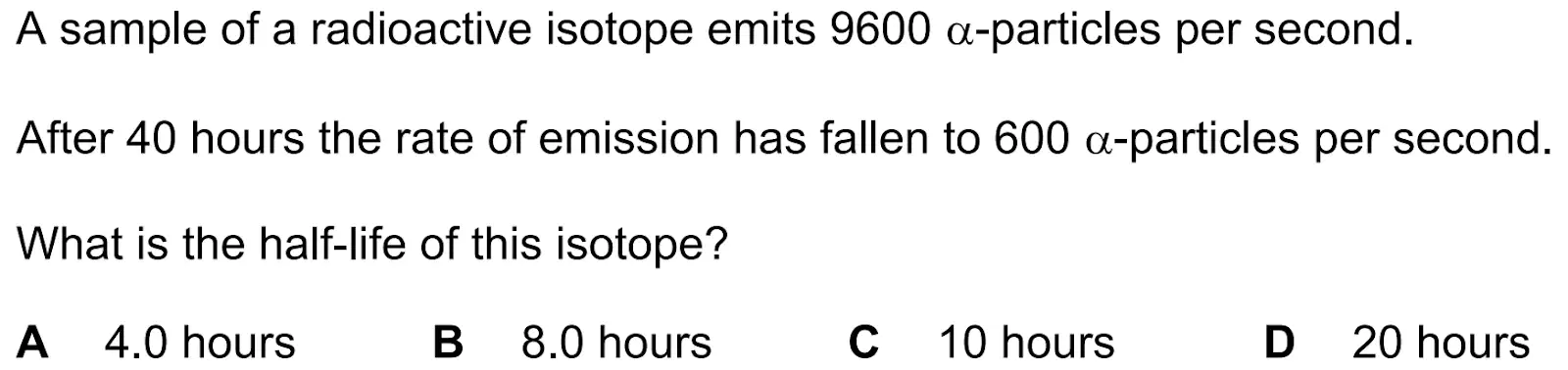
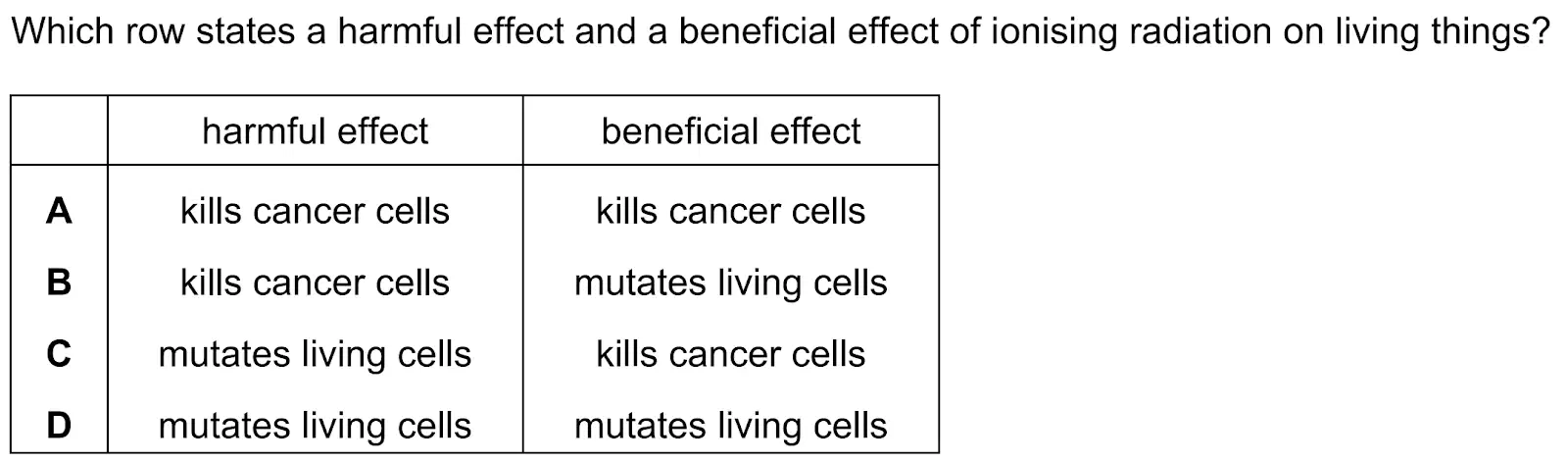
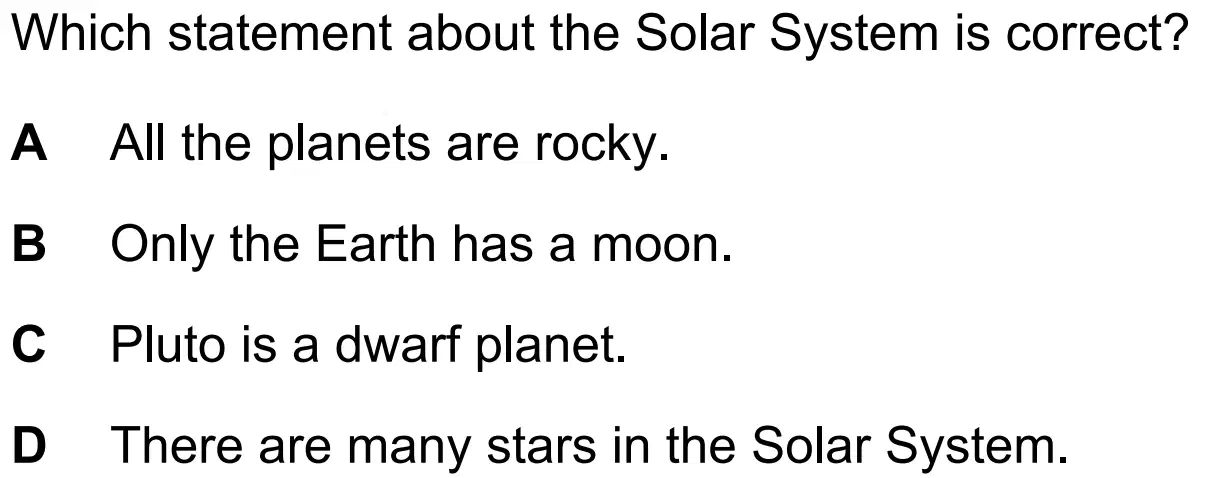
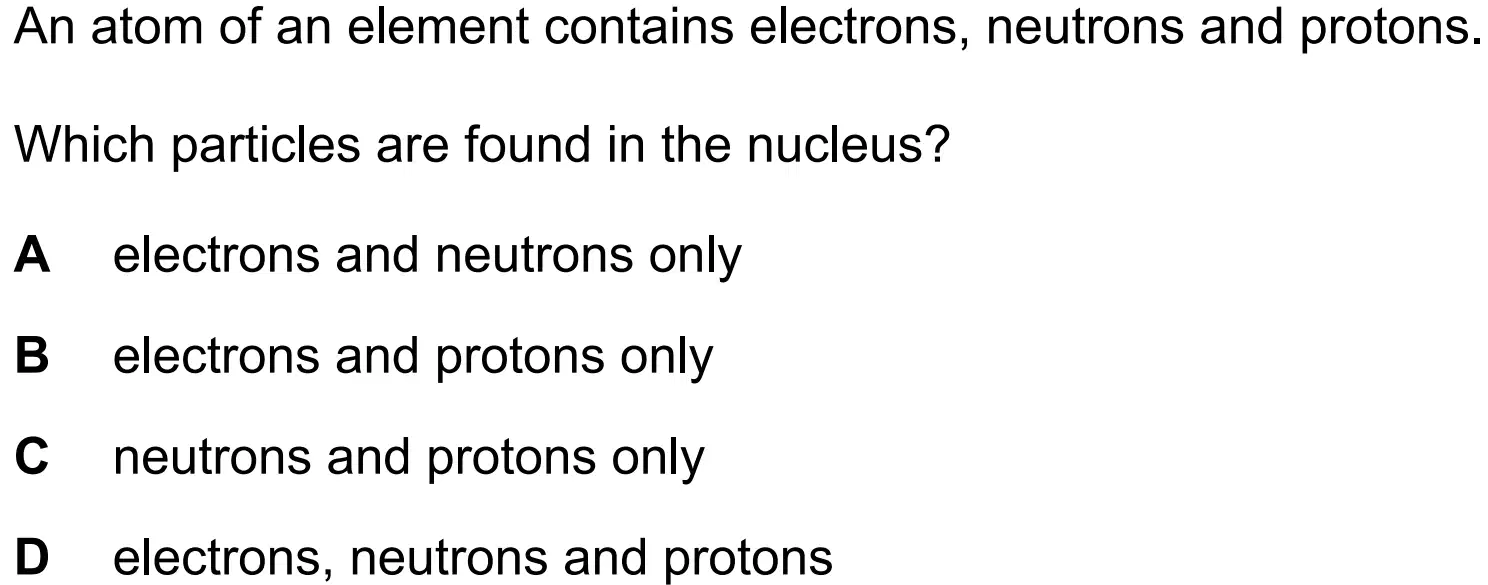
wayground logo

Free Printable Worksheets

Font size

S
M
L
XL
Worksheets

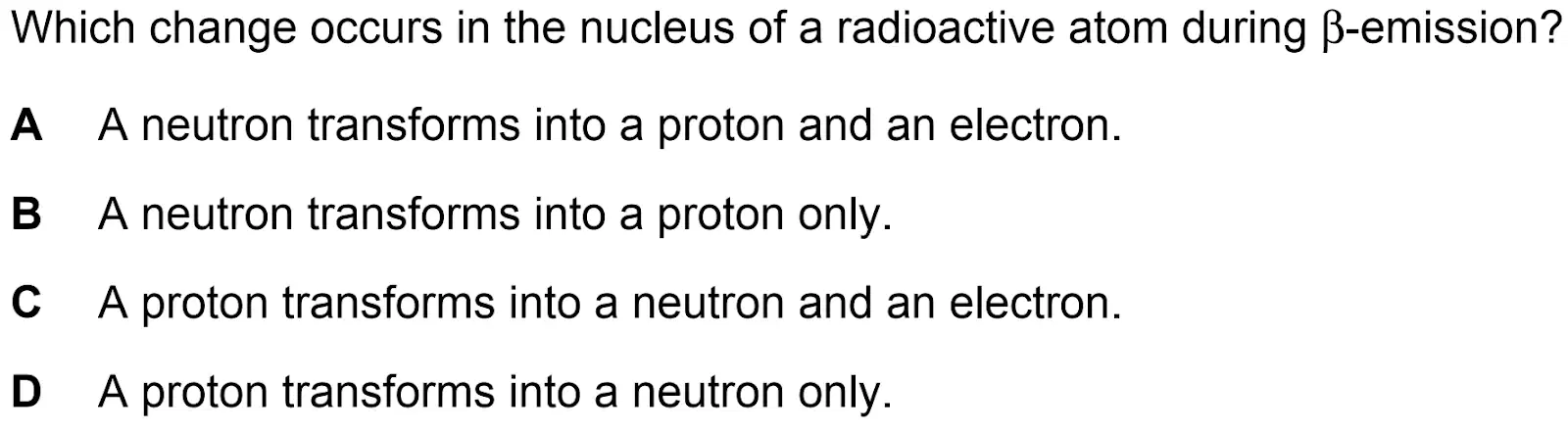
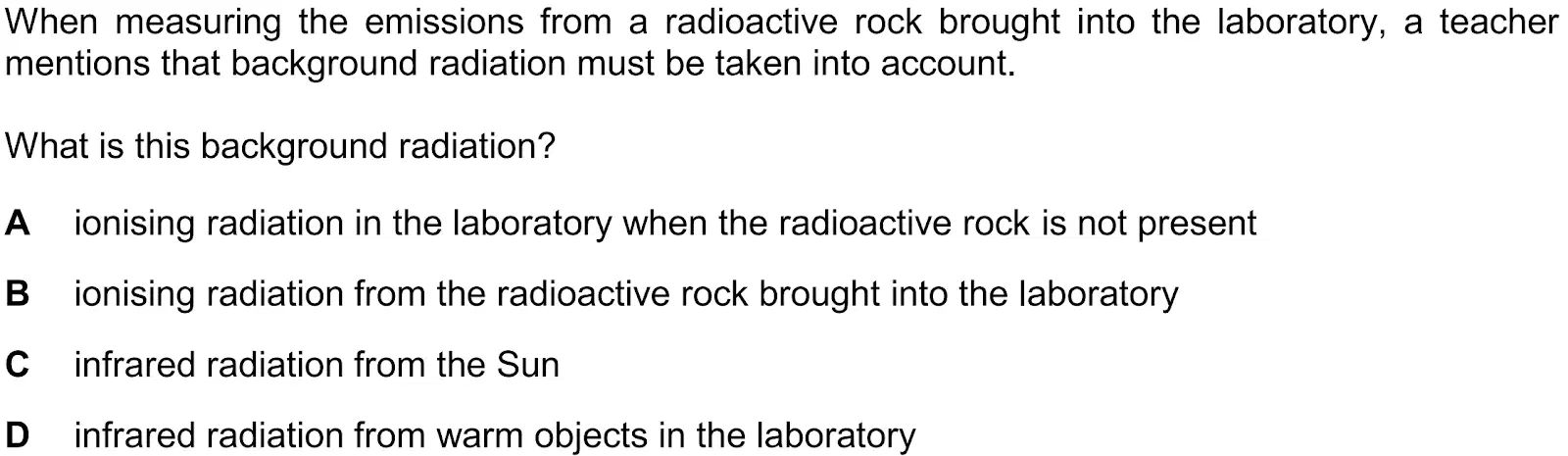
G9 EASE 3 REVIEW 24/25

Total questions: 130

Worksheet time: 3hrs 49mins

Name
Class
Date
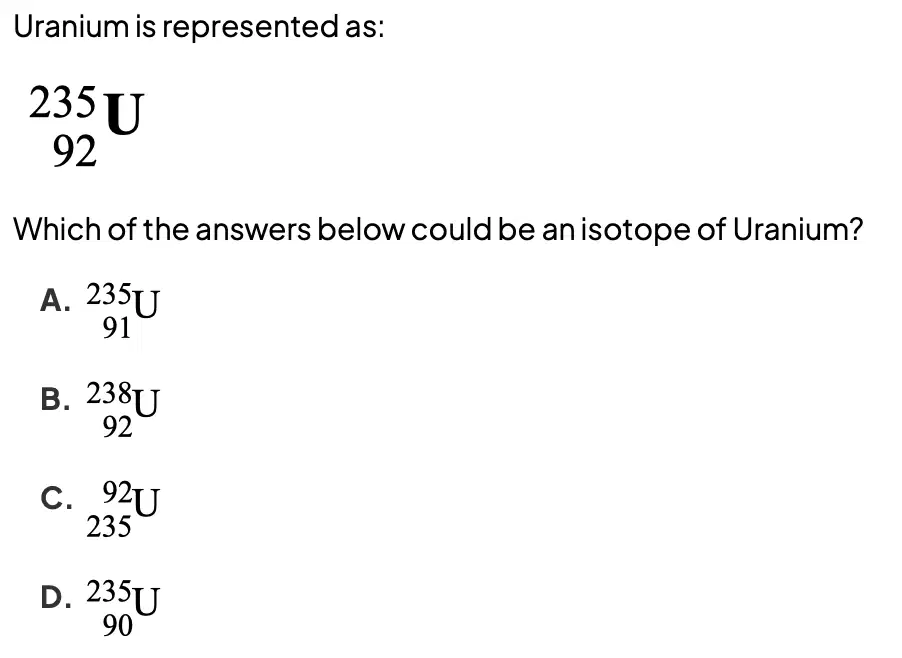
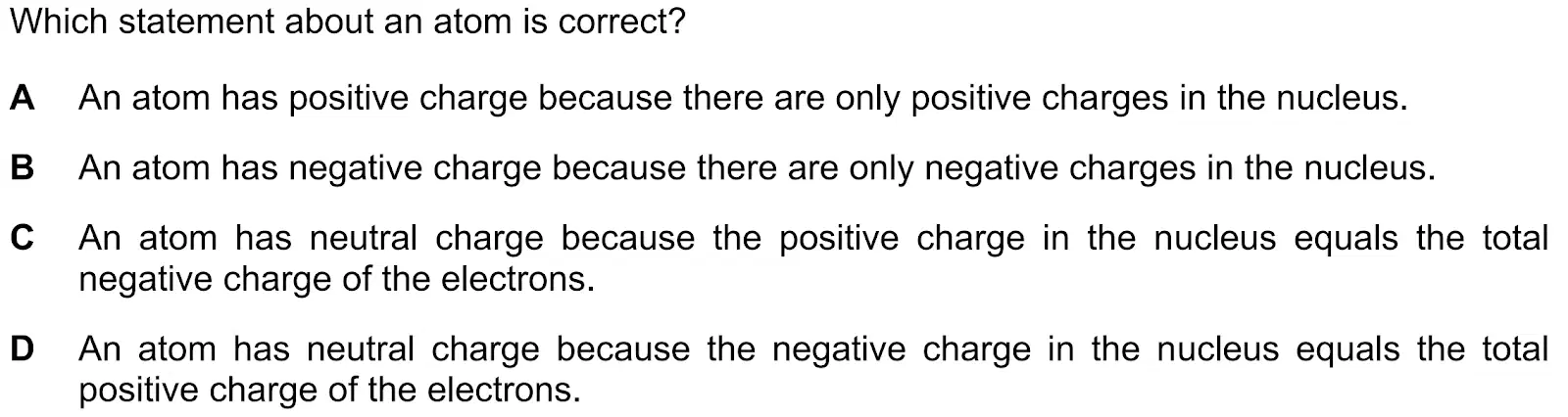
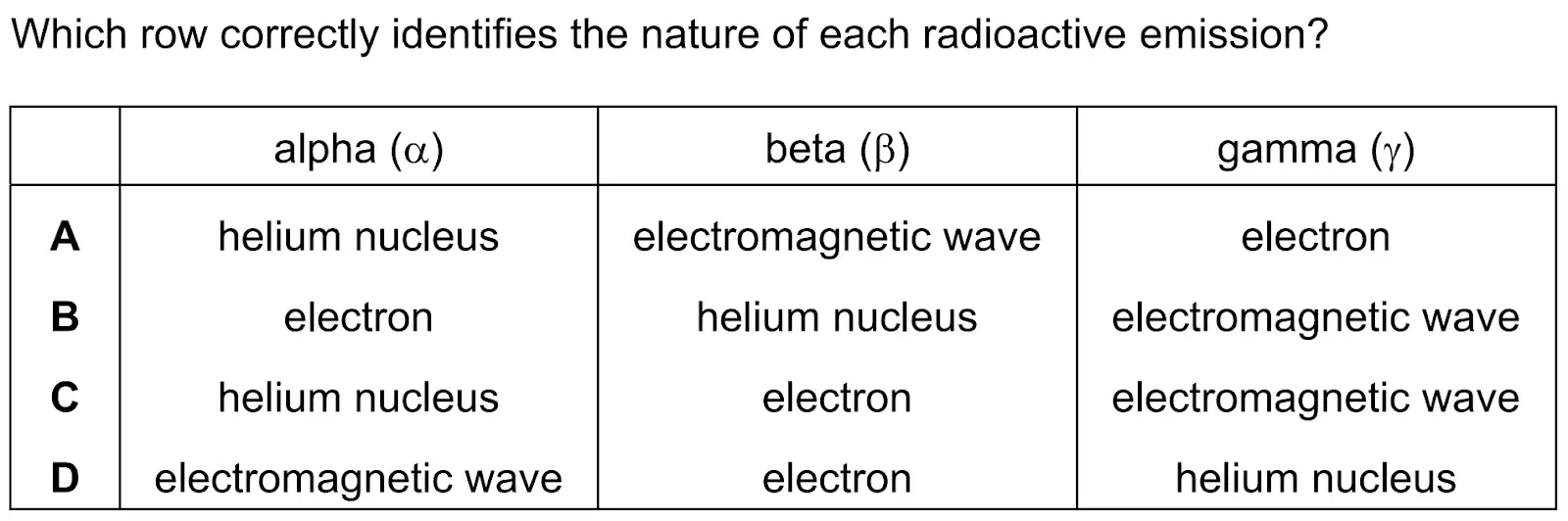
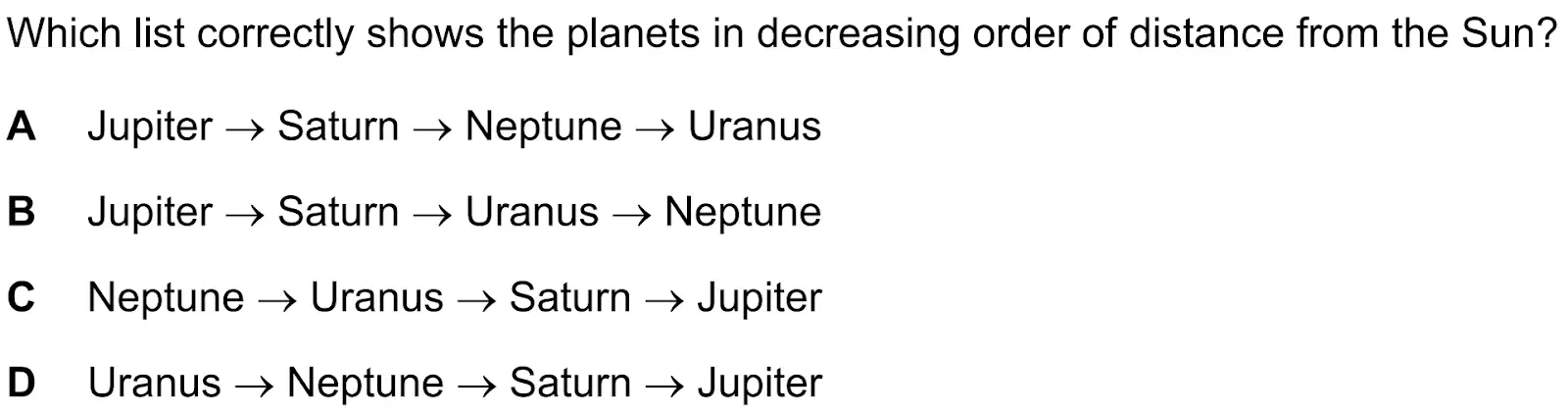
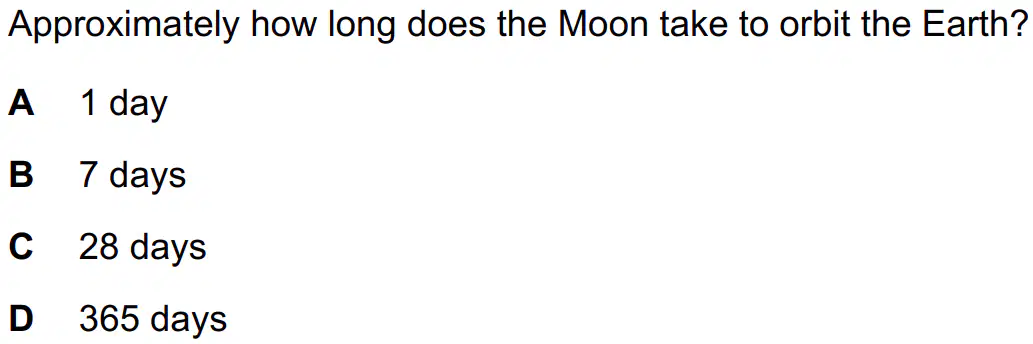
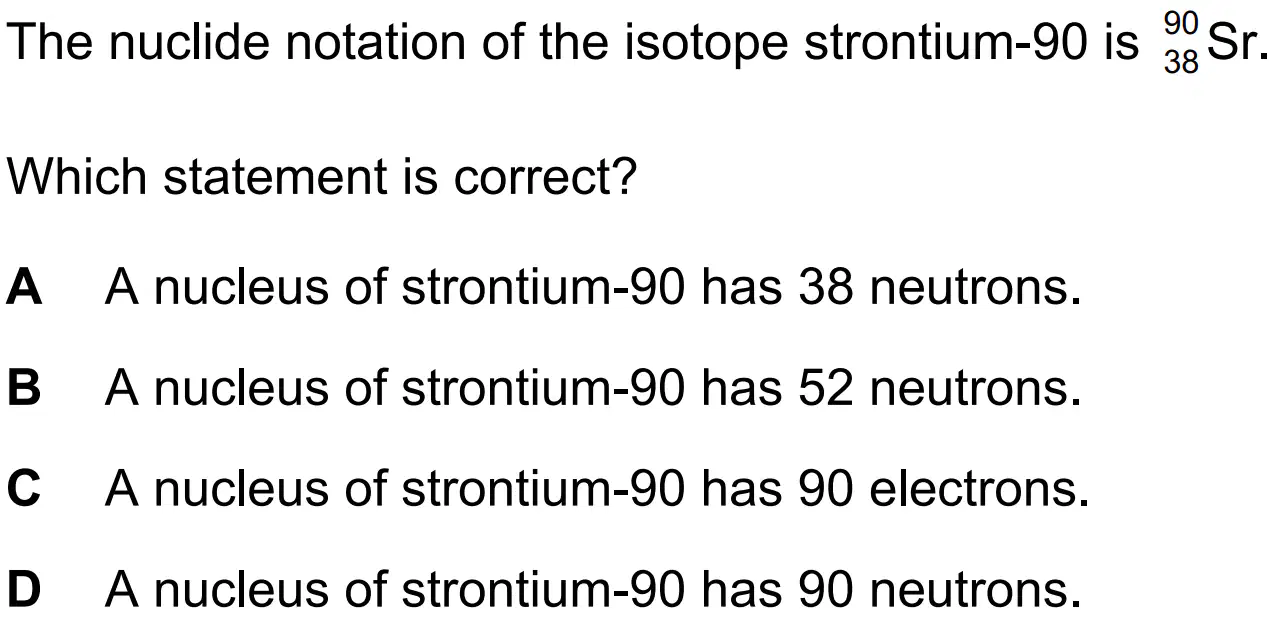
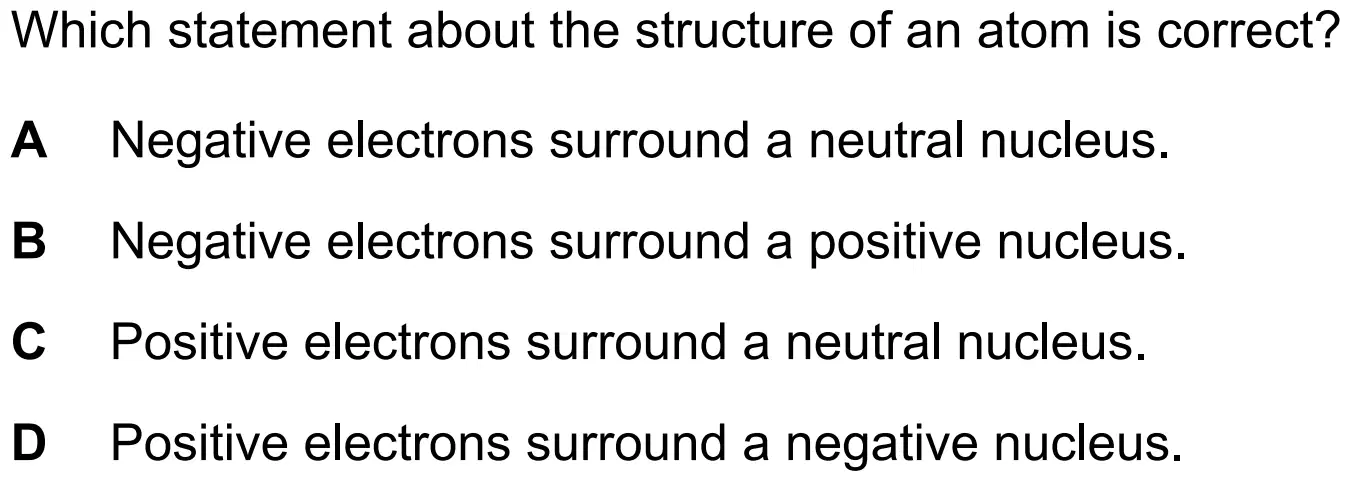
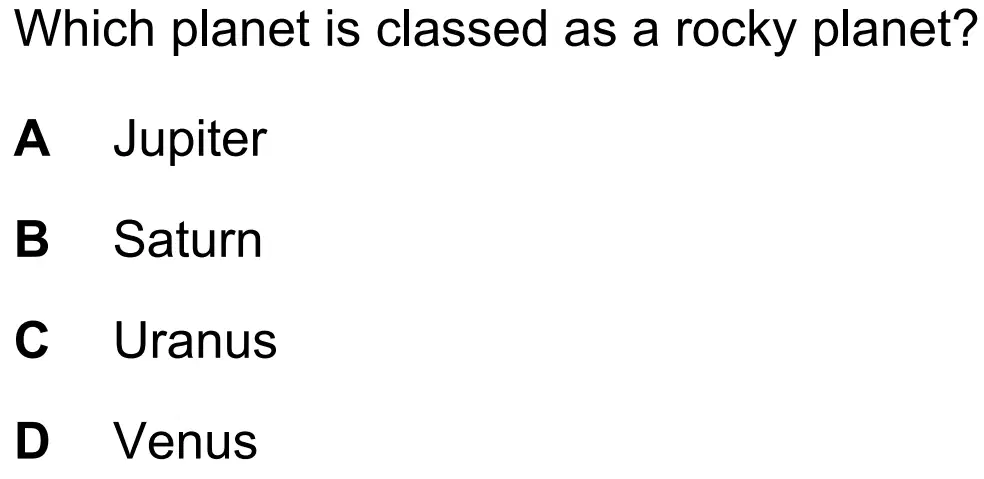
1.

-

a)

A

b)

B

c)

C

d)

D

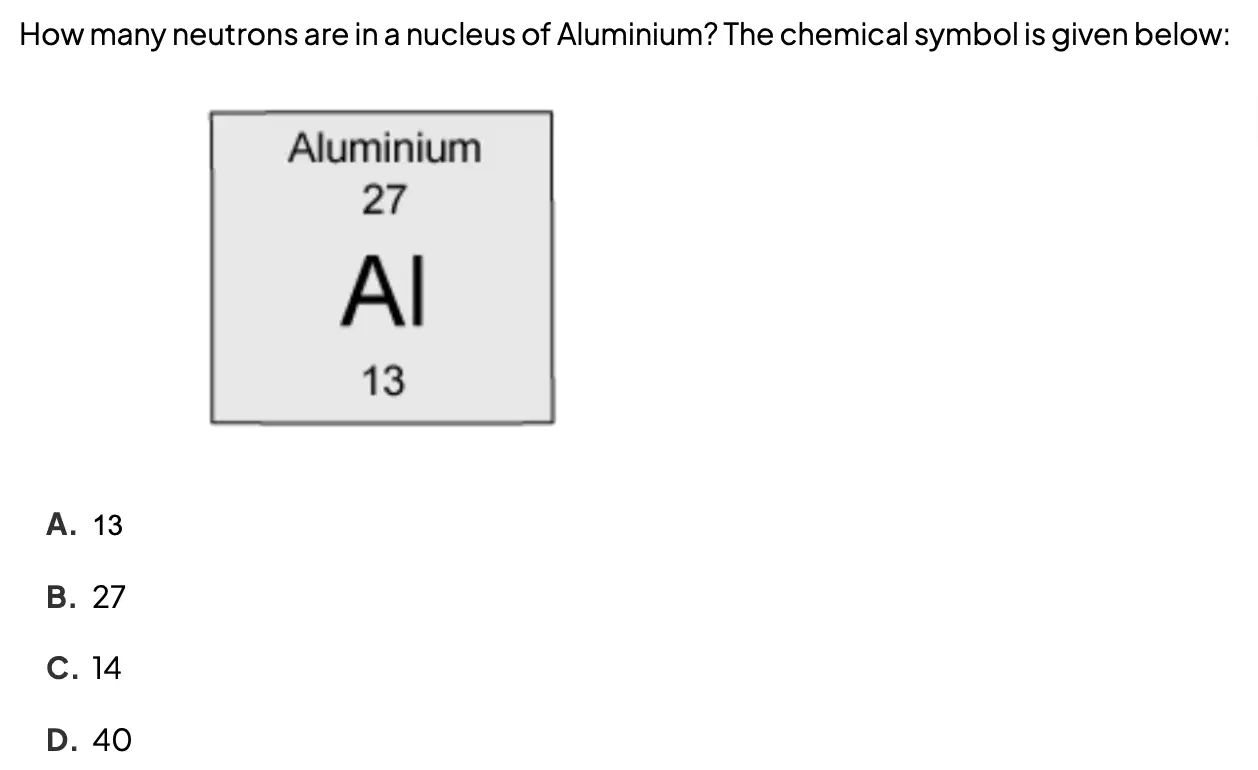
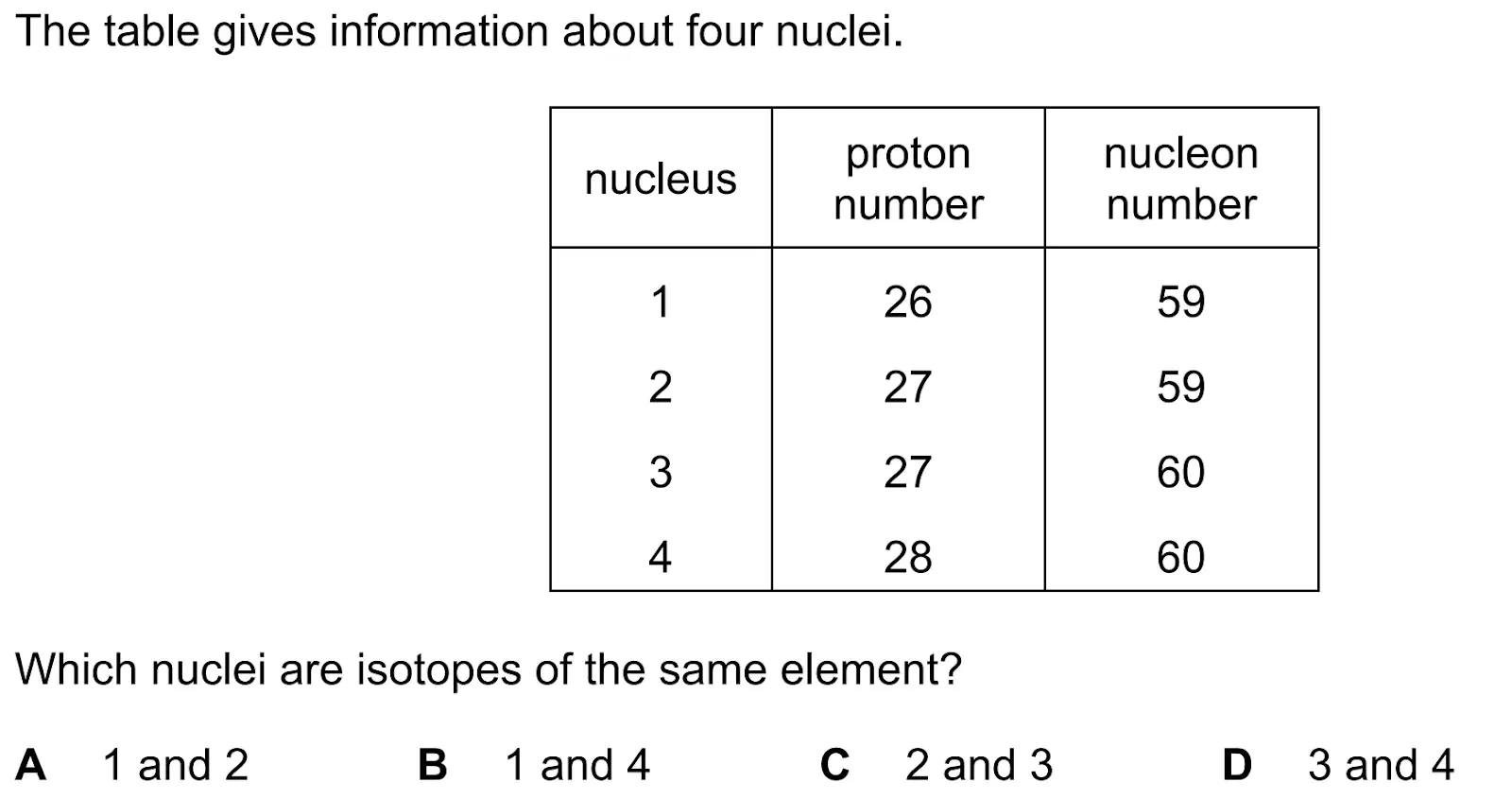
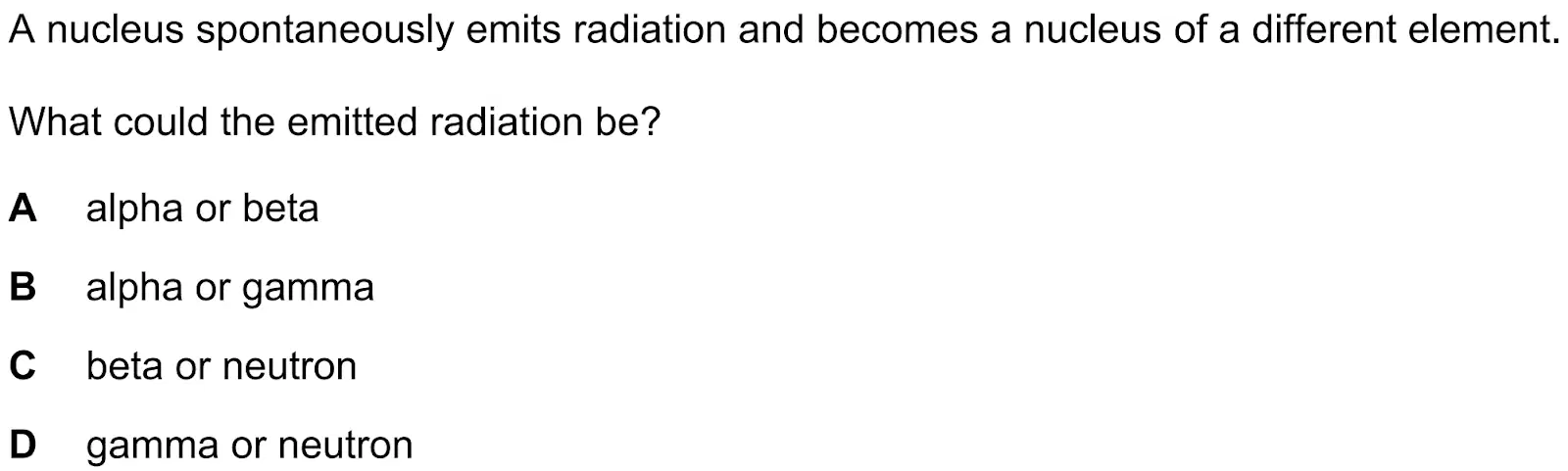
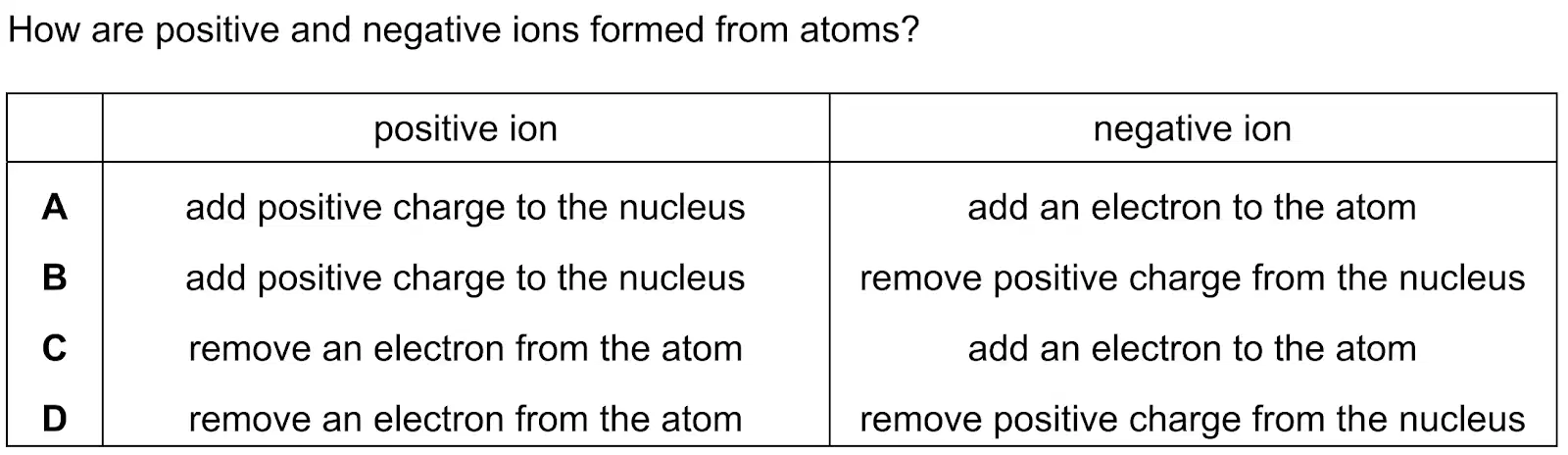
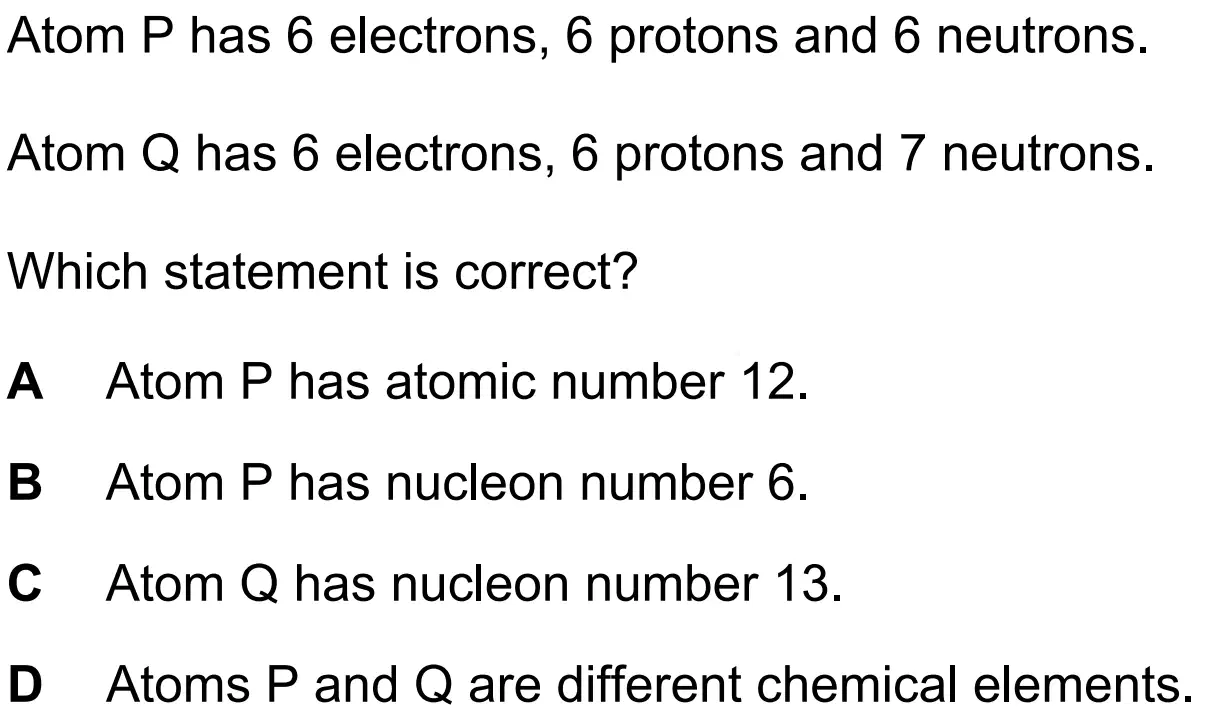
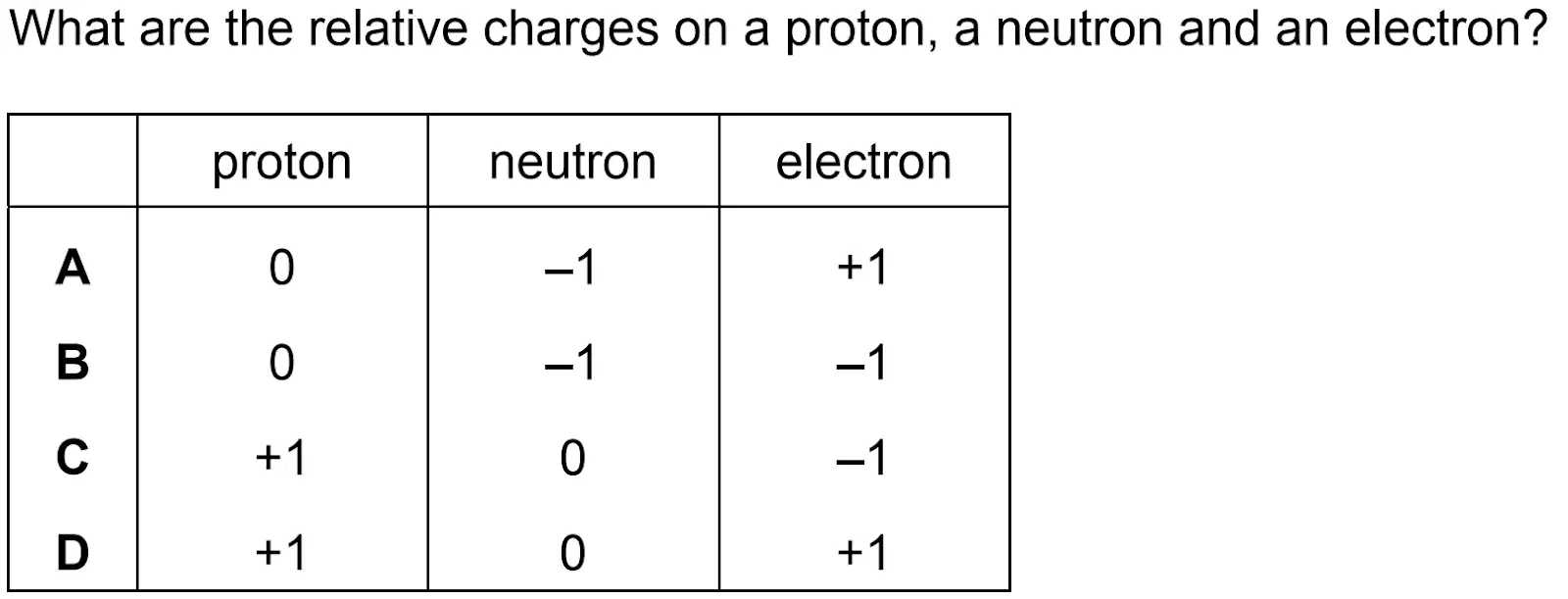
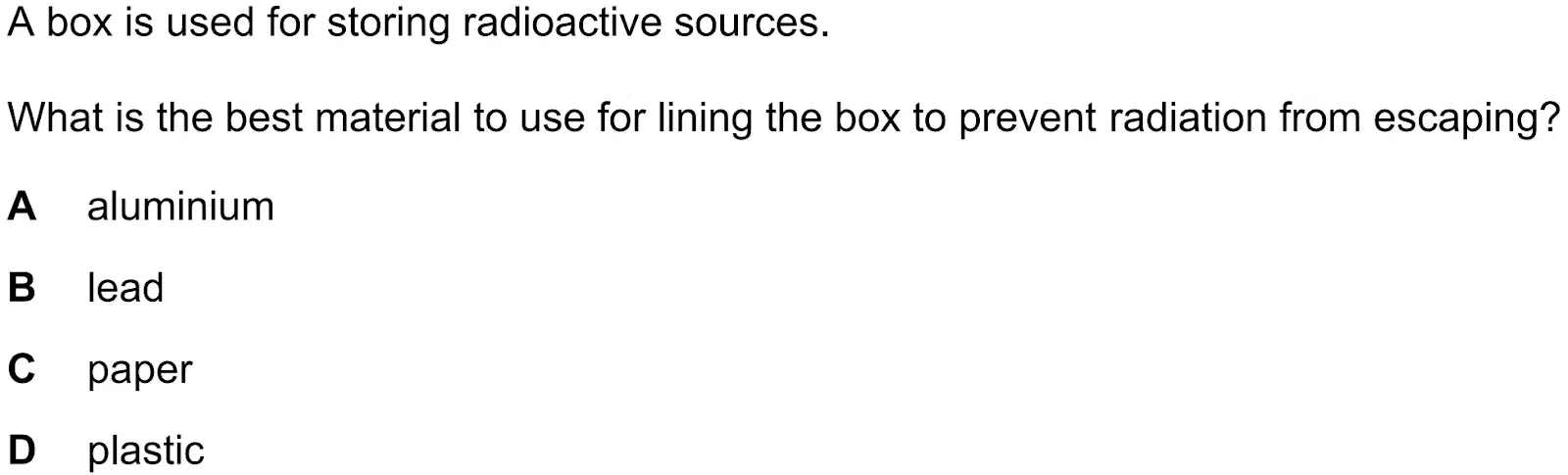
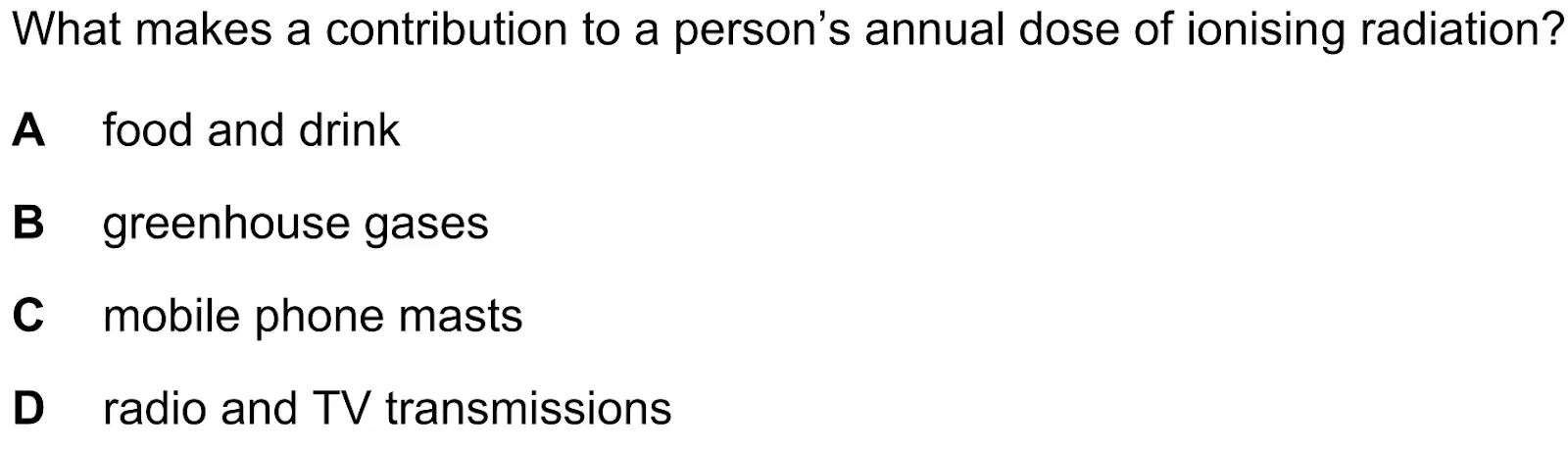
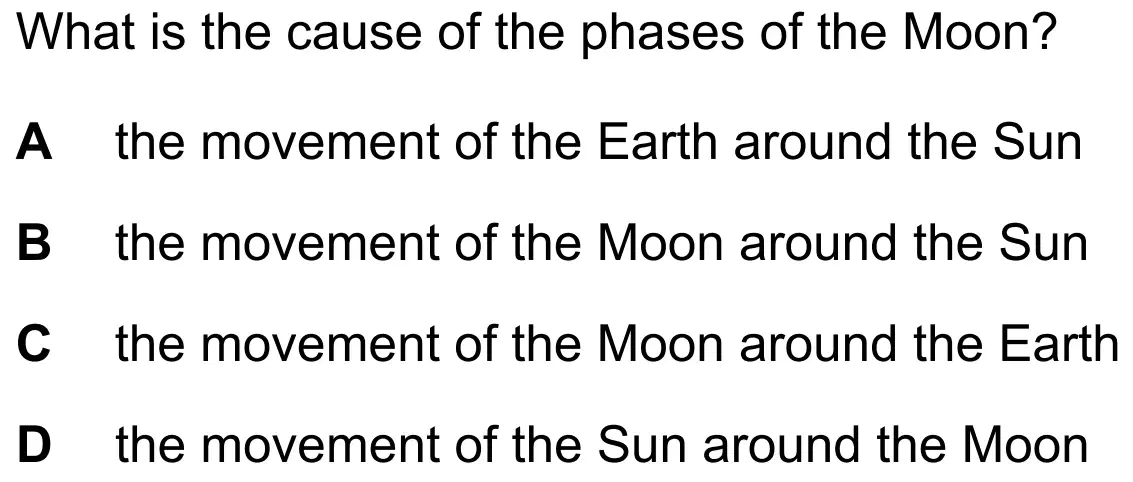
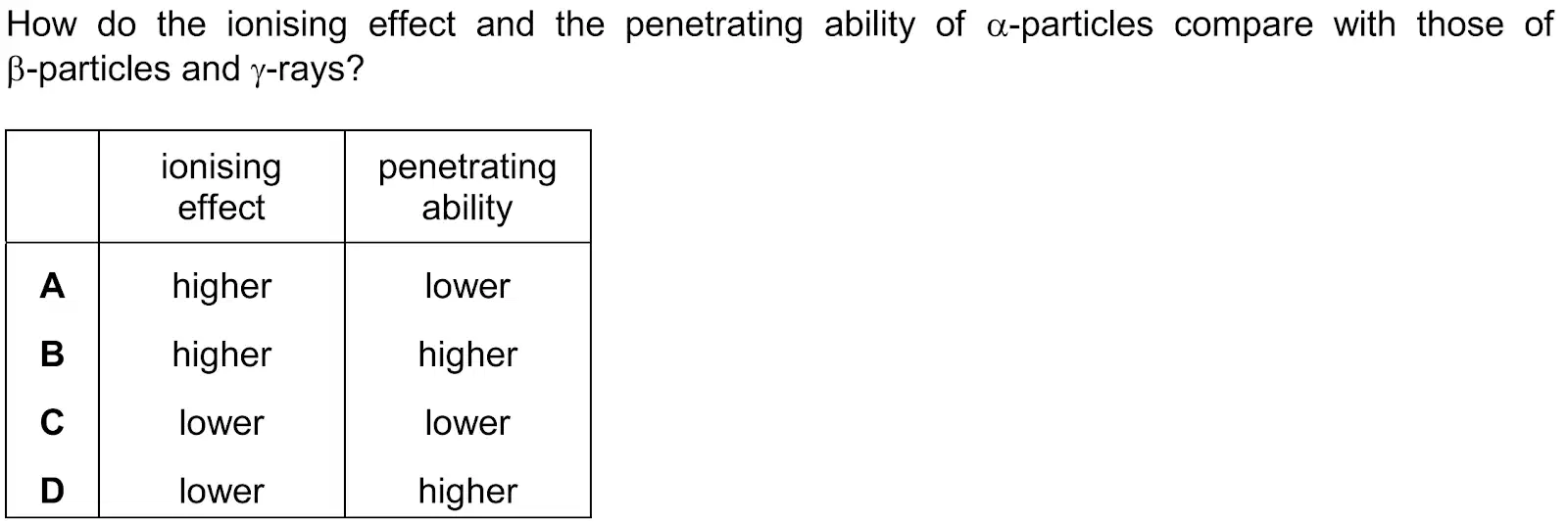
2.

-

a)

A

b)

B

c)

C

d)

D

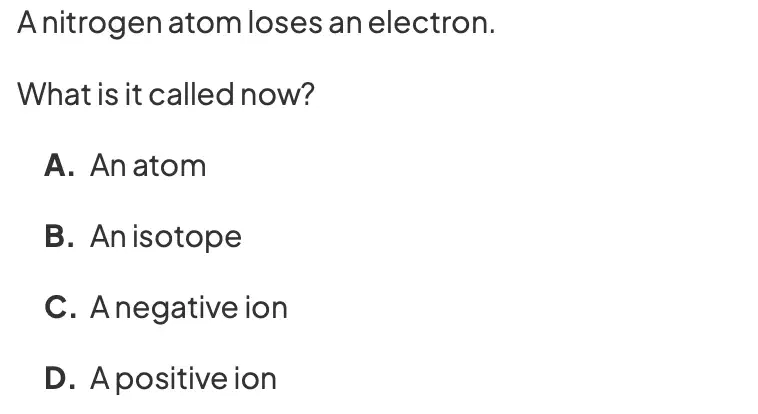
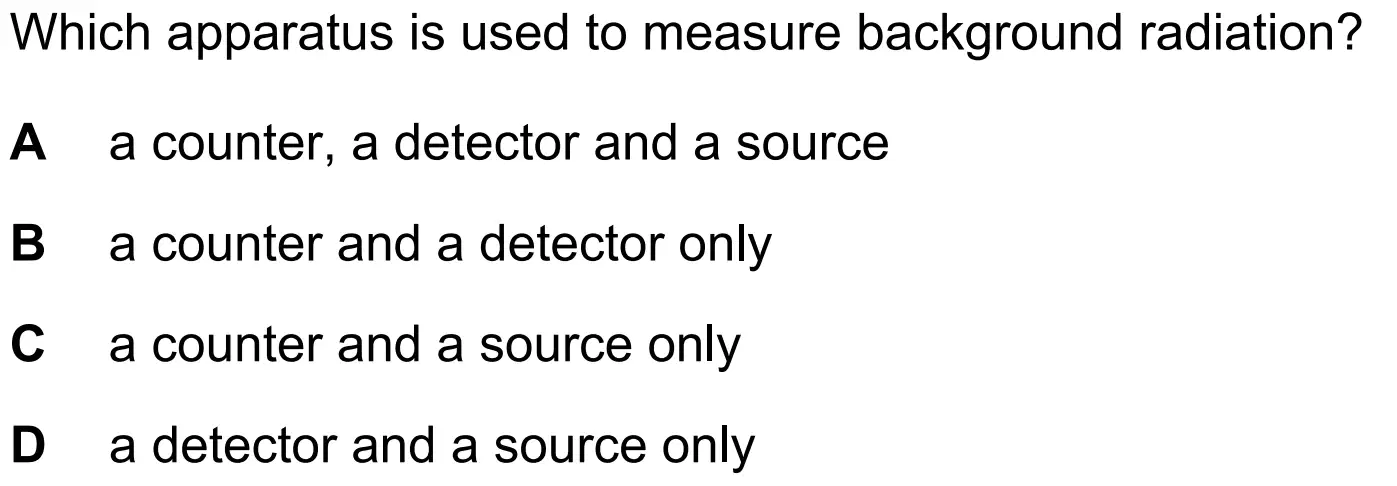
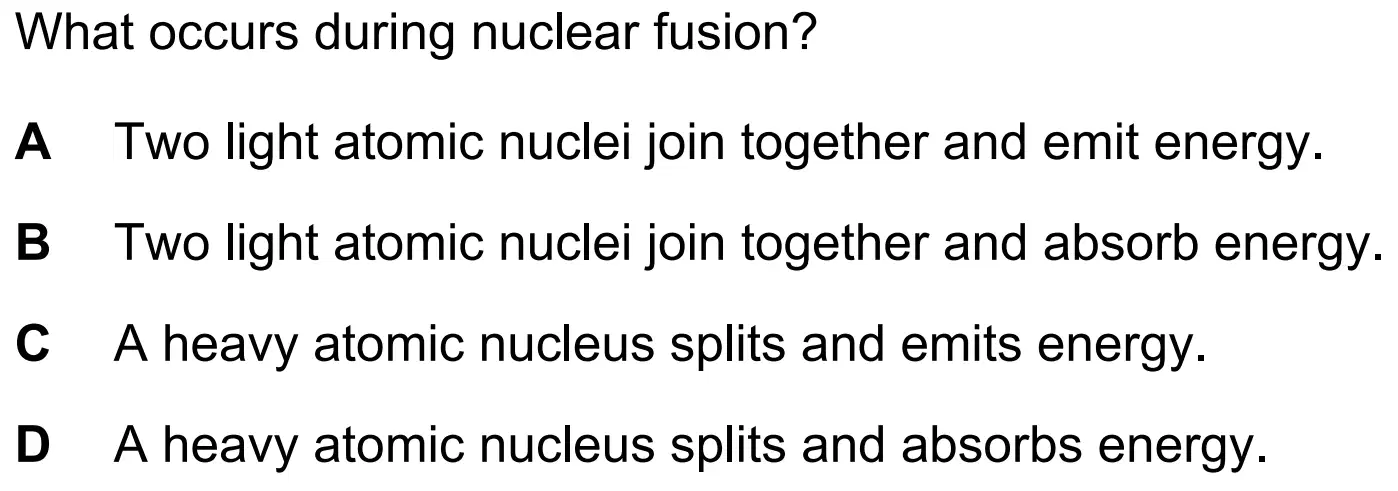
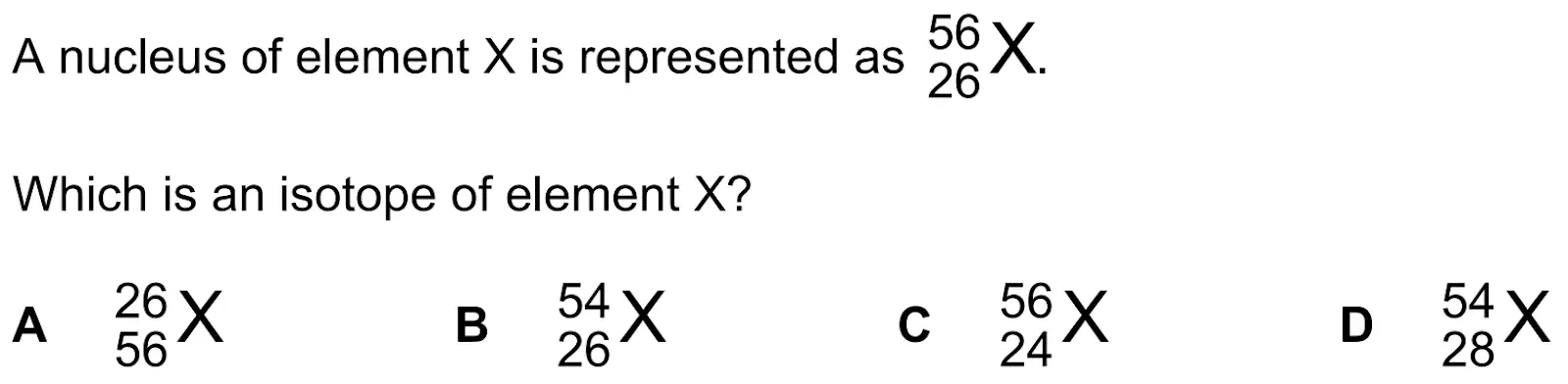
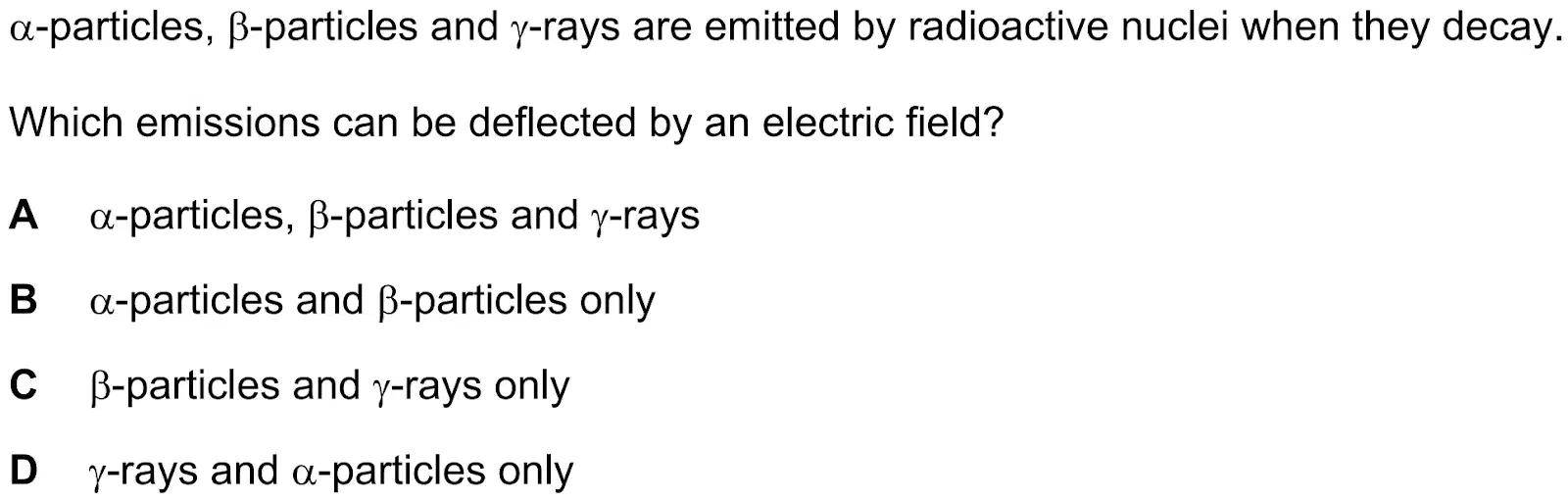
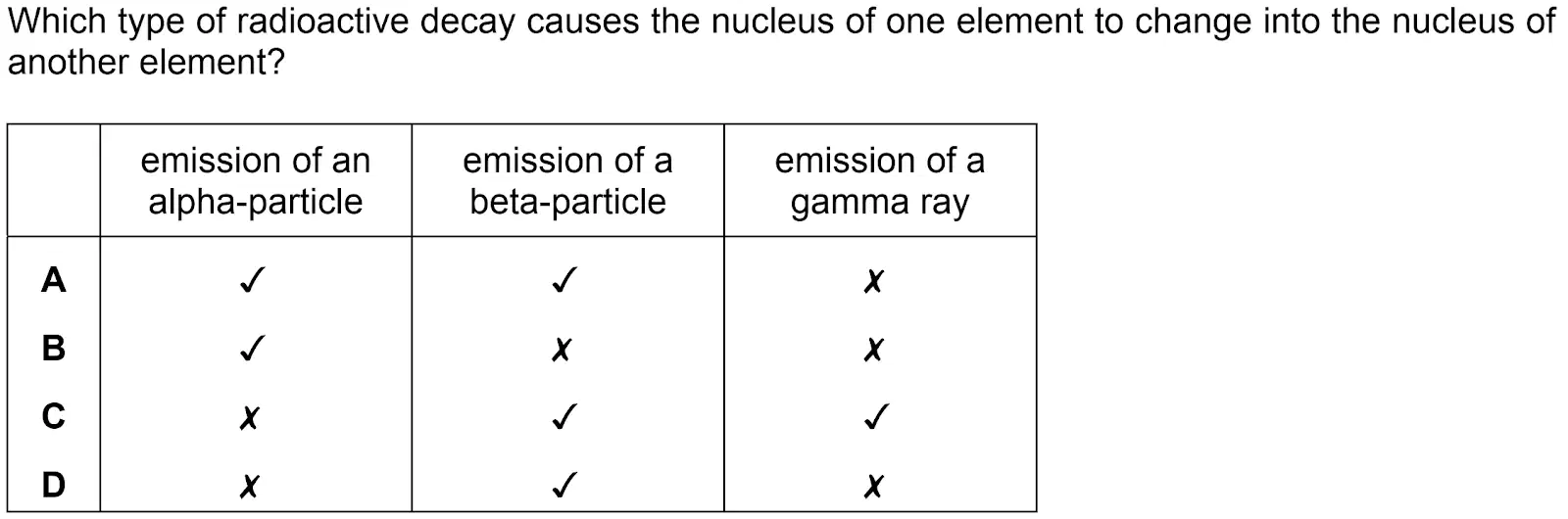
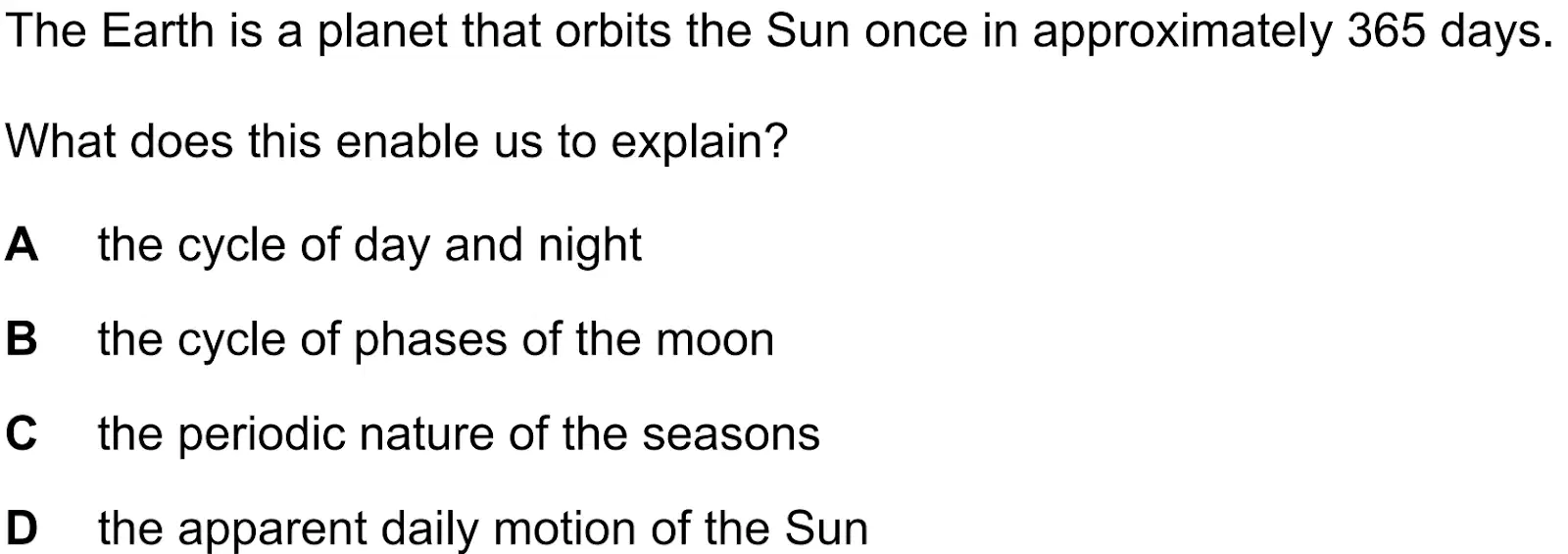
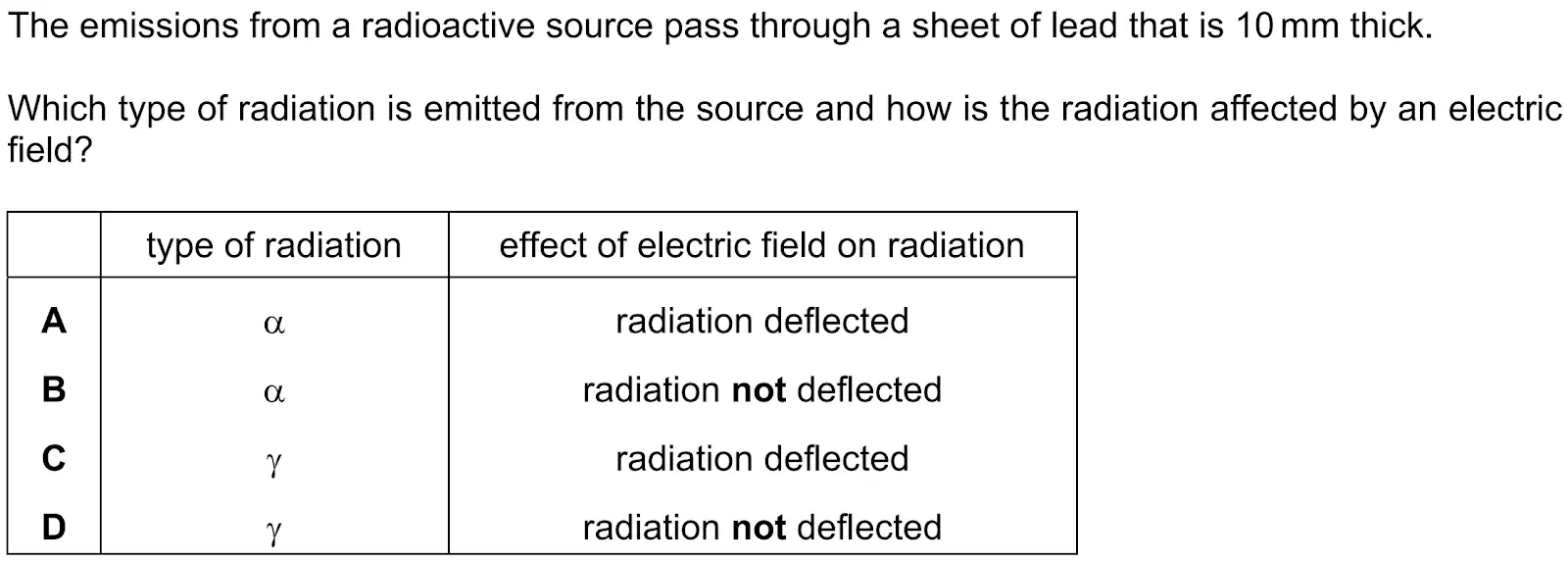
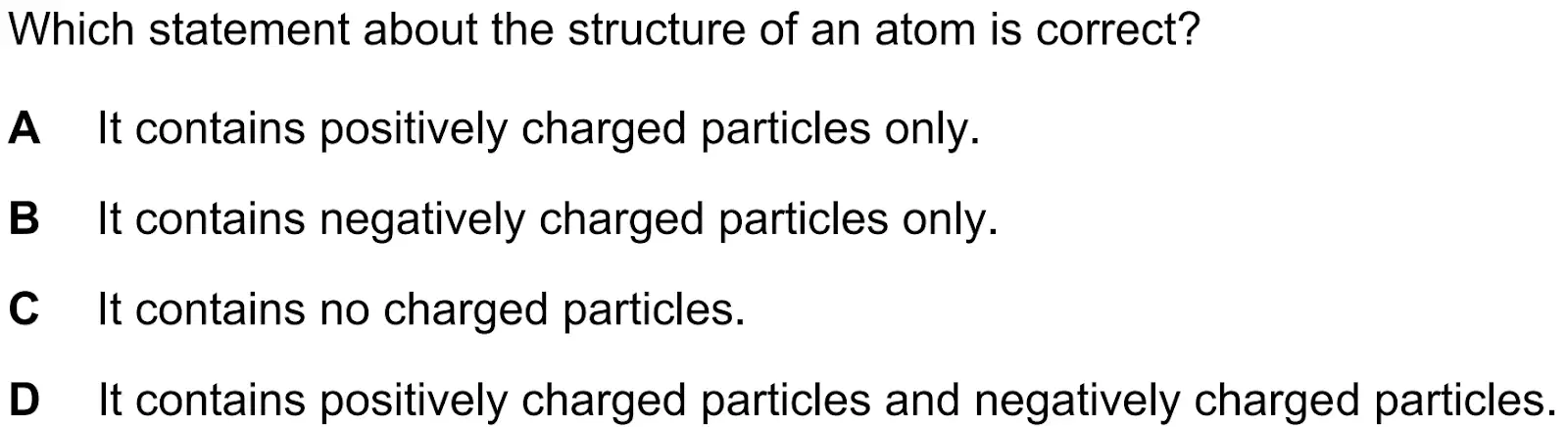
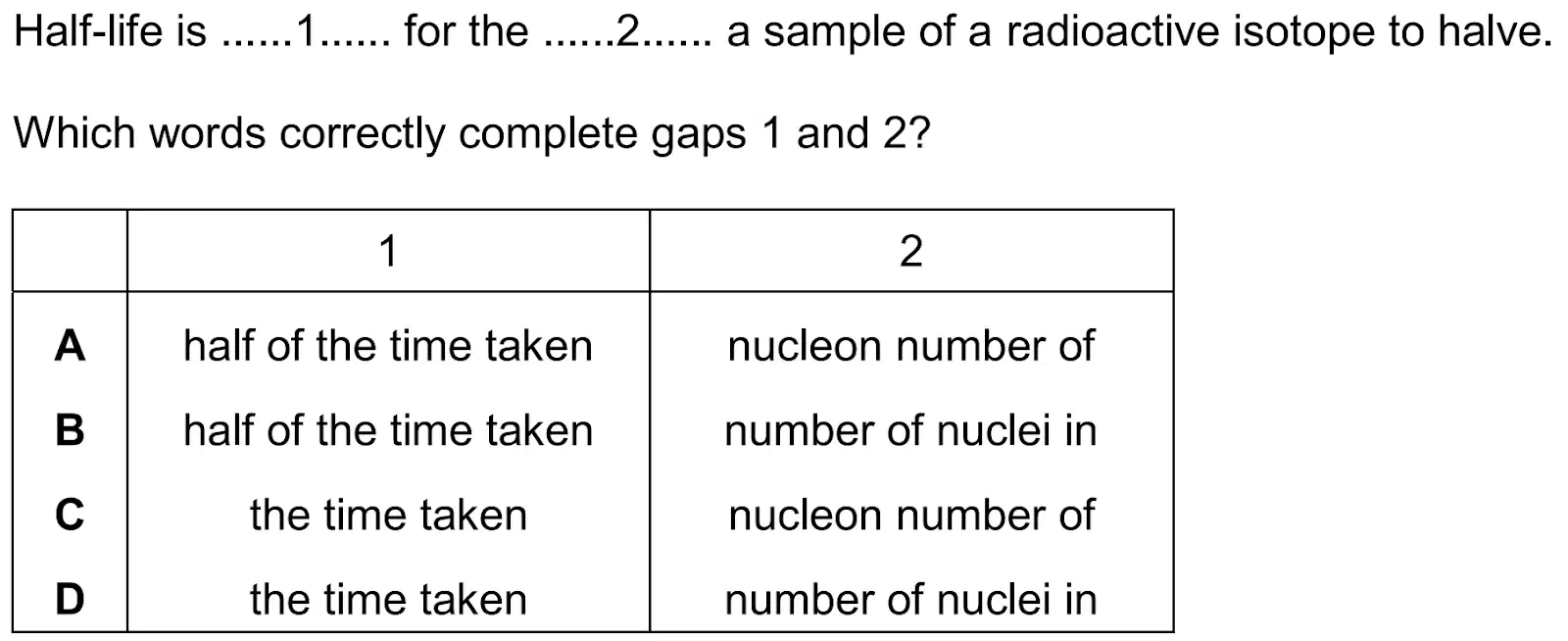
3.

-

a)

A

b)

B

c)

C

d)

D

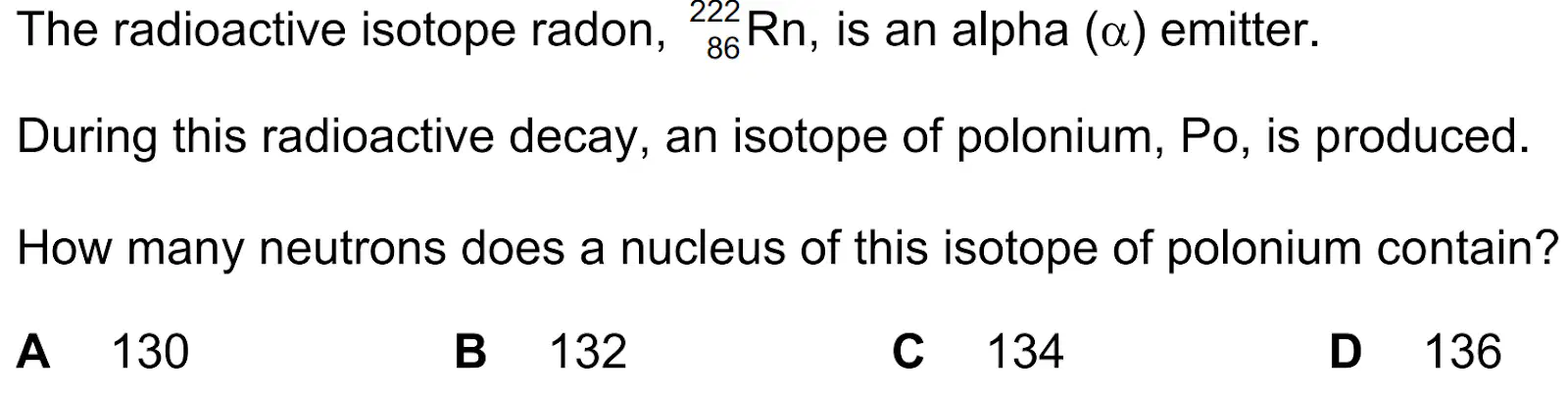
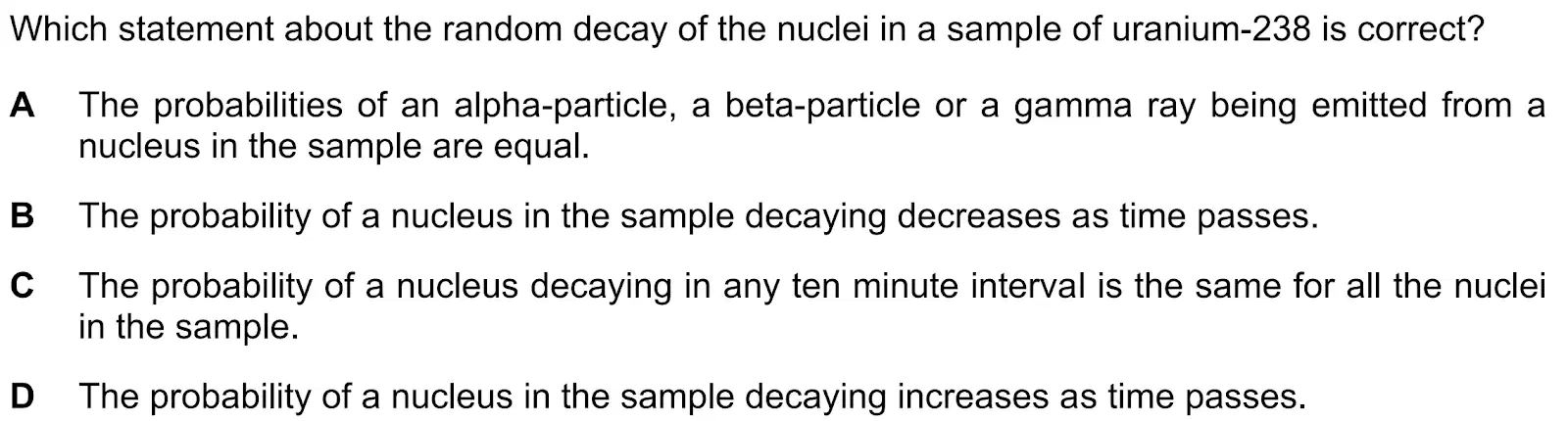
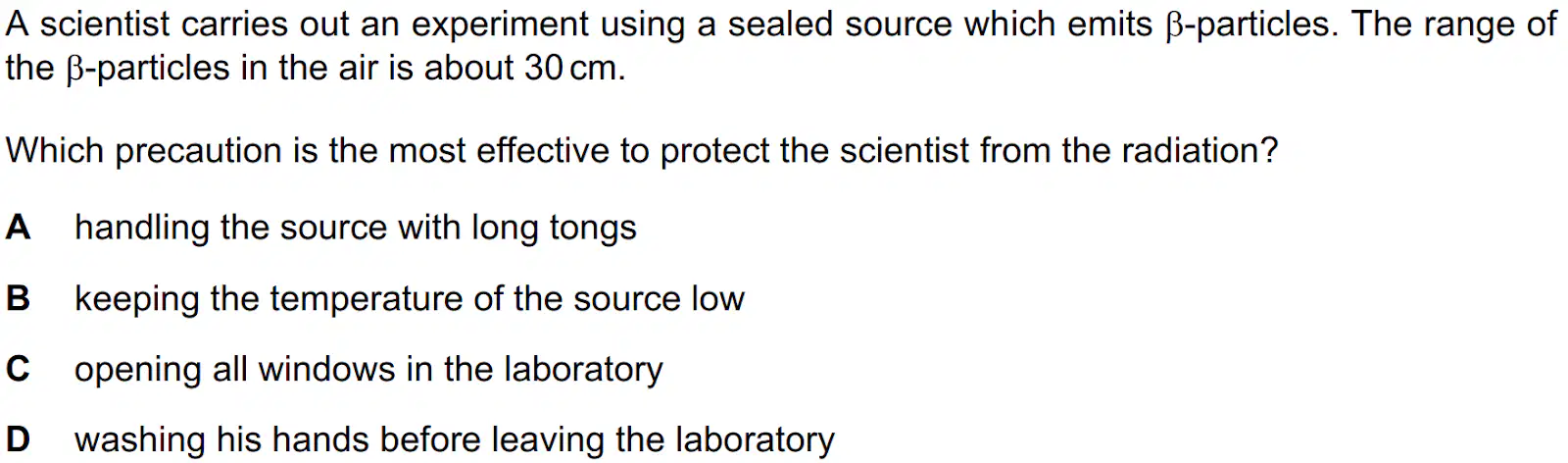
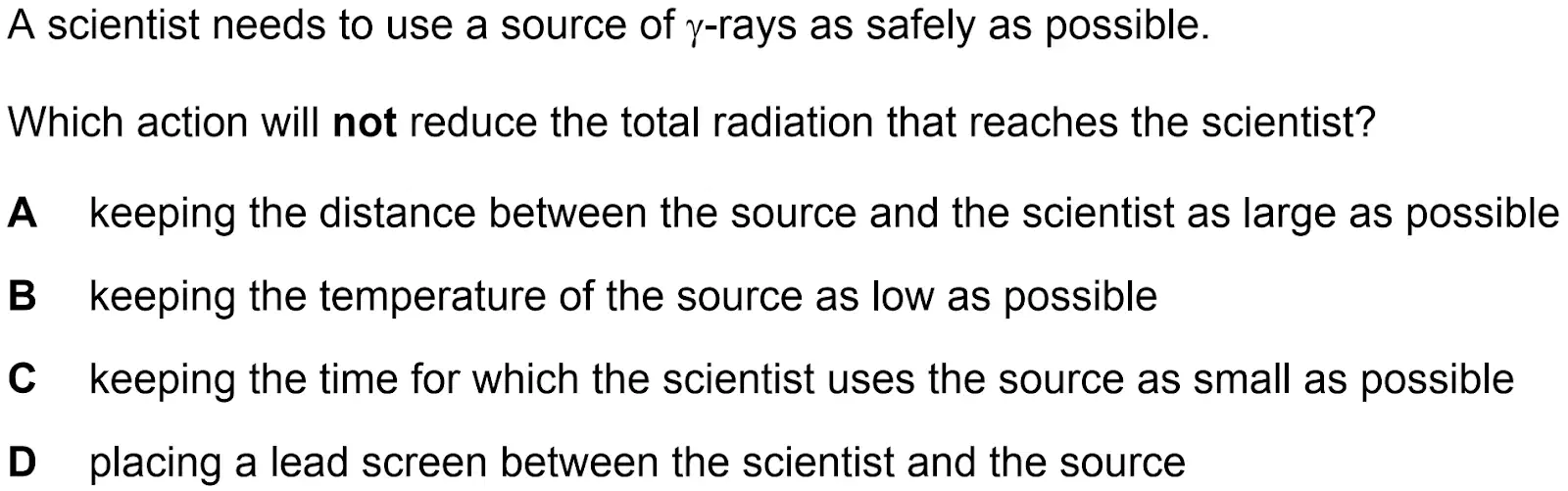
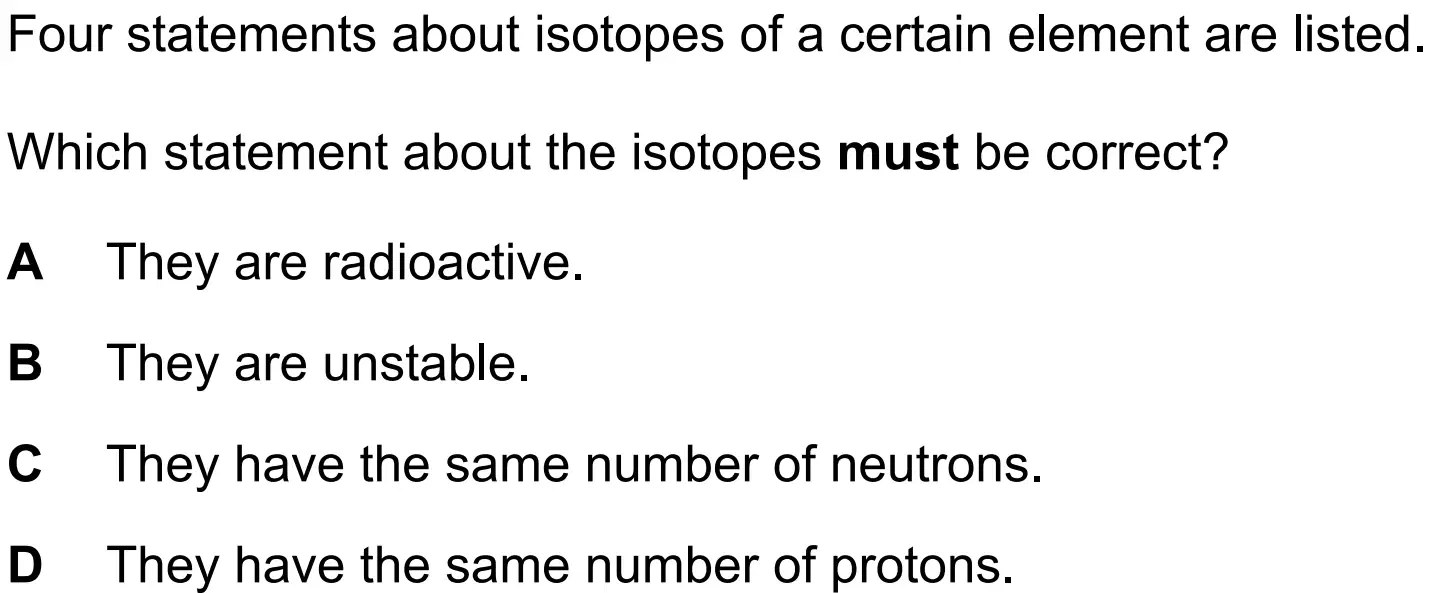
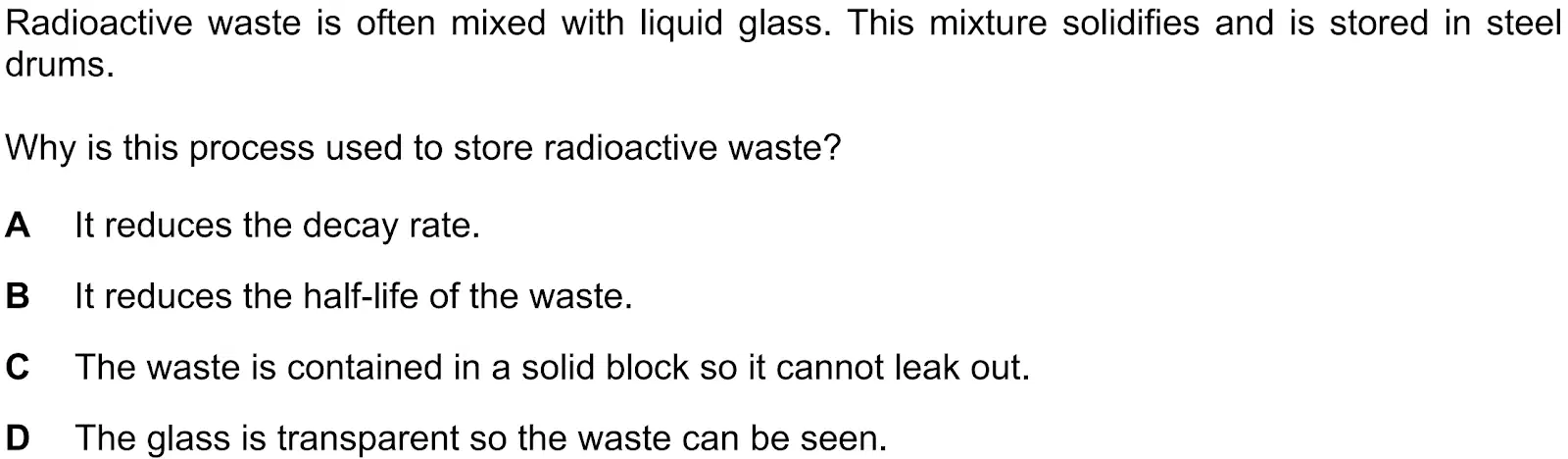
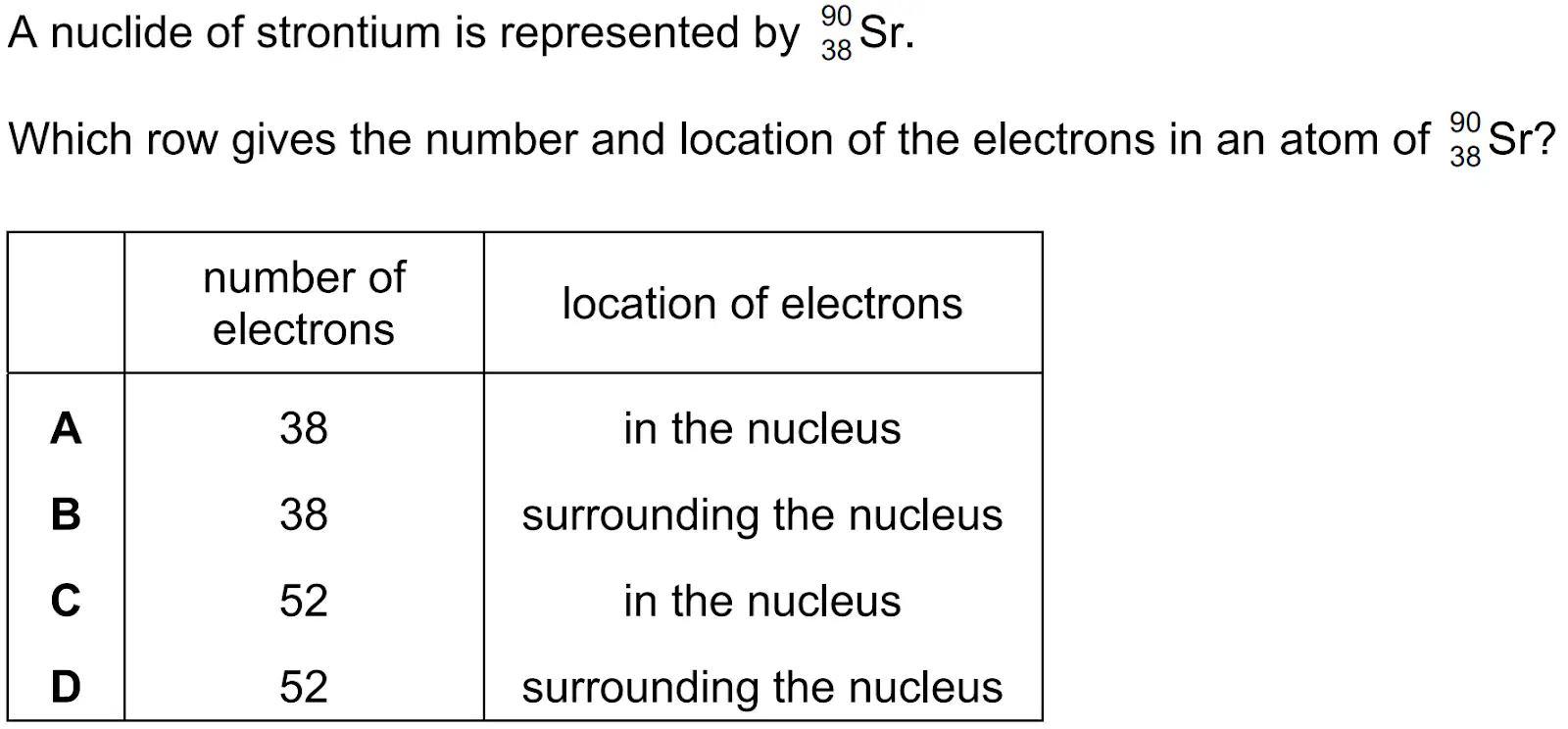
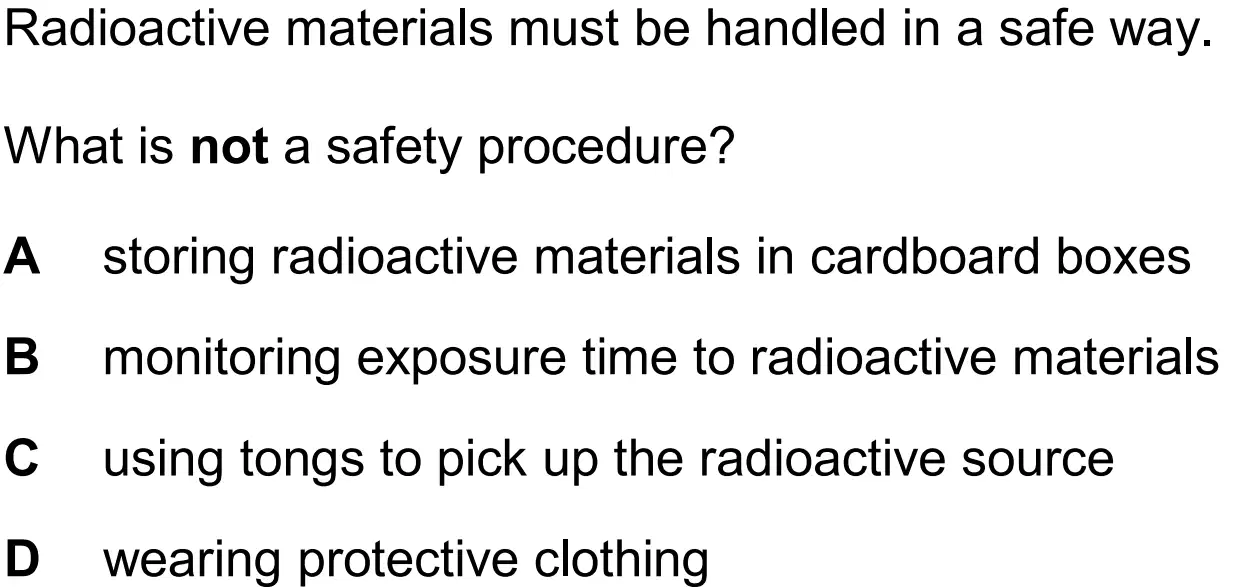
4.

-

a)

A

b)

B

c)

C

d)

D

5.

-

a)

A

b)

B

c)

C

d)

D

6.

-

a)

A

b)

B

c)

C

d)

D

7.

-

a)

A

b)

B

c)

C

d)

D

8.

-

a)

A

b)

B

c)

C

d)

D

9.
The protons and neutrons are inside of the nucleus, and contain almost all of _____
a)
the charge of the atom
b)
the volume of the atom
c)
the mass of the atom
d)
the kinetic energy of the atom
10.
In terms of matter, the atom is almost entirely filled with _____
a)
orbiting electrons
b)
charged protons
c)
heavy neutrons
d)
empty space
11.
Which of the following is a positively charged subatomic particle found in the nucleus of an atom?
a)
Electron
b)
Proton
c)
Neutron
d)
Quark
12.
What carries no charge 
a)
Neutrons
b)
Electrons
c)
Protons
13.
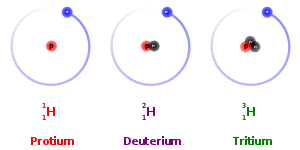
Isotopes of the same element have different ____________. 
a)
 numbers of protons  
b)
numbers of electrons
c)
 symbols 
d)
numbers of neutrons
14.
Takes two small nuclei and combines them into a larger nucleus
a)
fission
b)
fusion
15.
The splitting of a nucleus into smaller nuclei is
a)
fusion
b)
fission
c)
half-life
d)
gamma radiation
16.
How do nuclear power-plants work?
a)
Fusion
b)
Half-life
c)
Fission
d)
Fusion or fission
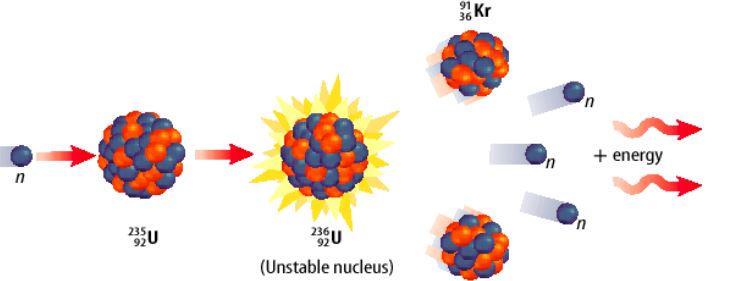
17.
This is an example of...
a)
Fission  reaction
b)
Fusion reaction
c)
Decomposition reaction
d)
Decay
18.
Where does fusion occur naturally?
a)
Underwater
b)
All around us
c)
In the radioactive waste
d)
On the sun
19.
Which atoms combine together during fusion reaction on the sun?
a)
Helium and Hydrogen atoms
b)
Hydrogen atoms
c)
Hydrogen and Lithium atoms
d)
Hydrogen and Carbon atoms
20.
Very high temperature and pressure is required for:
a)
Fission
b)
 Fusion
c)
Radioactive Decay
21.

What is the proton number of this carbon atom

a)

12

b)

6

c)

2

d)

1

22.

To find the number of neutrons in an atom you

a)

nucleon number - proton number

b)

proton number - nucleon number

c)

nucleon number + proton number

d)

nucleon number x proton number

23.
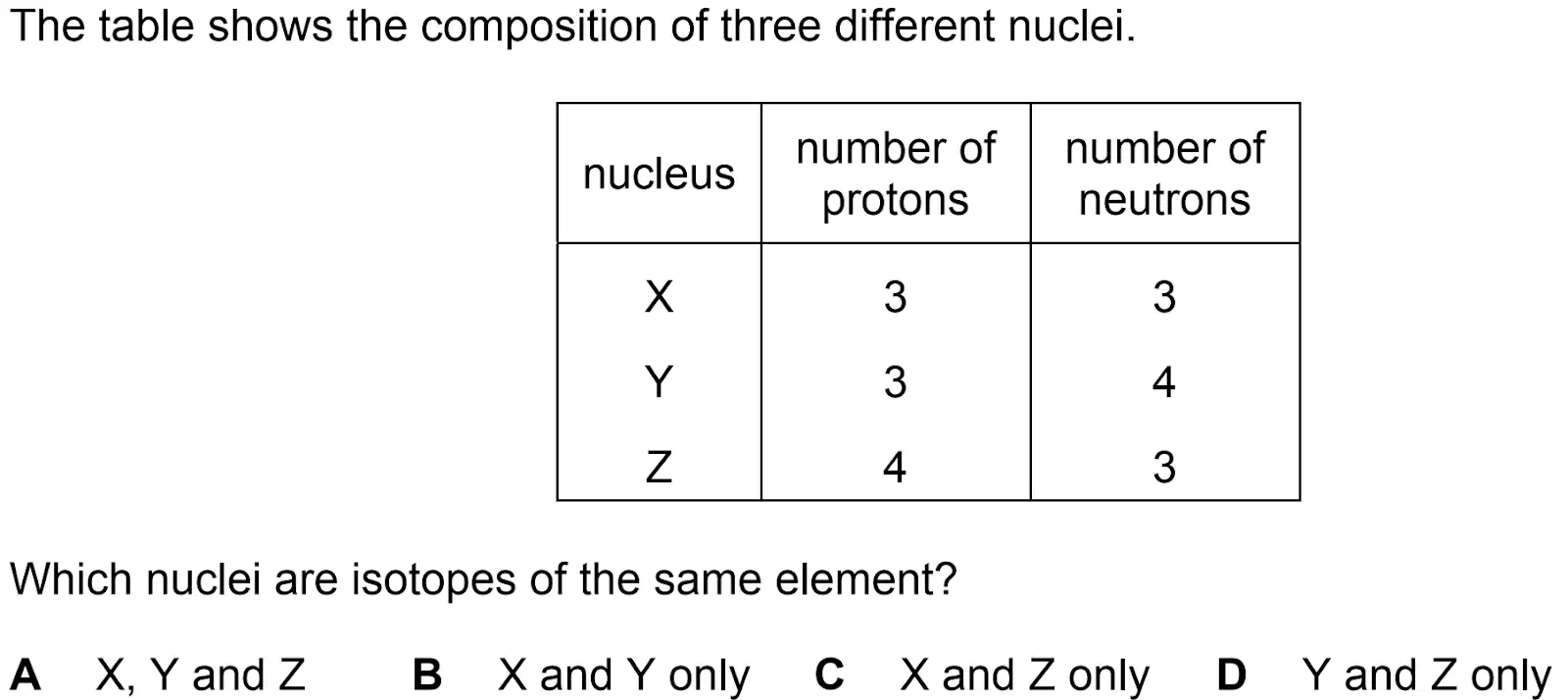
Different isotopes have...
a)
different masses
b)
different atomic numbers
c)
different electrons
d)
different protons
24.
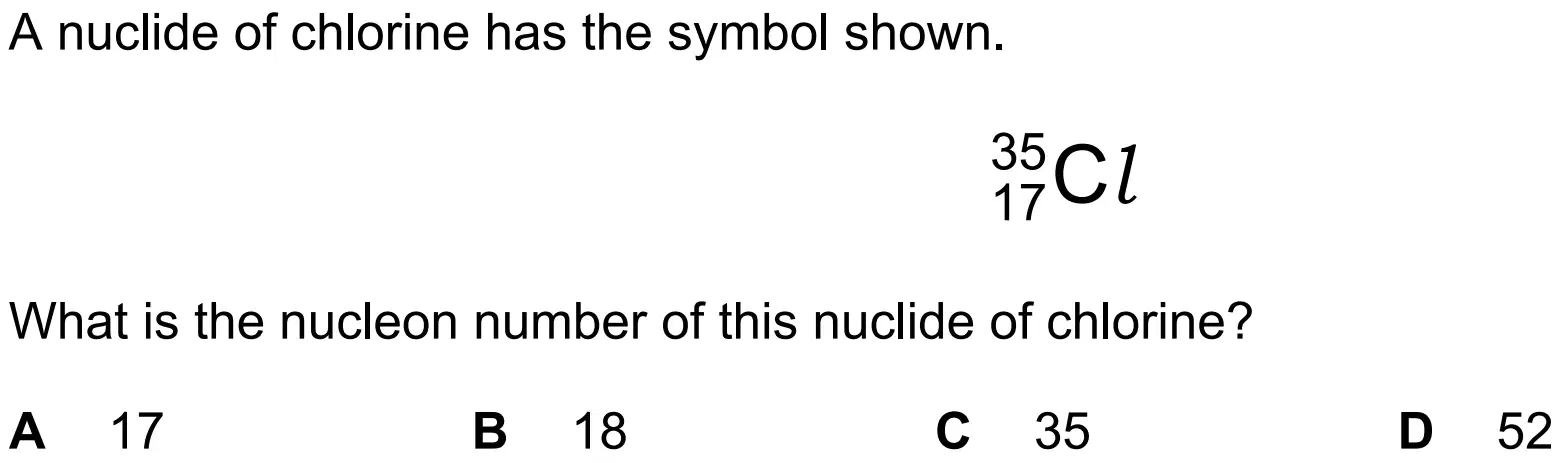
What is the name of the pictured isotope?
a)
Chlorine-Schmorine
b)
Chlorine-17
c)
Chlorine-35
d)
Chlorine-18
25.
How many neutrons does the isotope of lithium have?
a)
8
b)
3
c)
4
d)
5
26.

In Rutherford's famous experiment, the vast majority of alpha particles passed straight through the gold foil. What does that tell us?

a)

The nucleus is very small and atoms are mostly empty space

b)

The plum pudding model was correct

c)

Atoms are tiny

d)

The nucleus is positive

27.

An element has two isotopes. Which row compares the numbers of particles in the nuclei of the atoms of these isotopes?

a)

different number of neutrons and number of nucleons, the same number of protons

b)

different number of neutrons, the same number of protons and electrons

c)

the same number of neutrons, different number of protons and nucleons

d)

different number of protons, the same number of neutrons and number of nucleons

28.

Which row gives the relative charge of an electron, a neutron and a proton?

a)

electron - 1, neutron 0, proton - 1

b)

electron - 1, neutron 0, proton + 1

c)

electron + 1, neutron - 1, proton 0

d)

electron + 1, neutron 0, proton + 1

29.

The symbol for a radioactive nuclide of carbon is 14C6. How many neutrons are in its nucleus?

a)

6

b)

8

c)

14

d)

20

30.

The three main types of nuclear radiation are alpha, beta, and gamma. Which of the following lists these types of radiation from highest penetrating power to lowest penetrating power?

a)

alpha, gamma, beta

b)

beta, alpha, gamma

c)

beta, gamma, alpha

d)

gamma, beta, alpha

31.

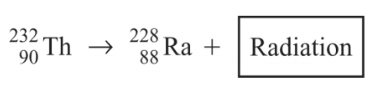
This equation shows the radioactive decay of thorium (Th). Which of the following particles is released in this reaction?

a)

alpha

b)

beta

c)

neutron

d)

gamma

32.
a)

A

b)

B

c)

C

d)

D

33.
a)

A

b)

B

c)

C

d)

D

34.
What particle completes this reaction?
a)
alpha particle
b)
beta particle
c)
gamma particle
d)
neutron
35.
What is Half-life?
a)
The amount of time it takes for some of the nuclei in a sample of the isotope to decay
b)
The amount of time it takes for half the electrons in a sample of the isotope to decay
c)
The amount of time it takes for half the nuclei in a sample of the isotope to decay
d)
the amount of time it takes to double the nuclei in a sample of the isotope to decay
36.
After the third half-life, how much of the sample is left?
a)
1/2
b)
1/3
c)
1/16
d)
1/8
37.
Barium-122 has a half-life of 2 minutes. A fresh sample weighing 80 g was obtained. If it takes 10 minutes to set up an experiment using barium-122, how much barium-122 will be left when the experiment begins?
a)
0.25g
b)
2.5g
c)
25g
d)
80g
38.
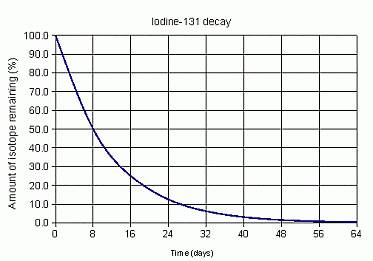
If 10 mg of iodine 131 is given to a patient, how much is left after 24 days? The half-life of iodine-131 is 8 days.
a)
1.25mg
b)
1.25g
c)
10g
d)
10mg
39.
The half-life of strontium-90 is 25 years. How much strontium-90 will remain after 100 years if the initial amount is 4.0 g?
a)
3.0g
b)
0.25mg
c)
0.3g
d)
0.25g
40.
If the half-life of uranium-232 is 70 years, how many half-lives will it take for 10 g of it to be reduced to 1.25 g?
a)
1 half-life
b)
2 half-lives
c)
3 half-lives
d)
4 half-lives
41.
What is the half-life of iodine-131?
a)
32 days
b)
8 days
c)
16 days
d)
24 days
42.

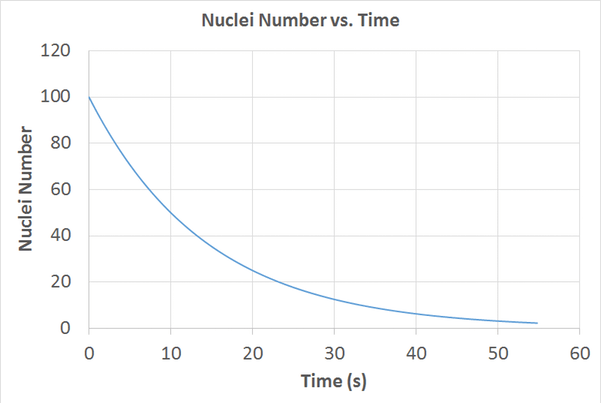
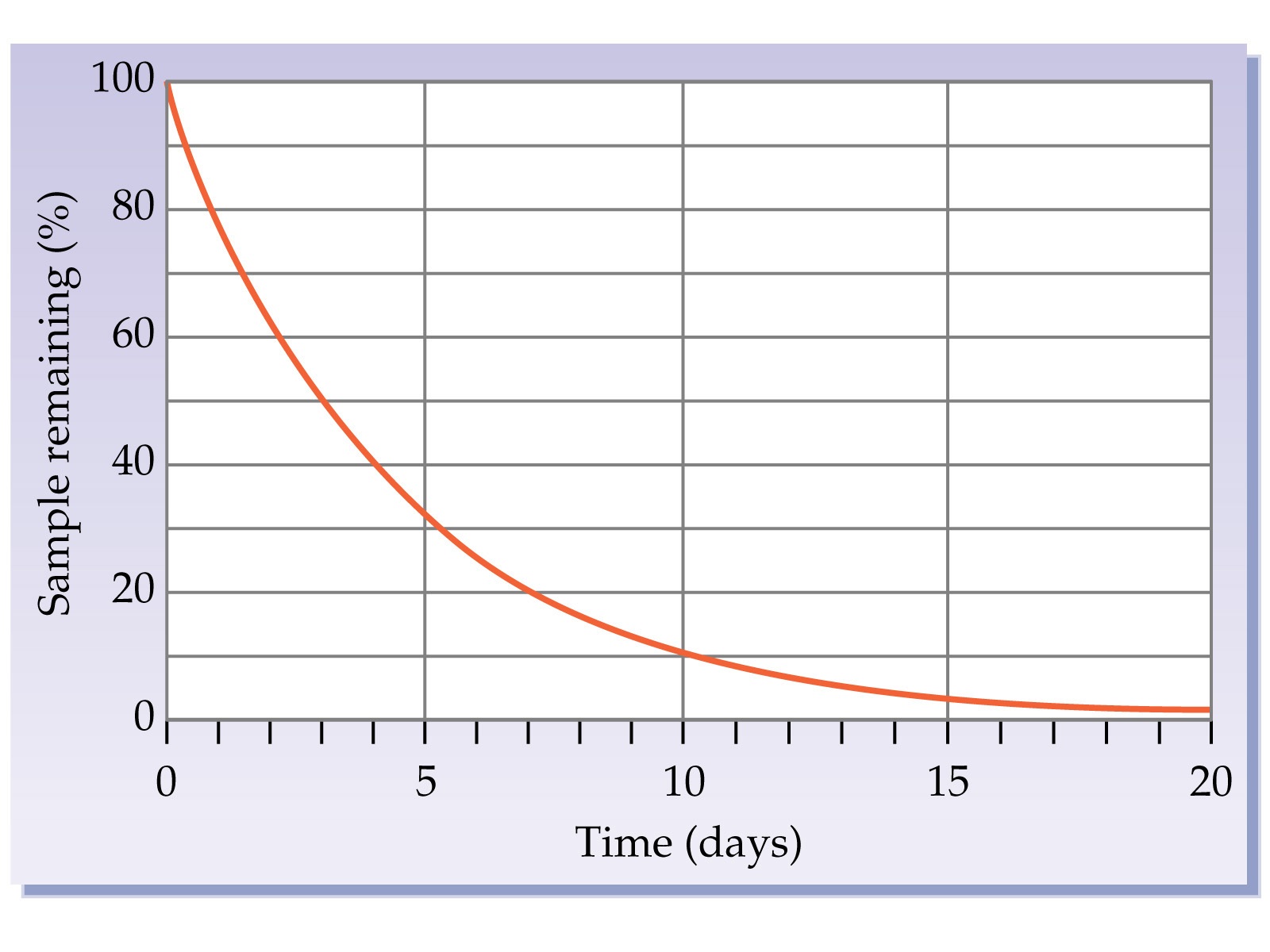
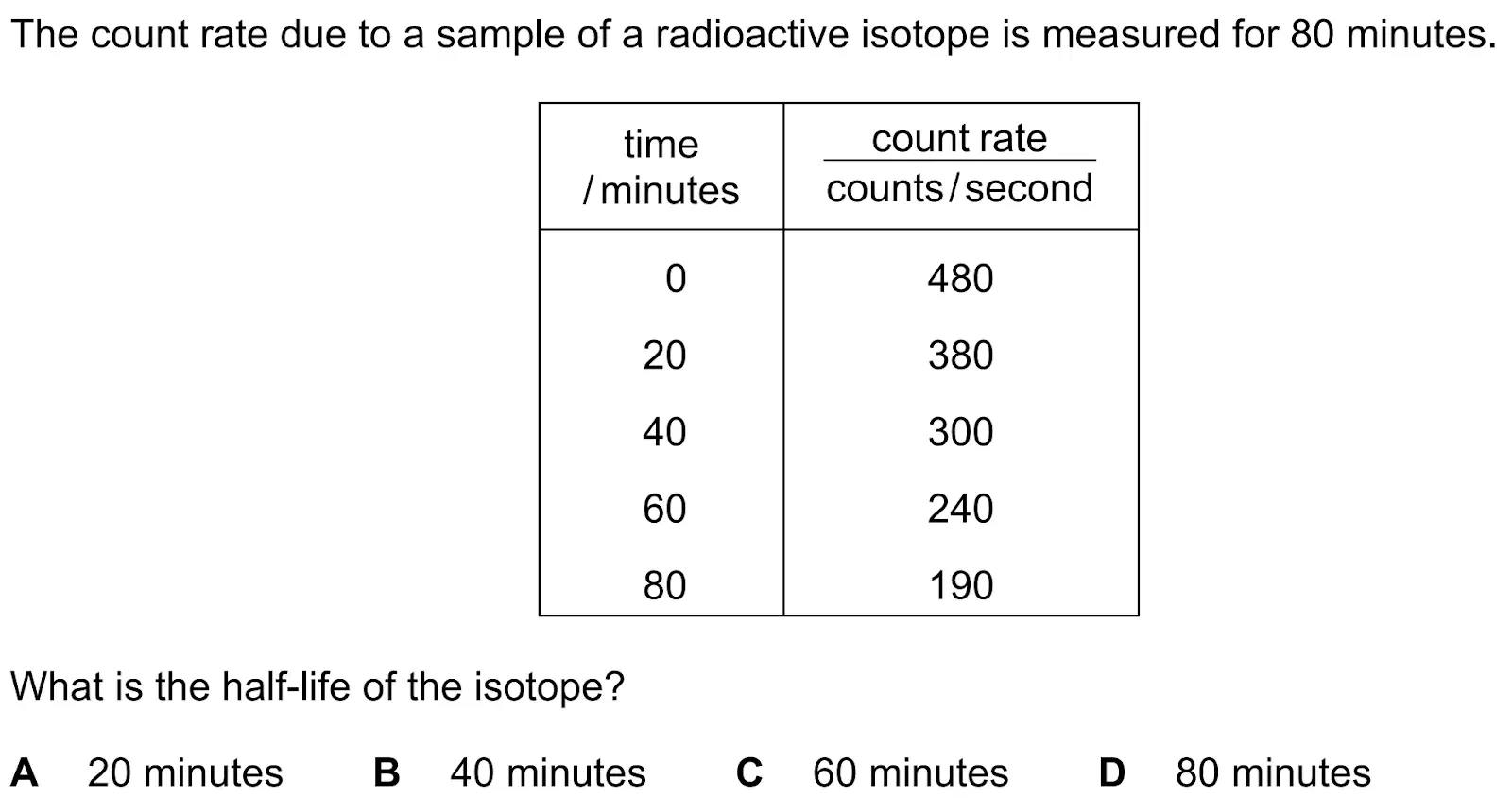
What is the Half life of this isotope?

a)

5 seconds

b)

10 seconds

c)

15 seconds

d)

20 seconds

43.

What is the Half Life of this isotope?

a)

3 days

b)

5 days

c)

8 days

d)

10 days

44.

Which diagram best represents the percentage of this radioactive isotope sample that will remain after 2 half-lives?

a)
b)
c)
d)
45.
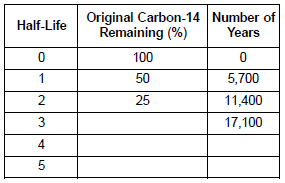
You have 100 grams of radioactive C-14. The half life of C-14 is 5730 years. 
How many grams are left after 1 half life? 
a)
100 grams
b)
25 grams
c)
2 grams
d)
50 grams
46.

After 22,800 years, approximately what percentage of the original carbon-14 remains?

a)

15%

b)

12.5%

c)

6.25%

d)

3.125%

47.
If one-fourth of the carbon-14 is remaining then how many half-lives have passed?
a)
1
b)
2
c)
3
d)
4
48.
When nuclei decay, massive amounts of __________ is released.
a)
energy
b)
jello
c)
protons
d)
neutrons
49.
A radioisotope of silver has half life of 10 minutes. What fraction of the original mass would remain after one hour?
a)
1/64
b)
1/2
c)
1/4
d)
1/8
50.
Selenium-83 has a half life of 25 minutes. How many minutes would it take for a 20 milligram sample to decay and only have 1.25 milligrams of it remaining? 
a)
25 minutes
b)
50 minutes
c)
75 minutes 
d)
100 minutes
51.

Geologist use the time it takes for a radioactive isotope to decay to half its original mass called a___________.

a)

radioactive decay

b)

isotope

c)

half-life

d)

carbon dating
52.
Question
a)
A
b)
B
c)
C
d)
D
53.
Question
a)
A
b)
B
c)
C
d)
D
54.
Question
a)
A
b)
B
c)
C
d)
D
55.
Question
a)
A
b)
B
c)
C
d)
D
56.
Question
a)
A
b)
B
c)
C
d)
D
57.
Question
a)
A
b)
B
c)
C
d)
D
58.
Question
a)
A
b)
B
c)
C
d)
D
59.
Question
a)
A
b)
B
c)
C
d)
D
60.
Question
a)
A
b)
B
c)
C
d)
D
61.
Question
a)
A
b)
B
c)
C
d)
D
62.
Question
a)
A
b)
B
c)
C
d)
D
63.
Question
a)
A
b)
B
c)
C
d)
D
64.
Question
a)
A
b)
B
c)
C
d)
D
65.
Question
a)
A
b)
B
c)
C
d)
D
66.
Question
a)
A
b)
B
c)
C
d)
D
67.
Question
a)
A
b)
B
c)
C
d)
D
68.
Question
a)
A
b)
B
c)
C
d)
D
69.
Question
a)
A
b)
B
c)
C
d)
D
70.
Question
a)
A
b)
B
c)
C
d)
D
71.
Question
a)
A
b)
B
c)
C
d)
D
72.
Question
a)
A
b)
B
c)
C
d)
D
73.
Question
a)
A
b)
B
c)
C
d)
D
74.
Question
a)
A
b)
B
c)
C
d)
D
75.
Question
a)
A
b)
B
c)
C
d)
D
76.
Question
a)
A
b)
B
c)
C
d)
D
77.
Question
a)
A
b)
B
c)
C
d)
D
78.
Question
a)
A
b)
B
c)
C
d)
D
79.
Question
a)
A
b)
B
c)
C
d)
D
80.
Question
a)
A
b)
B
c)
C
d)
D
81.
Question
a)
A
b)
B
c)
C
d)
D
82.
Question
a)
A
b)
B
c)
C
d)
D
83.
Question
a)
A
b)
B
c)
C
d)
D
84.
Question
a)
A
b)
B
c)
C
d)
D
85.
Question
a)
A
b)
B
c)
C
d)
D
86.
Question
a)
A
b)
B
c)
C
d)
D
87.
Question
a)
A
b)
B
c)
C
d)
D
88.
Question
a)
A
b)
B
c)
C
d)
D
89.
Question
a)
A
b)
B
c)
C
d)
D
90.
Question
a)
A
b)
B
c)
C
d)
D
91.
Question
a)
A
b)
B
c)
C
d)
D
92.
Question
a)
A
b)
B
c)
C
d)
D
93.
Question
a)
A
b)
B
c)
C
d)
D
94.
Question
a)
A
b)
B
c)
C
d)
D
95.
Question
a)
A
b)
B
c)
C
d)
D
96.
Question
a)
A
b)
B
c)
C
d)
D
97.
Question
a)
A
b)
B
c)
C
d)
D
98.
Question
a)
A
b)
B
c)
C
d)
D
99.
Question
a)
A
b)
B
c)
C
d)
D
100.
Question
a)
A
b)
B
c)
C
d)
D
101.
Question
a)
A
b)
B
c)
C
d)
D
102.
Question
a)
A
b)
B
c)
C
d)
D
103.
Question
a)
A
b)
B
c)
C
d)
D
104.
Question
a)
A
b)
B
c)
C
d)
D
105.
Question
a)
A
b)
B
c)
C
d)
D
106.
Question
a)
A
b)
B
c)
C
d)
D
107.
Question
a)
A
b)
B
c)
C
d)
D
108.
Question
a)
A
b)
B
c)
C
d)
D
109.
Question
a)
A
b)
B
c)
C
d)
D
110.
Question
a)
A
b)
B
c)
C
d)
D
111.
Question
a)
A
b)
B
c)
C
d)
D
112.
Question
a)
A
b)
B
c)
C
d)
D
113.
Question
a)
A
b)
B
c)
C
d)
D
114.
Question
a)
A
b)
B
c)
C
d)
D
115.
Question
a)
A
b)
B
c)
C
d)
D
116.
Question
a)
A
b)
B
c)
C
d)
D
117.
Question
a)
A
b)
B
c)
C
d)
D
118.
Question
a)
A
b)
B
c)
C
d)
D
119.
Question
a)
A
b)
B
c)
C
d)
D
120.
Question
a)
A
b)
B
c)
C
d)
D
121.
Question
a)
A
b)
B
c)
C
d)
D
122.
Question
a)
A
b)
B
c)
C
d)
D
123.
Question
a)
A
b)
B
c)
C
d)
D
124.
Question
a)
A
b)
B
c)
C
d)
D
125.
Question
a)
A
b)
B
c)
C
d)
D
126.
Question
a)
A
b)
B
c)
C
d)
D
127.
Question
a)
A
b)
B
c)
C
d)
D
128.
Question
a)
A
b)
B
c)
C
d)
D
129.
Question
a)
A
b)
B
c)
C
d)
D
130.
Question
a)
A
b)
B
c)
C
d)
D